Best Kettlebell Workouts for Women: 10 Moves

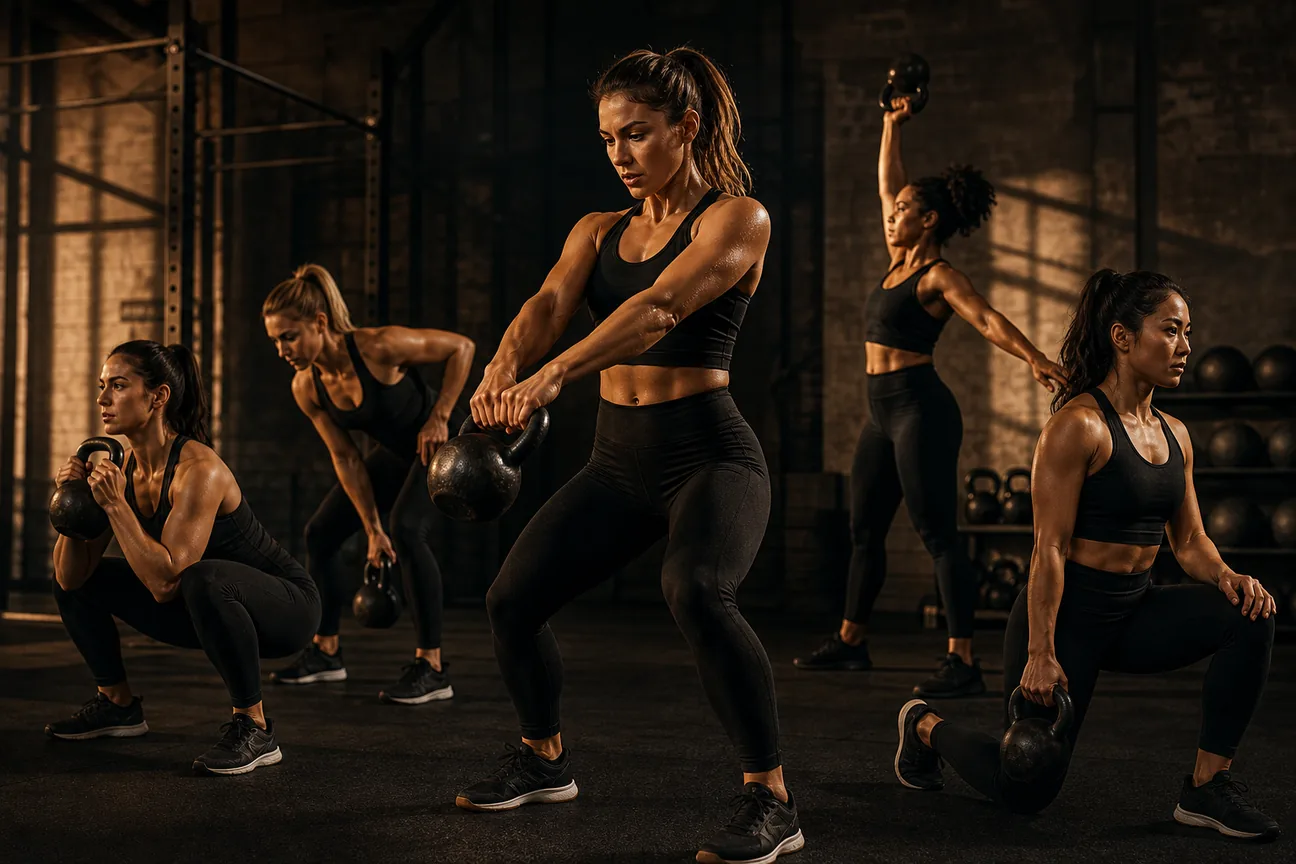
Want stronger legs, a steadier core, and workouts that fit between work and family? Kettlebell workouts for women can be short and effective when you choose a few moves and use sound form. Here are 10 options, with cues, easier versions, and ways to build a routine. Hybrid Fit Mom’s coach, Mari Grossi, teaches strength and conditioning for women who intend to age like athletes.
An analysis of 40 comments and questions from YouTube and Quora about women kettlebell workouts found that 35% mentioned beginner weight selection and safety.
1. Kettlebell Swing: Build Power and Raise Your Heart Rate
The two-hand swing is a fast hip-hinge exercise. Your glutes and hamstrings drive the bell; your arms guide it. It works well in a short conditioning block, but it’s a poor first move if the hinge still feels awkward.
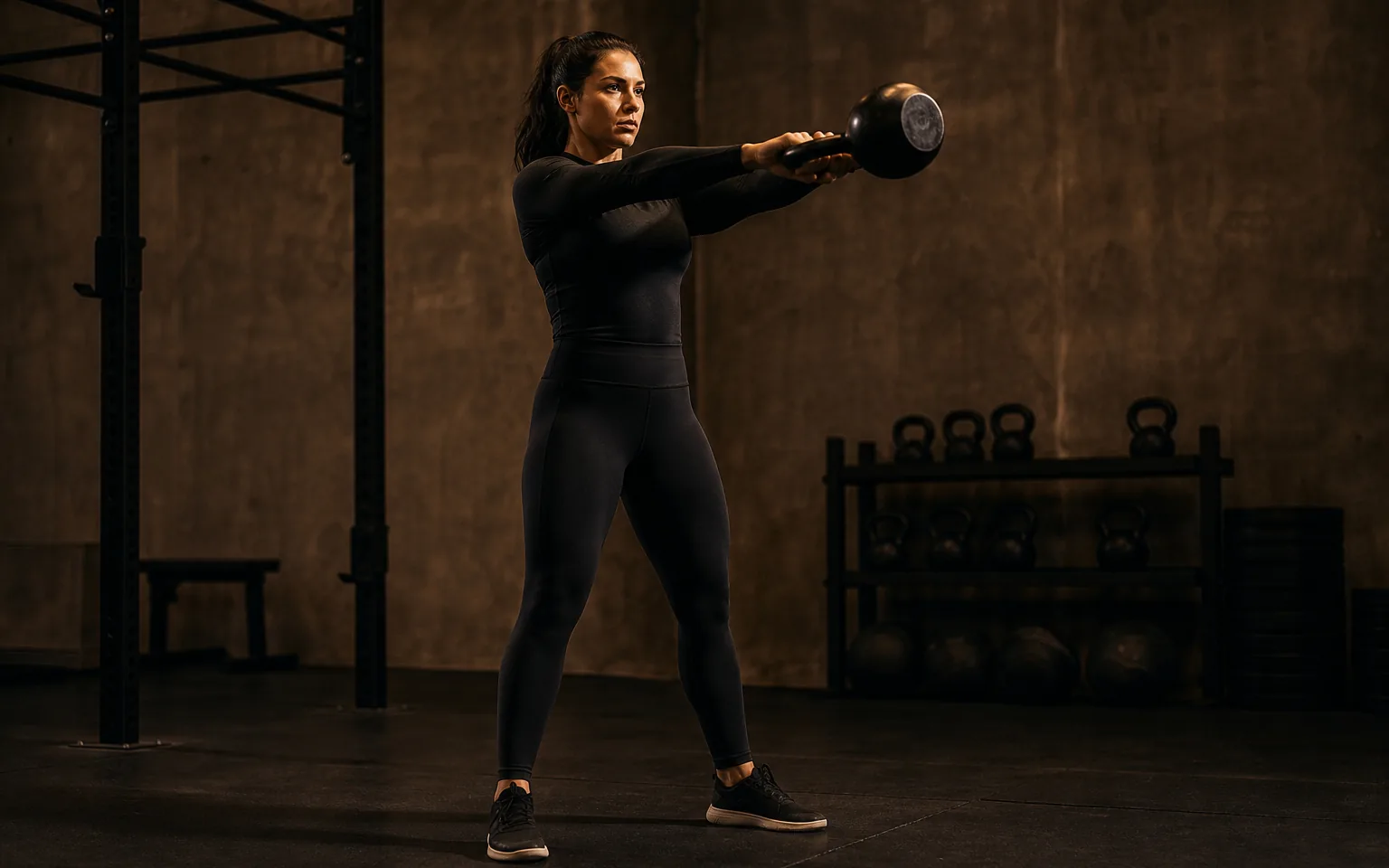
Start with the bell a short step in front of you. Push your hips back, take the handle, then hike the bell between your thighs. Stand tall by snapping your hips forward. Let the bell float to about chest height. Don’t lift it with your shoulders. Exhale on the drive and breathe in as it swings back.
Try 3 sets of 8 to 12 reps, resting until your breathing settles. Newer lifters can practice unloaded hip hinges or deadlifts first. If your back rounds or the bell pulls you forward, stop and use a lighter load. Clear the space around you before each set.
Swings train the back of your body and raise the pace of a session. They’re not a replacement for slower strength work. For more swing-only formats, see kettlebell swing workouts for busy women.
2. Goblet Squat: Strengthen Your Legs With an Easy-to-Scale Hold
A goblet squat is a squat with the bell held close to your chest. The front hold can help you stay upright, while your quads and glutes do most of the work. It’s a useful choice when you want a clear, steady lower-body exercise.
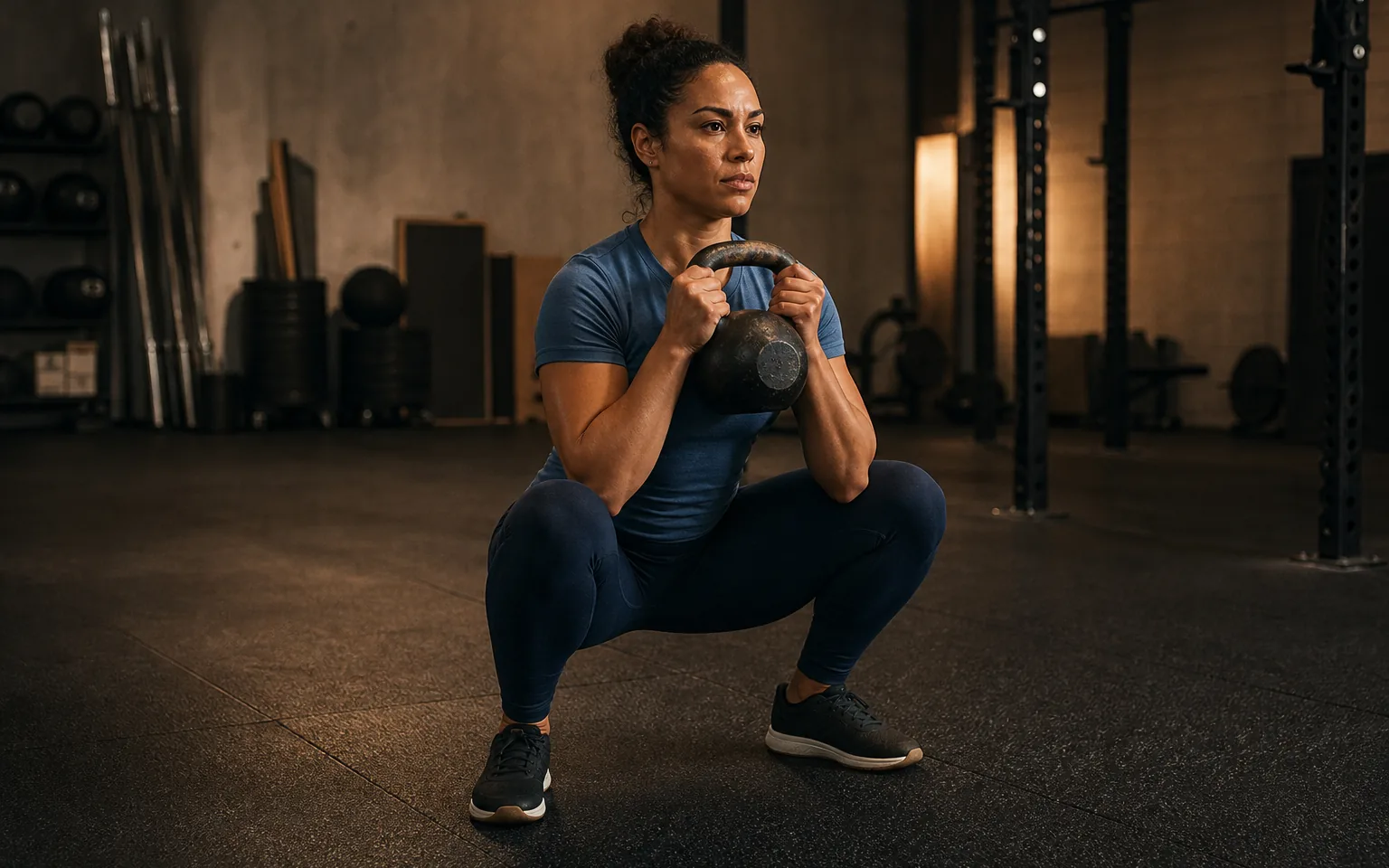
Hold the bell by its sides, close to your chest. Set your feet about shoulder-width apart. Sit between your hips and bend your knees, keeping your whole foot on the floor. Go only as low as you can while your heels stay down and your back stays long. Push through your feet to stand.
Start with 2 or 3 sets of 8 to 10 reps. If the bell feels heavy, practice bodyweight squats or hold a lighter bell. If your heels lift, shorten the range and work on control before chasing depth. A dumbbell held upright can stand in for a kettlebell.
Use this move for leg strength, then pair it with a hinge such as the deadlift. For another lower-body focus, try these kettlebell leg workouts.
3. Kettlebell Deadlift: Practice a Strong, Safe Hip Hinge
The kettlebell deadlift is a slower hinge that builds the pattern used in swings and cleans. The bell starts between your feet, which gives you a clear target for each rep. It’s a good pick for strength practice without the speed of a swing.
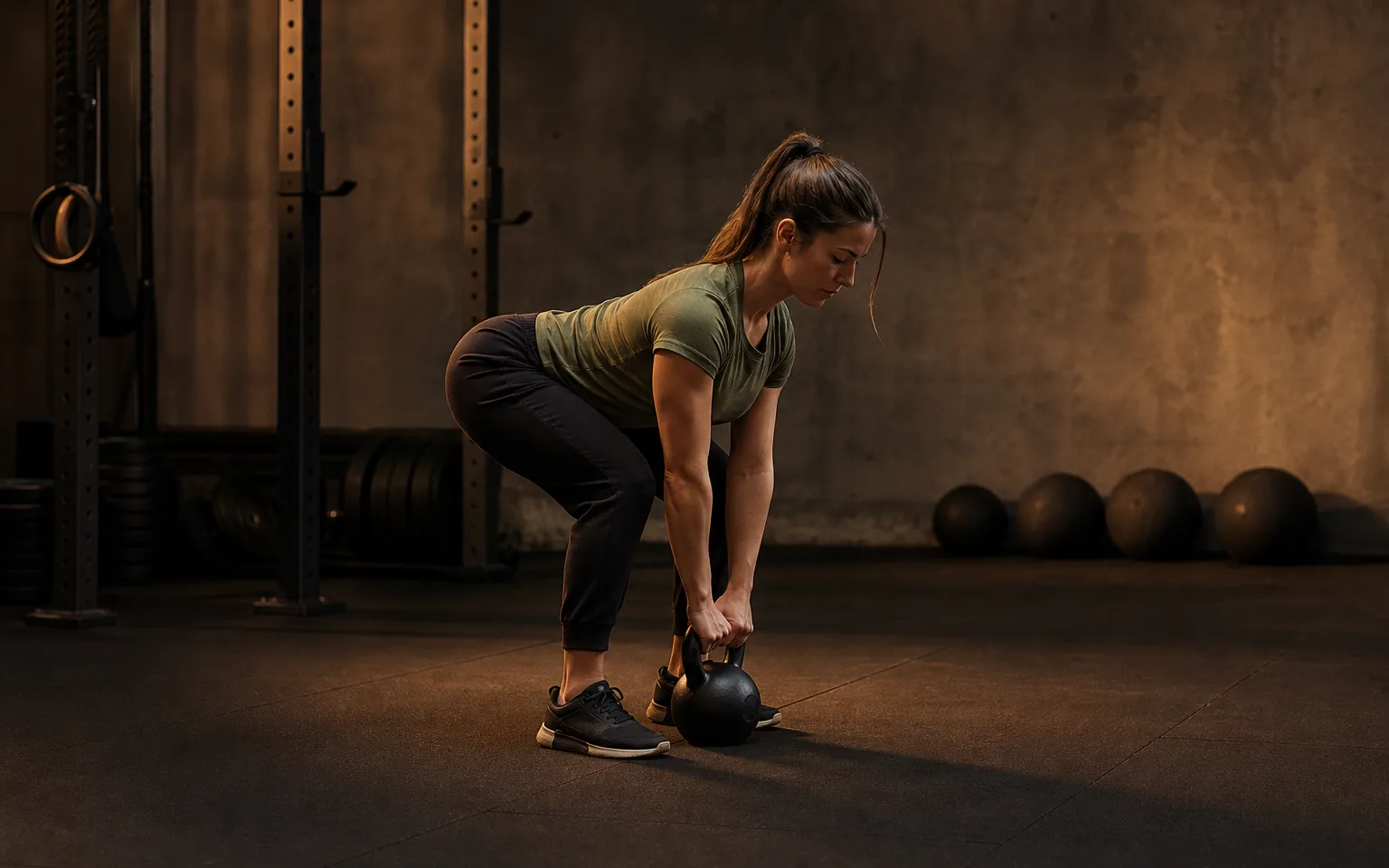
Stand with the bell between your feet. Push your hips back, bend your knees enough to reach the handle, and keep your spine long. Grip the handle, brace your middle, then press through the floor to stand. Keep the bell close. Lower it with control and reset before the next rep.
Try 3 sets of 8 to 10. If reaching the floor makes your back round, raise the bell on a stable, low surface or practice the hinge with no weight. Use a load that lets every rep look much the same. A clean, controlled set matters more than a heavy bell.
For a home plan aimed at newer lifters, explore beginner kettlebell workouts for women. A strong hinge is the base for more dynamic moves.
4. One-Arm Kettlebell Row: Train Your Back at Home
The one-arm row trains your upper back, arm, and grip. It also asks your trunk to resist twisting. If you sit for much of the day, this gives your pulling muscles direct work, with just one bell and a stable place to brace.
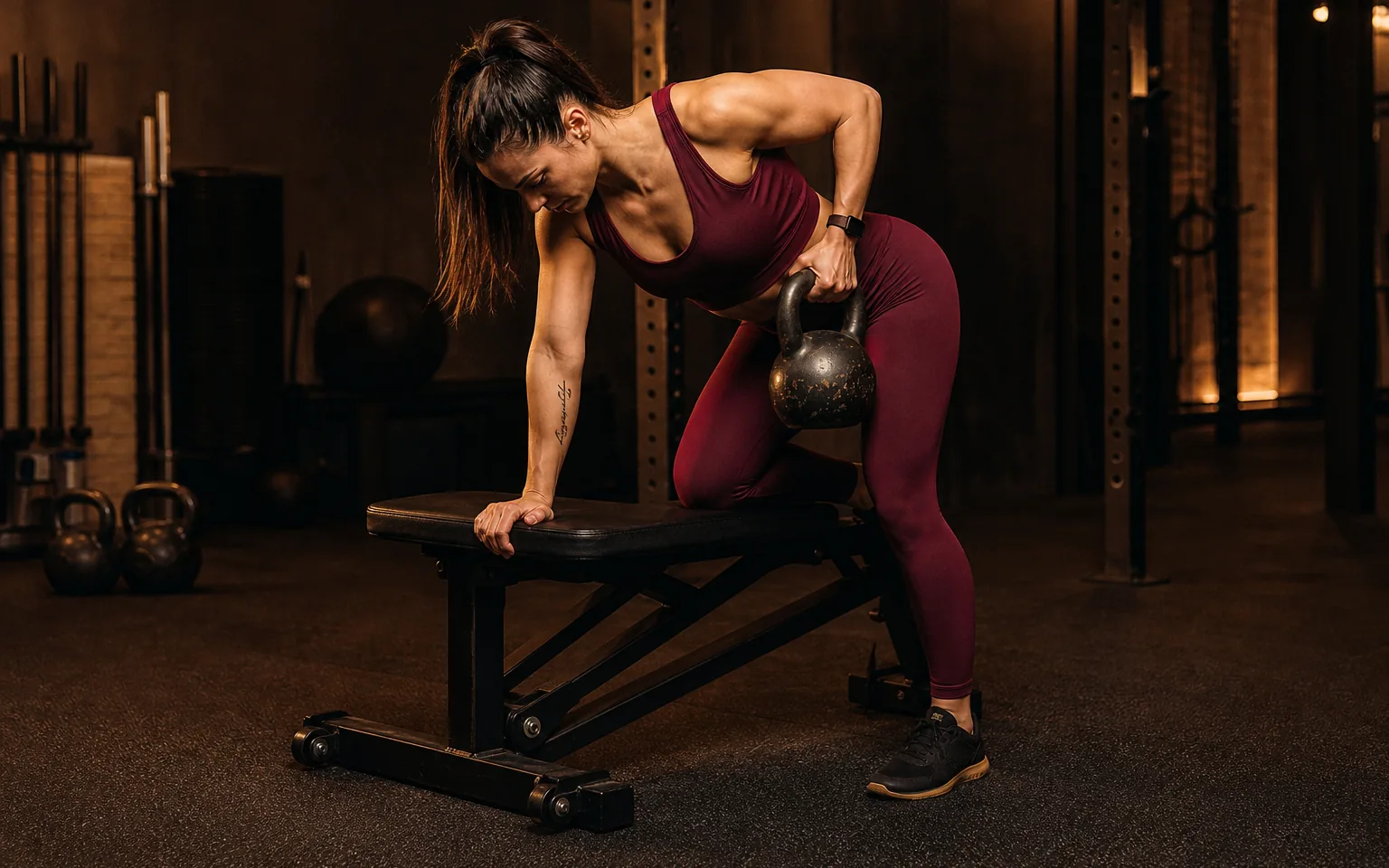
Place one hand on a bench or sturdy chair. Hinge forward with a long back and hold the bell in the other hand. Pull your elbow toward your hip, not up toward your shoulder. Lower the bell slowly. Keep your chest and hips facing the floor rather than rotating with each pull.
Do 2 or 3 sets of 8 to 12 reps per side. A supported stance is a good starting point if holding a hinge feels tiring. If your torso twists or your shoulder hikes toward your ear, use a lighter bell. Match the reps on both sides, even if one arm feels stronger.
Rows balance the pushing work in a routine. They’re also easy to fit into a short strength session while a child’s snack is in the oven. Just keep the chair steady before you lean on it.
5. Kettlebell Overhead Press: Build Shoulder Strength With Control
A strict overhead press trains your shoulder and arm while your trunk keeps your ribs and hips stacked. It’s a strength move, not a race. Use a load you can press without leaning back or turning the lift into a leg drive.
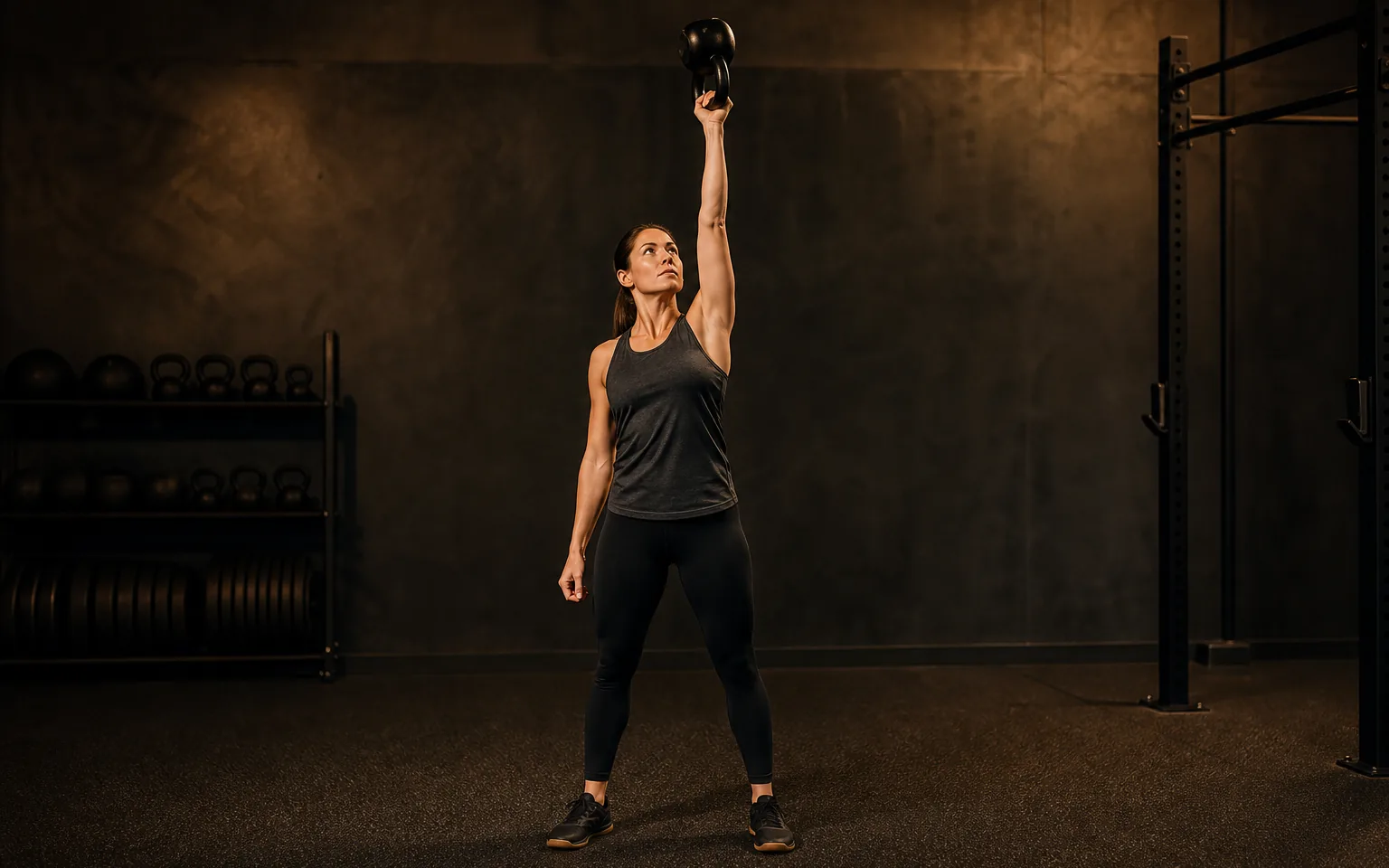
Start with the bell in the rack position at your shoulder. Keep your wrist straight, ribs down, and glutes gently tight. Press the bell up until your arm is straight, with the bell over your shoulder. Lower it slowly to the rack. Breathe out as you press.
Try 2 or 3 sets of 5 to 8 reps per side. If your back arches, lower the weight or practice a half-kneeling press with a light bell. You can also begin with the bell already at shoulder height, so you’re learning the press without adding a clean.
Stop the set if your shoulder feels painful or your wrist folds under the bell. A controlled range beats forcing a lockout you can’t hold.
6. Turkish Get-Up: Combine Strength, Balance, and Mobility
The Turkish get-up takes you from lying on the floor to standing while one arm holds a bell overhead. It trains control across several positions, but it’s a skill move, not a high-rep finisher. Start without weight or use a shoe balanced on your fist.
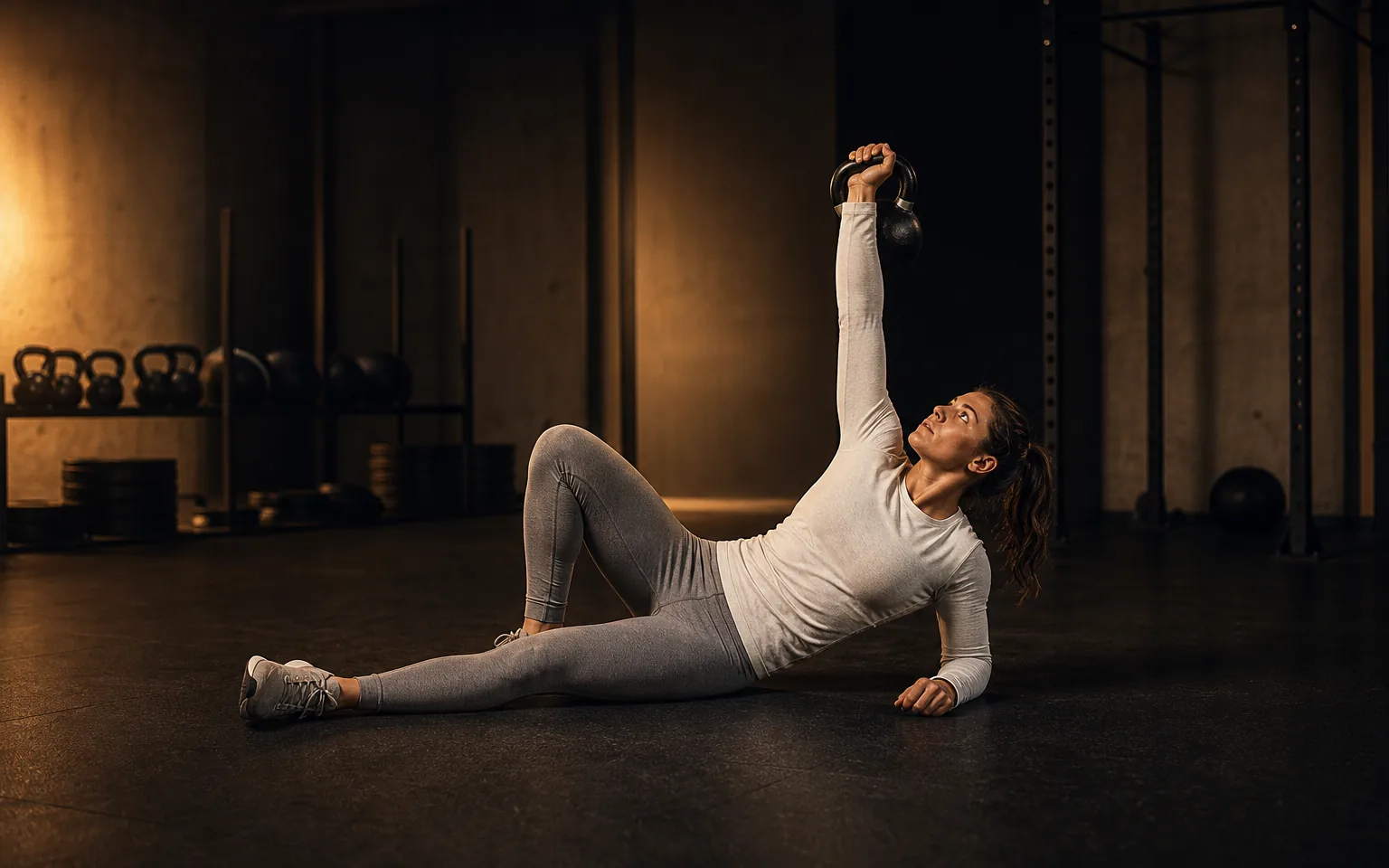
Move slowly through the stages: roll to your elbow, press to your hand, lift your hips, sweep your leg into a kneel, then stand. Keep your eyes on the raised hand and your elbow straight. Reverse the path to return to the floor. Learn each position before linking them together.
Practice 1 or 2 reps per side, resting between attempts. A bodyweight version is a useful regression. If the shoulder wobbles or you lose track of the bell, pause and reset. Don’t add load just because you can press that weight overhead; the floor-to-standing transitions ask for more control.
This move can help you practice getting up from the floor with control. For healthy adults, build it gradually and ask a qualified clinician about any movement that conflicts with a current injury or health concern.
7. Farmer’s Carry: Add a Simple Functional-Fitness Finisher
A farmer’s carry is a walk with a kettlebell in each hand. It trains grip and trunk control while you stay tall under load. The pattern has a plain use: carrying bags through the front door without letting your shoulders creep toward your ears.
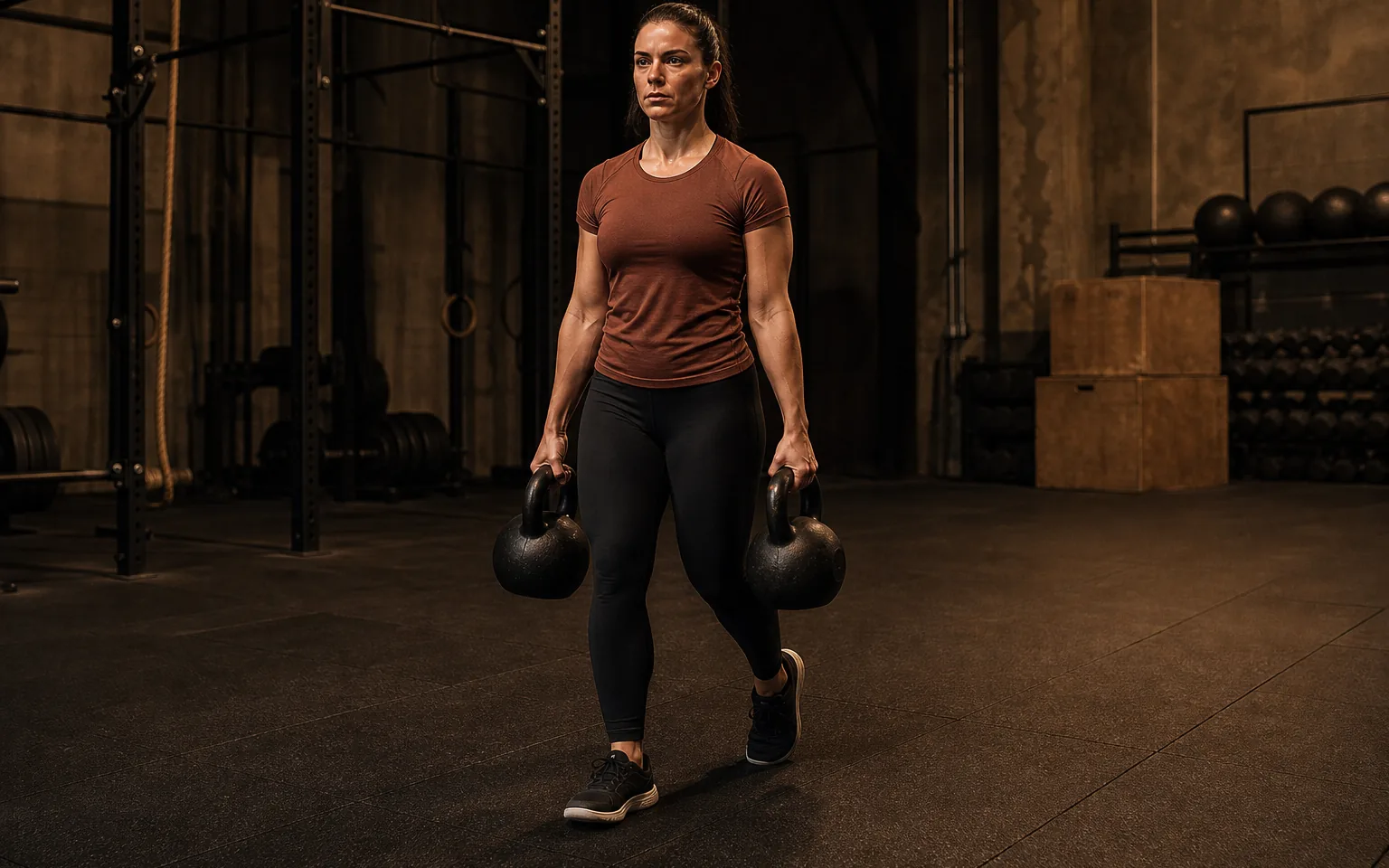
Hold the bells at your sides. Stand tall, brace gently, and walk with short, steady steps. Keep your shoulders down and breathe as you move. Turn carefully, then set the bells down with control. If you have one bell, carry it on one side and switch hands halfway through.
Start with 2 or 3 walks of 20 to 30 seconds. Use a lighter load if you lean to one side, shrug, or can’t keep breathing. A suitcase carry with one bell is often easier to set up at home, though it asks your trunk to resist tipping.
Place carries at the end of a strength session or between slower exercises. Keep the path clear. A hallway is enough, provided nobody is about to appear around the corner.
8. Kettlebell Windmill: Challenge Your Mobility and Stability
The windmill combines a hip hinge with a turned torso and an overhead hold. It challenges mobility and control, so it belongs after you can hold a bell overhead without discomfort. The floor isn’t your target. A good position is.
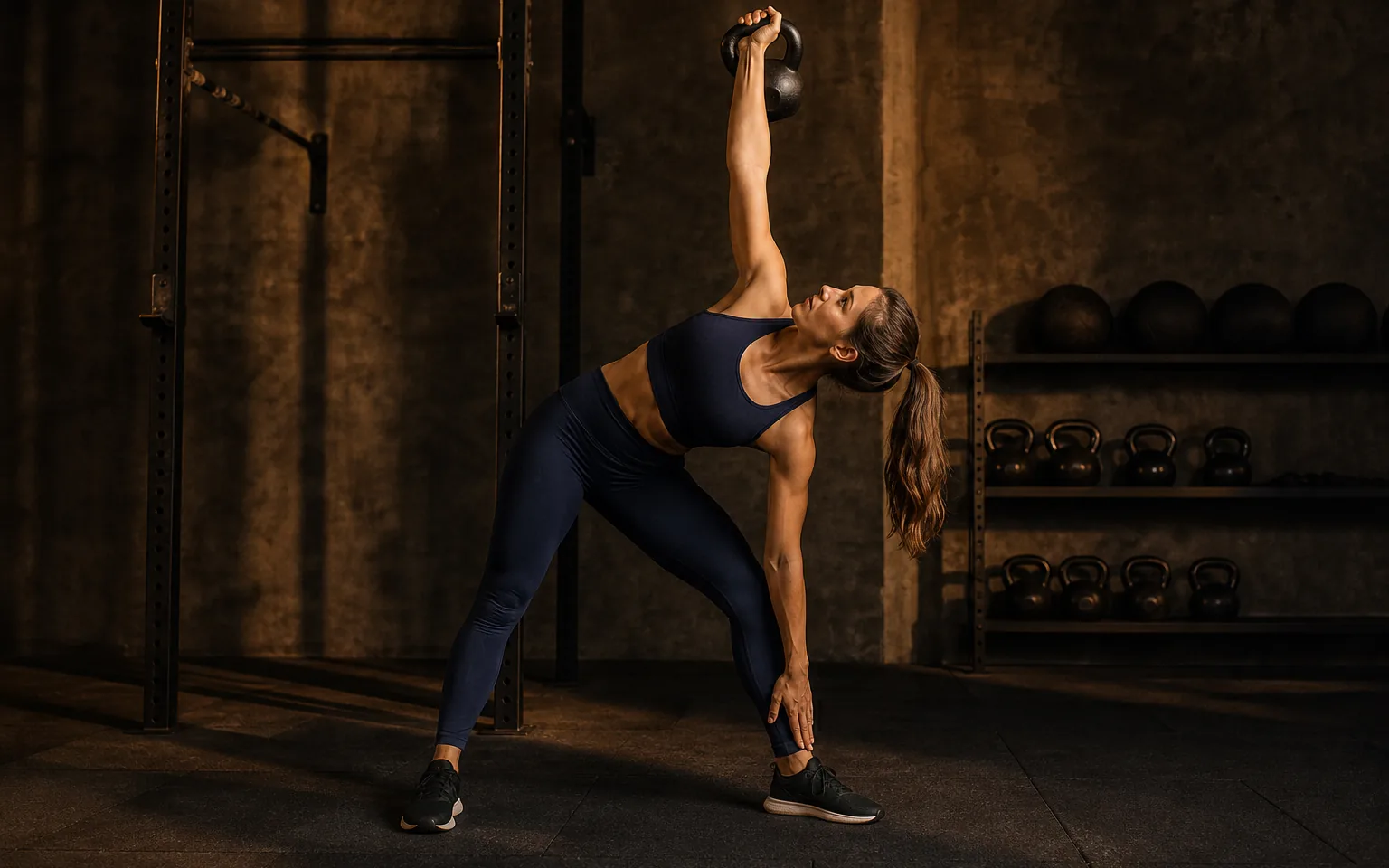
Begin with no weight. Stand with feet apart and point one arm up. Shift your hips back toward the side under the raised arm as you reach the other hand down your leg. Keep the lifted arm steady and your spine long. Return to standing with control.
Try 2 sets of 3 to 5 slow reps per side. If the pattern feels smooth, use a very light bell in the raised hand. Keep your eyes on the bell if that feels comfortable. Shorten the range if you start bending sideways or lose the overhead position.
Windmills aren’t a beginner conditioning drill. Save them for a fresh part of your session, when your shoulder isn’t already tired from pressing or swings.
9. Kettlebell Reverse Lunge: Train Single-Leg Strength and Balance
A reverse lunge works one leg at a time and can show you where balance differs from side to side. Holding the bell at your chest makes the load easy to track. Start with bodyweight if you’re still learning how to step and return.
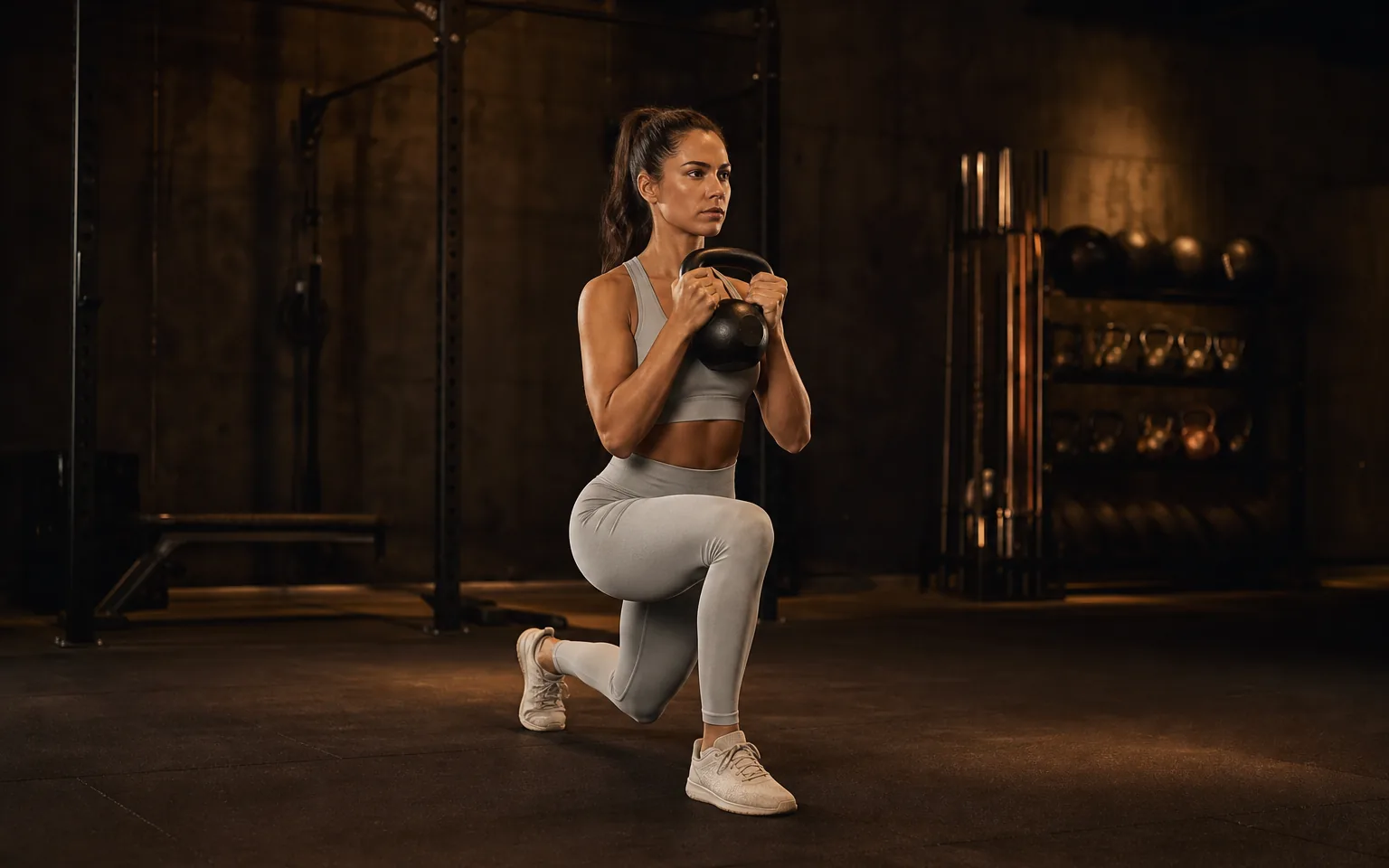
Stand tall, then step one foot back. Bend both knees only as far as you can control. Keep the front foot flat and the front knee in line with your toes. Push through the front foot to return. Do all your reps on one side, then switch, or alternate legs for an easier balance challenge.
Begin with 2 sets of 6 to 8 reps per leg. Hold one light bell at your chest only once the bodyweight version feels steady. Shorten the step or reduce the depth if your balance slips. If knee pain worsens, stop and seek guidance from a qualified health professional.
Reverse lunges fit after squats or deadlifts. They’re a useful way to give each leg its own work without needing more equipment.
10. Kettlebell Clean: Link Lower-Body Power to Upper-Body Strength
The clean moves the bell from between your legs to the rack at your shoulder. It’s a quick, hip-driven move that sets up presses and other lifts. Learn the deadlift and swing first. A clean done with arm strength alone often bangs the forearm.
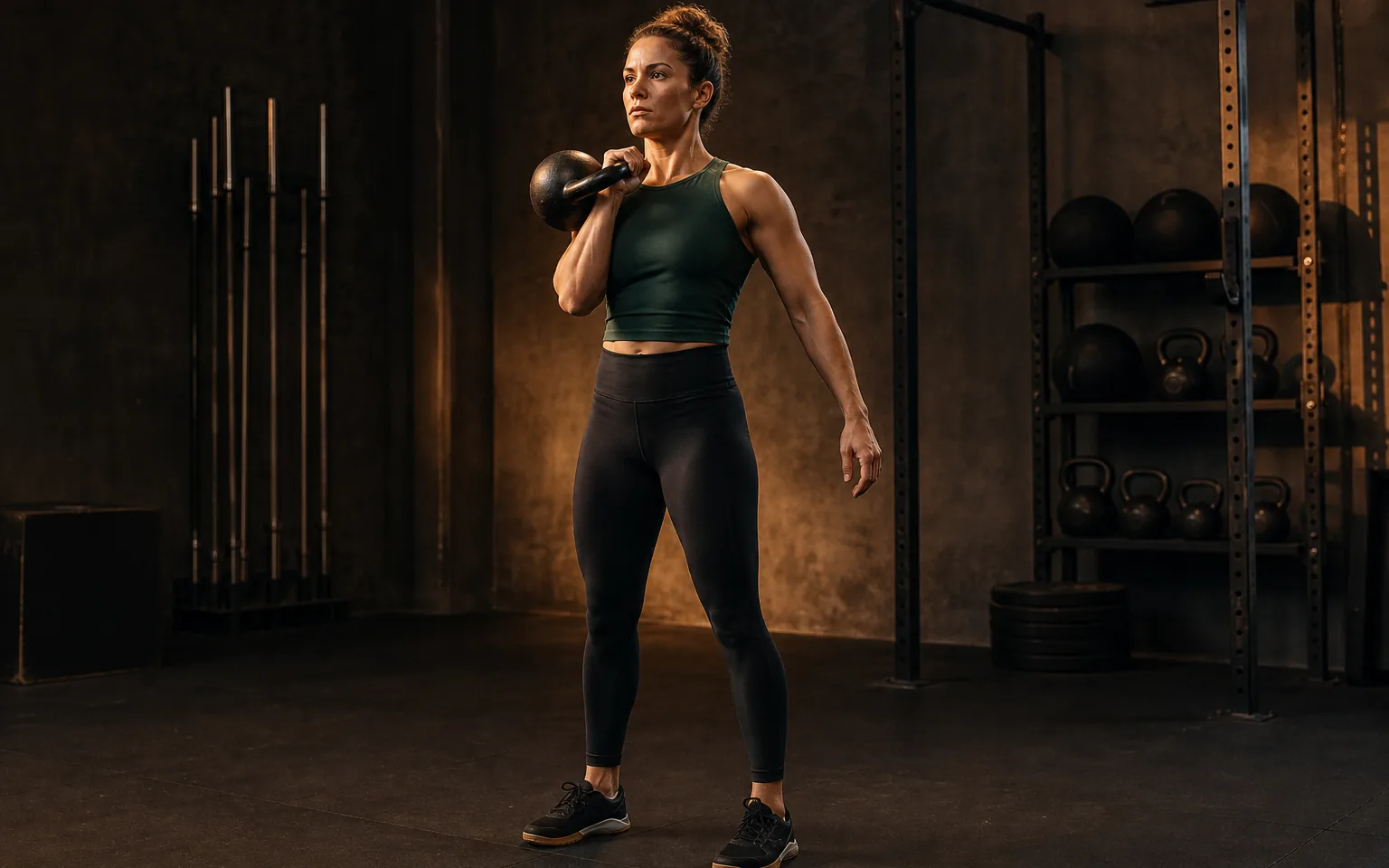
Hinge and hike the bell back, then drive your hips forward. Keep the bell close to your body. As it rises, guide your hand around the handle so the bell settles softly against your forearm. Pause in the rack, then lower it with control. The bell should rotate around your hand, not flip over it.
Start with 3 sets of 3 reps per side using a light bell. Practice a deadlift or two-hand swing if you’re not ready to guide the bell into the rack. If the catch hurts, stop and review the bell path before trying again.
Three ways to build a session
- Beginner strength, about 20 minutes: Choose deadlifts, goblet squats, and supported rows. Do 2 sets of 8 reps each, resting as needed. Use one bell that feels manageable for every move, or go lighter for rows.
- Full-body home session, about 30 minutes: Warm up for 5 minutes with easy squats and hip hinges. Then pair goblet squats with rows, and deadlifts with presses. Do 3 rounds at a steady pace. Finish with a short carry and a few minutes of easy movement.
- Conditioning, about 15 minutes: If your swing form is solid, alternate 10 swings with 30 to 45 seconds of rest for 8 to 10 rounds. This targets the hips and heart rate. Use one kettlebell and stop when your form fades.
Keep at least a day between harder full-body sessions when you’re new to training. Two or three weekly strength sessions are a workable starting point. Easy walking or mobility work can fill other days. For another complete format, see full-body kettlebell workouts for busy women.
Pick a load you can control
There isn’t one right kettlebell weight for every woman. Choose a load that lets you finish your planned reps with steady form. Presses and rows may need a lighter bell than deadlifts or squats. If you can’t keep your back long during a hinge, or your wrist bends during a press, go lighter.
Progress one thing at a time. Add a rep, improve your range, or move to a heavier bell once your current work feels controlled. Mari’s six-week Kettlebell Build gives women with basic kettlebell skills a set plan: three sessions of 30 to 40 minutes each week, plus a core day of about 20 minutes. It starts with a lighter bell and more reps in weeks one and two, then builds toward more resistance and power.
Make room for recovery and changes in your body
Strength training should fit your life, not punish you for having one. If you’re pregnant, recently postpartum, managing pelvic floor symptoms, or dealing with pain, ask a qualified health professional about suitable movements and load. Stop any exercise that causes pain, pressure, or leaking. You can still train, but your plan may need a change.
Sleep and regular meals support training and recovery. There’s no need to make every session a hard circuit. Keep some days easy, drink to thirst, and eat enough to support your day. Hormone changes and menopause can affect how you feel, but they don’t make strength work off-limits. Adjust effort and recovery to what your body is telling you.
Ready to stop piecing together workouts from saved clips? Try Hybrid Fit Mom’s self-guided six-week plan. It includes prerecorded exercise demos, an eating framework, and lifetime access after a one-time purchase. Mari is a weightlifting L1 certified coach, teacher, and mom of two.
FAQ
What kettlebell workout is best for women who are new to training?
A simple strength session with deadlifts, goblet squats, and supported rows is a good place to start. Use bodyweight practice first if you’re still learning the moves. Keep the first sessions easy enough that your form stays steady. Once the movements feel familiar, add a small amount of work rather than changing everything at once.
How often should I do kettlebell workouts?
Two or three strength sessions a week is a sensible starting range for many people. Leave a rest day between harder full-body workouts while you get used to the work. Walking or gentle mobility can fit between sessions. If you’re sore or tired enough to change your form, take more time to recover.
How heavy should my kettlebell be?
Pick a bell that lets you complete the planned reps without losing control. You may need less weight for overhead presses than for deadlifts. If you can’t keep your back long, or you have to swing the bell up with your arm, use a lighter load. Add weight only after you can repeat clean reps.
Can kettlebell workouts help with strength and cardio?
Yes. Slower moves such as squats and presses build strength, while swings can raise your heart rate because they use repeated, fast hip drives. You don’t need to make every lift a fast circuit. Pair strength work with walking or another form of cardio to build a week that suits your schedule.
Are kettlebell workouts safe after having a baby or during menopause?
They may be appropriate, but the right plan depends on your health, symptoms, and training history. If you’re postpartum or have pelvic floor symptoms, ask a qualified clinician about your return to exercise. During menopause, adjust the load and rest based on how you feel. Stop if a move causes pain or pressure.
Conclusion
Start with the deadlift, goblet squat, and row if you want a steady home strength session. Pick a bell you can control, then record your reps and build gradually. If you’d rather follow a week-by-week structure, take a look at Hybrid Fit Mom’s six-week Kettlebell Build and see whether it fits your training week.