Best Kettlebell Leg Workouts for Strength

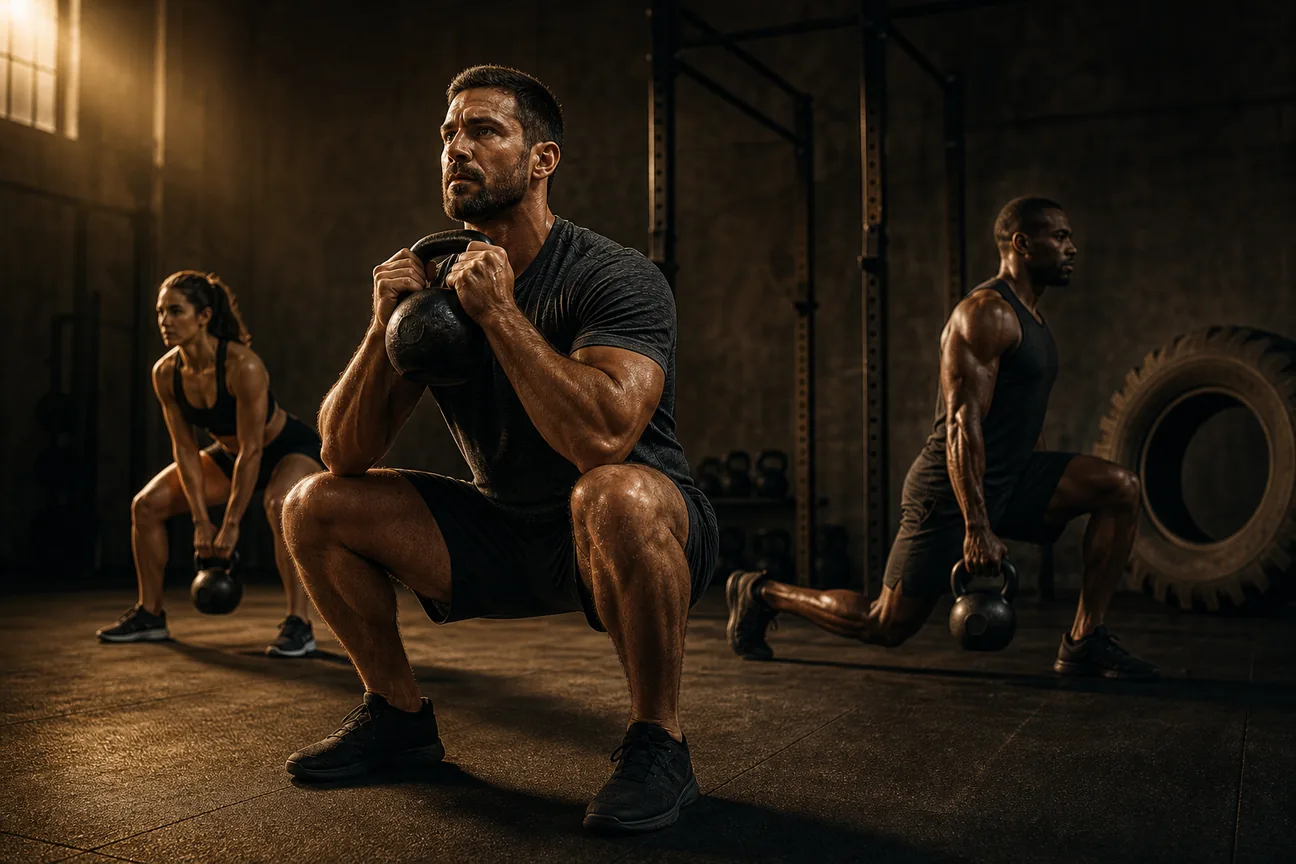
Ready to train your legs with one kettlebell and a small patch of floor? These kettlebell leg workouts cover squats, hinges, lunges, and swings, with cues to help you keep each rep controlled. Hybrid Fit Mom’s six-week program uses one kettlebell for 24 guided sessions, so you can follow a plan instead of saving another workout for later.
An analysis of 25 comments and questions from YouTube and Quora about kettlebell LEG Workouts found that 24% mentioned equipment suitability and exercise modifications.
1. Kettlebell Goblet Squat - A simple way to train your quads and glutes
The goblet squat is a two-leg squat with the kettlebell held close to your chest. It trains your quads and glutes while the front-held load helps you keep your torso tall. It’s a useful first move in a session because it lets you practice depth before adding speed or more complex balance demands.
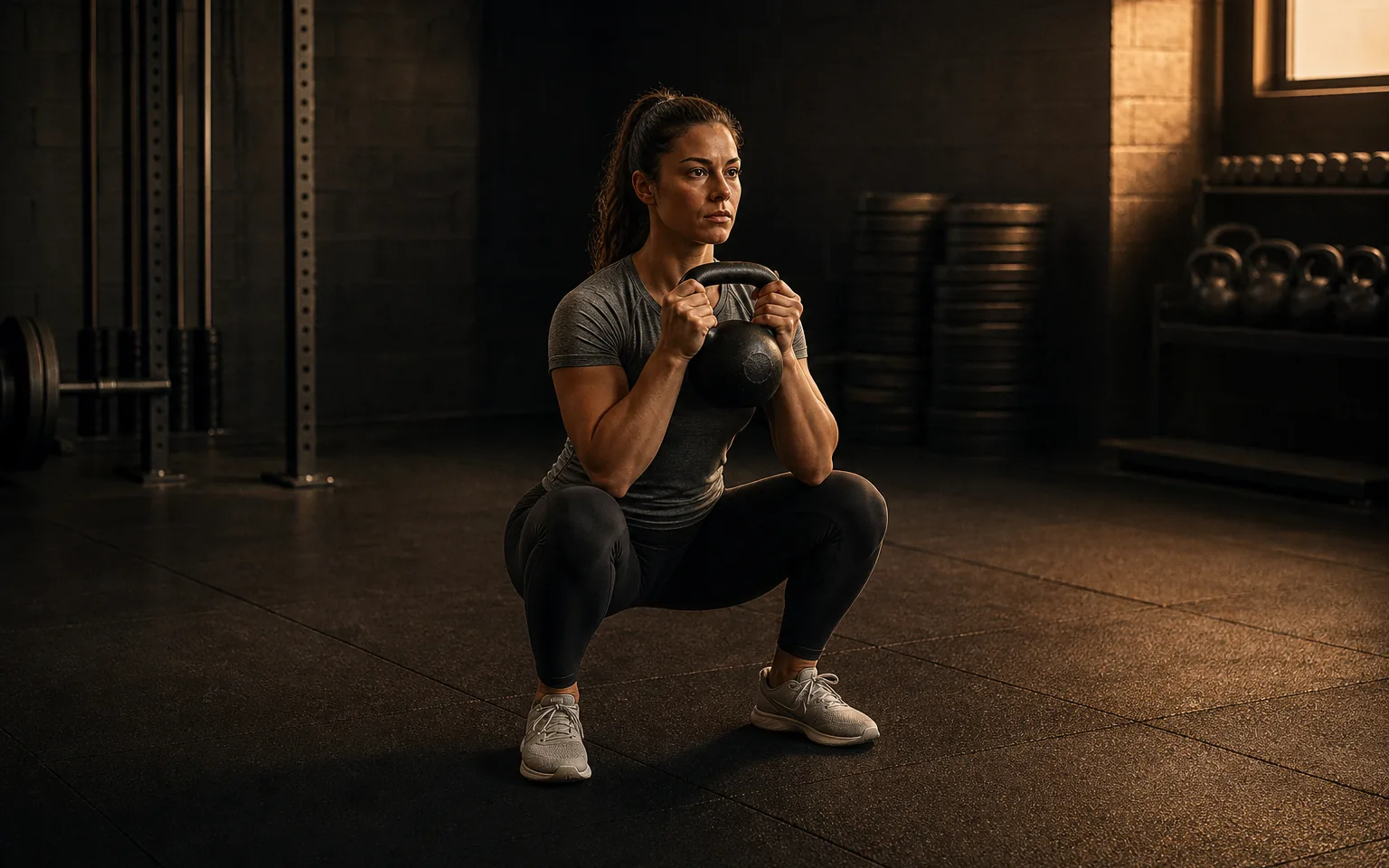
Hold the bell by its horns, with elbows angled down. Set your feet around shoulder-width, then brace your middle as if you’re about to lift a heavy grocery bag. Sit down between your hips. Let your knees track in the same direction as your toes, and keep both heels on the floor. Stand by pressing through your whole foot. Don’t push your hips so far forward at the top that your back arches.
Start with 2 or 3 sets of 8 to 12 controlled reps. If you’re using a timer, work for 40 seconds, then rest for 20 seconds. Stop the set when your squat gets shallow or your heels start to lift. A chair behind you can give you a depth target while you learn the pattern.
When the usual squat feels easy, slow the lowering part or pause near the bottom. A one-and-a-quarter rep adds a short rise before you return to the bottom, then stand. That makes each rep harder without changing the bell. For more ideas on building a full strength session, see these kettlebell exercises for muscle gain.
Keep your first set smooth. Depth comes before load.
2. Kettlebell Romanian Deadlift - Build hamstring and glute strength with a hip hinge
The Romanian deadlift trains the back of your legs through a hip hinge. You push your hips back while keeping a soft bend in your knees. Your hamstrings lengthen as the bell travels down, then your glutes help bring you upright.
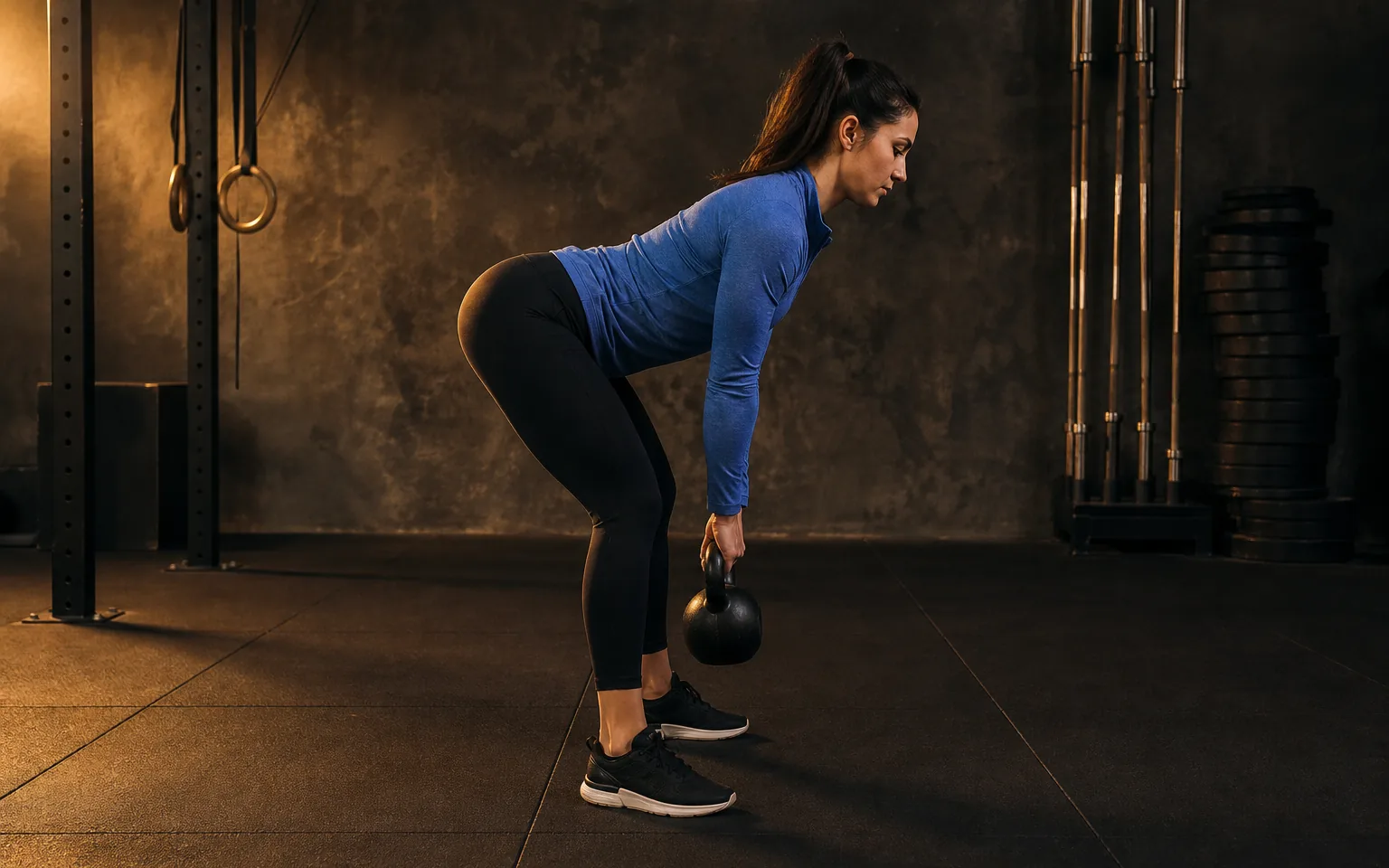
Hold the bell with both hands in front of your thighs. Keep your shoulders set and your spine long. Send your hips back as if you’re closing a car door behind you. Let the bell track close to your legs. Lower it only as far as you can while keeping your back steady and feeling a stretch in your hamstrings. Then press your feet into the floor and stand tall.
Try 3 sets of 8 to 10 reps, with enough rest to reset your grip and position. This is a strength set, not a race. If the bell reaches the floor before you feel a stretch, shorten the range rather than rounding your back to reach lower. If your knees bend more as you descend, pause and send your hips farther back.
For a short circuit, pair this hinge with goblet squats. Do 8 to 10 deadlifts, rest for 30 to 45 seconds, then do 8 to 10 squats. Repeat for 2 or 3 rounds. You can also use a 45-second work and 15-second rest timer, but choose a pace that keeps the hinge crisp. A clock is a prompt, not permission to rush.
Hybrid Fit Mom’s six-week plan builds movement practice across 24 sessions, with progressive home workouts and one kettlebell. If you’re weighing guided training against making each session up as you go, this overview of kettlebell programs for women and busy moms can help you compare the fit.
3. Kettlebell Reverse Lunge - Train each leg with a controlled, compact step
A reverse lunge trains one leg at a time while the step back gives you room to settle into the rep. Hold the bell at your chest, or hold it in one hand at your side if you can stay upright. Start with bodyweight if the added load makes your balance uncertain.
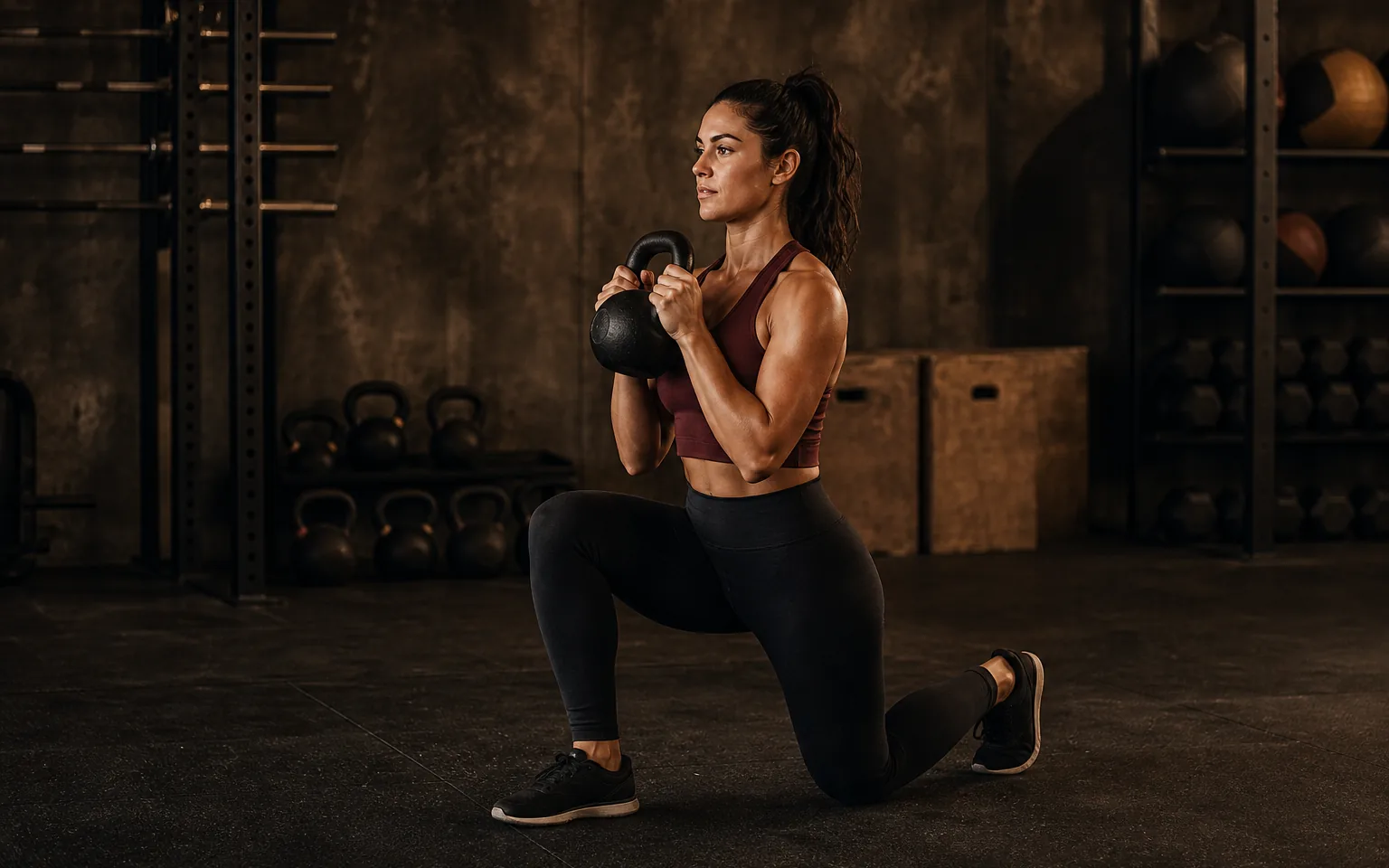
Stand tall, then step one foot back far enough to bend both knees. Keep your front foot flat and your front knee pointed in line with your toes. Lower only as far as you can control. Press through the front foot to return to standing, then repeat on the other side. Keep your feet on two separate tracks, rather than stepping directly behind the front foot like you’re walking a tightrope.
For strength, do 6 to 10 reps per leg for 2 or 3 sets. Switch sides after each set, or finish one side before you change legs. If you’re short on time, use 40 seconds of work and 20 seconds of rest. Keep the step small enough to stay steady; a bigger stride isn’t automatically a better rep.
Need an easier version? Hold a sturdy chair or counter with one hand and use a shorter range. If stepping back feels awkward, use a split squat instead: set your feet in place, lower straight down, then stand. That keeps the work on each leg without asking you to manage a moving step.
Reverse lunges can fit into an after-school workout because they need little space and no bench. Do the reps beside a clear wall, not near toys or a pet that has decided your workout is the day’s main event.
4. Single-Leg Kettlebell Romanian Deadlift - Challenge balance and unilateral strength
This one-leg hinge trains your standing-side hamstrings and glutes while asking your hips to stay level. It can show you where balance needs work. Use a lighter bell than you would for a two-leg deadlift, because staying steady is part of the task.
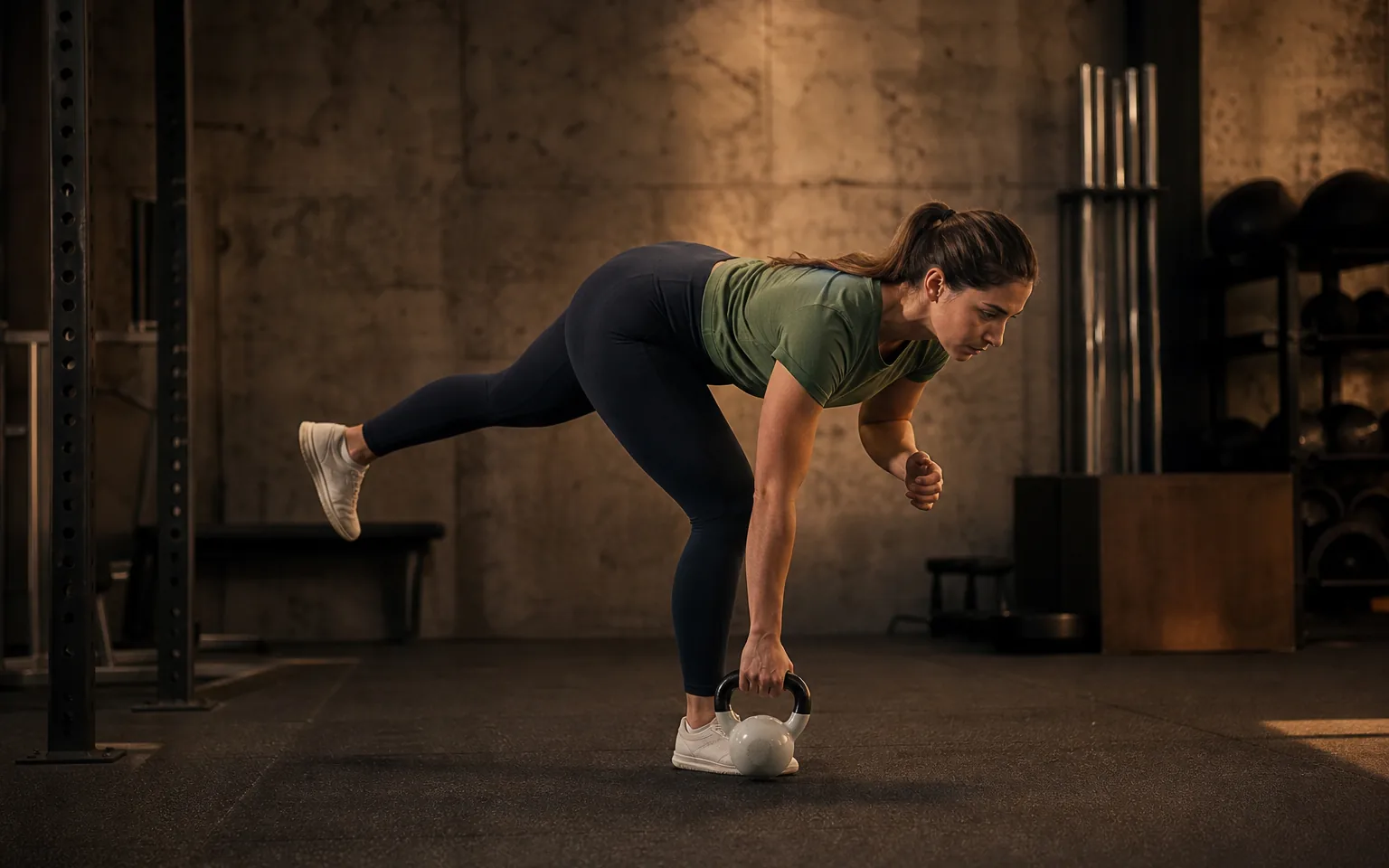
Stand on one foot with a soft knee. Hold the kettlebell in the hand opposite that leg. Hinge forward as your free leg reaches behind you. Keep your hips facing the floor and your spine long. The bell doesn’t need to touch the ground. Stop when you feel a hamstring stretch or your back is about to round, then press through the standing foot to rise.
Begin with 2 sets of 6 to 8 reps per side. If you wobble, use a kickstand stance: keep the toes of your back foot on the floor and most of your weight on the front leg. You can also rest your free hand on a wall. Those options let you practice the hinge without making balance the only thing you train.
Move slowly on the way down. If one hip opens outward, reduce the range and reset. Keep a simple note of reps for each side; don’t add weight until both sides feel controlled. For this exercise, a clean, repeatable rep beats a dramatic reach toward the floor.
Single-leg work fits well after your main squats or deadlifts. It adds a different challenge without needing another piece of kit.
5. Kettlebell Swing - Add a powerful hip-drive movement for strength and conditioning
The swing is a fast hip hinge, not a squat and not an arm raise. Your hips create the drive that sends the bell forward. Your arms stay soft, like straps, while your glutes and hamstrings power the movement. The pace can raise the effort of a session, so learn the hinge before adding speed.
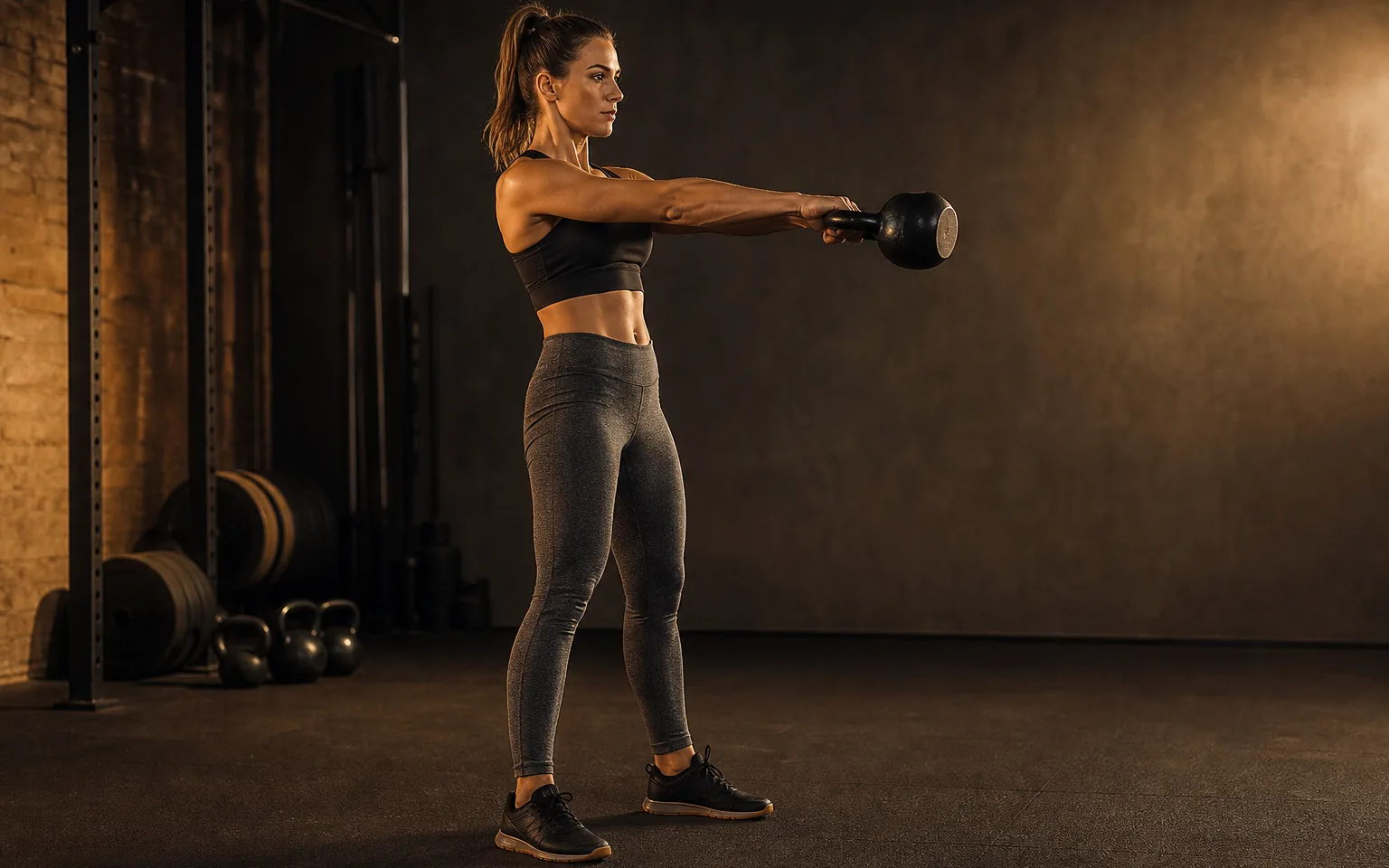
Set the bell a short step in front of you. Hinge back, grip the handle, and hike the bell between your thighs. Snap your hips forward to stand tall. Let the bell float to about chest height, then guide it back between your legs. Keep your spine long and your knees softly bent. Don’t lift the bell with your shoulders.
Try 5 sets of 10 reps with a rest that lets you breathe and reset. If you’re new to swings, practice the hip hinge with deadlifts first. A set should end before your back rounds or your arms start hauling the bell upward. Put the bell down safely between sets rather than dropping it into a cluttered room.
For a brief conditioning option, use 20 seconds of swings followed by 40 seconds of rest for 5 rounds. For a longer session, do 30 seconds of swings and 30 seconds of rest for 10 rounds. These are sample timings, not a test. If your form slips, stop the interval and rest.
Hybrid Fit Mom’s one-bell program pairs strength work with conditioning across six weeks. Its structure can help if you want training that progresses instead of a list of saved clips. Swings can raise your heart rate, but keep the movement clean before you chase a faster pace.
6. Kettlebell Lateral Lunge - Work your inner thighs and move in a different direction
The lateral lunge takes you side to side instead of forward or back. It trains your working leg while the straight leg gets a stretch through the inner thigh. Hold one bell at your chest, or start without a load until the side step feels steady.
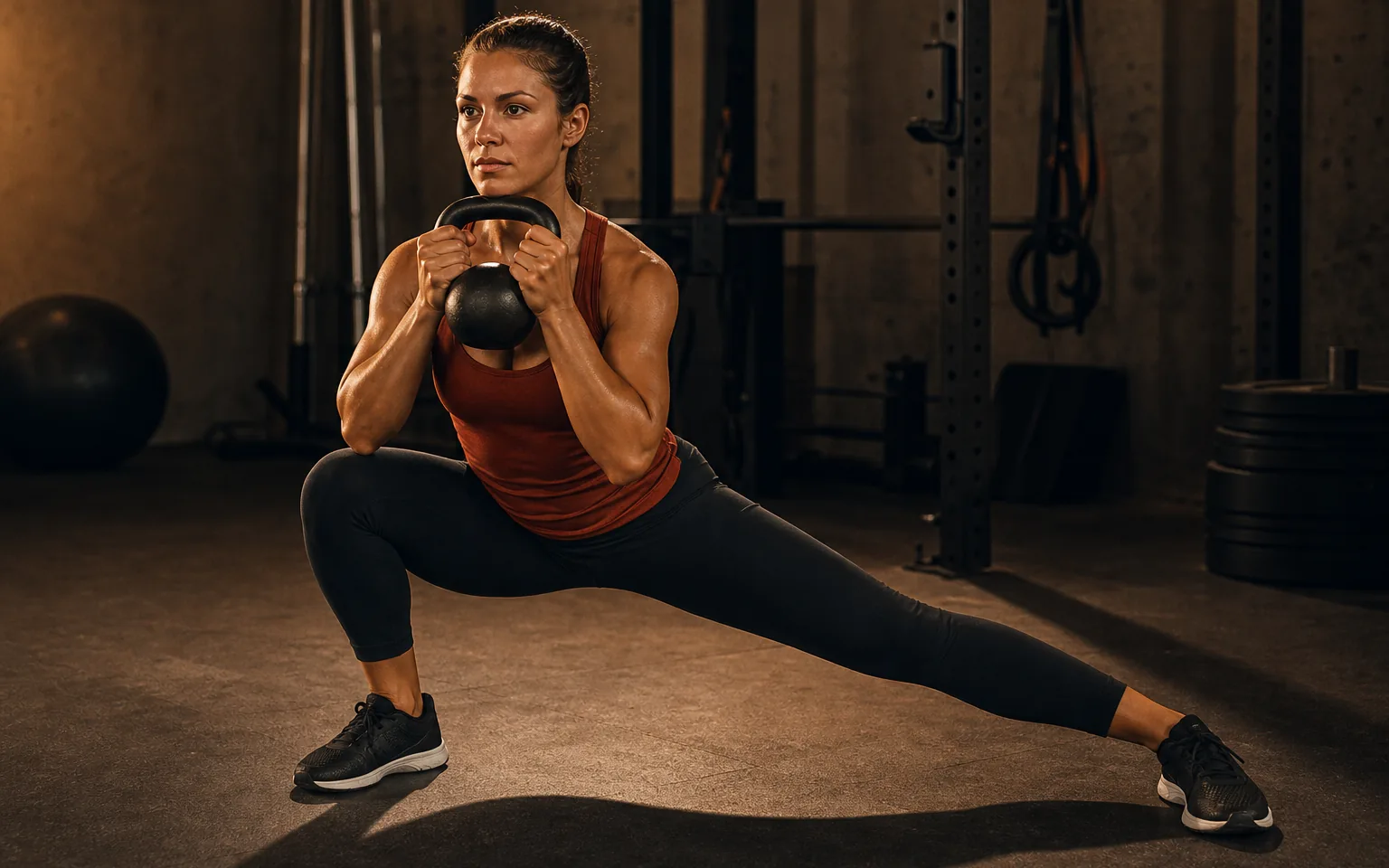
Stand with your feet under your hips. Step out to one side and sit your hips back over that leg. Bend the stepping knee while keeping the other leg long. Keep your chest lifted and your foot flat. Push through the bent leg to return to the start, then switch sides. Stay within a range that lets your knee follow your toes.
Start with 6 to 8 reps per side for 2 sets. If you want a timed format, work for 30 seconds and rest for 30 seconds. This move asks for more control than a straight-ahead squat, so don’t rush the switch. If your heel lifts or your knee caves inward, make the step smaller.
Use the table to pick a session length that fits your day. Warm up first with a few minutes of easy movement, such as marching in place, bodyweight squats, and hip hinges. Have your kettlebell, water, and a clear space ready. A sturdy chair can help with balance or serve as a depth target.
| Time available | Simple format | Best use |
|---|---|---|
| 5 minutes | Choose 2 moves. Work 40 seconds, rest 20 seconds, repeat once. | A short practice session. Keep the load manageable. |
| 15 minutes | Choose 4 moves. Do 2 rounds of 8 to 10 reps, resting as needed. | Strength work with room to reset between exercises. |
| 20 minutes | Choose 5 or 6 moves. Do 2 rounds with 30 to 45 seconds between sets. | A fuller session with squats, hinges, and single-leg work. |
Keep a record of the bell, reps, and sets you complete. When you can do every rep with control, add a rep or a set before moving to a heavier bell. Change one thing at a time. That makes it easier to tell whether your legs are adapting or your form is just getting hurried.
FAQ
Can you build leg strength with one kettlebell?
Yes, one kettlebell can support a useful leg-strength routine. Squats and deadlifts train both legs together, while lunges and single-leg hinges make each side work on its own. You can also change reps, sets, range, or tempo as you get stronger. Choose a load you can control, then progress without letting form fall apart.
How many times a week should I do kettlebell leg workouts?
Two leg-focused sessions per week is a sensible starting schedule for many people. Leave time between harder sessions so your legs can recover, and adjust based on your other training and energy. If your week is busy, one planned session is more useful than an ambitious schedule you can’t keep. Add another day when the first one feels routine.
What weight kettlebell should I use for leg exercises?
Pick a weight that lets you finish the planned reps with steady control. The right load may differ by exercise: you might manage a heavier bell for a two-leg deadlift than for a single-leg hinge. If you can’t keep your back steady or your balance goes, use a lighter bell or an easier variation.
Are kettlebell swings a leg exercise?
Swings train a hip hinge, with the glutes and hamstrings driving the bell. They also add a conditioning demand when you repeat them at a brisk pace. Keep your arms relaxed and use hip drive to move the bell. If you’re still learning the hinge, practice deadlifts first and build to swings once you can keep your back steady.
How can I fit a leg workout into a busy day?
Choose a short format before you start. A five-minute session can use two moves with timed work and rest, while a longer window can fit several exercises and more recovery between sets. Set out one kettlebell and clear the floor ahead of time. Hybrid Fit Mom’s six-week program gives you 24 guided sessions if you’d rather follow a set plan.
Conclusion
Choose two moves to start, such as goblet squats and Romanian deadlifts, and schedule your first session this week. If you want a guided plan with one kettlebell, Hybrid Fit Mom’s strength and conditioning program includes 24 sessions over six weeks, with one-time payment and lifetime access. Start with the first workout and build from there.