Best Kettlebell Full-Body Workouts for Busy Women

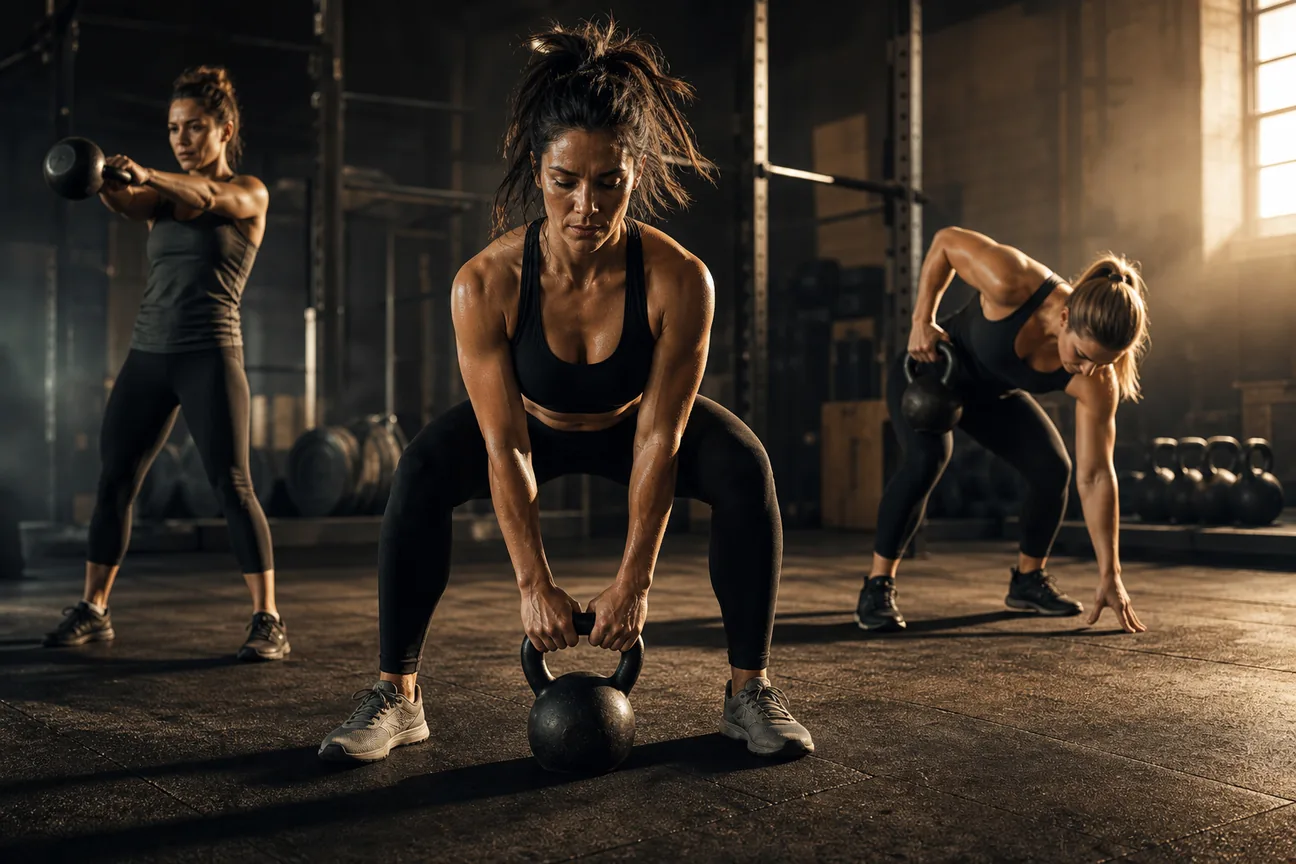
Grab one kettlebell and clear a little floor space. Kettlebell full body workouts can fit into a busy week, but the right format depends on how much time and structure you need.
An analysis of 59 comments and questions from Reddit, YouTube and Quora about kettlebell FULL-BODY workouts found that 27% mentioned the relative effectiveness of kettlebell training.
Here are five options, from a 15-minute circuit to a progressive six-week plan. Hybrid Fit Mom is mentioned as a useful resource, but the numbered picks are workout formats you can choose from.
1. 15-Minute Single-Kettlebell Full-Body Circuit: A Short, Women-Focused Session
A 15-minute circuit is a short home session built around one bell and timed work periods. It suits you when the day has a narrow gap, but you still want to train your legs, hips, upper body, and core.
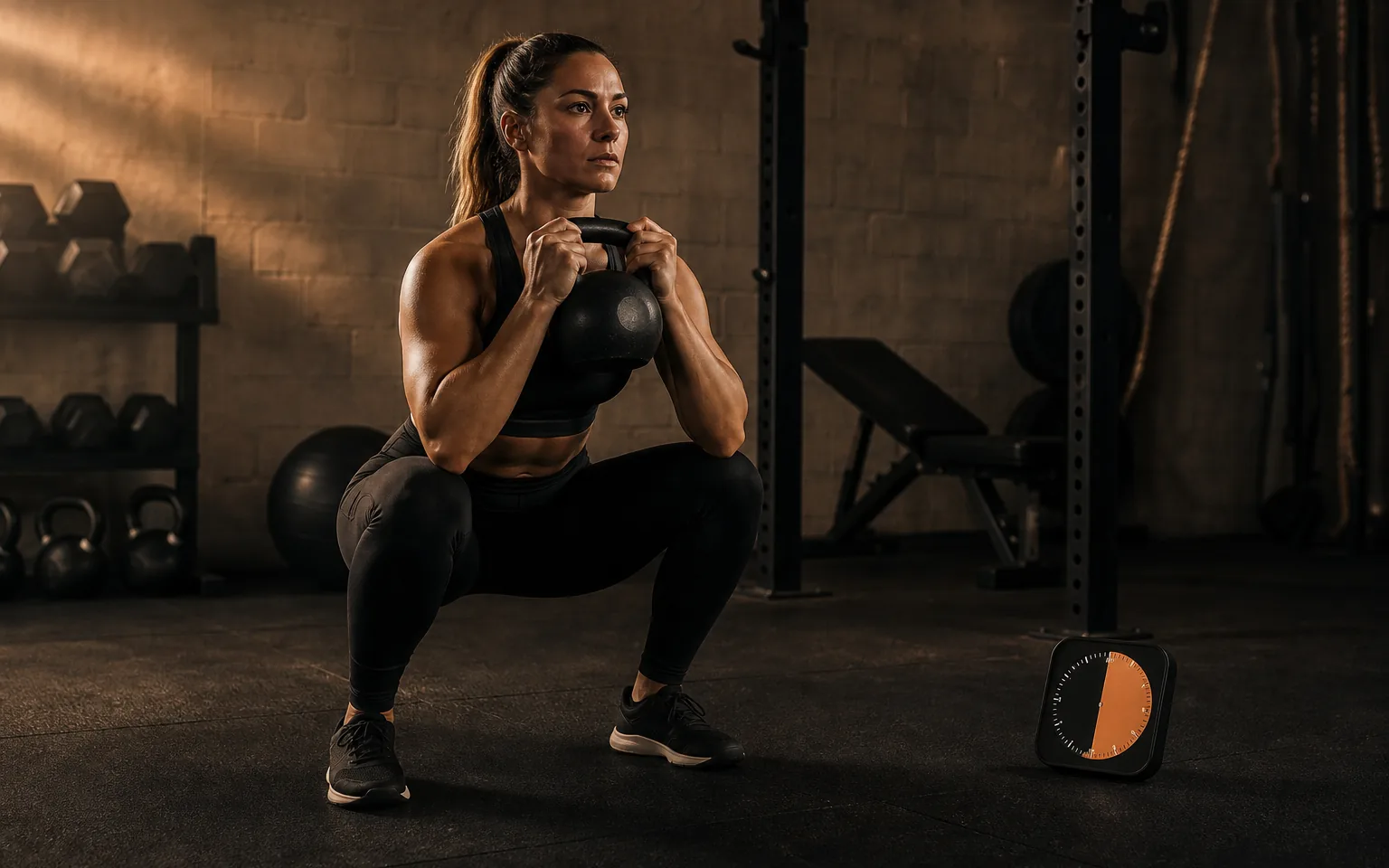
One workable format pairs a strength move with swings, then gives you a short rest. For example, alternate 30 seconds of goblet squats with 30 seconds of swings. Next, do a reverse lunge, then swings again. Continue with rows and a press, switching sides where needed. The exact pairing can change, but keep the swing only if your hinge stays crisp.
Keep the bell close during the squat and brace your middle before each rep. For swings, send your hips back as if closing a car door with your hips, then stand tall. Your arms guide the bell; your hip drive moves it. A swing is a hinge, not a squat.
Use a weight you can control through every rep. If you lose your neutral spine or pull the bell up with your shoulders, pause and reduce the load or swap swings for deadlifts. A chair can support a one-arm row if balance is an issue. The kettlebell’s offset weight and handle design allow it to be used for both controlled lifts and dynamic movements.
Do a brief warm-up first. March in place, practice bodyweight hinges, and do a few easy squats. The circuit should leave you worked, not rushed into sloppy reps.
2. 35-Minute One-Kettlebell Full-Body Workout: A Three-Day Weekly Plan
This option uses one bell for three full-body sessions each week. It suits you if you want a repeatable plan with room for recovery between workouts, rather than a different saved video every day.
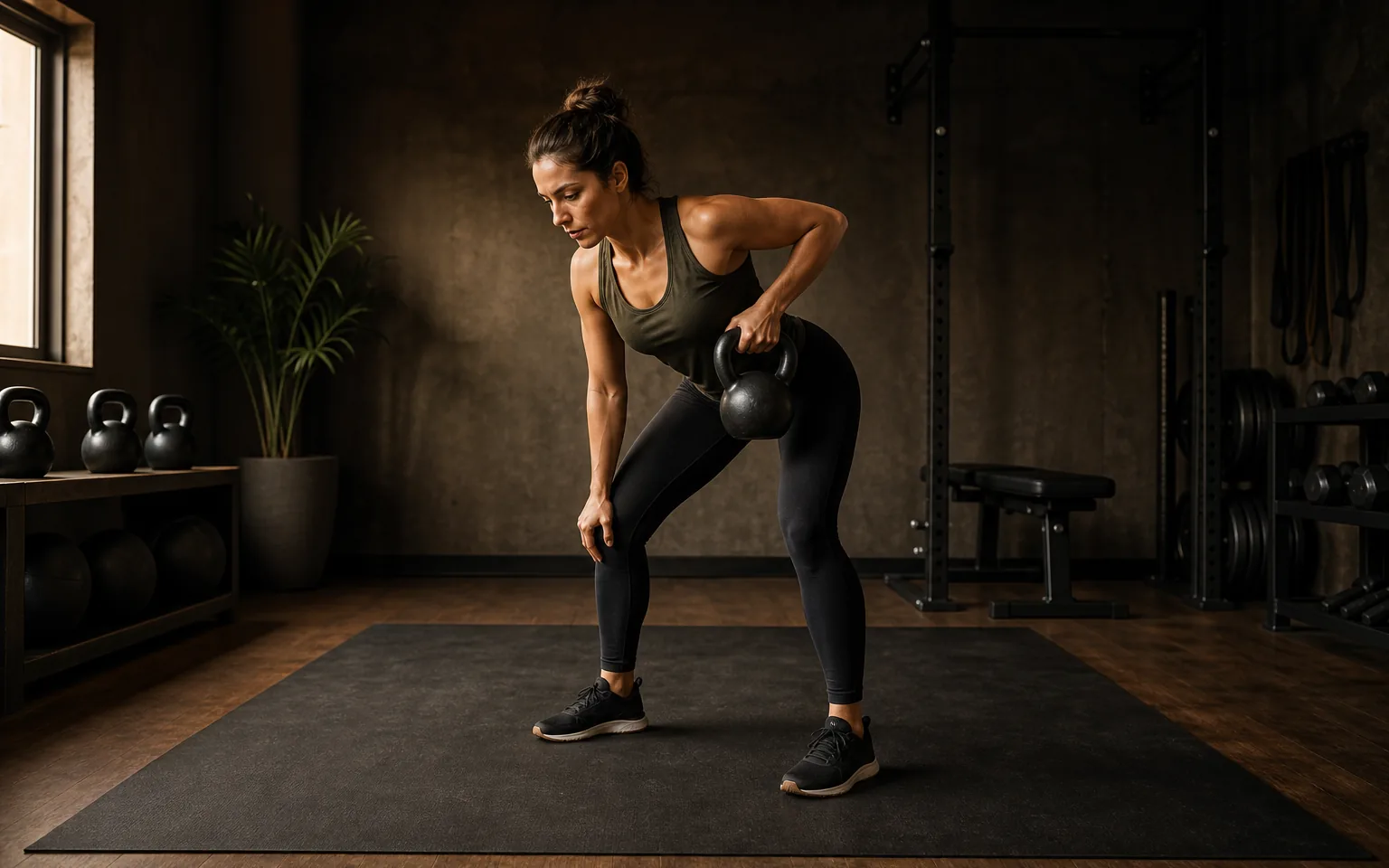
A simple A/B schedule can help keep the week organized. Train A on Monday, B on Wednesday, then A on Friday. The next week, start with B. Each session can use a squat, a hinge, a press, and a row. Pick a few sets for each movement and rest enough to keep the next set controlled.
For Workout A, try goblet squats, two-hand swings, a one-arm press, and a supported row. Workout B might use reverse lunges, single-arm swings if you have the skill, floor presses, and rows. If swings are not yet steady, use kettlebell deadlifts instead. That keeps the hinge pattern without adding speed.
One bell has a trade-off: the load that feels right for squats may be too heavy for strict presses. Choose based on the movement you find hardest to do safely. A simple working-weight check can help you think about load and progression without rushing to buy more gear.
Keep a small log: exercise, bell weight, reps, and whether the last rep stayed smooth. When you can complete your planned reps with steady form, add a rep or increase the load if you have a suitable heavier bell. Don't add weight just because the calendar changed.
Set your bell on a clear, stable floor, with enough room to swing without hitting furniture. A session can take longer than 35 minutes if you need extra rest; preserving form matters more than racing the clock.
3. 35-Minute Four-Day Kettlebell Workout: A Structured General-Strength Option
A four-day schedule gives each workout a clear job, often by alternating upper- and lower-body emphasis. It can suit women who already train regularly and can protect time for several sessions each week. If work or family plans shift often, three sessions may be easier to keep.
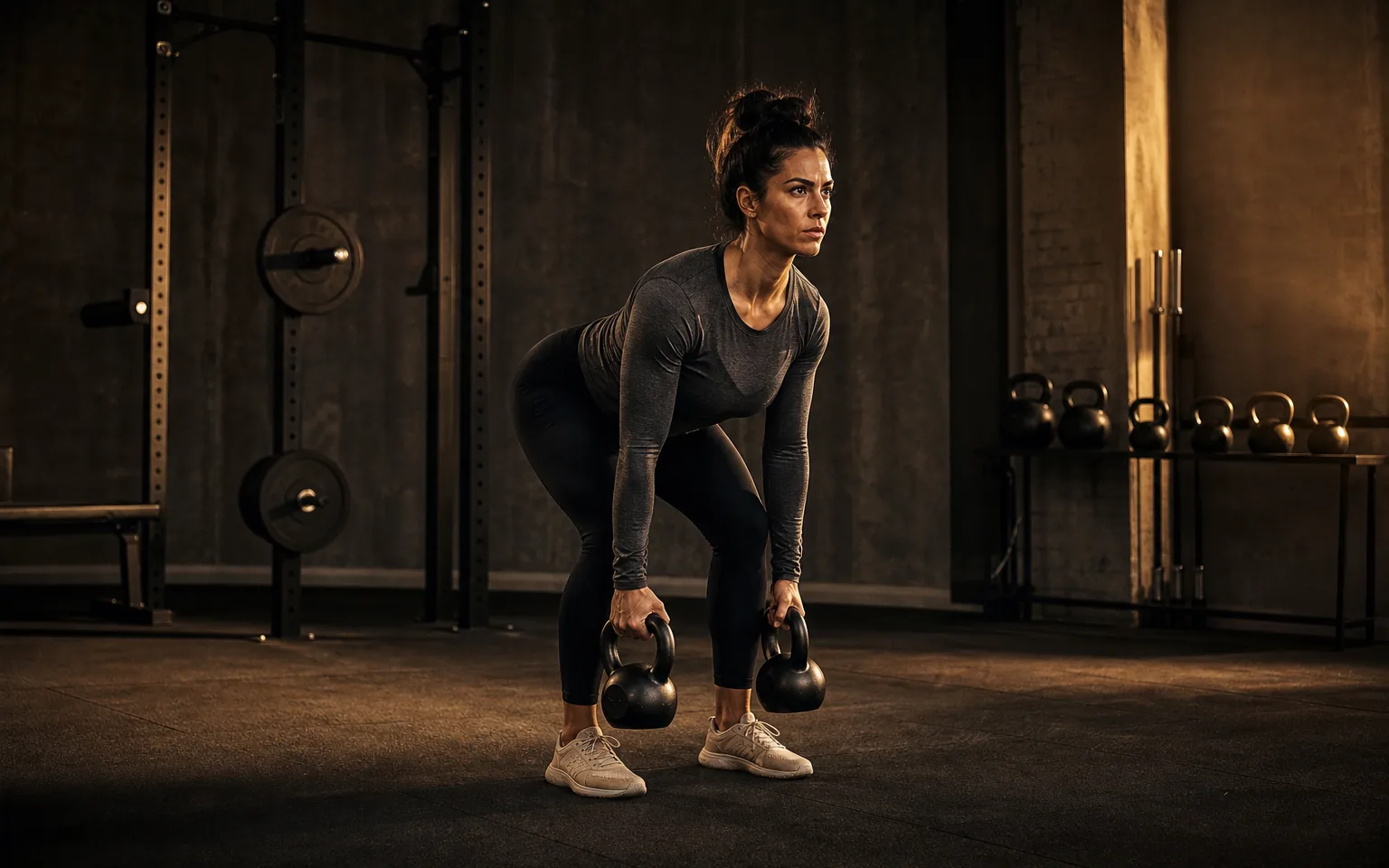
One weekly layout is lower body on Monday, upper body on Tuesday, rest on Wednesday, then repeat the two themes on Thursday and Saturday. Each day still uses full-body patterns, but one area gets more work. A lower-body day might lead with goblet squats and deadlifts, then add rows and a carry. An upper-body day could lead with presses and rows, then include lighter squats or hinges.
Use deliberate reps for strength work. Lower the bell with control on squats and presses. Keep your ribs stacked over your hips when pressing overhead; if your low back arches, the load may be too heavy or your brace may have slipped. On swings, keep your shins fairly upright and drive from the hips.
A four-day setup is not automatically better. A general-strength plan may use four sessions, but your recovery still sets the pace. Start with fewer sessions if you're returning after a break, then add a day when sleep and energy remain steady. A link to weekly activity guidance doesn't mean every person needs four lifting days.
Hybrid Fit Mom’s six-week program gives busy women a set progression instead of a loose collection of workouts. The program has four weekly sessions, with three sessions lasting 30 to 40 minutes and a shorter core day around 20 minutes. Mari Grossi demonstrates the movements, and the program also includes an eating framework and lifetime access. If you’re weighing different home plans by time, coaching, and equipment, compare kettlebell programs for women and busy moms.
If you're considering training before breakfast or between errands, choose food that sits well with you. Your food choices before training can depend on timing and the workout.
4. Swing-and-Turkish Get-Up Workout: A Minimalist Strength-and-Mobility Pair
This two-move format pairs a fast hip hinge with a slow floor-to-standing movement. It suits you if you have basic kettlebell skills and want a compact session that asks for power, control, and shoulder stability.
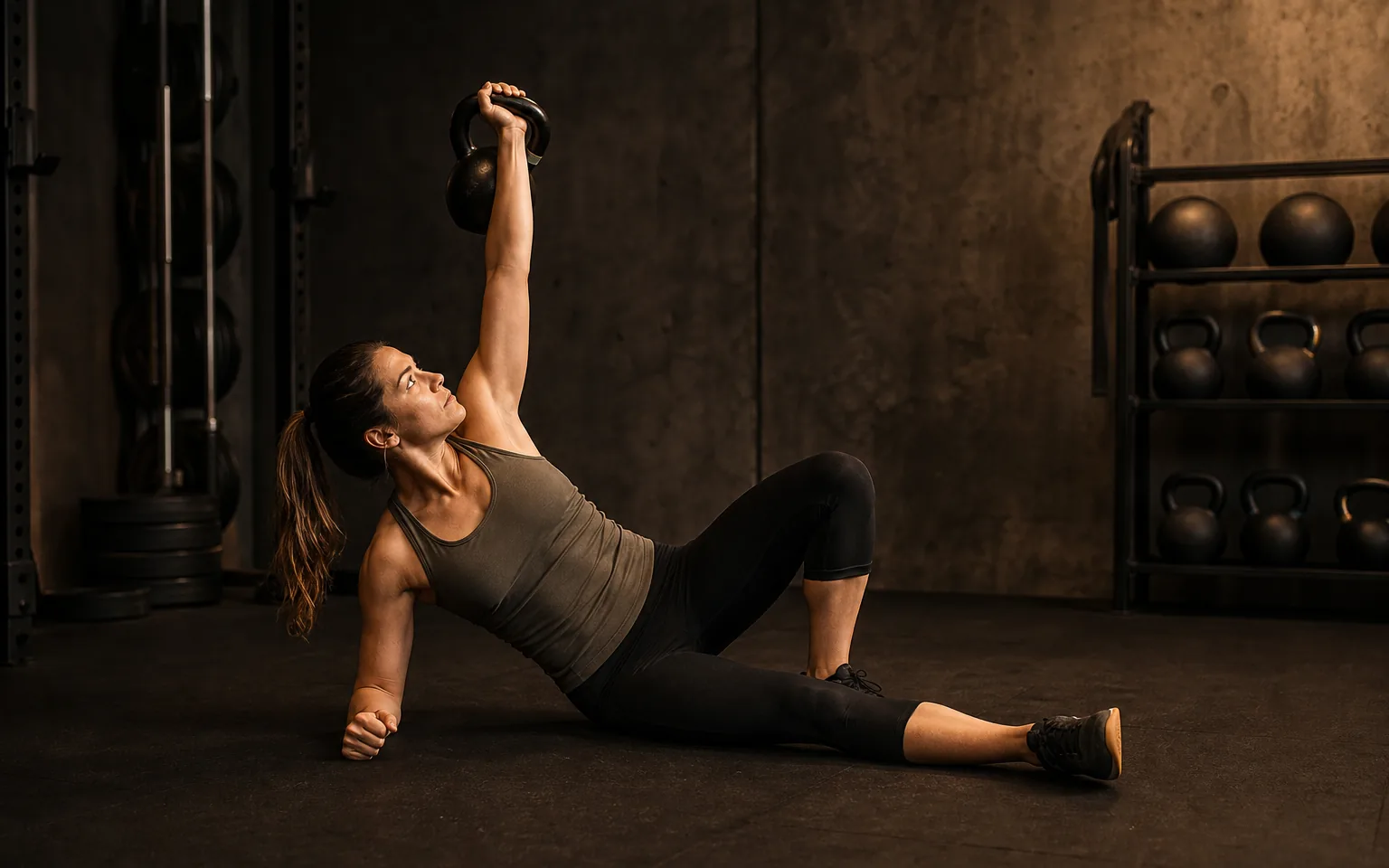
Start with a few easy swings to warm up the hinge, then alternate short sets of swings with one Turkish get-up per side. Rest as needed. Keep the get-up slow enough to notice each position: roll to your elbow, press to your hand, lift your hips, sweep the leg through, then stand. Reverse the steps with control.
Start the get-up with a light bell or no load until the sequence feels clear. Keep your wrist straight and shoulder packed, meaning the shoulder stays firm rather than sinking toward your ear. If you cannot hold the bell steadily while moving from the floor, set it down and practice the positions without weight.
For swings, stop the set before your hinge changes or your grip starts to fail. This is power work, not a contest to see how long you can keep moving. A simple starting session could use a few sets of 8 to 10 swings, then one controlled get-up per side, repeated for several rounds. Add rounds only when the quality stays consistent.
Simple & Sinister is a minimalist training approach centered on one-arm swings and Turkish get-ups. Its progression works toward performance standards, so treat it as a longer-term practice rather than a quick workout challenge. This pair can be a good fit when you value skill and repeatable basics over lots of exercise changes.
Don't put heavy swings on back-to-back days. Your grip and hips need a chance to recover, especially if you are still learning to keep the bell close on the backswing.
5. Kettlebell Kickboxing Workout: A Cardio-Focused Full-Body Choice
Kettlebell kickboxing blends martial-arts movement patterns with kettlebell work. It suits you if you enjoy changing moves and want a more cardio-focused session than a slow strength workout.
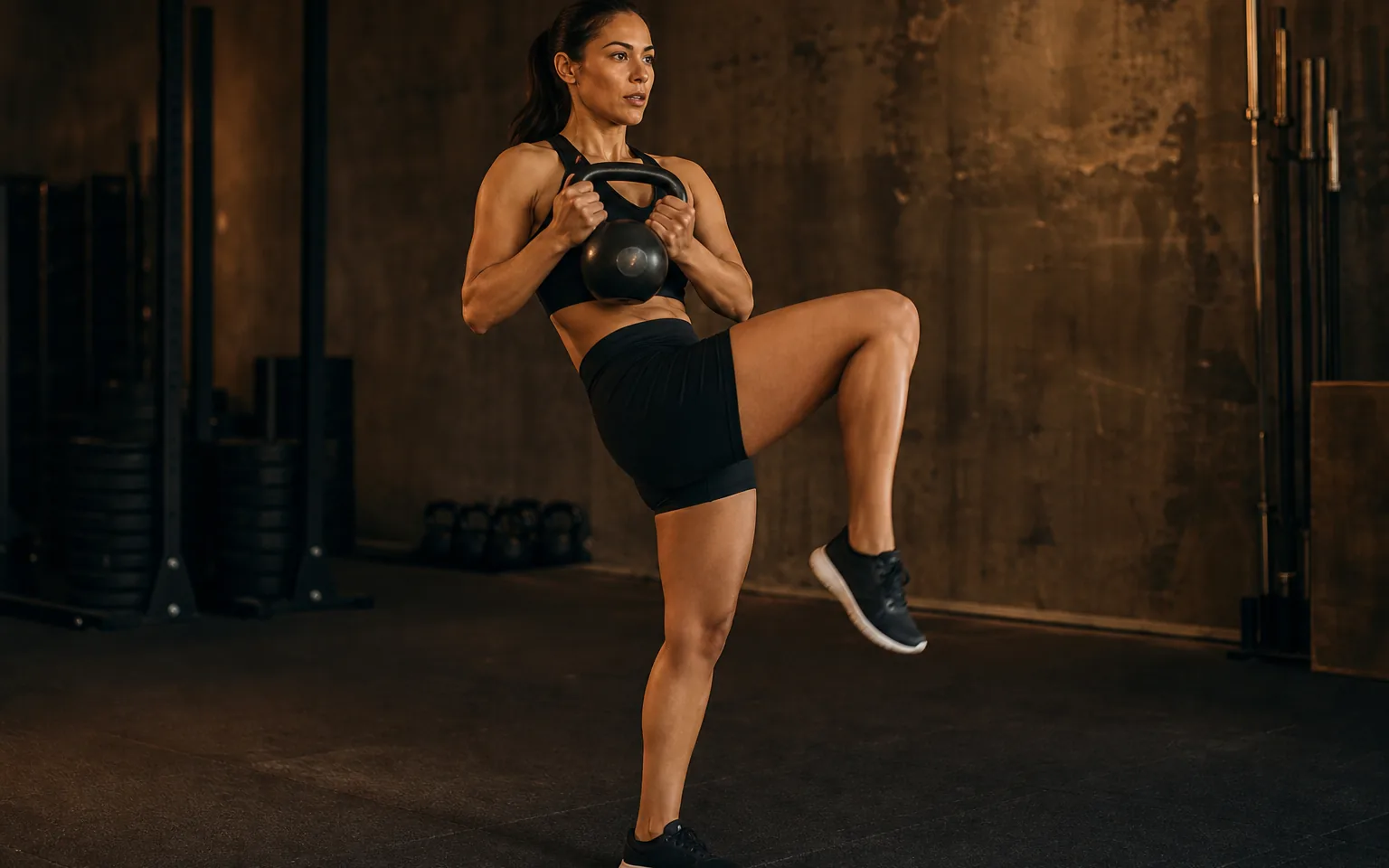
A class or video may combine punches, steps, kicks, and bell movements in timed rounds. The pace can raise your breathing rate, so learn the movement without a bell first when coordination is new. Then add a light load only to moves where you can control the bell and keep your stance steady.
Don't assume that a fast routine replaces strength training. If building strength is a main goal, include slower squats, presses, and rows elsewhere in your week. Kicking and punching patterns can add movement variety, but they aren't a reason to swing a bell overhead when your shoulder or timing isn't ready.
Kettlebell Kickboxing is a cardio-focused format built around martial-arts patterns and kettlebell training. The name covers a style, not one fixed workout template, so check the actual session structure before choosing it. Look for clear demonstrations and enough time to learn each move.
Use a clear area and avoid loose rugs or clutter. If a combination gets confusing, slow it down or remove the bell. A session should challenge your fitness without forcing you to guess where your hands or feet go next.
Kettlebell Full-Body Workout Comparison: Time, Frequency, and Focus
Use this comparison to match the format to the week you actually have. Time estimates describe the formats in this shortlist, not a promise that every session will take exactly that long.
| Workout format | Typical time | Weekly fit | Best match |
|---|---|---|---|
| Short single-bell circuit | About 15 minutes | Use when time is tight | A quick full-body session |
| One-bell strength plan | About 35 minutes | Three sessions | Repeatable home training |
| Four-day strength split | About 35 minutes | Four sessions | Regular training weeks |
| Swing and get-up pair | Flexible | Allow recovery between hard sessions | Power and movement control |
| Kickboxing format | Varies by session | Use as a cardio-focused day | Timed, varied movement |
Schedules matter as much as exercise choice. A 35-minute workout four times a week can be a bigger demand than one short session suggests. Choose the fewest sessions you can repeat without scrambling to recover.
FAQ
Can a 15-minute kettlebell workout be enough?
Yes, a 15-minute workout can be useful if you train with control and repeat it consistently. Pair a squat or lunge with a hinge, then add a push or pull. Use a short warm-up first. If the bell makes your form break down, reduce the load or choose a slower exercise instead of trying to squeeze in more reps.
How many days a week should I do kettlebell workouts?
Two or three days a week is a reasonable place to start for full-body training, with rest between harder sessions. Four days can work if you're already training and recover well. Your schedule matters too. A plan you can follow during a busy week is more useful than an ideal schedule that keeps getting skipped.
What weight kettlebell should a woman start with?
Choose a bell you can control in the hardest movement you plan to do, often an overhead press. Test a few careful reps before using it for a full session. If you lean back, lose your brace, or can't lower the bell with control, use a lighter one. One weight won't feel equally easy for every exercise.
Are kettlebell swings safe for beginners?
They can be, once you can hinge at the hips without rounding your back. Practice the hinge with a deadlift first, then learn to hike the bell back and drive your hips forward. Keep your arms relaxed and stop if your back position changes. If the swing still feels uncertain, use deadlifts while you build the pattern.
Can one kettlebell train the whole body?
Yes. One bell can load squats, hinges, presses, rows, carries, and floor movements. The main challenge is choosing a load that works for both lower-body and upper-body exercises. Adjust reps or use a slower lowering phase when the bell feels light, and don't force a press with a weight you can't control.
Conclusion
Choose the shortest plan you can repeat with good form, then follow it long enough to build skill and strength. If you want a guided home schedule, see the Hybrid Fit Mom six-week kettlebell program, then set aside your first training slot this week.