What Weight Kettlebell Should a Woman Use?

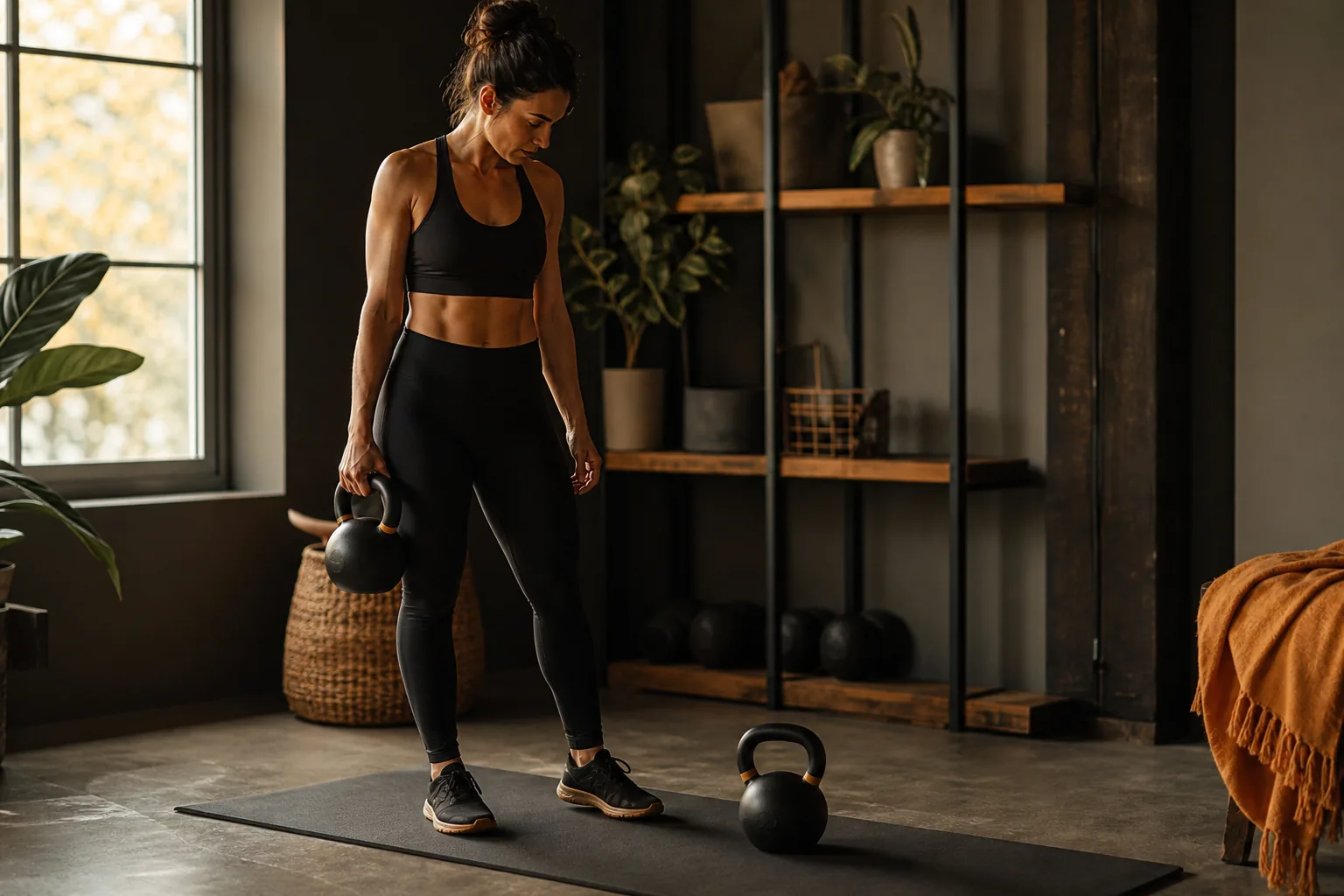
Staring at the kettlebell rack and wondering which bell is yours? For many women new to kettlebells, a sensible starting range is 8 to 12 kg (18 to 26 lb), but the right weight depends on the move and your skill. Here’s how to choose a load you can control, then build from there.
An analysis of 50 comments and questions from Reddit, YouTube and Quora about kettlebell weight for women found that 12% mentioned proper technique and injury prevention.
Why One Kettlebell Weight Won’t Fit Every Exercise
The short answer to what weight kettlebell should a woman use is: it depends on the exercise. A two-hand swing uses your hips and legs to move the bell. A strict press asks your shoulder to lift it slowly. One weight won’t feel the same in both moves.
For a broad beginner starting point, kettlebell guidance often puts many women around 8 to 12 kg, or 18 to 26 lb. Choose toward the lower end if kettlebell movements are new to you. That range is a starting point, not a rule based on gender or body size.
Your hips can often handle more load than your shoulders. During a swing, your arms guide the bell while a sharp hip drive sends it forward. During a press, your shoulder and arm must control the full lift. Get-ups also ask for balance and control, so the working weight may be lighter still.
If you’re comparing bells for home use, the guide to choosing a kettlebell size can help you think through your first purchase. You may end up using one bell for swings and squats, then a lighter one for presses or get-ups.
A bell’s handle matters, too. It should sit in your hand without pinching, and you should be able to hold it without your grip giving out first. Cast iron bells can change in overall size as their weight goes up. Competition-style bells tend to keep a more consistent shape across sizes, which can make the rack position feel more alike as you progress.
If you’re inactive, a gradual approach can help: start with small amounts of activity and build up over time. That’s a sound approach here, too: learn the movement before you chase a heavier number.
How Experience and Form Change a Sensible Starting Weight
Your past training counts, but it doesn’t tell the whole story. If you’ve lifted weights before, you may have good general strength. Kettlebells still ask you to control an off-center load and learn new positions. A strong barbell squat doesn’t automatically mean a heavy kettlebell swing will feel smooth.
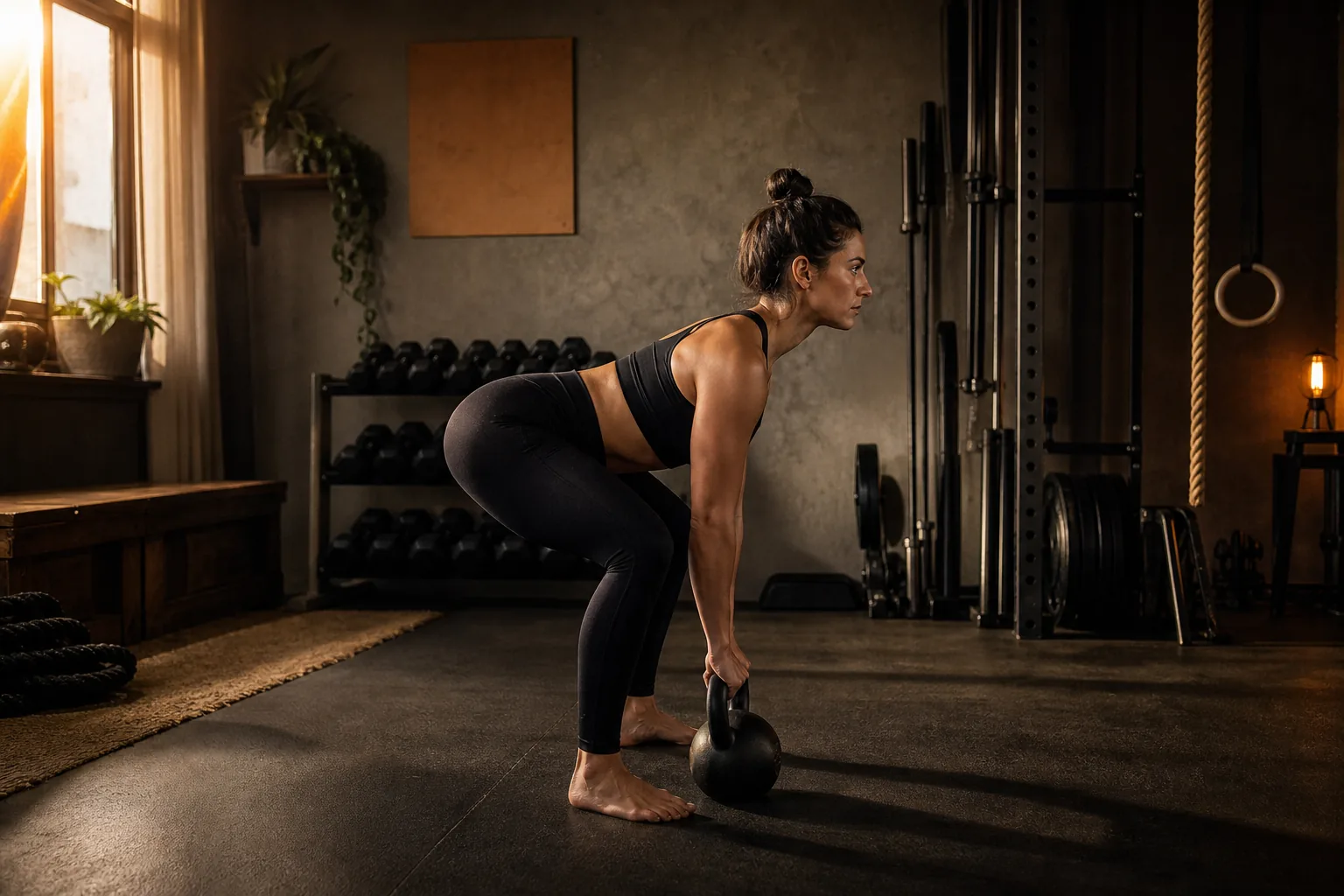
If you’re new to strength training as well as kettlebells, try the lighter end of the range first. You should be able to pick the bell up from the floor with a steady back and set it down with control. For the swing, learn the hip hinge without weight first. The same hips-back setup appears in a controlled kettlebell deadlift. Push your hips back while keeping your spine long, then stand tall by driving your hips forward.
Women’s programs don’t all point to the same first bell. Some guidance starts women around 8 to 12 kg, while some short beginner programs suggest 10 to 15 lb. That gap is a reminder to check the exercise and the plan, rather than treating one number as universal.
What matters in the first session is how you move. Can you keep your wrist straight in the rack position? Can you brace your middle without leaning back? If the bell pulls you off balance or your back rounds, use a lighter load or return to an unloaded version.
If you have a health condition, pain, or a recent injury, ask a health professional about training before adding load.
There’s no prize for starting with the heaviest bell you can lift once. You need a weight you can repeat with sound form, even when you’re fitting a session between work and family duties. If you can’t keep your wrist, back, and grip steady, that bell is too much for today.
What a Kettlebell Should Feel Like in Common Movements
A good test is simple: try 10 controlled reps of a familiar move, then ask whether you could repeat the same form for a few more. You want a clear effort, not a scramble. Stop if the bell causes pain or makes you lose control.
Swings
For a swing, the bell should move because your hips snap forward, not because your arms lift it. Start with a solid hinge. Keep your arms loose as guides, then let the bell swing back between your thighs. Your back stays long, and your feet stay planted.
A bell that’s much too light may tempt you to raise it with your shoulders. One that’s too heavy can pull your back out of position or slow the hip drive. Try a set of 10 with a weight that lets you move the bell briskly and stop when you choose. The kettlebell swing form cues can help you check your hinge and bell path.
Goblet squats
Hold the bell close to your chest, with both hands on the handle or horns. Sit between your hips while keeping your heels down and your chest steady. The bell should help you stay balanced, not tip you forward. If you can’t reach a comfortable depth without your heels lifting, use a lighter bell or practice the squat without weight.
Presses, cleans, and get-ups
These moves need more control in your hand and shoulder. In a press, keep your ribs from flaring as the bell travels overhead. In a clean, the bell should land softly at your shoulder, not bang against your wrist. For a get-up, move slowly and keep your eyes on the bell. Pick a lighter weight than you’d use for swings.
Different loads for different lifts are normal. A two-bell home setup may help later, but you can start with one and choose moves that suit it. Mari’s coaching at Hybrid Fit Mom also puts form before load progression: once your planned reps stay controlled, you can add a rep or increase the weight.
Signs Your Kettlebell Is Too Heavy or Too Light
Your form gives you better feedback than the number printed on the bell. Watch how the last reps look, not only how the first one feels. If your position changes as you tire, stop the set and adjust the load, the reps, or the rest.
It’s too heavy if…
- Your back rounds during a hinge or swing.
- Your shoulder lifts toward your ear during a press.
- You can’t keep a firm grip or a straight wrist.
- You rush the lowering part of a squat or press because the bell feels hard to control.
- You feel pain, or the bell knocks into your arm during a clean.
For swings, a heavy bell may also make you squat the bell down instead of sending your hips back. Put it down. Rest, then try a lighter load or practice the hinge without a bell.
It’s too light if…
You can do many more reps than planned without slowing down, and the movement feels easy from start to finish. In a swing, the bell may float up while your hips barely work. That’s a sign to test a heavier bell, provided your hinge is already sound.
Progress based on your reps and form, not a fixed number of weeks. First, reach the top of your planned rep range with steady control. Then add a rep or try the next bell for a small set. Kettlebell sizes often jump by several pounds, so a new bell can feel like a big change. Keep the old weight nearby while you test it.
Some programs use a faster progression rule. For example, some suggest adding 2.5 to 5 lb when sets feel easy. That’s one program’s cue, not a deadline for everyone. Hybrid Fit Mom’s six-week plan uses controlled reps as the cue to add a rep or raise the load.
Choosing a Usable Home Setup for Busy Women
You don’t need a wall of bells to begin. Start with one weight that suits the moves in your plan. If your swing weight feels too heavy for presses, use bodyweight work for the press pattern while you build strength, or add a lighter bell when you’re ready.
Think about where you’ll train. A fixed cast iron kettlebell is a straightforward choice if you have room to store it. Vinyl-coated bells may be kinder to floors, while an adjustable bell can take up less storage space. Adjustable designs can feel bulkier, so check that you can hold and move one comfortably before buying.
One short circuit can fit into a crowded day, but a quick workout doesn’t always mean a simple equipment list. Some 10-minute programs call for more than one kettlebell size. Longer sessions may give you more time to work at a steady pace, but only choose a plan you can return to next week.
That’s where structure helps. A saved video can show a move for today, but it won’t tell you what to do next week or when to add load. Hybrid Fit Mom’s self-guided program runs for six weeks with 24 sessions, or four per week. It includes prerecorded demonstrations, an eating framework, and lifetime access for a one-time $29 purchase, with a 14-day refund.
The program doesn’t set one starting weight for every woman. Instead, choose a bell you can use for the planned movements, then follow the form-based cue to add reps or load. Mari Grossi is a Weightlifting L1 certified coach, a teacher, and a mother of two. Her guidance is built around training women who want to age like athletes, not around chasing a bigger bell for its own sake.
For your home plan, choose a schedule you can repeat around work and family, and keep your weekly routine practical. Two sessions you can keep doing beat an ambitious setup that stays in the closet.
Before you buy another size, track the bell you used and how each set felt. If your lower-body work is easy while presses still need focus, your next purchase may be a heavier bell for swings and squats, not a matched pair.
Frequently Asked Questions
What weight kettlebell should a beginner woman start with?
Many beginner women can start around 8 to 12 kg (18 to 26 lb), then adjust for the movement and their experience. If you’re new to strength training, try the lighter end and focus on control. A swing may call for a different load than a press. Treat the range as a starting point, not a rule for every woman.
Is 10 lb too light for a kettlebell?
A 10 lb kettlebell can work for learning a press or another controlled movement, especially if you’re new to lifting. It may be too light for a strong two-hand swing if your arms do most of the work. Test the movement. If you can keep good form and the set feels easy, try a heavier bell.
Should I use the same kettlebell weight for swings and squats?
You can use the same bell for both if you can control it through each movement. But a weight that feels right for a goblet squat may not suit a press, and a swing may need more load than an overhead move. Match the bell to the exercise, and don’t force every movement to use one weight.
When should I move up to a heavier kettlebell?
Move up when you can finish your planned reps with steady form and still control the bell. Try the next size for a short set before using it throughout a workout. If your back rounds, your grip slips, or your shoulder position changes, go back to the previous weight and build more reps first.
Do women need lighter kettlebells than men?
No single weight rule applies to all women or all men. Strength, movement skill, grip, and the exercise itself all affect the load you can control. Many women start in the 8 to 12 kg range, but a woman with training experience may use more. Choose by your form and the task, not by gender alone.
Conclusion
Start with a bell you can move with control, often 8 to 12 kg for women new to kettlebells, and choose a lighter load for presses or get-ups. Test 10 reps of a familiar move before building your workout around it. When your form stays steady, add a rep or try the next size.