What Size Kettlebell Should a Woman Start With?

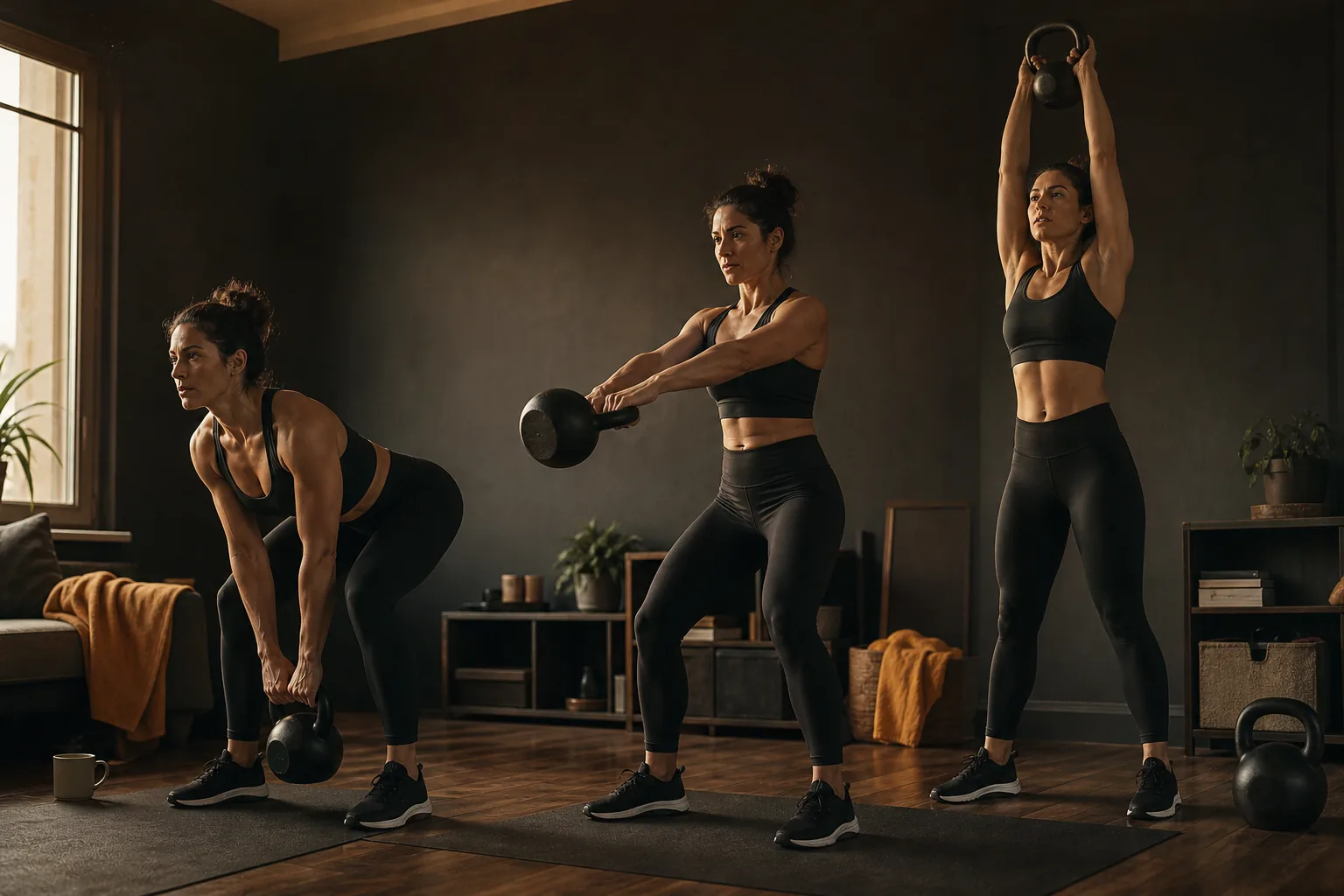
If you’re choosing between an 8 kg and a 12 kg kettlebell, start with the moves you plan to do. For many women new to kettlebells, 8 kg (18 lb) is a useful first weight for hip hinges and two-hand swings. Presses and get-ups often call for a lighter bell, while stronger lifters may start heavier.
An analysis of 35 YouTube comments about starting kettlebell weight for women found that 20% mentioned adjustable kettlebell solutions.
The Best Starting Point for Most Women: Around 8 kg (18 lb)
An 8 kg (18 lb) kettlebell is a sensible starting point for many women who are new to kettlebell training but already move regularly. It’s heavy enough to feel during a basic hinge or two-hand swing, yet light enough for many beginners to practice control. It’s a starting point, not a rule about what women can lift.
Several guides place women’s first kettlebell in the 8 to 12 kg (18 to 26 lb) range. GXMMAT separates that advice by movement: its guide suggests about 8 kg (18 lb) for presses and Turkish get-up s, then about 12 kg (26 lb) for swings and deadlifts. That split makes sense. Your hips and legs can usually produce more force than your shoulders can control overhead.
If you’re new to strength work or have been inactive, don’t feel you have to begin at 8 kg. Some guidance puts sedentary beginners closer to 4 to 6 kg (9 to 13 lb). Use the lighter end to learn how the bell rests in your hand and how to brace your trunk. A light bell can be useful for early practice, but it may not challenge your legs much once your hinge is steady.
On the other hand, a woman who already strength trains may be comfortable starting with 12 kg for deadlifts or swings. Past lifting experience helps, but kettlebell skills still take practice. A barbell squat doesn’t teach the timing of a swing, and a strong shoulder press doesn’t automatically make a get-up feel stable.
Body weight alone won’t settle the question. A heavier person may find a given bell hard to control, while a lighter person with a strong training base may manage it well. Choose based on the movement, your current capacity, and whether each rep looks much like the last one.
If you want a closer look at how women can match load to each movement, this kettlebell weight guide for women covers those choices in more detail. You only need one bell to begin. Add a lighter or heavier size when your training calls for it.
Hybrid Fit Mom is built around that steady approach. Its self-guided six-week program gives busy women a set schedule for home training, rather than a folder of saved workouts with no plan for what comes next.
Why the Right Kettlebell Weight Depends on the Exercise
A kettlebell doesn’t feel like the same load in every move. A swing uses force from your hips. A strict press asks your shoulder to raise and steady the bell overhead. A Turkish get-up adds balance and control while you change positions on the floor.
That’s why one weight can feel right for a deadlift and far too heavy for a press. The bell’s center of mass sits beyond your grip, so your hand and shoulder have to manage its movement. The basic design of a kettlebell is simple, but its weight can shift as you move it.
Use the table as a starting check, not a prescription. The ranges reflect common guidance for beginners, and your form should decide whether a bell fits.
| Movement | Starting range to consider | What a suitable load should let you do |
|---|---|---|
| Deadlift or hip hinge | 8–12 kg (18–26 lb) | Push your hips back and stand without rounding your back. |
| Two-hand swing | 8–12 kg (18–26 lb) | Drive the bell with your hips, not your arms or lower back. |
| Goblet squat | Often similar to, or a little heavier than, your press bell | Hold the bell close to your chest and keep your trunk steady. |
| Overhead press | About 6–8 kg (13–18 lb) | Keep your wrist straight and finish without leaning back. |
| Turkish get-up | About 6–8 kg (13–18 lb), or lighter for learning | Keep the arm steady as you move through each position. |
GXMMAT’s guidance puts a common beginner press weight at 8 kg and a swing or deadlift weight at 12 kg. That doesn’t mean you need two bells on day one. If you can buy just one, pick the weight that suits the main movement in your plan. Then practice other moves with a lighter load, or wait until you have the right bell.
Before a swing, learn the hinge with the bell on the floor. Set it between your feet, push your hips back, and keep your back long as you reach for the handle. Then stand by driving your feet into the floor. The arms hold the bell; the hips move it.
For a press, hold the handle so your wrist stays in line with your forearm. Keep your ribs from flaring as the bell goes overhead. If you have to arch your back or shrug hard to finish the rep, lower the weight. A stable overhead hold matters more than getting the bell above your head at any cost.
A good home session can use a heavier bell for squats or deadlifts and a lighter one for presses. If you’re working with one bell, build the session around the moves it suits instead of forcing it into every exercise.
Women’s strength training can fit into a broader weekly routine too. A kettlebell is one tool for that work, not a test of your worth.
How Your Experience, Grip, and Goals Affect Your Starting Weight
Your training history changes what feels familiar. If you already lift weights, your legs may handle a 12 kg deadlift with ease. But the bell’s offset handle and swinging path may still feel new. Start with a weight that lets you learn the movement before you chase a hard workout.
If you’re new to resistance training, or you’ve been mostly sedentary, a 4 to 6 kg bell can help you practice basic positions. That’s especially useful for a light press, a slow squat, or a get-up drill without rushing. You can start with body-weight practice for a move that feels awkward, then add the bell when you can keep control.
Grip is another factor. A thick handle can tire your hand before your legs do. If the bell starts slipping during a swing, stop and reset. Don’t try to save a rep by squeezing harder while your posture changes. A smooth handle and a secure grip matter more than a weight that looks impressive.
Your goal also shapes your choice. For strength work, you want a load that challenges the target muscles while you keep clean reps. For a longer conditioning set, a lighter bell may help you keep moving without turning each rep into a grind. And if you’re learning a technical move, such as a clean or snatch, skill comes before load.
Think about the first two or three moves in your plan. If most of the session is hinges and squats, a medium bell may fit. If it includes presses or get-ups, you may need a lighter option. This is why a two-bell setup can make sense over time: one for lower-body work, one for overhead and skill work.
For a first purchase, a fixed-weight bell keeps the choice simple. An adjustable kettlebell can cover more than one load, which may help when space is tight, but you’ll need to check that the design suits the movements you plan to do. A change in weight between sets is fine for slow strength work. It’s less convenient when a workout calls for repeated swings.
Hybrid Fit Mom’s plan is aimed at women with basic kettlebell skills who want a schedule to follow at home. Coach Mari Grossi is a weightlifting L1 certified coach, a hybrid athlete, a teacher, and a mom of two. Her program includes prerecorded exercise demonstrations with cues, so the movement can be reviewed before you add load.
When your training week includes strength work alongside cardio, keep each session’s job clear. For example, use a moderate bell for controlled strength sets, then keep a separate zone 2 to 3 session at a pace where you can still speak in short phrases. The goal is consistent training, not turning every workout into a test.
If you want to compare beginner home routines before setting your week, these beginner kettlebell workouts for women show different session styles and time needs.
Signs the Weight Is Manageable, and When to Go Lighter or Heavier
A good weight lets you repeat the same basic shape across the set. You can brace before the rep, move the bell with control, and reset without rushing. The last rep may take effort. It shouldn’t look like a different exercise from the first.
Try this simple check with a bell you already have access to. First, do a few slow deadlifts. Then perform a small set of goblet squats. If you can keep your feet planted and your torso steady, the load may suit those moves. For a press, test a few controlled reps on each side. Stop if your wrist bends back or your ribs flare as you raise the bell.
For swings, begin with deadlifts and hinge practice. A swing is not a squat and it isn’t a front raise. If you can’t hike the bell back between your legs with a long spine, don’t test your limit with fast reps. Go back to the hinge or choose a lighter bell while you learn the pattern.
Go lighter when the bell pulls you out of position. Common signs include a rounded back during a hinge, a wrist that collapses under the bell, or an overhead press that turns into a backward lean. If your grip gives out before the muscles doing the exercise, rest and check the handle before continuing.
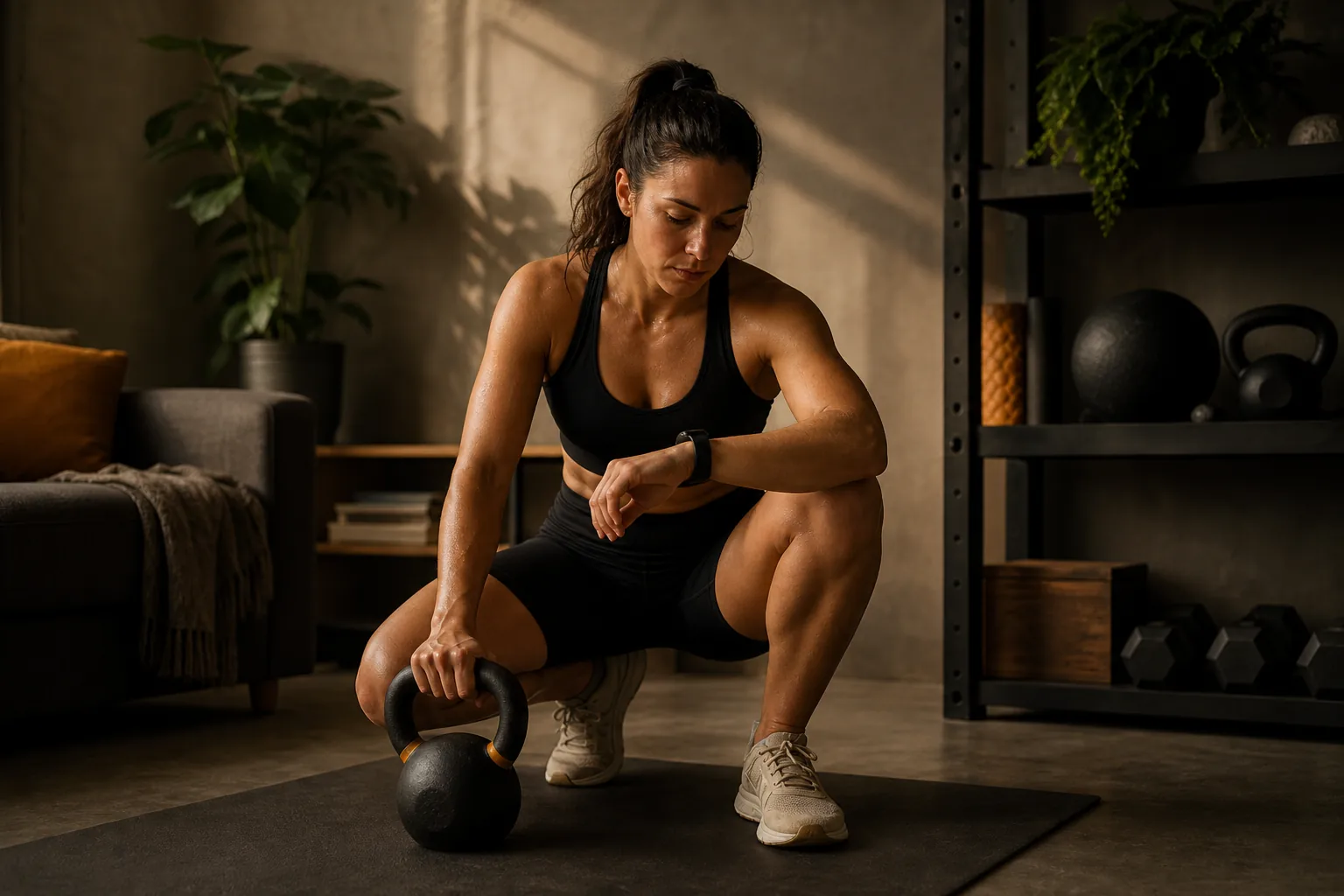
Go heavier only when the current bell feels controlled for the work you’ve planned. One common guideline suggests moving up after you can complete 15 to 20 clean reps without the weight feeling challenging. Another movement-based benchmark is to build steady sets before adding load. You don’t need to hit the same mark for every exercise.
Kettlebell sizes often jump by about 4 kg. That can feel like a lot, especially for a press. Add reps or sets first, or use a slower pace with the bell you have. When you try the next size, start with a small number of reps. Keep it for the exercises that suit it, rather than switching every move at once.
There’s no fixed calendar for that change. One guide suggests an 8 kg to 12 kg swing progression over roughly two months, but your technique and training routine may move faster or slower. If you’re still learning the hinge, stay with the lighter bell. If your reps are crisp and the load is easy, the next size may be worth testing.
For an overhead move, don’t use a successful swing as proof that you can press the same weight. Pressing and get-ups ask for more direct shoulder control. Choose a load that lets you keep the arm stacked and the wrist straight throughout the rep.
Hybrid Fit Mom’s six-week program offers progressive home workouts and lifetime access after a one-time purchase. A structured plan can help you see when a move, load, or weekly schedule changes. You still choose the bell that fits your body and the rep in front of you.
Frequently Asked Questions
Is 8 kg a good kettlebell weight for a woman?
Yes, 8 kg (18 lb) is a common first weight for women who are new to kettlebells and already active. It can work for hinge practice, deadlifts, and some swings. You may want a lighter bell for presses or get-ups. If you’re new to all strength training, start lighter and focus on control.
Should I start with a 8 kg or 12 kg kettlebell?
Start with 8 kg if kettlebells or strength training are new to you. Consider 12 kg for swings or deadlifts if you already train and can keep a steady hinge. The right choice can differ by exercise, so don’t assume one weight will suit every movement.
What kettlebell weight should I use for swings?
Many beginner women use 8 to 12 kg (18 to 26 lb) for two-hand swings. Start at the lower end if you’re learning the hinge. You should feel your hips drive the bell while your arms guide it. If your back rounds or the bell pulls you off balance, stop and use a lighter load.
When should I move up to a heavier kettlebell?
Move up when your planned reps stay controlled and the current bell no longer feels challenging for that exercise. Add reps or sets first if the next size feels like too big a jump. Test the heavier bell with a few reps, and judge presses separately from swings.
Conclusion
For many active women new to kettlebells, 8 kg is a sound place to begin for basic hinge work, with a lighter bell for presses and get-ups. Test your chosen weight with slow, controlled reps before building a workout around it. Pick one movement to practice this week, then add load only when your form stays steady.