Best Single Kettlebell Workouts for Busy Women

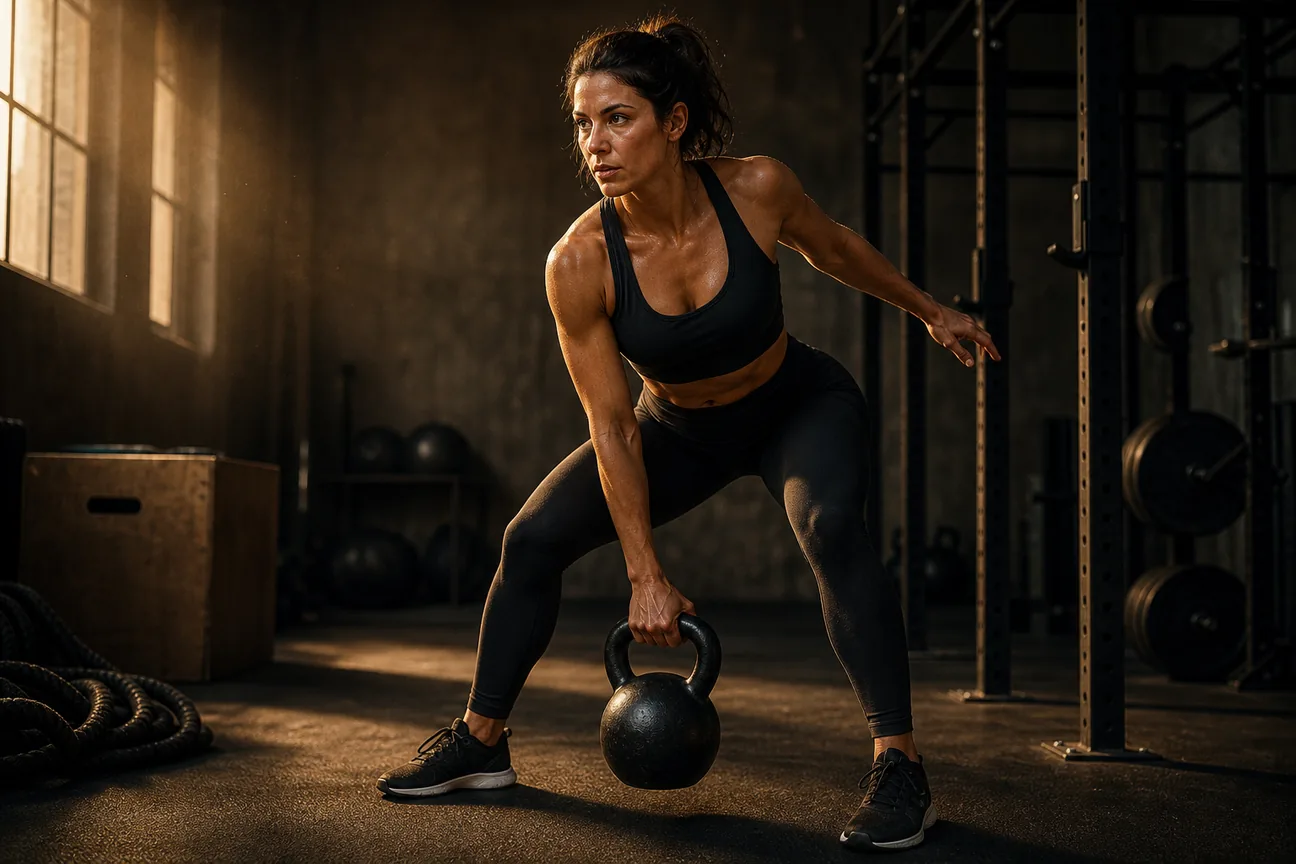
One kettlebell can cover a full-body session, even when your workout window is short. These single kettlebell workouts give you six formats to try, with options for strength, conditioning, and movement practice. If you want more ways to structure a time-efficient session, compare these full-body kettlebell workouts for busy women.
An analysis of 54 comments and questions from Reddit, YouTube and Quora about single kettlebell workouts found that 33% mentioned personal progress.
Start with the circuit if you want a little of everything. If you need a plan that carries through the week, Hybrid Fit Mom has a six-week home program built for busy women and mothers.
1. The One-Kettlebell Full-Body Circuit: A balanced strength session
This circuit uses one bell to train a hinge, squat, press, row, and carry. It suits you when you want a short, repeatable session without changing equipment between moves.
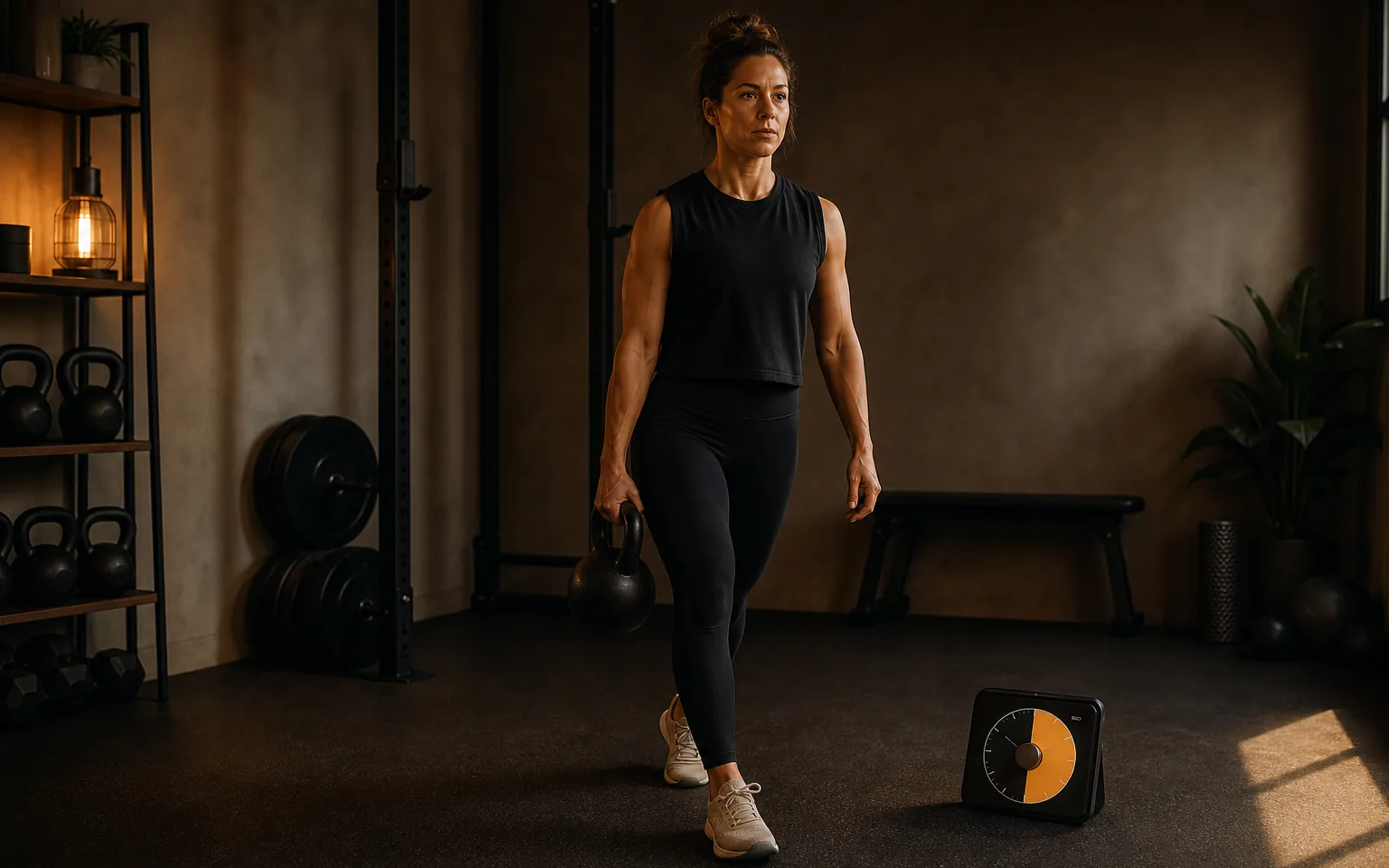
Warm up for about five minutes. March in place, do a few bodyweight squats, and practice an unloaded hip hinge. Then move through these stations:
- Goblet squat
- Kettlebell deadlift or swing
- One-arm row
- One-arm overhead press
- Reverse lunge
- Suitcase carry, walking with the bell at your side
Try 40 seconds of work followed by 20 seconds to rest or change sides. Complete two rounds to start, with a minute between rounds. The work intervals make the circuit easy to time, but don't race the reps. Stop a set early if your back rounds or your grip slips.
One bell has to suit several movements. Choose a load you can press with control; you can use fewer reps for presses while the same bell feels lighter on squats. For a supported row, brace your free hand on your thigh or a sturdy chair. The kettlebell circuit ideas for home can help you pick another circuit shape when you want a change.
Finish with a few minutes of easy movement and gentle stretches for your hips and shoulders. A full session with warm-up and cool-down may take 25 to 30 minutes. If you're new to timed circuits, keep the two rounds and let clean movement set the pace.
2. The Squat-and-Press Workout: A lower-body and shoulder pairing
This pairing alternates goblet squats with one-arm presses. It fits a day when you want focused strength work rather than a fast, breathless circuit.
Hold the bell at your chest for the squat. Keep your elbows close and sit between your legs while your feet stay planted. Breathe in as you lower, then breathe out as you stand. A goblet hold places the weight in front of you, which can help you stay upright as you squat. A kettlebell's offset weight and handle also make grip and wrist position part of the task.
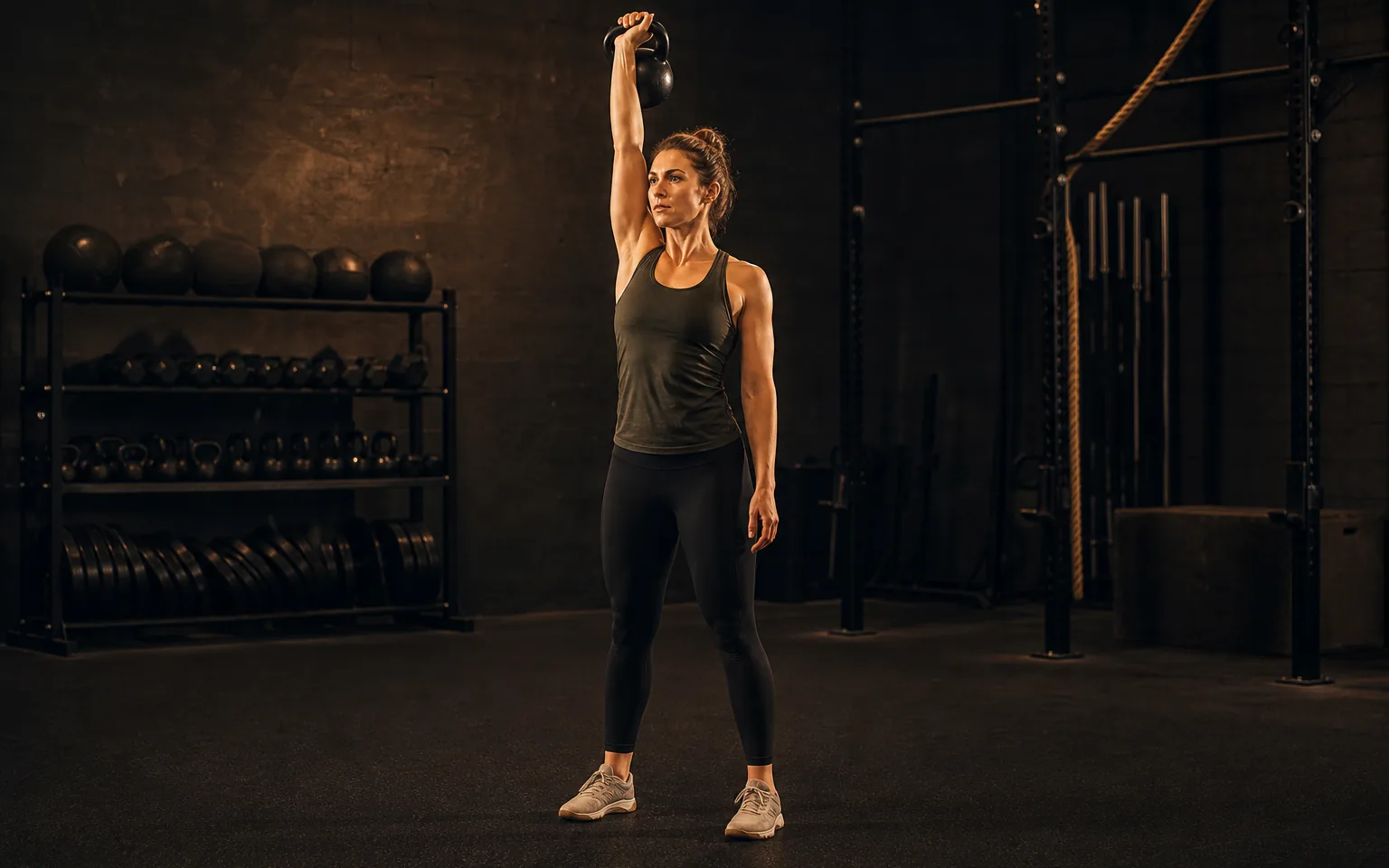
For the press, bring the bell to your shoulder with your wrist straight. Brace your middle as if preparing for a gentle push, then press overhead without leaning back. Lower it to the rack position with control. Do all planned reps on one side, then switch.
Try three rounds of 6 to 8 squats followed by 5 presses per side. Rest for 60 to 90 seconds between rounds, or longer if you need it to keep the next set steady. If overhead pressing is new, use a lighter bell or reduce the reps. You can also swap the press for a floor press if raising your arm overhead doesn't feel comfortable.
Keep the squat depth that lets you hold your balance and keep your spine steady. When both movements feel smooth for every round, add a rep before you make the session faster.
3. The Hinge-and-Row Workout: Build posterior-chain strength
This session pairs a kettlebell deadlift with a one-arm row. It suits you if you want to work your hips and back at a measured pace, with less demand than a swing interval.
For deadlifts, set the bell between your feet. Push your hips back, keep your spine long, and bend your knees as needed to reach the handle. Stand by pressing your feet into the floor and bringing your hips forward. The lift should come from your legs and hips, not a tug from your lower back.
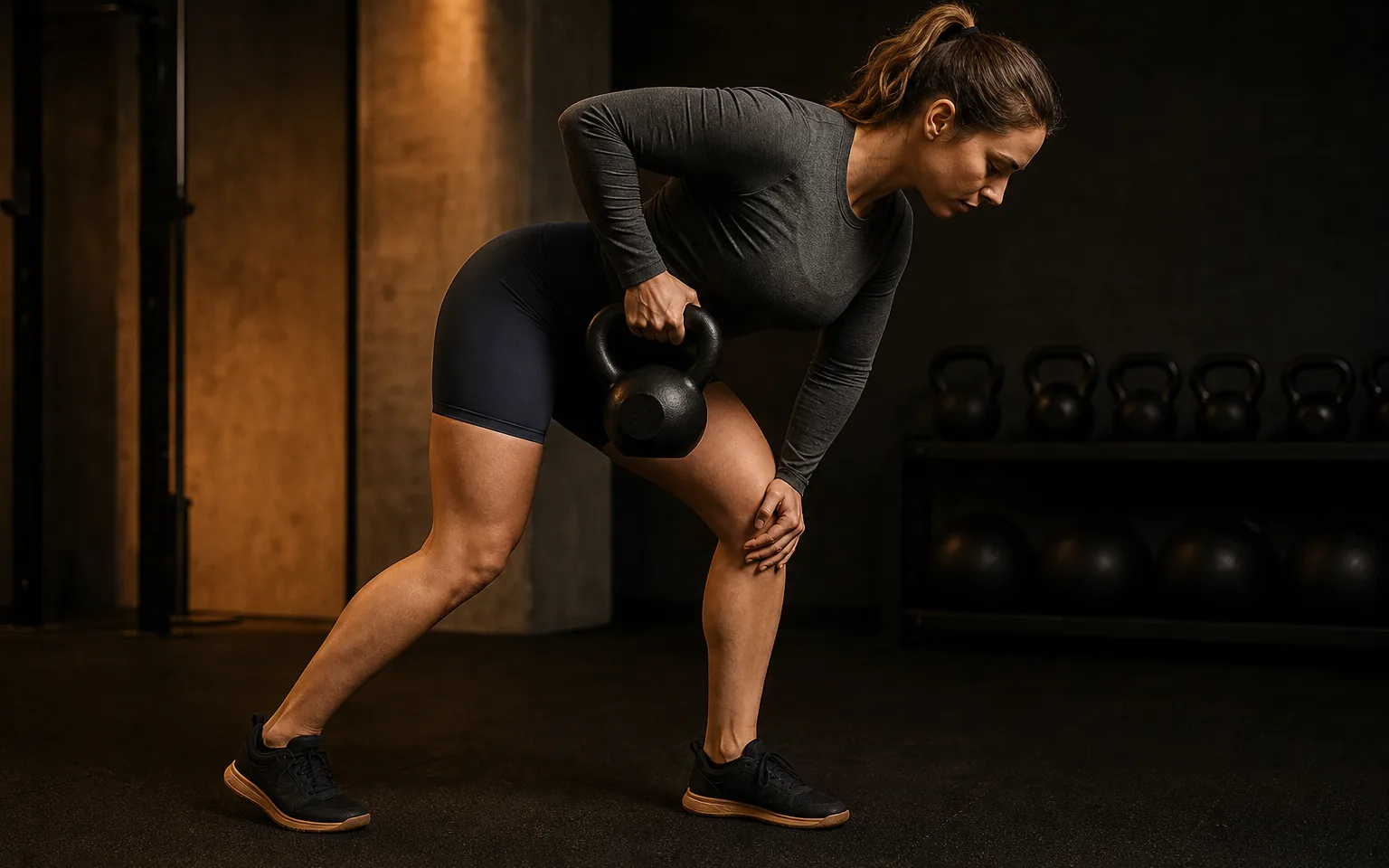
For the row, take a staggered stance and hinge forward. Rest your free hand on your front thigh or a firm chair. Pull the bell toward your lower ribs, keeping your shoulders square to the floor. Lower it slowly. If your torso twists as you row, use a lighter load or shorten the set.
Do 8 deadlifts, then 8 rows on each side. Rest for about a minute and repeat for three rounds. Start with the side that feels less steady, then match its reps on the other side. That keeps one arm from quietly doing extra work.
You can track the load and reps in a note on your phone or a paper log. When every rep stays controlled across all rounds, add one rep per set or use a heavier bell for the deadlift. Change one thing at a time. If one bell feels too heavy for rows but easy for deadlifts, keep the row supported and use fewer reps.
For a broader set of strength formats, the kettlebell strength workouts for busy women include options with different time demands.
4. The Kettlebell Swing Intervals: Add a conditioning challenge
Swing intervals turn a practiced hip hinge into a short conditioning session. Choose this option only if you can swing with control; it's a poor time to learn the move while tired.
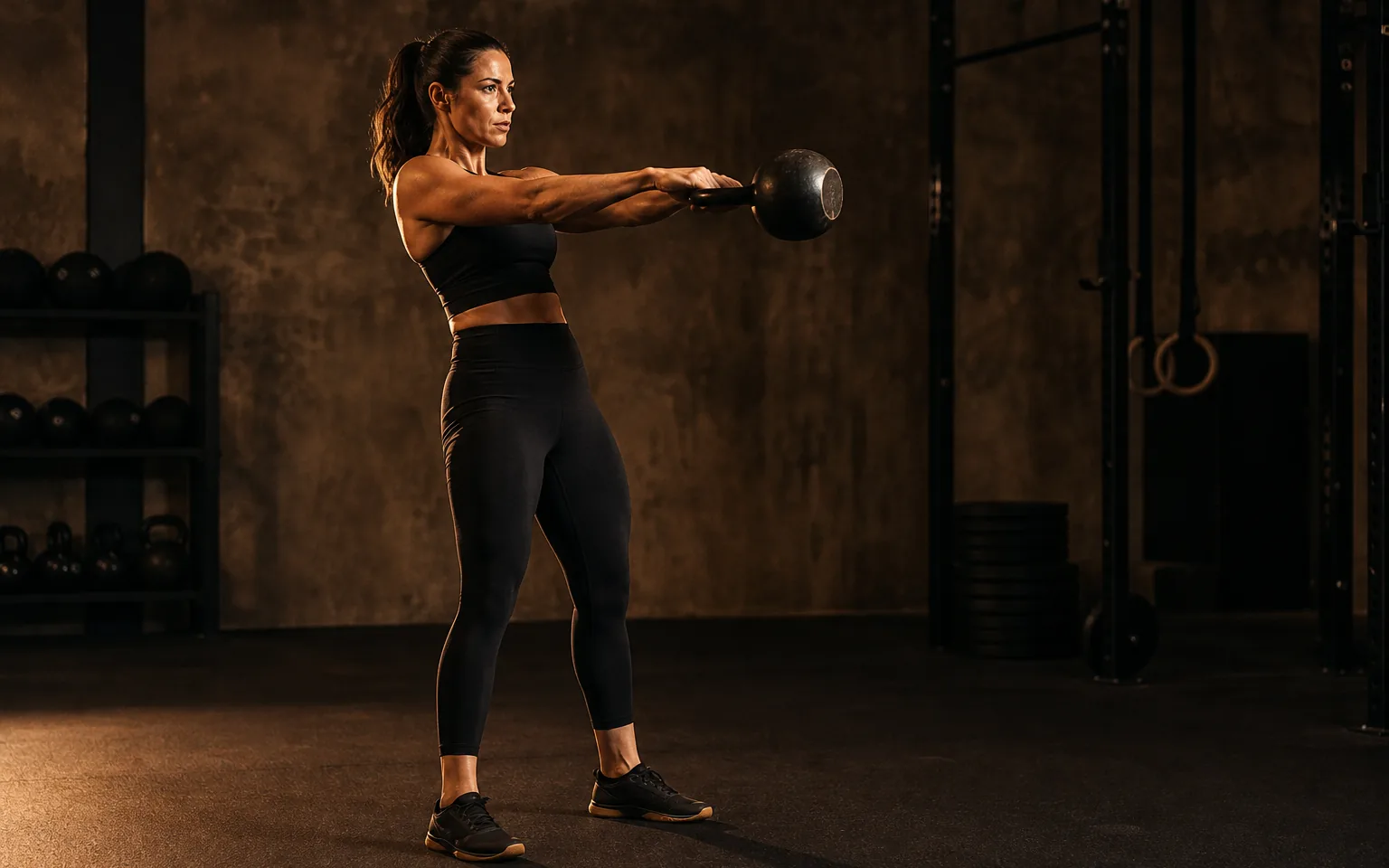
Set the bell a short distance in front of you. Hinge back, grip the handle, and hike the bell between your thighs. Snap your hips forward to send it up. Your arms guide the bell; your hips provide the drive. At the top, stand tall with your ribs over your hips. Don't squat the swing or pull the bell up with your shoulders.
For a 10-minute session, try 20 seconds of swings followed by 40 seconds of rest. Repeat for 10 rounds. If your hinge is new, make the work period 10 to 15 seconds and rest longer. You can also practice deadlifts instead until your swing feels reliable, but deadlifts aren't the same conditioning move.
End the interval when you lose a firm grip, feel your lower back take over, or can't control the bell on its way down. Put the bell on the floor between rounds if you need to reset. A timer is a guide, not a command to keep moving through poor reps.
Afterward, walk around until your breathing settles. A few easy hip hinges and shoulder movements make a simple cool-down. Mari Grossi, Hybrid Fit Mom's certified weightlifting coach, frames training around a busy life. That means a short session you can repeat beats a hard workout that leaves you avoiding the next one.
5. The Reverse Lunge-and-Clean Workout: Practice single-side strength
This format links a reverse lunge with a clean to the rack position. It suits you if you've already learned the clean and want a session that asks each side to work on its own.
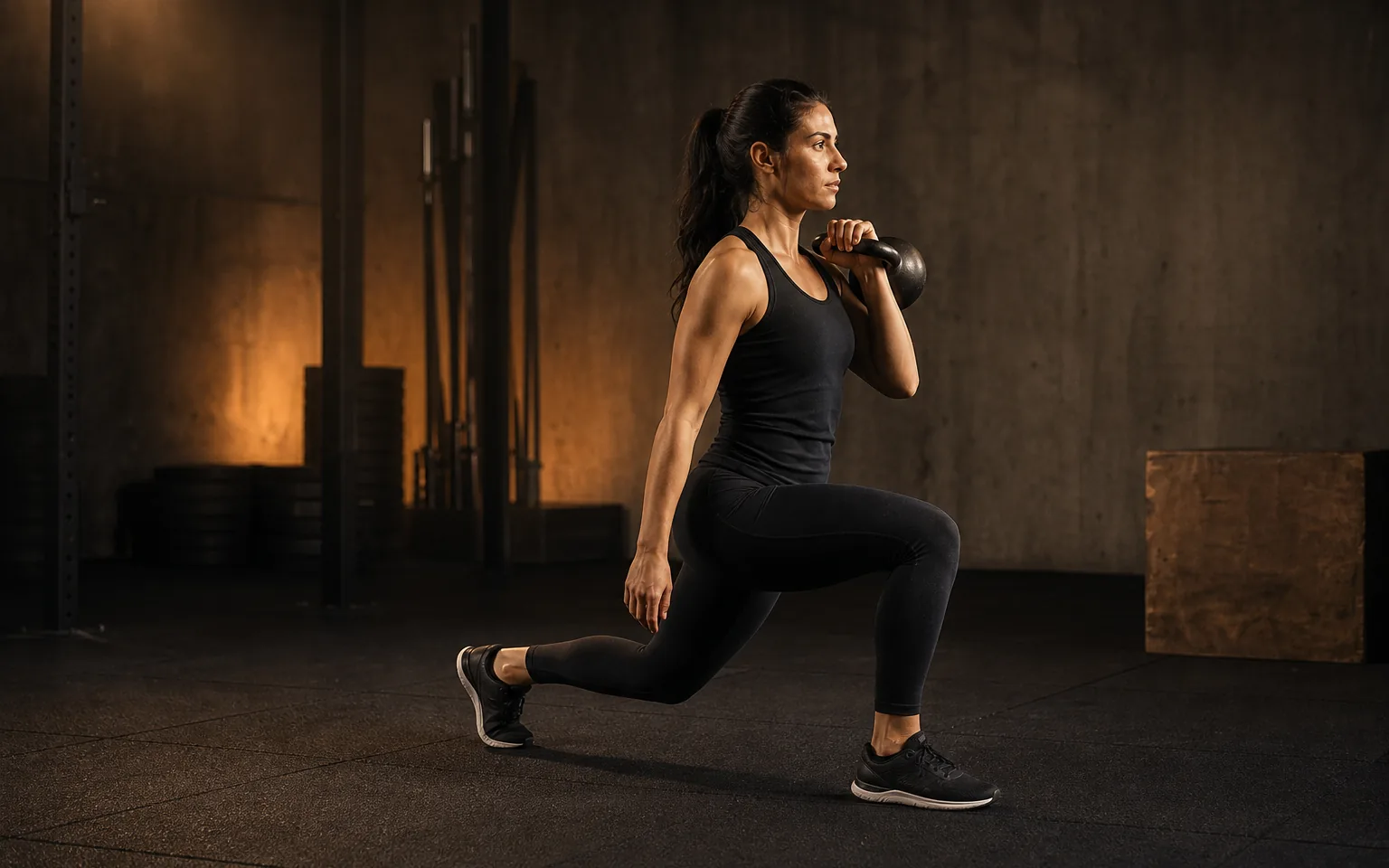
For the lunge, hold the bell at your chest or in one hand at your side. Step back, lower only as far as you can stay balanced, then push through your front foot to stand. Keep the front knee tracking in line with your foot. A shorter step or a shallow range is fine while you build control.
A clean moves the bell from the floor or hang position to your shoulder. Keep it close to your body and guide your hand through the handle so the bell rests against your forearm. Don't let it flip out and bang your wrist. If you haven't practiced this skill, use a deadlift in its place and save the clean for a separate practice session.
Try 5 reverse lunges per side, then 5 cleans per side. Rest for a minute and repeat for three rounds. Keep the same number of reps on both sides, even if one side feels stronger. If balance fades, hold the bell at your chest with both hands for the lunge and do the clean separately.
Keep this workout slower than a timed circuit. The clean needs a clear path and the lunge needs a stable foot. When the bell starts to swing away from your body, pause and reset your stance before the next rep.
6. The Turkish Get-Up Practice Session: Train control and mobility
The Turkish get-up takes you from lying on the floor to standing with one arm holding the bell overhead. It's a skill session, not a race. Pick it when you have enough space and time to focus on each position.
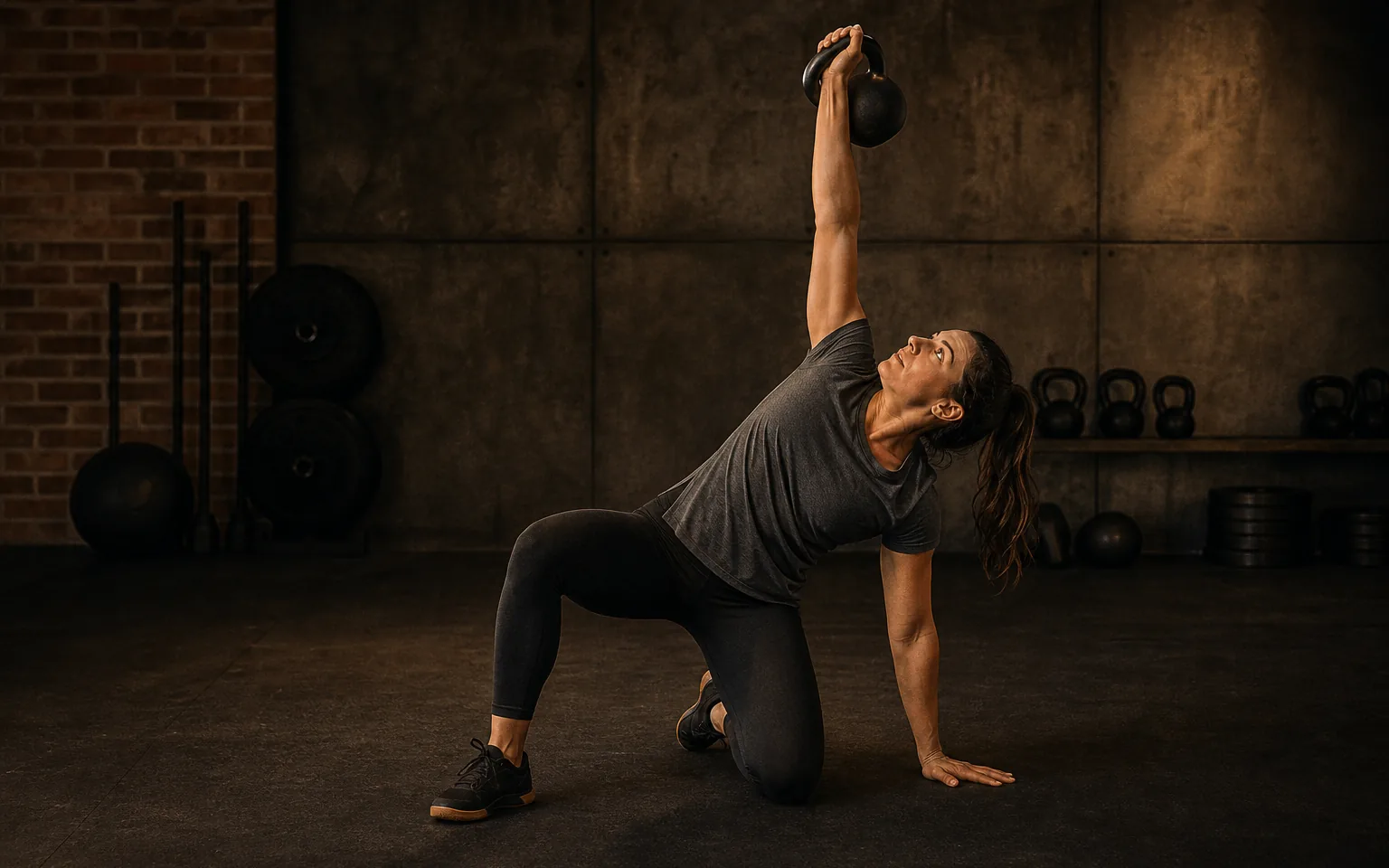
Begin without a bell or use a very light one. Lie on your back and hold your arm straight above your shoulder. Keep your eyes on your hand. Bend the knee on the same side as the bell. Roll toward your free arm, then press up to your hand. Lift your hips and sweep your straight leg underneath you to reach a half-kneeling position.
From there, stand with control while keeping the bell above your shoulder. Reverse the steps to return to the floor. Pause at each position. If your wrist bends back, your arm drifts away from your shoulder, or you can't keep your eyes on the bell, stop and practice the earlier part without weight.
Do one to three slow reps per side, resting between attempts. You can end at the elbow, hand, or half-kneeling position as a scaled practice. Those partial versions let you learn the sequence without rushing the full floor-to-standing movement.
Keep the room clear around you, and make sure you can lower the bell safely before you begin. The WHO's physical activity guidance recommends muscle-strengthening activity on two or more days a week, and a skill session like this can sit alongside those strength days.
Compare the Six Single-Kettlebell Workouts
Use this comparison to match the session to your available time and skill. The time ranges below are suggested working formats, not a promise that every workout will take the same amount of time. Set aside extra time if you need more warm-up or rest.
| Workout | Suggested time | Best fit | Scale it by |
|---|---|---|---|
| Full-body circuit | 25 to 30 minutes | A balanced session | Start with two rounds |
| Squat and press | 15 to 20 minutes | Steady strength work | Use fewer press reps |
| Hinge and row | 20 to 25 minutes | Controlled hip and back work | Support your free hand |
| Swing intervals | 10 minutes of intervals | Conditioning with swing skill | Shorten work periods |
| Reverse lunge and clean | 15 to 20 minutes | Single-side strength practice | Separate the clean and lunge |
| Turkish get-up practice | 10 to 15 minutes | Slow movement practice | Use no weight or partial reps |
If you want a weekly structure rather than a menu of sessions, Hybrid Fit Mom's six-week Kettlebell Strength & Conditioning Program uses progressive home workouts and prerecorded exercise demonstrations. It includes an eating framework and lifetime access for a one-time $29 purchase. The program is self-guided, so you can work through it at your own pace.
Choose the format that fits today's energy and skill. Then give it enough repeats to see whether your reps, control, or rest time improve.
FAQ: Single Kettlebell Workouts
Can you get a full-body workout with one kettlebell?
Yes, one kettlebell can train your full body when you include different movement patterns. Pair a hinge such as a deadlift with a squat, row, and press. A carry can add grip and trunk work. Choose a bell you can control, and adjust reps when the same load feels harder for one movement.
How long should a single kettlebell workout take?
A useful session can take 10 to 30 minutes, depending on its goal and your rest needs. A short swing interval may take 10 minutes of work, while a full-body circuit needs time for warm-up and cool-down. Keep extra rest when form starts to slip; the timer doesn't set your limit.
What weight kettlebell should a woman start with?
There's no one starting weight that fits every woman. Test a few controlled squats, deadlifts, rows, and presses. The bell should let you keep good form, especially on presses and rows. If you can't control it through the full range, choose a lighter load or practice the movement without weight.
How many days a week should I do kettlebell workouts?
Two or three sessions on nonconsecutive days is a sensible starting schedule for many people. Leave room to recover, especially after hard swing intervals or a session with lots of lower-body work. If you're already doing other training, count that workload too and adjust the number of kettlebell days.
How do I make a one-kettlebell workout harder?
First, make each rep more controlled and repeat the session. Then add a rep or a round if your form stays steady. You can also shorten rest, but don't change load, reps, and pace all at once. For swings and cleans, don't raise the speed or workload until the movement remains sound.
Conclusion
Start with the full-body circuit if you want a balanced session today. If you need a plan that maps out progression across busy weeks, take a look at Hybrid Fit Mom's six-week program, then choose a workout time you can protect this week.