Strength Training for Busy Moms: A Home Plan

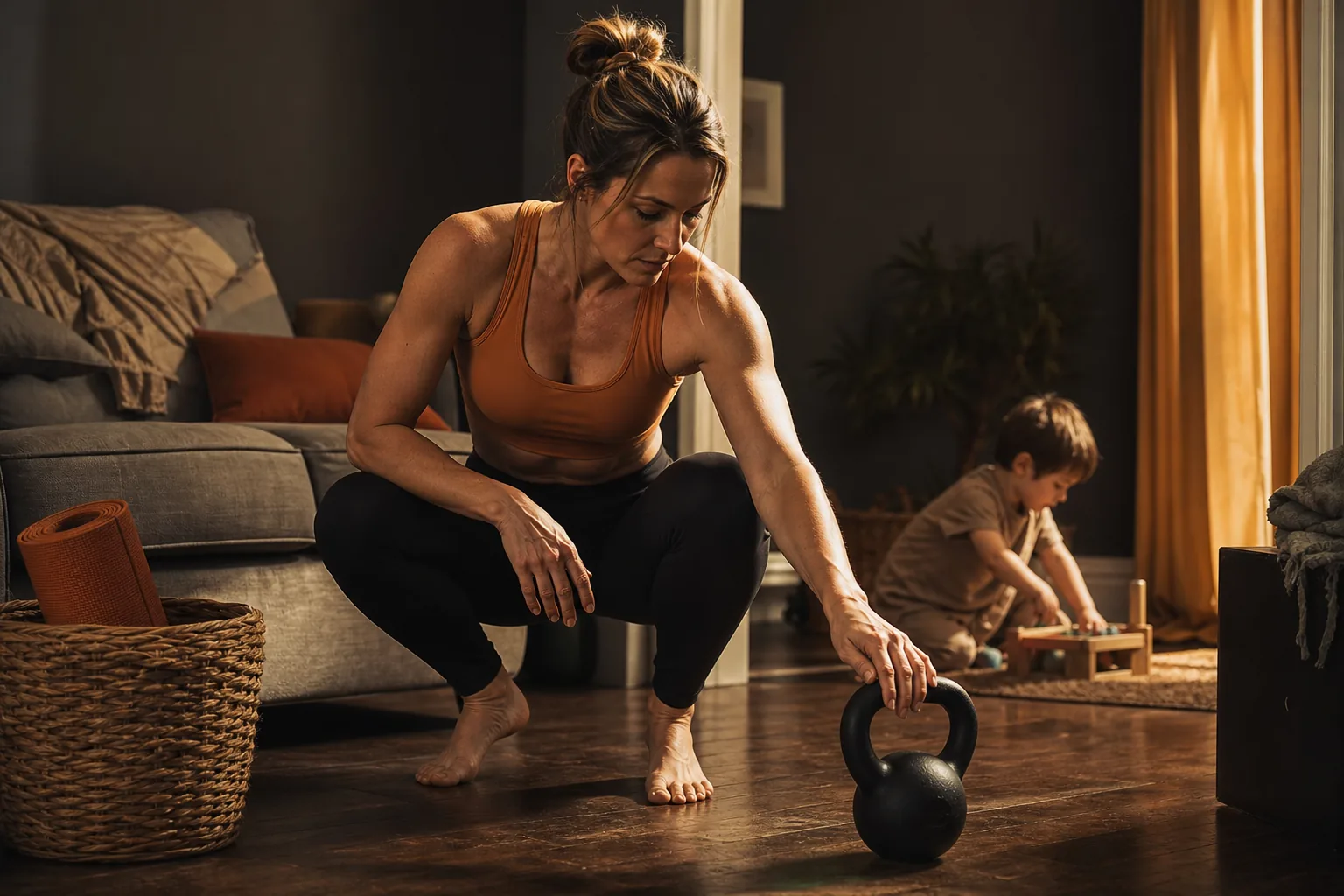
Strength training for busy moms can fit around work, school runs, and bedtime, without waiting for a perfect hour. Start with two short sessions a week, a clear patch of floor, and a plan you can repeat. Then adjust the work to match your time, skill, and recovery.
An analysis of 32 YouTube comments about strength training for busy moms found that 28% mentioned limited time.
Step 1: Set a Realistic Weekly Training Schedule
Pick days you can return to, not days that look ideal on paper. Two full-body sessions each week are a solid start.
Put each session beside a routine that already happens. You might train after school drop-off on Tuesday, then again on Saturday morning. If mornings are unpredictable, choose a window after dinner instead. The point is to name a likely time and keep a backup slot.
Here’s a simple week to try:
- Monday: Full-body strength, 20 to 30 minutes.
- Tuesday: Walk or take a rest day.
- Wednesday: Rest or easy mobility.
- Thursday: Full-body strength, 20 to 30 minutes.
- Friday through Sunday: Rest, family walks, or other easy movement.
Some weeks will be messier. If a child gets sick or work runs late, move the session rather than trying to make up every missed minute. A brief bodyweight session can be a practical fallback when a full workout won’t fit.
Once two sessions feel steady, you can add another day or use a structured plan with more frequent workouts. Hybrid Fit Mom’s six-week program has four sessions per week, including a shorter core day. That schedule is an option, not a test you have to pass. For a broader view of program formats, compare the kettlebell strength training plans for women that fit your week.
By now, you should have two likely training windows and one backup. Write them on your calendar. Keep the plan flexible enough to survive a normal week.
Step 2: Prepare Your Kettlebell, Space, and Workout Plan
Set up a spot that takes less time to clear than a TV episode’s opening credits. You need room to hinge at the hips, squat, and step backward without striking a table or toy. A small rug-sized area can work if the floor is stable and clear.
Keep your kettlebell close by, along with a firm chair for balance or supported rows. A towel or mat can make floor exercises more comfortable. A resistance band is an optional way to add pulling work. You don’t need a full home gym before you can begin.
Before you add weight, rehearse each move without it. Then test a light load. You should be able to move smoothly and finish a set feeling you could do a couple more clean reps. If you need to jerk the bell, hold your breath, or change your posture to finish, make the exercise easier or use less weight.
Plan your session before you pick up the bell. Choose four or five movements and write down the order. For example, pair a squat with a row, then use a hinge and a floor press. Keep the first few sessions simple so you can learn the moves instead of searching for what comes next.
A clear plan helps when time is short. The home strength plan for women includes movement cues and a weekly structure that can flex around work and family. The same idea applies to your setup: store the bell where you can reach it, then clear the floor in a minute.
If children are nearby, let them know which part of the floor is for your workout. They can count reps or do bodyweight squats beside you, but keep them away from the moving bell. Put the weight away when you finish.
By now, your workout spot should be safe to use, and your next session should be written down. Make it easy to start, not fancy to look at.
Step 3: Build Each Workout Around Simple Movement Patterns
Build a session around the actions your body uses all day. A basic full-body workout can include a squat, hinge, push, pull, and carry or trunk-control move. These patterns help you practice getting up from the floor, lifting a child, or carrying groceries with more control.
Start with a warm-up of a few minutes. March in place, circle your arms, then do easy bodyweight squats and hip hinges. Use these first reps to ease into strength work and check how your body feels today.
Try a simple five-move session
- Goblet squat: Hold the bell close to your chest. Sit between your hips while keeping your heels down, then stand.
- Kettlebell deadlift: Set the bell between your feet. Push your hips back with a long spine, grip the handle, then stand by pressing the floor away.
- Supported row: Place one hand on a firm chair. Pull the bell toward your ribs with the other hand, then lower it slowly.
- Floor press: Lie on your back with knees bent. Press the bell up from your chest while keeping your ribs steady.
- Suitcase carry: Hold the bell at one side and walk slowly for 20 to 30 seconds. Keep your shoulders level.
Try two sets of six to eight reps for each strength move. Rest until you can speak in a full sentence. For one-sided moves, work both sides before moving on. Stop a set when your grip slips or your form changes.
New to kettlebells? Learn the deadlift before trying swings. A swing is a fast hip hinge, not a squat with a weight. Wait until you can hinge and handle the bell with control. Bodyweight squats, bridges, and incline push-ups against a stable counter are useful choices while you learn.
For another session layout, browse these kettlebell workouts for busy women. Keep the choice simple. A plan you can repeat beats a saved workout you have to decode each time.
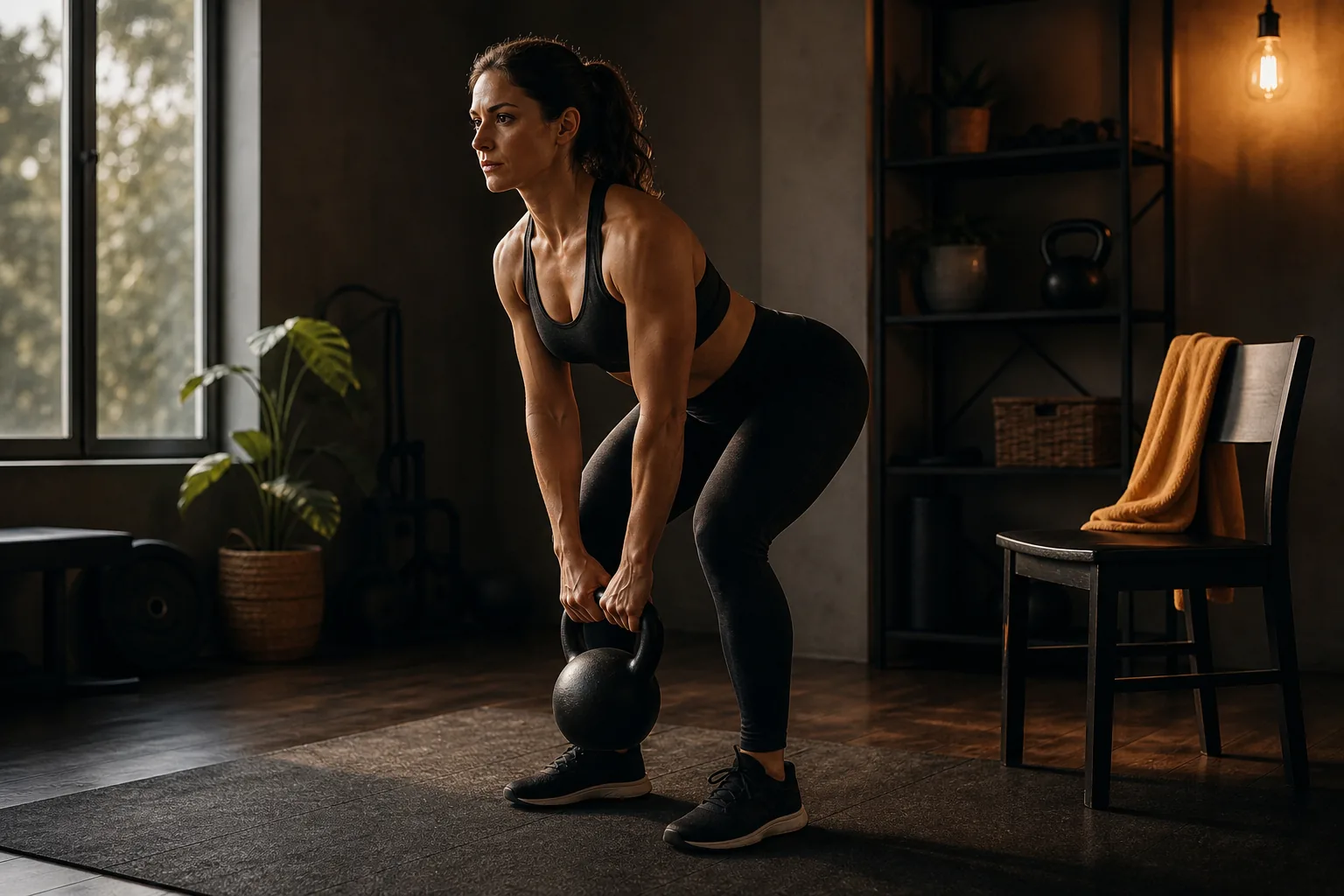
By now, you should have a short list of movements you can do with steady form. Add speed or heavier load only after the movement itself feels familiar.
Step 4: Fit a Focused Strength Session Into a Busy Day
Use the time you have, then stop. A focused 20-minute workout is a full session. A 10-minute version can be a useful fallback when pickup runs late or the baby wakes early.
For a 10-minute bodyweight circuit, set a timer and move through squats, incline push-ups, glute bridges, reverse lunges, and dead bugs. Do a calm set of each move, then repeat what fits. Rest when you need to. Don’t rush through reps just to beat the timer.
If you have about 20 minutes, add a kettlebell to movements you already know. Do two or three rounds of a squat, deadlift, row, and carry. Keep transitions short, but take enough rest to hold your form. This is strength work, not a race against the kitchen timer.
Small blocks can fit around family life. You might do one round before breakfast, then another later if your day breaks into two windows. Or train while a child plays nearby, with the bell out of reach between sets. Don’t try a loaded exercise while carrying or watching a child who needs your hands.
For more options across different time windows, see these workouts for moms on busy days. Choose one routine before the day gets crowded. Having the order ready saves the small pocket of time you worked to protect.
Postpartum recovery needs its own pace. Ask your healthcare professional when it’s safe to return to structured exercise, especially after surgery, complications, or ongoing pain. Begin with easy movement and gentle breathing. If you notice leaking, pelvic heaviness, pain, or abdominal doming, stop that exercise and seek guidance from a qualified clinician or pelvic-floor specialist.
Hybrid Fit Mom’s six-week program includes 24 sessions, with three sessions lasting 30 to 40 minutes and a shorter core day of about 20 minutes. It’s a structured option if you want a weekly sequence instead of building each workout from scratch.
By now, you should have a full session and a shorter fallback. Both count as training days you can return to.
Step 5: Track Your Work and Progress Gradually
Write down what you did while the details are fresh. Note the movement, bell weight, reps, and rounds. Add one short note if something felt awkward or easy. A notebook or phone note is enough; the goal is to make your next choice based on your last session, not a guess.
Change one thing at a time. First, make each rep smoother. Then add a rep or slow the lowering part of the movement. Once you can complete every rep with control and still have a couple in reserve, consider a slightly heavier bell if you have one. Don’t increase the weight and the number of sets in the same workout.
If the next kettlebell feels like too large a jump, stay with your current load. Add a rep, pause briefly, or use a slower tempo. The right progression is the one that makes the work harder without changing your shape or losing control.
Track more than the load. Notice whether you can stand up from the floor more easily, carry groceries without switching hands as often, or climb stairs with less effort. These everyday signs can help you see what your training is doing, even when the scale doesn’t change.
Hybrid Fit Mom’s program uses weekly progression and prerecorded exercise demonstrations. The program’s guidance also suggests logging the bell, reps, and rounds, then adding a small amount of work when all three rounds feel controlled. It costs $29 as a one-time purchase and includes lifetime access. That can suit you if you want a six-week plan without a recurring subscription.
Motivation often follows action, rather than arriving before it. Mark the session complete, even if you did the short version. If your week falls apart, return to the next planned workout. Don’t punish yourself with a double session.
By now, your log should show what you lifted and how the reps felt. Use it to choose one small change for your next workout.
FAQ
How often should busy moms strength train?
Two days a week is a sensible starting point for strength training. Put at least a day between full-body sessions when you can, then add another day if your schedule and recovery allow it. Walking or easy movement can fill other days. A repeatable two-day plan is more useful than a four-day schedule you can’t keep.
Can I build strength with 10-minute workouts?
Yes, a 10-minute workout can help you keep a training habit and complete useful strength work. Choose a few movements you know, move with control, and use the time you have. It’s a fallback, not a requirement to make every session short. When you have more time, follow your regular plan.
What kettlebell exercises should I start with?
Start with movements you can control, such as goblet squats, deadlifts, supported rows, floor presses, and carries. Practice without weight first if a movement feels new. Learn the hinge before adding swings. Use a lighter load if you have to jerk the bell, change your posture, or rush the last reps.
When can I strength train after having a baby?
Ask your healthcare professional when you’re ready to return to structured exercise, since recovery varies by person and birth. Start gently and stop if you have pain, leaking, pelvic heaviness, or abdominal doming. A pelvic-floor specialist can help if symptoms arise. Don’t use a general timeline as a substitute for advice about your own recovery.
Conclusion
Choose two weekly training windows, prepare one short workout, and write down what you do. Start with movements you can control, then progress one small step at a time. If you want a mapped-out kettlebell sequence, take a look at Hybrid Fit Mom and pick your first workout day.