Strength Training at Home for Women: A Simple Plan

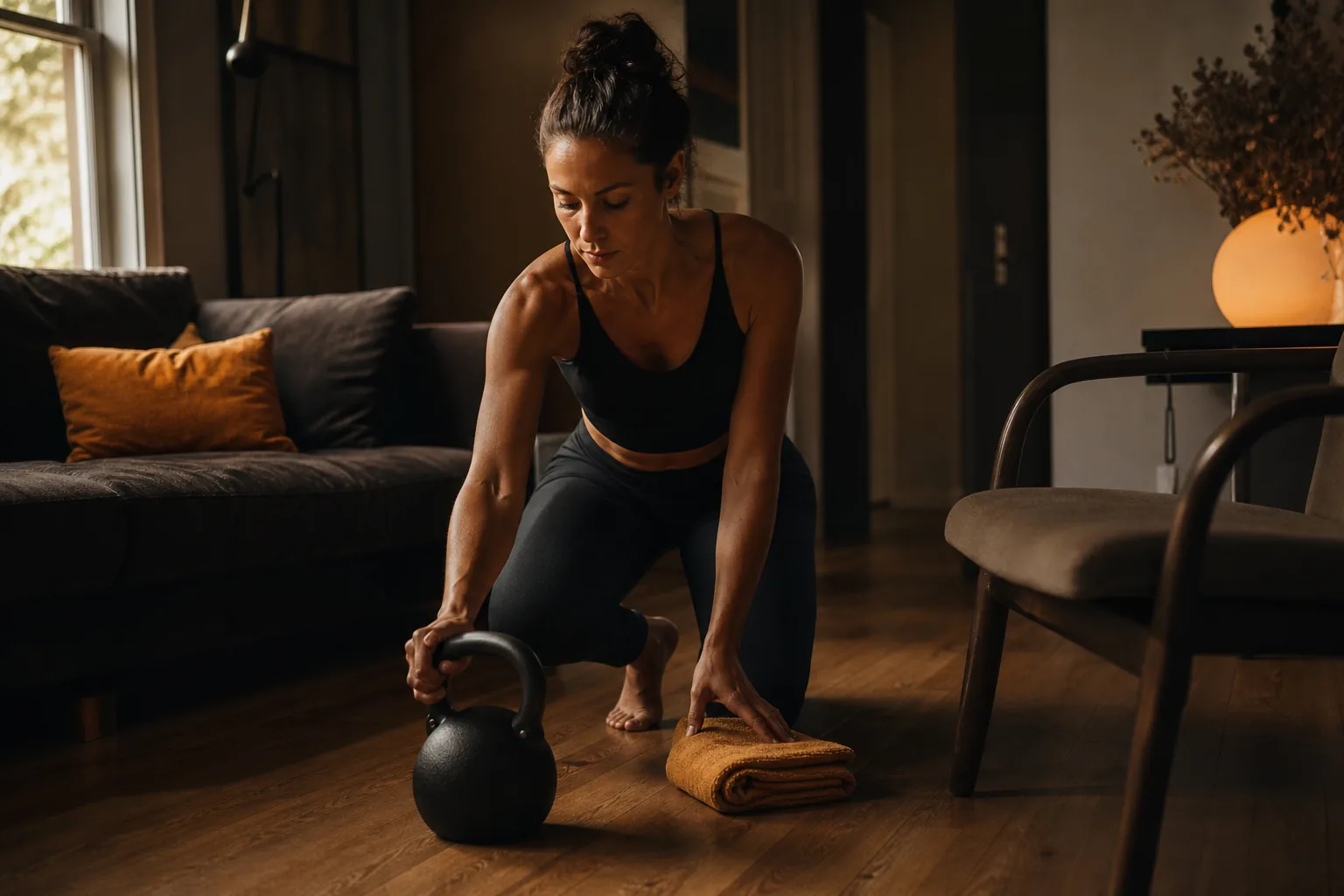
You can get stronger at home without turning your living room into a gym. Strength training at home for women can start with one kettlebell, a clear patch of floor, and a plan you can repeat when life gets busy.
An analysis of 44 comments and questions from YouTube and Quora about strength training at home for women found that 36% mentioned beginner-friendly guidance.
Use these steps to set up safely, learn the main movements, and build a full-body routine. You can start with two sessions a week, then add difficulty when your form stays steady.
Step 1: Set Up a Safe, Space-Saving Home Workout Area
Make a clear space about two meters by two meters, or roughly the size of a small rug. You should be able to hinge at the hips, squat, and step back without hitting furniture. Move pets, toys, and loose cords before you start. A stable floor matters more than a fancy mat.
For a simple setup, keep a kettlebell nearby, plus a firm chair or couch for balance and a towel or mat for floor work. A resistance band can add options for rows or warm-ups. Dumbbells work too, but you don’t need to buy every kind of weight at once. One kettlebell can train your squat, hinge, push, pull, and carry patterns.
Choose a weight you can lift with control. For your first session, test the movement without weight, then try a light load. You should finish each set feeling that you could do a couple more clean reps. If you have to jerk the bell, hold your breath, or change your posture to finish, use less weight.
Give yourself four or five minutes to warm up. Walk in place, move your arms in circles, then do a few bodyweight squats and hip hinges. Keep water close. If you’re postpartum, recovering from surgery, managing a joint issue, or dealing with pain, check with a qualified health professional before starting. Stop for sharp pain, dizziness, numbness, or chest discomfort.
Save the spot by storing the bell under a sturdy table or in a closet between sessions. The goal is a space you can clear in a minute, not a room that needs a makeover. If you want more routine ideas once your setup is ready, these kettlebell strength workouts for busy women can help you compare formats.
Step 2: Learn the Foundational Strength Movements
Practice the movement before you add speed or load. A slow, steady rep teaches you where your hips, knees, and back should be. Start with two sets of six to eight reps per movement. Rest until you can speak in a full sentence, then go again.
Hip hinge and kettlebell deadlift
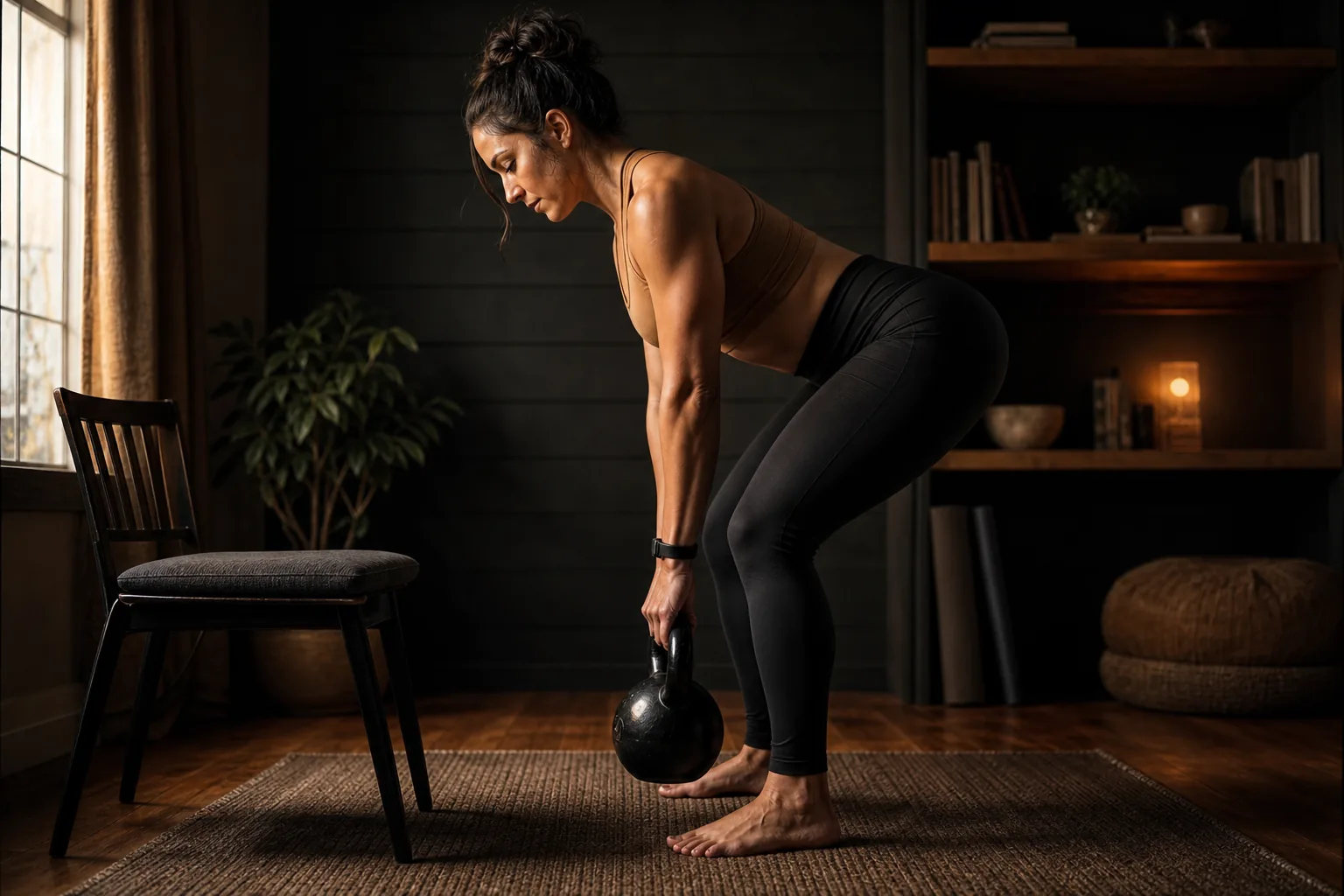
Stand with the kettlebell between your feet. Soften your knees, push your hips back, and keep your back long as you reach for the handle. Grip it, brace your middle as if preparing for a gentle nudge, then stand by pushing the floor away. Set the bell down by sending your hips back again. Don’t turn the deadlift into a deep squat.
Goblet squat
Hold the bell close to your chest by the sides of its handle. Set your feet about shoulder-width apart. Sit your hips down between your legs while keeping your heels planted and chest steady. Stop at a depth you can control, then press through your feet to stand. A chair behind you can give you a clear depth target.
One-arm row
Place one hand on a firm chair and step your feet into a stable stance. Hold the bell in the other hand. Keep your back flat, then pull your elbow toward your ribs. Lower the bell slowly. If your chest twists or your shoulder lifts toward your ear, reduce the weight.
Floor press and carry
For a floor press, lie on your back with knees bent. Hold the bell securely at your chest, then press it up without letting your ribs flare. Lower it with control. For a suitcase carry, hold the bell at one side and walk slowly for 20 to 30 seconds. Keep your shoulders level instead of leaning toward or away from the load.
These patterns train the main actions you’ll use in a basic strength session. Strength training uses resistance to build muscle strength and endurance. Learn each pattern unloaded first, then add a light bell only when the movement feels controlled. Save swings and snatches for later if you haven’t learned the hinge and safe kettlebell handling yet.
For more movement options and form cues, you can use this collection of kettlebell exercises for women as a next step. Keep the focus narrow at first. Five steady reps teach more than a rushed set of fifteen.
Step 3: Build a Simple Full-Body Kettlebell Workout
Once the movements feel familiar, put them into a short session. This sample plan uses five exercises and a single kettlebell. Keep the pace calm. You’re training strength, not racing a timer.
- Goblet squat: 2 sets of 8 reps.
- Kettlebell deadlift: 2 sets of 8 reps.
- One-arm row: 2 sets of 8 reps on each side.
- Floor press: 2 sets of 6 to 8 reps on each side.
- Suitcase carry: 2 walks of 20 to 30 seconds on each side.
Rest for about a minute between sets, or longer if you’re still breathing hard. A session may take around 20 to 30 minutes once you include your warm-up and setup. If you’re short on time, do one set of each movement and stop there. A smaller session is still a session.
Keep your reps smooth. Lower the bell with control, pause briefly if you need to reset, and stand without a sudden yank. On one-sided exercises, complete both sides before moving on. If your grip starts to slip, end the set and rest rather than trying to save a rep.
Use the movement that matches the equipment you have. A band can provide resistance for rows, while a pair of dumbbells can replace the kettlebell for squats or presses. Bodyweight squats and incline push-ups against a sturdy counter are good starting points if you’re still learning. Don’t use a slippery household item as a weight.
When the session feels too easy, first make each rep slower and more controlled. Then add one or two reps to a set. Only add weight when you can keep the same form through every rep.
A kettlebell routine can help you build strength for daily tasks, such as carrying groceries or lifting a child. It can also support muscle tone as your muscles grow stronger. The work is the same whether your goal is feeling steadier on stairs or building a lasting training habit.
Step 4: Schedule Workouts and Progress Gradually
Start with two full-body sessions each week, with at least one day between them. For example, train Tuesday and Saturday. Put the sessions on your calendar like appointments, but leave room to move them when work or family plans change. A repeatable schedule beats an ambitious one you can’t keep.
For the first two weeks, use the same five movements and the same starting sets. Write down the exercise, the weight, and how many clean reps you completed. Note anything that felt awkward. That small record helps you decide what to change next time instead of guessing based on how you feel that day.
Progress one thing at a time. If all reps look steady and you finish with a couple of good reps still in reserve, add one rep to each set at your next workout. When you reach the top of your rep range with good form for two sessions, use a slightly heavier bell if you have one. Otherwise, slow the lowering part of each rep or add a set.
Don’t increase the load and the number of sets in the same session. If the next weight feels like a large jump, return to your previous load and build more reps first. The goal is a harder training signal without losing control. Soreness is not a progress score; the ability to repeat the work with sound form is more useful.
For strength work, two days is a solid place to begin. If you later add a third session, keep it light at first or repeat the same plan rather than adding several new exercises at once.
Hybrid Fit Mom offers a structured six-week kettlebell program for women who want the next step mapped out. It includes 24 sessions, four per week, with three sessions lasting 30 to 40 minutes and a shorter core day of about 20 minutes. The one-time purchase is $29 and includes lifetime access, prerecorded demonstrations, an eating framework, and a 14-day refund. Mari Grossi is a weightlifting L1 certified coach, a teacher, a hybrid athlete, and a mother of two. Her program is for people who can pick up a kettlebell and hinge with a flat back, rather than complete beginners who need to learn every pattern first.
Step 5: Adapt the Plan for Busy Weeks and Keep Going
Some weeks won’t go to plan. Don’t make a missed workout into a reason to quit or double the next session. Return to your usual routine when you can. If you have ten minutes, warm up and do one set each of squats, deadlifts, and rows. Leave the rest for the next session.
Keep a minimum version ready before the week gets crowded. Choose three familiar exercises and set a timer for a short block. Stop when your form gets sloppy or you reach the time limit. This is a way to keep the habit alive, not a test of willpower.
On days between strength sessions, a walk can fit more easily than another hard workout. Choose a pace where you can still talk, even if you’re a little breathless. If your legs feel tired, take an easy walk or rest. Recovery is part of training, not a missed opportunity.
Use the same flexible approach with food. Hybrid Fit Mom’s program includes an eating framework, but it isn’t described as a meal plan. For your own routine, start with regular meals that leave you enough energy to train and recover. Avoid treating one missed workout or one busy day of meals as a reason to abandon the week.
As you build a steadier routine, ask what you want your strength to let you do. Maybe it’s carrying bags in one trip, getting up from the floor, or keeping up on a family walk. That’s a better measure than chasing a perfect streak. We lift to build freedom and to age like athletes, not to earn a gold star for never missing Tuesday.
If you want a more defined sequence than a saved workout can give you, kettlebell workout programs for women can help you compare structured plans. Hybrid Fit Mom is one option for women and mothers with basic kettlebell skills who want progressive training at home without a subscription.
FAQ
How often should women strength train at home?
Two days a week is a sound starting point for home strength training. Work all major movement patterns across those sessions and leave a day between them when possible. If two sessions feel manageable for several weeks, you can add a third. Keep the extra session modest so your schedule and recovery can keep up.
What equipment do I need to start strength training at home?
You can start with one kettlebell, a clear floor space, and a stable chair for support. A resistance band or dumbbells can add options, but they aren’t required for the sample routine. If you don’t own a weight yet, practice the squat and hip hinge without load while you learn the movement.
Can I build strength at home with one kettlebell?
Yes, one kettlebell can load squats, deadlifts, rows, presses, and carries. Start with a weight you can control through the full set. Add reps or slow your tempo before moving to a heavier bell. If an exercise feels too hard to perform cleanly, use a lighter load or practice the pattern without weight.
How do I know when to increase my kettlebell weight?
Increase the weight when you can complete the planned reps with steady form and still feel you could do a couple more. Build your reps first, then move up when the top of your range feels controlled for two sessions. If the next bell is a big jump, stay with your current load and make the reps slower.
Is kettlebell training safe for beginners?
Kettlebell training can be a reasonable way to start when you use a manageable load and learn basic form first. Begin with slow movements such as deadlifts and goblet squats. Get professional advice if you’re postpartum, recovering from surgery, managing an injury, or feeling pain. Stop if you feel sharp pain, dizziness, numbness, or chest discomfort.
Conclusion
Start with two weekly sessions and a weight you can control. Put your workouts on the calendar, then record the reps you complete. When your form stays steady, add a rep before adding load. If you want a guided progression, review Hybrid Fit Mom’s six-week program and see whether its schedule fits yours.