Best Kettlebell Strength Training Programs


A kettlebell strength training program should tell you what to do today, then show how that work builds over time. For busy women and mothers, a clear home plan can beat a saved workout you have to piece together. Here are four options, starting with Hybrid Fit Mom, and what to check before choosing.
An analysis of 54 YouTube comments about kettlebell strength training programs found that 33% mentioned health benefits.
1. Hybrid Fit Mom
Hybrid Fit Mom is a self-guided, six-week kettlebell strength and conditioning program for women and mothers. It’s designed for home training for women and mothers with basic kettlebell skills.
The schedule has 24 sessions across six weeks, with four sessions each week. Three are 30 to 40 minutes, while the core session is about 20 minutes. You need one kettlebell, so the setup can stay simple even if your workout space is a corner of the living room.
Each workout is progressive, and prerecorded exercise demonstrations show Mari’s cues. That matters when a movement gets fuzzy mid-set. A swing should come from a hip hinge: send your hips back, then drive them forward. Your arms guide the bell; they don’t lift it like a front raise.
Mari Grossi is a weightlifting L1 certified coach, hybrid athlete, teacher, and mother of two. Her program includes an eating framework, not a meal plan. It costs $29 as a one-time purchase, includes lifetime access to future programs, and has a 14-day refund period. Learn more about Hybrid Fit Mom.
If you want to compare the weekly schedule with other home options, the roundup of kettlebell programs for women and busy moms adds more formats. The key difference here is the audience: Hybrid Fit Mom is made for busy women and mothers, rather than a general training crowd.
It’s a plan, not a folder of workouts. That distinction helps when Thursday arrives and your week has already changed twice.
2. The Kettlebelle
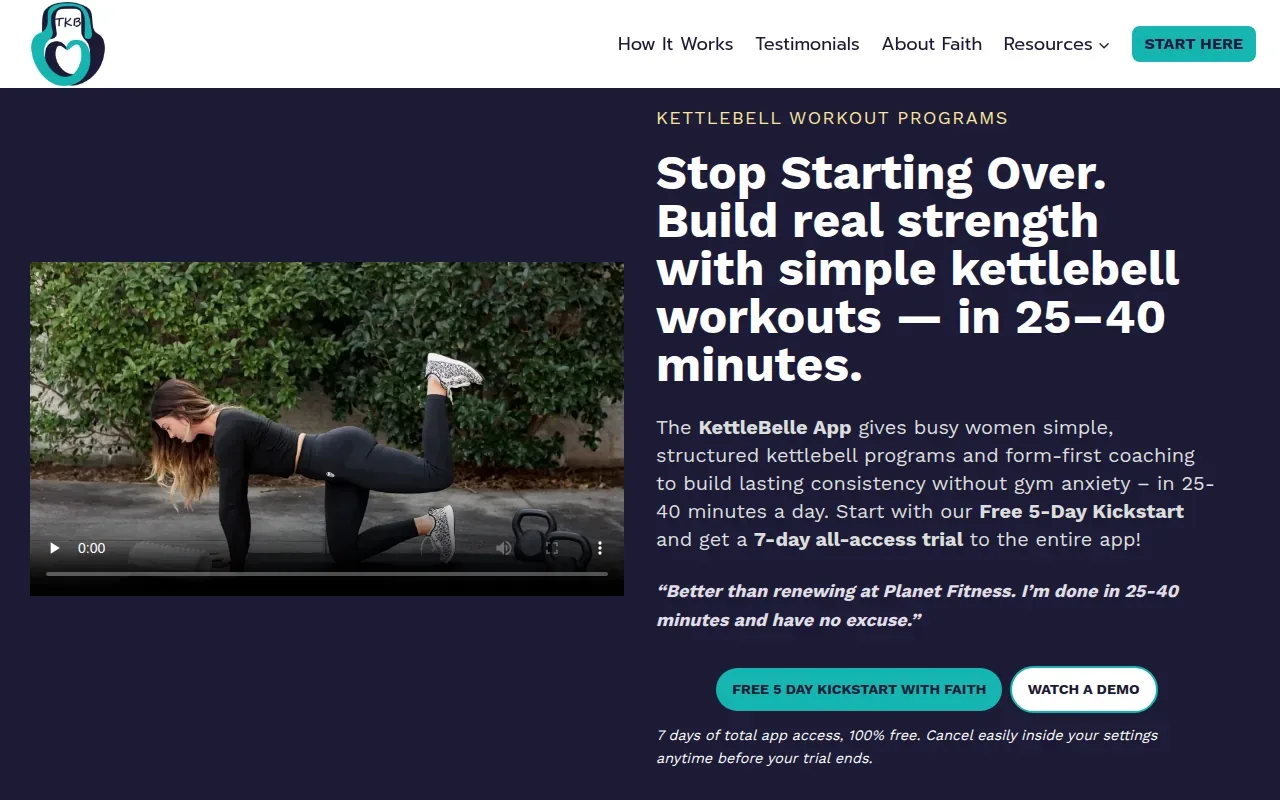
The Kettlebelle offers kettlebell training for women. It may fit if you want another structured option to compare with a six-week schedule.
Duration is one useful comparison point, but it doesn’t tell you whether a plan suits your week. Before choosing any block, check how many days it asks you to train and how long each session takes. A four-week program with demanding sessions can take more planning than a longer plan with a steady pace.
Also check which movements it asks you to perform. A strength plan may use slow moves such as deadlifts or presses, while conditioning work may add faster swings. If a clean is part of the plan, the bell should move smoothly into the rack position rather than bang against your forearm. And if the workout uses timed intervals, the clock shouldn’t rush a skill you’re still learning.
This is a useful choice to compare against your available training time, but don’t judge a plan by its duration alone. Look for the full schedule, clear movement guidance, and a way to track your work. Those details tell you more about the fit than the number of weeks on the cover.
For a mother whose schedule shifts, the real question is whether the planned sessions can still happen on a busy week. If the answer depends on a perfect calendar, a more flexible structure may be easier to keep up with.
3. Cavemantraining
Cavemantraining is a kettlebell training site with workouts, programs, courses, and certifications. Its range may suit you if you want to explore different formats or need training material for more than one skill level.
It offers workouts for beginners and intermediate users, including strength, cardio, flexibility, and endurance formats. Its workout library includes follow-along videos. It also has workout books, tutorials, and free PDFs.
That breadth is useful when you want choices. But a workout library and a set six-week plan solve different problems. A library gives you sessions to pick from. A program should tell you which session comes next and how to adjust the work as you get stronger.
If you use a library, keep your own simple log. Write down the movement, the bell’s weight, the reps, and whether your form stayed steady. Then repeat a session before making it harder. For swings, that means keeping the hinge crisp and stopping before fatigue changes the movement into a squat.
Cavemantraining also covers warm-ups and mobility. Those topics matter when you’re preparing for faster lifts or overhead work. A warm-up doesn’t need to become another workout. Rehearse the movements you’ll load, then do a few easy reps before starting the work sets.
Choose this format if you enjoy selecting sessions and learning at your own pace. If you’d rather follow a single schedule, a program with a set weekly arc may be simpler to manage around family routines.
4. Simple & Sinister by StrongFirst
Simple & Sinister by StrongFirst is a focused kettlebell routine built around swings and Turkish get-ups. It may suit you if you prefer to repeat a small set of movements and work on skill over time.
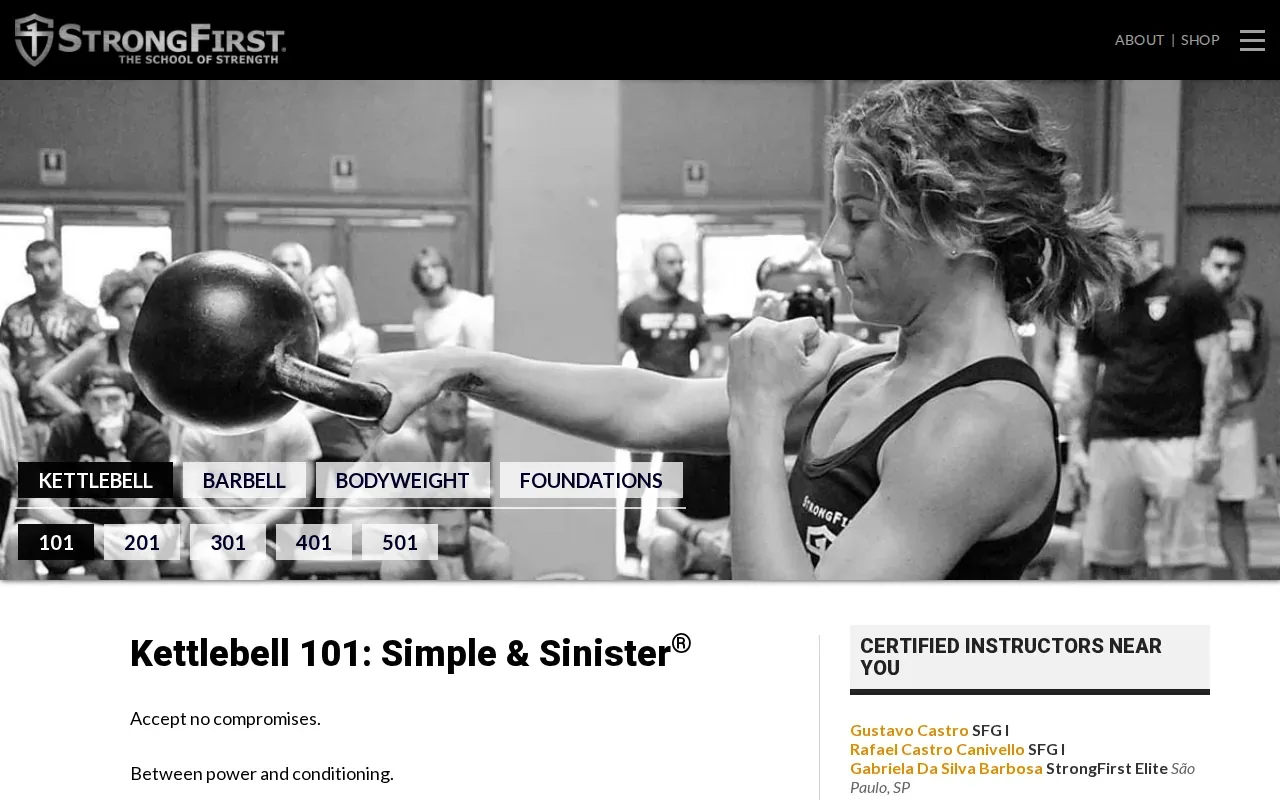
A swing trains the hip hinge. A Turkish get-up takes you from the floor to standing while you hold the kettlebell overhead. That get-up asks for control through several positions, so it’s worth learning slowly. Keep your eyes on the bell as you move, and pause if you lose a stable shoulder or balanced position.
The routine is open-ended rather than a fixed six-week block. It uses one kettlebell at a time, for one-arm swings and get-ups. It is not a learn-from-scratch plan: you should already swing and get up with steady form before you begin.
The narrow movement menu is its strength and its trade-off. Repeating the same lifts gives you room to practice. But it won’t provide the same variety as a program that includes squats, presses, and rows in a broader weekly plan.
Pick it if you want a short, repeatable practice and already have the skill to perform the lifts. If your goal is a broader full-body plan, compare its focused format with a schedule that trains more movement patterns.
Kettlebell Strength Training Programs Compared
Use this table to compare the shape of each option, not to declare one format best for every lifter. Your available time and current skill level should guide the choice.
| Option | Schedule or format | Equipment | Best fit |
|---|---|---|---|
| Hybrid Fit Mom | Six weeks; four sessions weekly, including a shorter core session | One kettlebell | Busy women and mothers who want a progressive home plan |
| The Kettlebelle | Kettlebell training for women | See website | People comparing another structured option |
| Cavemantraining | Workout library, programs, and learning material | Kettlebells | People who want a range of sessions |
| Simple & Sinister by StrongFirst | Open-ended practice of swings and get-ups | One kettlebell at a time | Intermediate users who prefer repeated practice |
A short session isn’t automatically easier to fit. Consider how many days it asks you to train and whether the plan tells you what to do next. Hybrid Fit Mom has a defined six-week schedule; Cavemantraining gives you a library to choose from. Those are different ways to organize your week.
For a more movement-based view of home training, the article on full-body kettlebell workouts for busy women explains how hinges, squats, presses, and rows can fit into one session.
What a Strong Kettlebell Program Should Include
A useful kettlebell strength training program gives you a schedule, a way to progress, and movements you can do with sound form. It should also match your current skill. A plan that asks for snatches before you can control a swing is asking too much too soon.
Full-body movement, not random exercise picks
Look for a mix of lower-body strength and upper-body work. A deadlift or swing uses the hip hinge. A goblet squat trains the squat pattern. A press adds overhead strength, while a row trains pulling. You don’t need every move in every workout, but the plan should cover more than one pattern over the week.
Progression you can track
Progression means the work changes in a planned way. That might mean adding a rep, a set, or load when your form stays steady. It may also mean reducing rest while keeping each rep controlled. Pick one change at a time. If the bell starts drifting or your back rounds, keep the same load or stop the set.
A simple training log can be a note on paper. Record the move, load, reps, and how the set felt. On the next session, you’ll know whether to repeat the work or make a small change. Don’t add weight just because a calendar says it’s week two.
Enough rest to keep good reps
Rest is part of strength training, not a sign that you’re slacking. A video workout may use timed rounds, but technical moves such as cleans and get-ups need enough time to stay smooth.
Warm-up, form, and recovery
Before loading a hinge, practice it without the bell. Send your hips back, keep your spine long, then stand by driving your hips forward. For a press, keep your ribs down and your forearm steady as the bell moves overhead. A warm-up should prepare those shapes, not tire you out.
Recovery also includes food, sleep, and easier days. Hybrid Fit Mom includes an eating framework. For background, kettlebell training research can offer context, not a promise about what one specific plan will do for you.
FAQ
Can I build strength with one kettlebell?
Yes, one kettlebell can support a full-body strength plan. You can use it for moves such as deadlifts, goblet squats, rows, and presses. The key is to choose a load you can control and follow a progression that keeps reps clean. Some programs use more than one bell, so check the equipment needs before you commit.
How many days a week should I train with a kettlebell?
Follow the schedule of the plan you choose, then make sure it fits your recovery and home routine. Hybrid Fit Mom schedules four sessions a week, including a shorter core day. Other plans may combine strength and conditioning sessions with mobility work. A workout library gives you more control, but you’ll need to organize your own week.
Is a kettlebell program suitable for beginners?
Some programs are designed for beginners, while others expect you to know the main lifts already. Beginner plans may teach kettlebell basics, while Simple & Sinister by StrongFirst is intermediate. If swings or presses still feel awkward, start with a plan that teaches the movement before adding speed or complex combinations.
How do I know when to use a heavier kettlebell?
Use a heavier bell when you can complete the planned reps with steady form and still control the hardest part of the movement. Don’t base the choice on an easy move if another exercise in the session feels shaky. If you can’t keep your grip, rack, or hinge position, stay with the current load or reduce the reps.
Conclusion
For busy women and mothers who want a set home schedule, Hybrid Fit Mom is the closest match in this shortlist. Check the six-week weekly layout, then choose a single kettlebell you can control through the planned movements and start with the first session.