Best Kettlebell Circuit Workout Ideas for Home


Got one kettlebell and 20 minutes? You can train your whole body at home without turning the session into a race. These kettlebell circuit workout ideas include quick options and longer plans, so you can pick one that fits your skills and your week.
An analysis of 56 comments and questions from YouTube and Quora about kettlebell circuit workouts found that 14% mentioned short, convenient home workouts.
1. 20-Minute Single-Bell AMRAP: A Flexible, Time-Capped Circuit
This circuit uses one kettlebell and five stations. AMRAP means “as many rounds as possible,” but the aim is steady, clean work, not a record number of rounds. It suits you if you already know the basic moves and want a clear 20-minute session.
Before you start, clear the floor around you and check that the bell handle is dry. Take a few minutes to walk or march in place, then rehearse a hip hinge, an easy squat, and a few unloaded shoulder reaches. If you’re new to swings, practice deadlifts first. Fast reps won’t fix a hinge you haven’t learned.
- 10 two-hand swings
- 10 goblet squats
- 10 overhead presses, split evenly between arms
- 5 rows per side
- 10 push-ups, with hands raised on a sturdy surface if needed
Repeat at a pace that lets you breathe between moves. For swings, send your hips back, then snap them forward. The bell should float; your arms guide it. On the press, keep your ribs stacked over your hips instead of leaning back. Stop or rest when your form changes.
The single-bell circuit is easy to scale: use fewer reps, take longer rests, or stop before the 20-minute mark. Add rounds only after the reps stay tidy. A step-by-step kettlebell swing form guide can help you check the hinge before adding speed.
2. Simple and Sinister: A Minimalist Swing-and-Get-Up Session
Simple and Sinister centers on two moves: the one-hand swing and the Turkish get-up. It suits you if you like a small menu of exercises and can practice them often. It’s a focused routine, not a varied full-body circuit.
The standard work is 100 swings and 10 get-ups. That means 10 sets of 10 swings, then 10 single get-ups, with five on each side. Rest as long as you need at first. The session can take around 20 minutes once you’ve built up to that pace, while early sessions may take longer.
Use a warm-up that prepares the same areas you’ll train. A short sequence of prying goblet squats, kettlebell halos, and hip bridges is one example. For each swing, hike the bell back between your legs and drive through your hips. Don’t lift it out in front with your arms.
The get-up asks for patience. You move from the floor to standing while keeping the bell overhead. Learn each position with no load or a very light bell before you add weight. If your arm wobbles or you lose control, set the bell down safely and return to a simpler version.
Progress comes from taking less rest over time, not from rushing each rep. Once your breathing settles quickly and every rep stays crisp, you can gradually shorten the breaks. It’s a long-term practice, so it may suit you better as a regular strength habit than as your only circuit.
If you want a weekly routine with more than two movements, compare these full-body kettlebell workouts for busy women before deciding what to repeat.
3. ABC Kettlebell Program: A Complex-Based Option for Intermediate Trainees
The ABC Kettlebell Program is a six-week plan with longer sessions. It’s for intermediate trainees who already know how to clean, press, swing, squat, and row. If those moves still feel new, build skill with simpler sessions before trying a more demanding complex.
A complex links several lifts in sequence, usually without setting the bell down between moves. That makes the transitions part of the work. You need to know where the bell should sit after a clean, how to brace during a press, and how to keep your balance during a squat.
The program changes its training demand across phases. That gives the six weeks a planned shape instead of asking you to repeat the same hard circuit every day. Still, a longer session takes more room in a busy week than the 20-minute options above. Pick a time when you can work without rushing from one task to the next.
Start each session with unloaded practice of the movements you’ll use. Keep the first complex controlled. If the clean bangs against your forearm, or the press turns into a backbend, pause and use a lighter bell. Your last rep should look much like your first.
This is the best fit here if you’ve built solid skills and want a longer, phased block. It’s less suitable when you’re learning the main lifts or need a session that fits neatly into a short break.
4. 30-Day Pressing Program: A Short Ladder for Upper-Body Focus
This four-week pressing plan uses a one-two-three rep ladder to build overhead pressing practice. It suits you if you want a short session with a clear focus, rather than a full-body circuit. Each rung gives you a chance to reset your stance and rack position.
Clean the bell to your shoulder, then press one rep. Switch arms and repeat. Continue with two reps per side, then three per side. That completes one ladder. Rest until your breathing settles and your shoulders feel ready before starting another.
Keep your feet planted and your middle braced. Press the bell overhead without leaning back to finish the rep. If you can’t keep your ribs over your hips, use a lighter bell or stop the set. Rest is part of the plan, not a sign that you’re doing it wrong.
For a simple progression, make the reps smooth before adding another ladder. Don’t increase the load and chase more reps in the same session. This routine gives the shoulders and arms more work, so pair it with a separate lower-body or hinge session if you want a more balanced week.
Pressing is a skill, and small changes in setup can affect how each rep feels. These kettlebell upper-body routines include more press and row pairings for days when you want a broader upper-body session.
5. Kettlebell KUTS: A Coach-Led Follow-Along Session
Kettlebell KUTS is a 30-minute online video session for people who prefer a coach on screen to a written list. Press play, follow the session, and spend less of your workout deciding what comes next. That can help if saved clips keep piling up but don’t tell you how to train across a week.
A follow-along format can make timing easier. You can watch the coach move between exercises, then pause when you need more time to reset. Keep your own form as the guide, though. The screen can’t tell you when a rep has become too rushed or your grip is fading.
Before starting, make sure you know the moves in the session. Keep space around the bell, and choose a load you can control through the planned work. If a movement is unfamiliar, pause the video and practice it slowly before joining the pace.
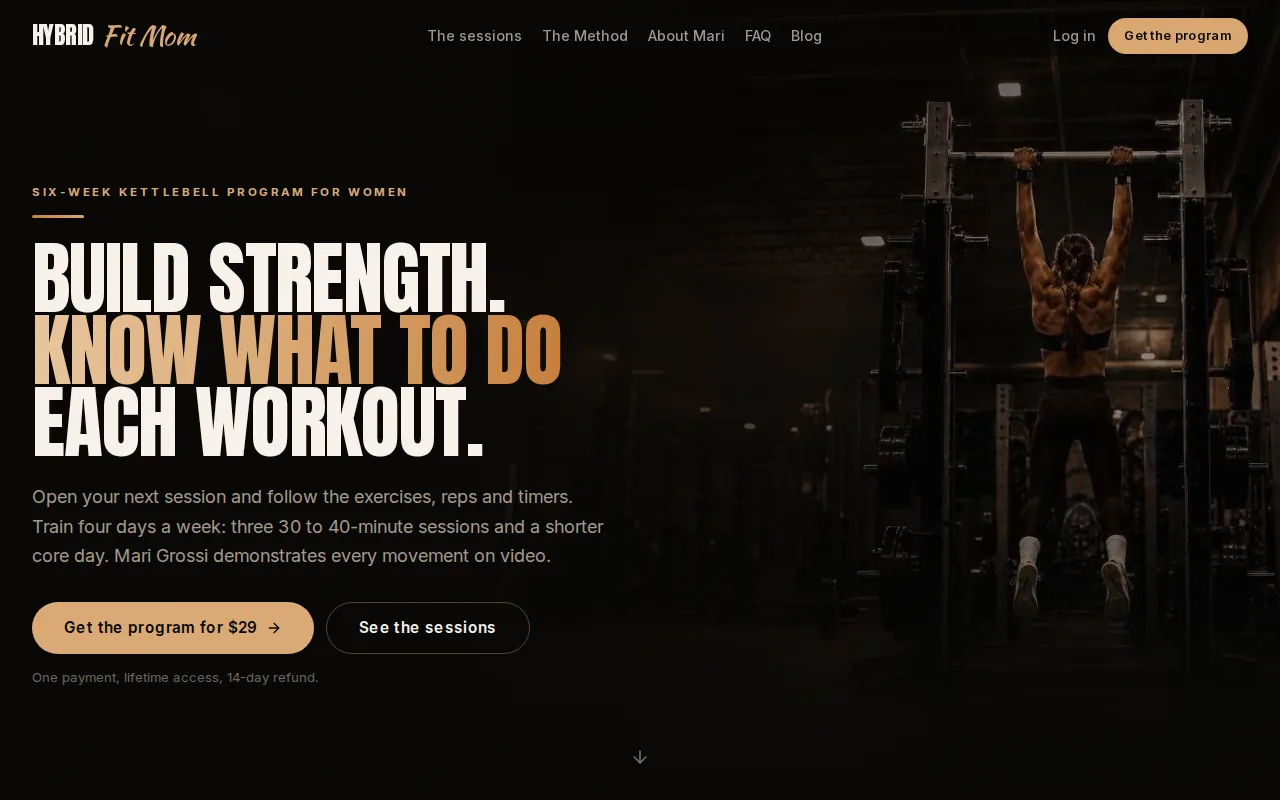
A single video is a session, not automatically a full training plan. If your aim is to build strength over several weeks, check that the plan tells you what to do next and how to progress. Hybrid Fit Mom’s self-guided six-week program is designed for busy women and mothers with basic kettlebell skills. It includes progressive home workouts and prerecorded exercise demos, with lifetime access.
That structure can be a better match when you want more than a workout to follow today. Hybrid Fit Mom’s program has 24 sessions, planned at four per week, with most sessions lasting about 30 to 40 minutes. For a busy household, having a plan already laid out can save the weekly “what should I do now?” debate.
Compare These Kettlebell Circuit Workout Options
Each option has a different time and skill demand. Use this table to choose a session that fits the training you can do well now. Longer plans don’t always mean longer daily workouts: the quick circuits take less time per session, while a six-week cycle gives you a longer progression window.
| Option | Time or length | Best fit | What to watch |
|---|---|---|---|
| 20-Minute Single-Bell AMRAP | 20 minutes | You know the basic moves and want a timed circuit | Don’t chase rounds when your form slips |
| Simple and Sinister | About 20 minutes once established | You want repeatable swing and get-up practice | Learn the get-up before loading it |
| ABC Kettlebell Program | Six weeks, longer sessions | You’re comfortable with the main kettlebell lifts | Allow enough time for each session |
| 30-Day Pressing Program | Four weeks | You want a short overhead press focus | Keep your trunk steady as reps rise |
| Kettlebell KUTS | 30 minutes | You prefer following a coach on screen | Pause when you need to reset or adjust |
For many mothers, the most useful choice is the one you can repeat without guessing. A short circuit can work on a packed day. For long-term strength, Hybrid Fit Mom offers a six-week plan with four workouts per week, prerecorded demonstrations, and lifetime access. It costs $29 as a one-time purchase and includes a 14-day refund.
FAQ
How long should a kettlebell circuit workout be?
A home circuit can take 15 to 20 minutes, while a longer strength session may take 30 to 45 minutes. Pick a duration that leaves time to warm up and keep your reps controlled. A short session you can repeat is often a better fit than a long workout you have to rush.
Can I do a full-body kettlebell circuit with one bell?
Yes, one bell is enough for a full-body circuit. Pair a hinge such as a swing with a squat, then add a press and row. Choose a load you can control across the moves, because the best weight for swings may not feel right overhead.
How do I make a kettlebell circuit harder?
Make one change at a time. First add a clean round or a few reps while keeping your form steady. You can also use a heavier bell or shorten your rest, but don’t change all three at once. Stop the set when you can’t keep the same control.
Are kettlebell circuits suitable after pregnancy?
It depends on your recovery, symptoms, and current strength. Ask a qualified health professional when you’re unsure, especially before adding swings or overhead lifts. Start with movements you can do without pain or pressure, then build up gradually. A coach who understands your needs can help you adjust the session.
Conclusion
For a quick home session, start with the single-bell AMRAP and keep the pace calm enough to hold good form. If you want a plan that carries you beyond today’s workout, look at Hybrid Fit Mom’s six-week program and check whether its four-session week fits your calendar.