Best Shoulder Kettlebell Workouts: 5 Moves to Try


Kettlebells can make shoulder training feel simple: one bell, a few clear moves, and no trip to the gym. These shoulder kettlebell workouts give you five options to build overhead strength and control. Hybrid Fit Mom also offers a six-week home program for women who want a set schedule instead of saved clips.
An analysis of 32 YouTube comments about shoulder kettlebell workouts found that 25% mentioned quick, efficient workout routines.
1. Half-Kneeling Single-Arm Kettlebell Press: Build Control and Stability
This press starts with one knee on the floor and the kettlebell held at your shoulder. It’s a strong first pick if you want to practice pressing without using a leg drive. The kneeling stance also makes it easier to notice when your trunk twists or your ribs flare.
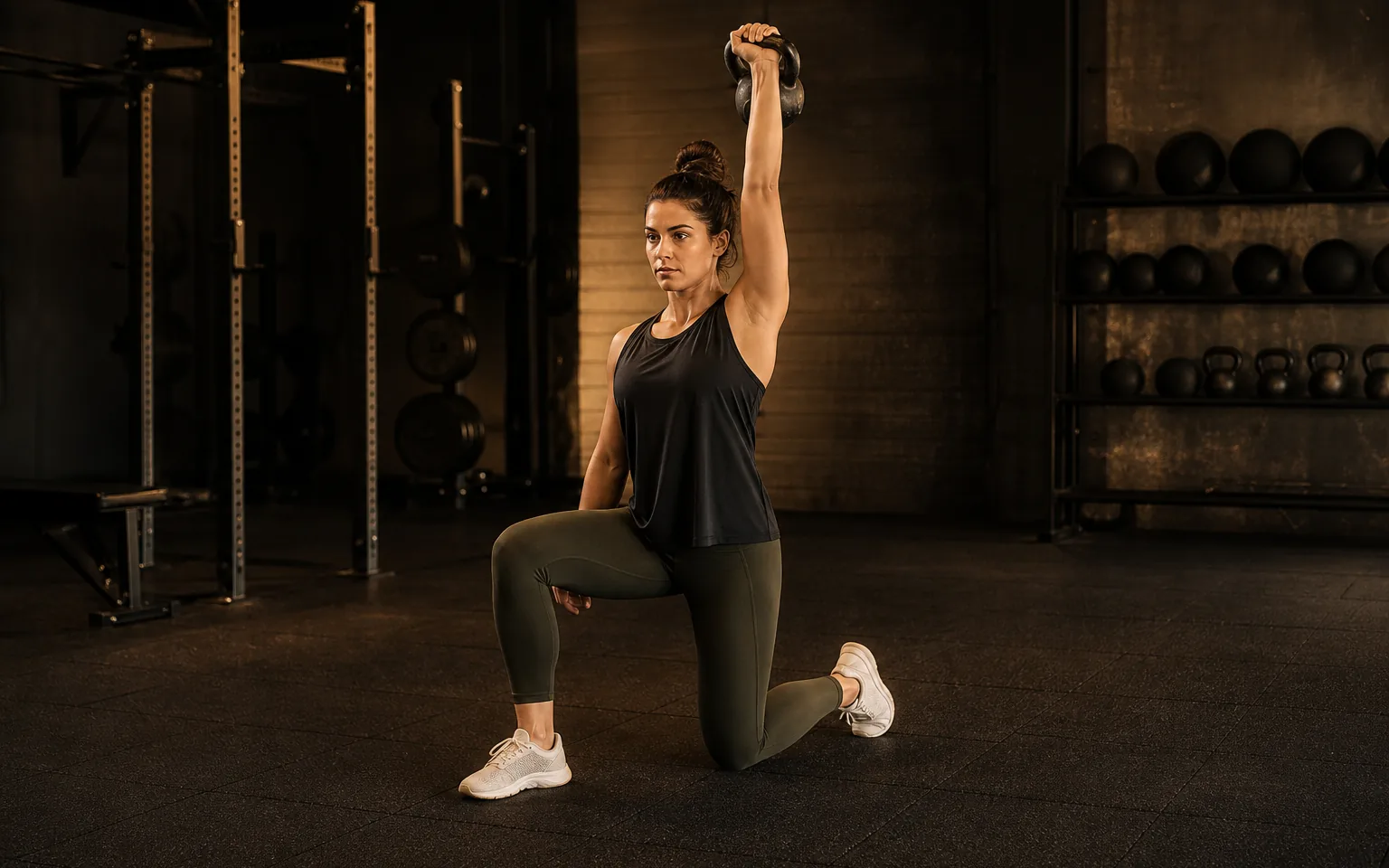
Set the knee on the same side as the pressing arm down, with your other foot flat in front. Hold the bell in the rack position, brace your middle, then press overhead. Keep your ribs over your hips. Lower the bell with control, and match the same number of clean reps on each side.
Try 3 sets of 5 to 8 reps per side. Rest about a minute between sets. Start with a bell you can press without leaning back or shifting your hips. If you lose your position, stop the set there; more reps won’t help if they come with a twist.
This move fits well into a home strength session alongside a row. For more options that pair strength with a weekly plan, see kettlebell strength workouts for busy women.
Use the kneeling version when you want control first. Once each side looks steady, try a standing press with the same bell.
2. Standing Kettlebell Strict Press: Train Straightforward Overhead Strength
The strict press is a standing overhead press with no help from your legs. It suits you if you can hold a stable rack position and want a clear way to build pressing strength. The rule is simple: your arm does the press, while your trunk keeps your body still.
Stand with your feet about hip-width apart. Hold the kettlebell at shoulder height, with your wrist straight and elbow near your side. Brace your abs and squeeze your glutes. Press the bell up, bringing your head through once it clears your face. Finish with your arm overhead, then lower it to the rack without arching your low back.
Begin with 3 sets of 4 to 6 reps per arm. Rest 60 to 90 seconds between sets. If you can’t keep your ribs down, reduce the load or return to the half-kneeling press. A small lean may feel like a shortcut, but it changes the lift.
Keep breathing while you brace. Think of your ribs drawing closer to your belt line, not your whole body crunching forward. Your shoulder should move freely as the bell rises; don’t force a range that feels painful.
Strict pressing also gives you a useful way to track progress. Use the same bell and clean form before you add weight. For more ideas on building a strength-focused kettlebell routine, explore kettlebell exercises for muscle gain. If you train both arms, start with the side that feels less steady and let that side set the rep count.
3. Kettlebell Push Press: Add a Small Power Element
A push press uses a short knee dip to help move the bell overhead. It’s a good choice once you know the rack position and can control a strict press. The leg drive helps you move through the press, but you still need a firm lockout and a controlled return.
Start with the bell racked at your shoulder. Keep your chest tall as you bend your knees a little, then drive through your feet. As your legs straighten, press the bell overhead. Keep your wrist stacked under the bell, then lower to the rack and reset before the next rep.
Use 3 sets of 4 to 6 reps per side, with 60 to 90 seconds of rest. Make each dip short and quick. If it turns into a deep squat, or your arm presses before your legs drive, pause and practice with a lighter bell.
A common fault is leaning back to finish. Keep the bell’s path close, and don’t use your lower back to push it past a sticking point.
Because this move is faster than a strict press, don’t rush the lowering phase. Set the bell down if your grip or position is slipping. For a busy session, place push presses after a short warm-up and before slower strength work.
4. Kettlebell Halo: Add Controlled Shoulder Movement
The halo circles a kettlebell around your head while both hands hold its horns. It’s a useful light-load choice when you want controlled shoulder movement before presses. It isn’t a contest to make the biggest circle. The bell should travel smoothly without bumping your head or neck.
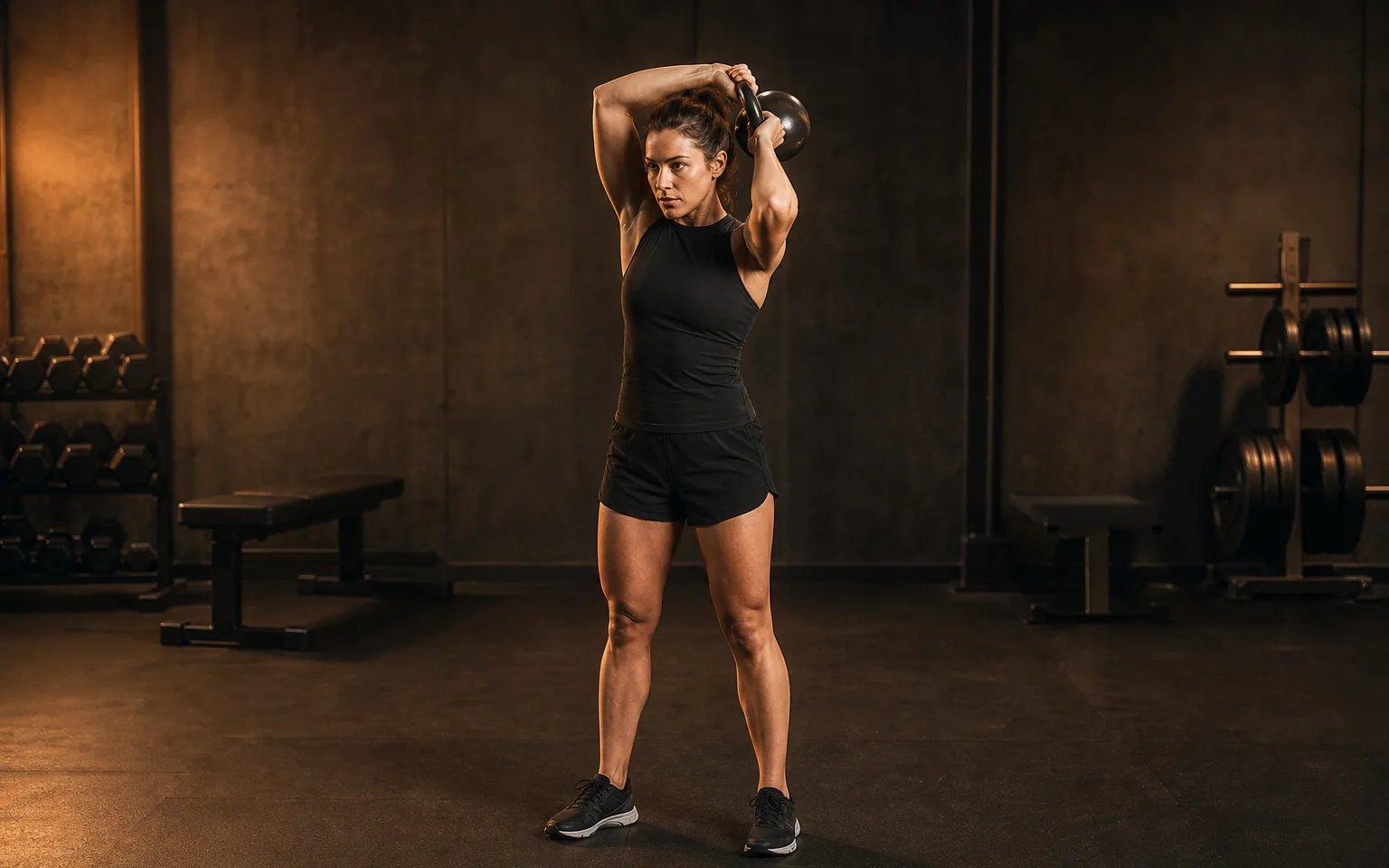
Stand with soft knees and hold the bell close to your chest. Brace your middle, then guide it around your head. Keep your head still as the bell passes behind it. Complete the planned reps in one direction, then switch directions. If your back arches or your shoulders shrug, make the circle smaller.
Try 2 sets of 6 to 8 circles each way with a light kettlebell. You can use the halo in a warm-up, but keep the motion comfortable and unhurried. It won’t replace a full warm-up: spend a few minutes moving your arms through an easy range and rehearsing the press with no load.
Keep the circle close around your head, brace your core, and breathe normally. If the bell swings wide or your neck moves to make room, slow down and shorten the path.
Use this as a primer, not a heavy strength test. If the movement feels uncomfortable, leave it out and choose a range you can control.
5. Kettlebell Waiter Carry: Challenge Overhead Stability While Walking
A waiter carry is a walk with one kettlebell held overhead. It’s for you if you can press the bell overhead and keep your arm steady. The walking adds a balance demand, so start with a short path and a load you can control.
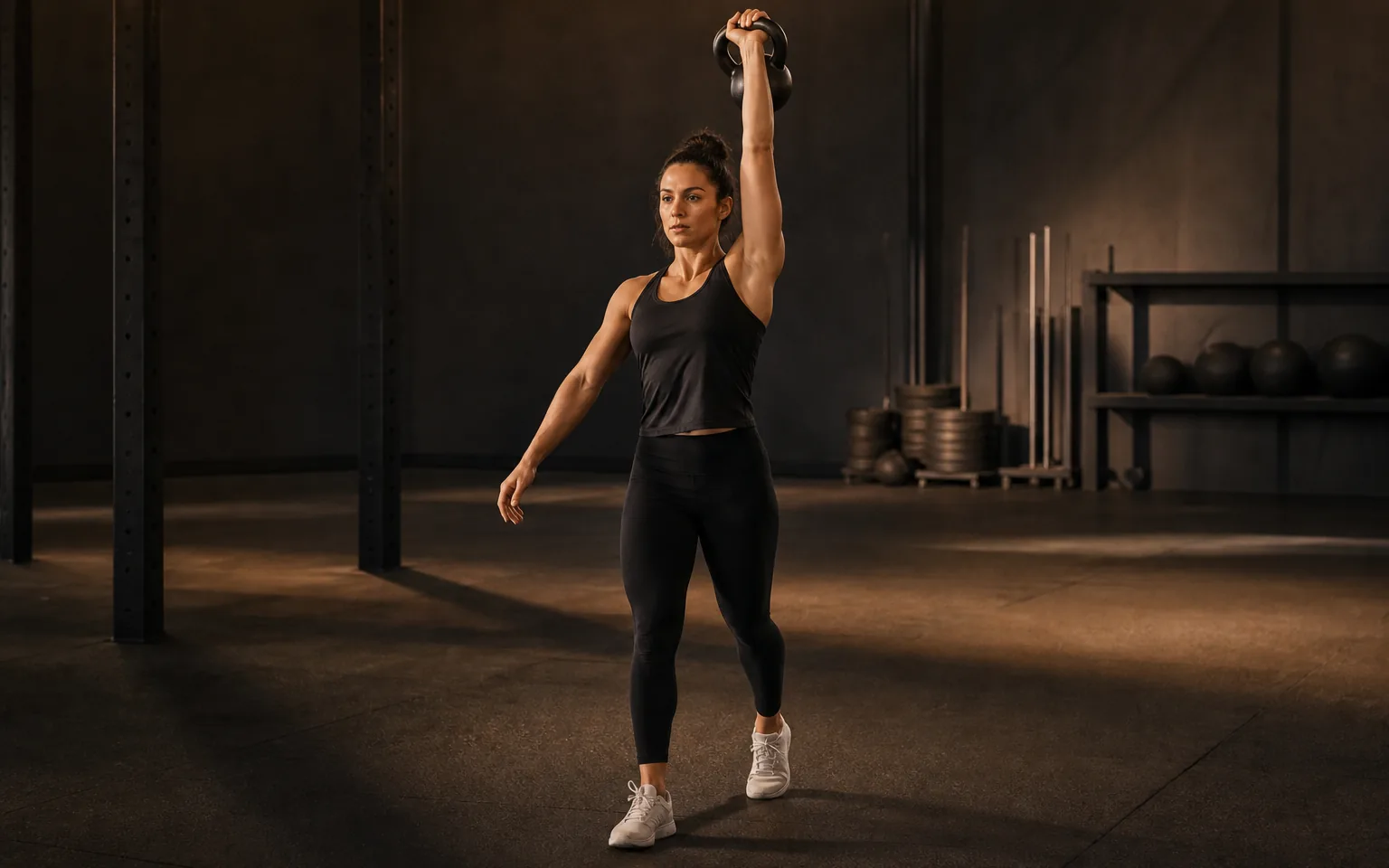
Press the bell overhead and pause to check your wrist, elbow, and shoulder. Keep your upper arm near your ear without forcing it back. Walk slowly for 10 to 20 steps, then lower the bell with control. Switch arms and repeat. Stay tall; don’t lean away from the load.
Start with 2 or 3 short walks per side. Rest as needed between arms. If the bell wobbles or your shoulder feels pinched, stop and use a lighter bell or return to a stationary hold. Clear the walking path first, especially if children or pets share the room.
Make the walk longer only after you can keep the bell still for the full distance. This is a stability drill, not a race across the living room.
Quick Comparison: Which Shoulder Move Fits Your Session?
Choose the move that fits your skill today, not the one that looks hardest. You can pair one press with a halo or carry, then finish the session. If you’re training your whole body that day, keep the shoulder work brief and leave energy for the rest of the plan.
| Move | Best use | Starter dose | Keep an eye on |
|---|---|---|---|
| Half-kneeling press | Practicing control on each side | 3 sets of 5–8 per arm | Torso twist or rib flare |
| Strict press | Building overhead strength | 3 sets of 4–6 per arm | Leaning back to finish |
| Push press | Adding leg drive to a press | 3 sets of 4–6 per arm | Deep dip or rushed lockout |
| Halo | Light, controlled shoulder motion | 2 sets of 6–8 each way | Bell swinging wide |
| Waiter carry | Practicing overhead control while walking | 2–3 short walks per arm | Wobbling or leaning |
For a simple shoulder session, warm up for a few minutes, then do the half-kneeling press for 3 sets per arm. Add 2 sets of halos, followed by 2 short waiter carries per side. Rest until you can keep good form. On another day, choose either the strict press or push press, rather than stacking both heavy presses together.
Train these moves once or twice a week at first, with at least a day between harder press sessions. When every rep feels steady, add a small amount of work: one rep per set, a slightly longer carry, or a heavier bell. Change one thing at a time. The next step should still let you move without pain or a loss of control.
Hybrid Fit Mom’s self-guided six-week program follows a set weekly rhythm: three workouts of about 30 to 40 minutes, plus a core day of about 20 minutes. It includes prerecorded demonstrations and an eating framework, with one-time purchase and lifetime access to future programs. If you want a wider home routine around shoulder work, browse full-body kettlebell workouts for busy women.
A saved workout can tell you what to do today. A plan also tells you what comes next. That difference matters when your training has to fit around work, school runs, and bedtime.
FAQs About Shoulder Kettlebell Workouts
How often should I train my shoulders with a kettlebell?
Start with one or two shoulder sessions a week, leaving at least a day between harder pressing days. Your shoulders also work during other upper-body training, so count those sessions too. If your reps get shaky or soreness changes how you move, take more recovery time before you train overhead again.
What weight kettlebell should I use for shoulder presses?
Choose a bell you can press for your planned reps without leaning back, twisting, or bending your wrist. Start lighter than you think you need, especially for the half-kneeling press. When you can complete every set with steady form, add a small amount of load or one rep per set.
Can I do kettlebell shoulder exercises at home?
Yes. These five moves need a kettlebell and enough clear space to press overhead or walk a few steps. Check that the ceiling is high enough before you press. For carries, move loose items out of the path and keep children and pets clear while the bell is overhead.
Should I stop if a shoulder exercise hurts?
Yes. Stop the movement if you feel pain, rather than trying to push through it. You can use a lighter bell or choose another exercise only if the movement feels comfortable. If pain continues or affects daily tasks, ask a qualified health professional for guidance before returning to overhead training.
Conclusion
Begin with the half-kneeling press, then add one move that matches your goal. If you’d rather follow a set home schedule, look at Hybrid Fit Mom’s six-week program and choose a week to start.