Best Kettlebell Exercises for Muscle Gain


A kettlebell can build muscle, not just leave you breathless. The key is choosing moves you can load with control, then giving your muscles enough work and recovery to adapt. Here are 10 useful exercises, plus a simple way to combine them into a home plan.
For busy women, a clear schedule beats a folder of saved workouts. Hybrid Fit Mom’s six-week kettlebell program runs four sessions a week with one bell, three workouts of 30 to 40 minutes plus a short core day, with filmed demos and an eating framework.
1. Kettlebell Swing: Build Posterior-Chain Power
The kettlebell swing is a fast hip hinge that trains your glutes and hamstrings while your trunk stays braced. It suits you if you already know how to hinge and want a powerful movement in your full-body plan.
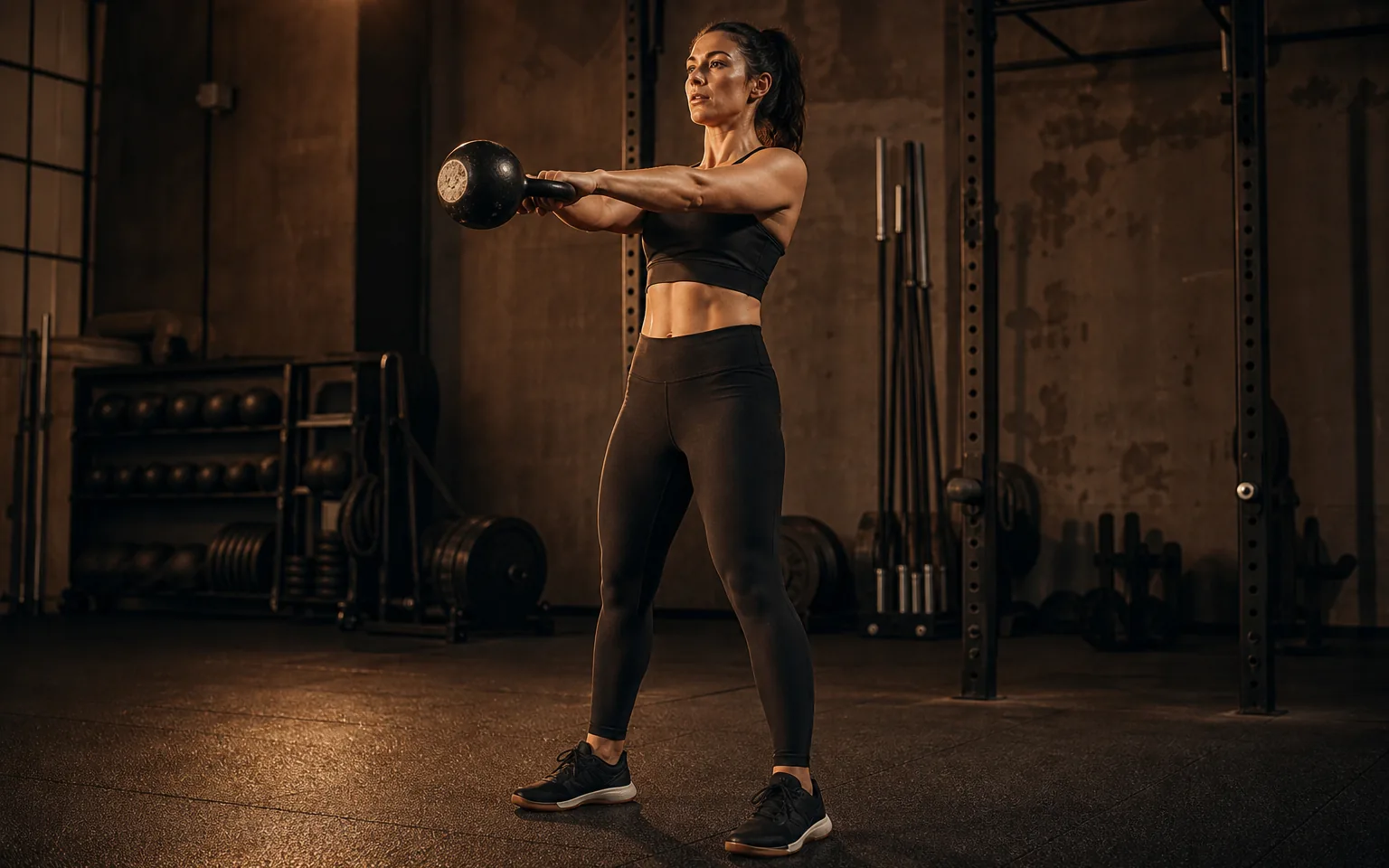
Start with the bell a short step in front of you. Hike it back between your thighs, then snap your hips forward to send it to chest height. Your arms guide the bell. They don’t lift it. Let the bell fall back, hinge again, and keep your spine steady.
Try 3 sets of 8 to 12 crisp reps, with 60 to 90 seconds of rest. Stop before the swing turns into a squat or your speed fades. Swings train power, but they don’t give your hamstrings the same slow lowering phase as a Romanian deadlift. Use both patterns if you want strength and controlled muscle-building work.
Start with a weight you can control through every rep. If the bell pulls you forward or your lower back takes over, set it down and practice deadlifts first. A good swing should feel driven by your hips, not your shoulders.
2. Goblet Squat: Train Quads and Glutes with One Bell
The goblet squat is a front-loaded squat that works your quads and glutes while asking your trunk to stay firm. It’s a strong pick if you have one kettlebell and limited floor space.
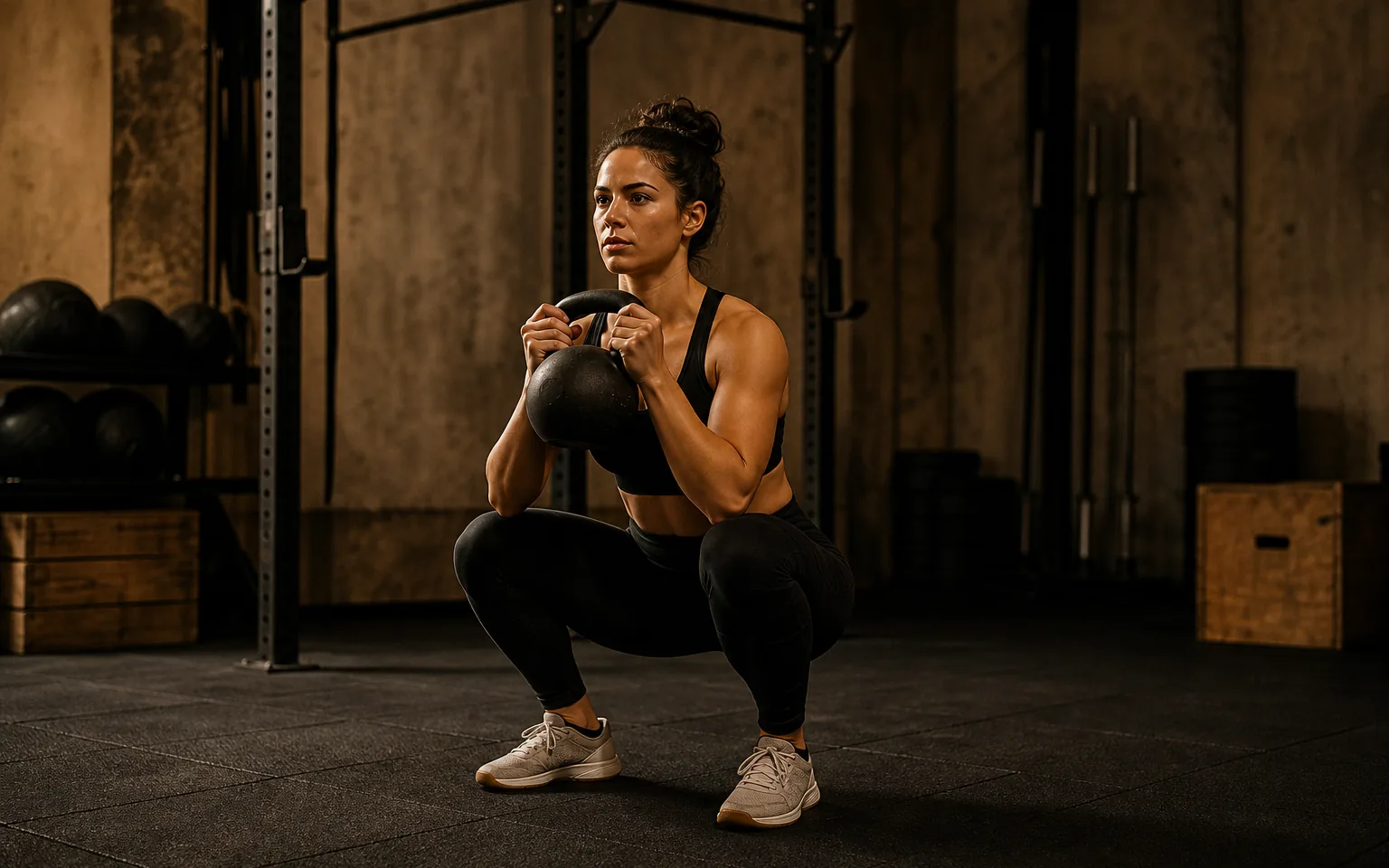
Hold the bell close to your chest by the horns or sides of the handle. Set your feet where you can squat comfortably. Sit between your hips while keeping your whole foot on the floor. Your knees can travel forward if that’s natural for your body. Stop at the deepest point where you can keep control and your back stays steady.
Use 3 or 4 sets of 6 to 12 reps. Rest about 60 to 90 seconds between sets. Pick a load that makes the final reps hard while your form stays sound. If you can easily do more than 12, add reps only if the range stays smooth, then move to a heavier bell when available.
The goblet hold can make it easier to keep your chest upright, but it can also limit how much weight you can use. When the bell feels too easy and heavier goblet loading isn’t an option, try a split squat or hold two bells in a front rack if you have them.
3. Kettlebell Clean and Press: Combine a Hinge with an Overhead Push
The clean and press brings a kettlebell from the floor or hang into the rack position, then presses it overhead. It fits you if you have basic clean skills and want a hinge followed by a controlled upper-body push.
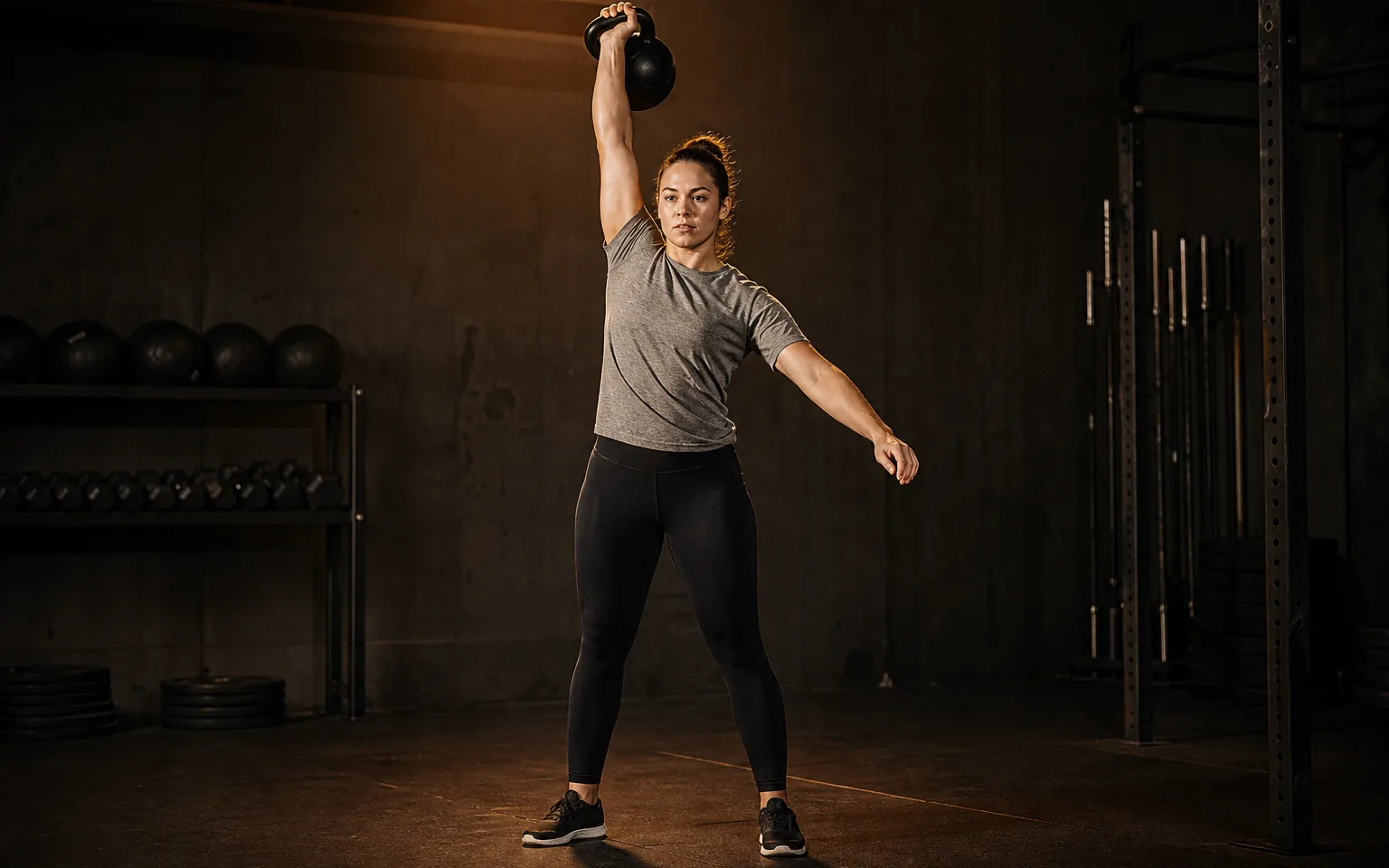
Keep the bell close as you guide it into the rack. Let it rotate around your hand rather than flipping over your wrist. Brace your middle, squeeze your glutes, and press the bell overhead without leaning back. Lower it to the rack with control, then return it to the start position.
Try 3 sets of 5 to 8 reps per side. Rest 90 to 120 seconds after both sides. Use a bell you can press smoothly. If the clean bangs your forearm or you have to arch your back to finish the press, reduce the load and practice each part on its own.
For muscle-focused sets, slow down the lowering phase. A strict press keeps the work on your shoulders and arms; a push press uses a small knee dip to help drive the bell. Learn the strict version first. Stop if overhead work causes sharp pain or numbness.
4. One-Arm Kettlebell Row: Add a Pull to Your Full-Body Training
The one-arm row trains your upper back and lats, with your trunk working to resist a twist. It’s a useful counter to pressing exercises, especially when you train at home without a cable machine.
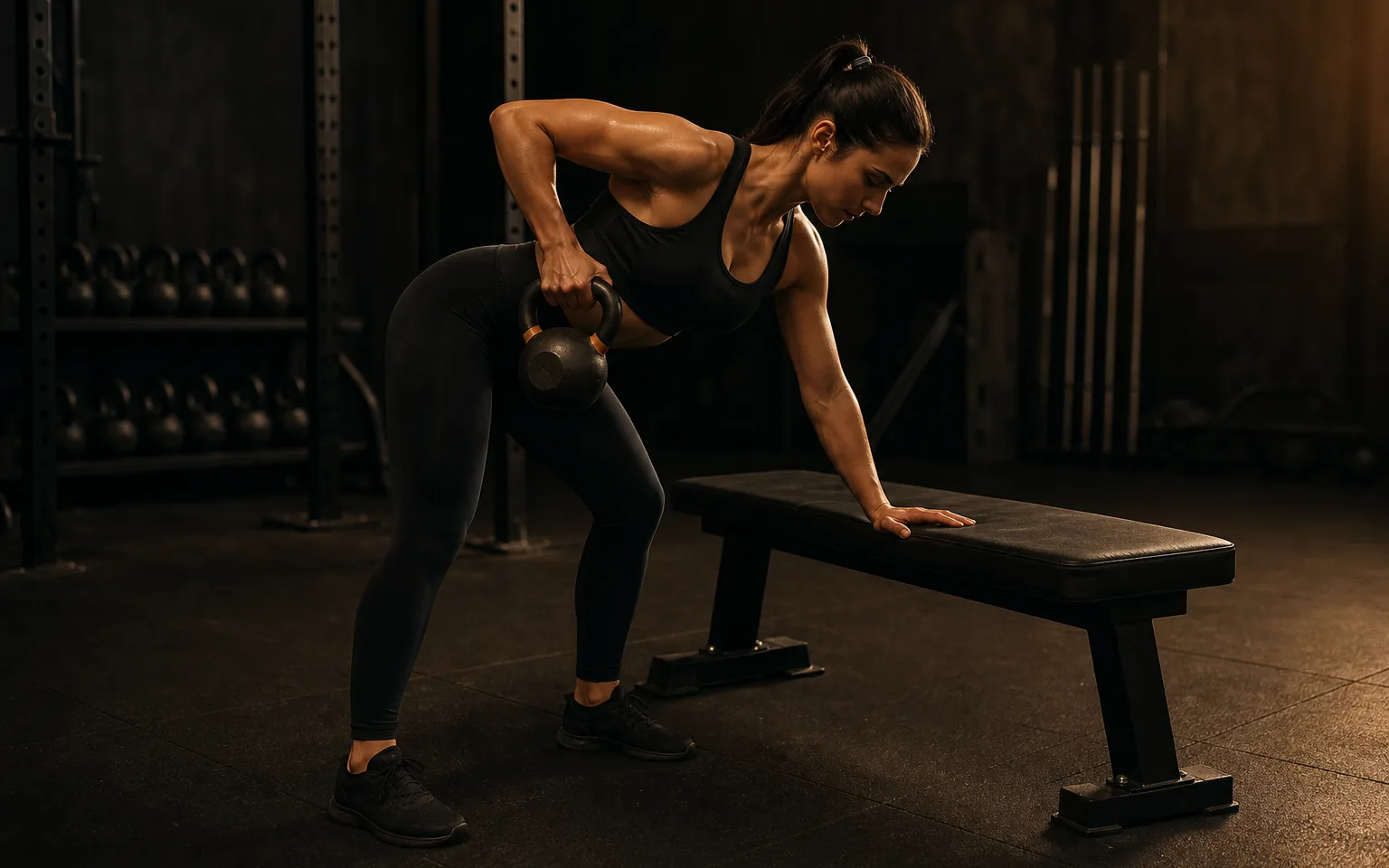
Place one hand on a sturdy chair or bench if you need support. Hinge at your hips and let the bell hang under your shoulder. Pull your elbow toward your hip, pause briefly, then lower the bell slowly. Keep your ribs and hips facing the floor instead of rotating with each rep.
Do 3 or 4 sets of 8 to 12 reps per side. Rest 60 to 90 seconds between sides or after both sides. Start with the weaker arm and match its rep count on the stronger side. That keeps one side from quietly doing more work every session.
If you can’t pause at the top without twisting, the bell is too heavy or your stance needs more support. Add load only when you can row through the full range without jerking. For balanced upper-body work, pair rows with a press rather than adding another push exercise.
5. Kettlebell Deadlift: Practice a Loaded Hip Hinge
The kettlebell deadlift teaches you to pick a weight up from the floor by driving through your hips. It works your glutes and hamstrings and makes a good starting point before swings or heavier hinge work.
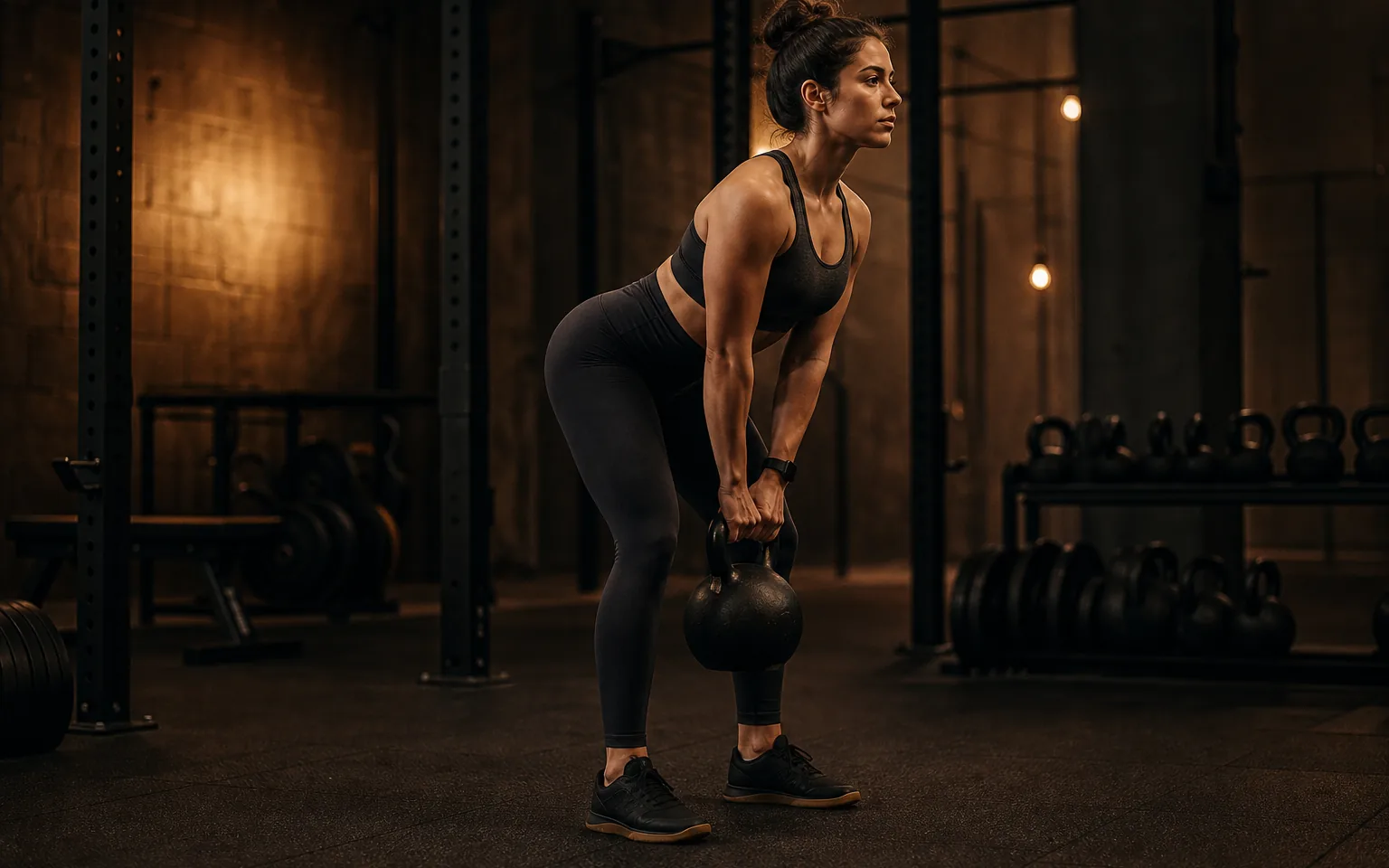
Place the bell between your feet. Push your hips back, bend your knees enough to reach the handle, and brace as if you’re about to lift a heavy grocery bag. Stand by pressing the floor away. Keep the bell close, then lower it with control. Reset on the floor between reps if that helps you hold your position.
Try 3 or 4 sets of 6 to 10 reps, resting 90 to 120 seconds. Pick a load that lets you keep a neutral back and finish each rep standing tall without leaning back. If your back rounds or the bell drifts away, reduce the weight and shorten the range until the hinge feels steady.
Once one bell is easy, you can use two bells if you own them. You can also use a staggered stance to make one leg work harder. Don’t rush the jump in load. A clean hinge is worth more than a heavier bell that changes your form.
6. Kettlebell Reverse Lunge: Build Single-Leg Strength
The reverse lunge trains one leg at a time and challenges your balance. It’s a good choice if you want leg work that needs little space and helps you spot left-to-right differences.
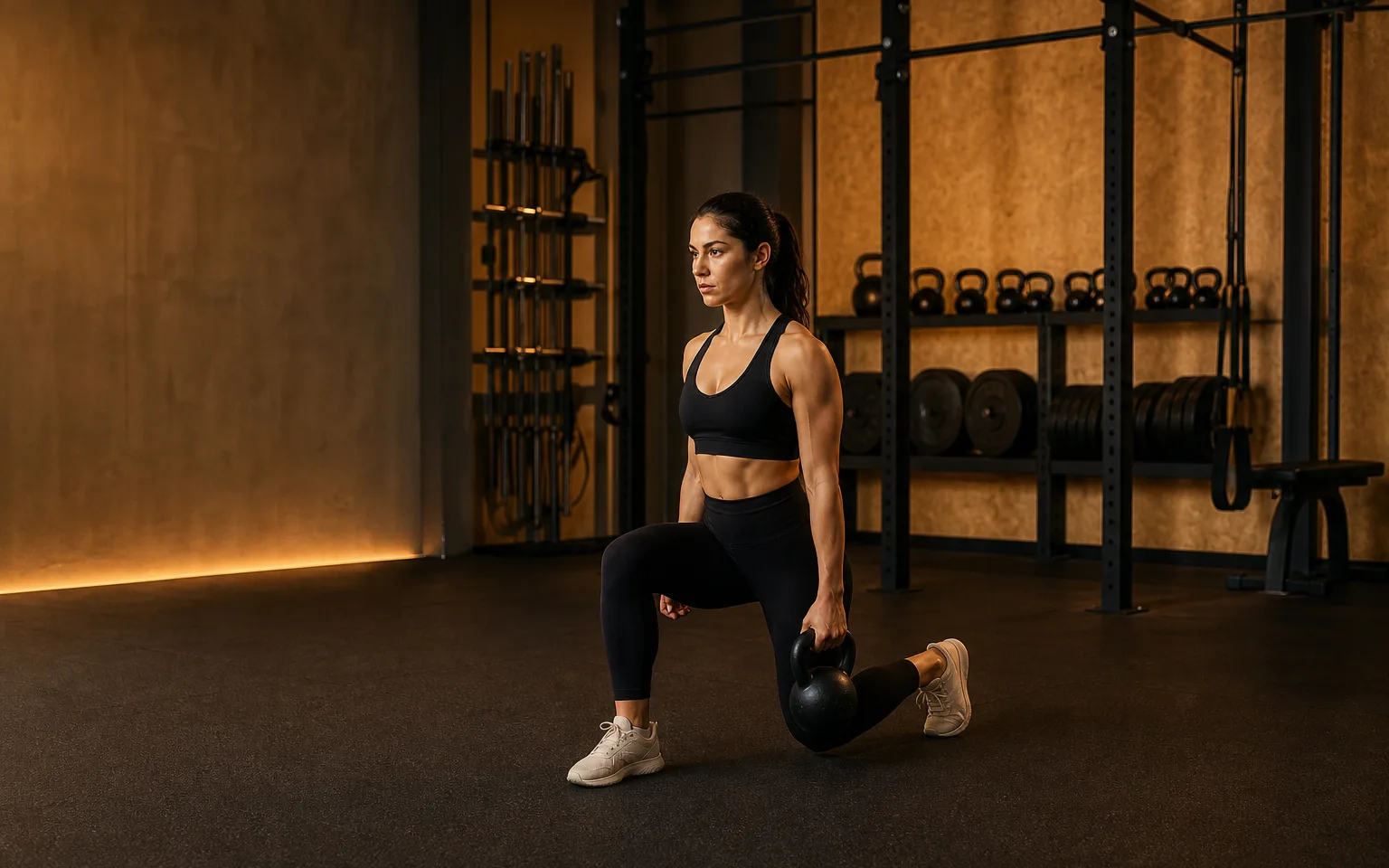
Hold the bell at your chest or by your side. Step one foot back and lower until both knees bend as far as feels controlled. Keep your front foot planted. Push through that foot to return to standing, then repeat on the other side. Use a wall or chair nearby if balance is the part that limits you.
Start with 3 sets of 6 to 10 reps per leg. Rest 60 to 90 seconds between sets. Add a bell only after bodyweight reps feel stable. If your front knee caves inward or your steps feel wobbly, shorten the step and use a smaller range for now.
Holding the bell on one side adds a trunk-stability demand. Holding it in a goblet position may feel more balanced. Choose the version that lets you train both legs with steady control. You don’t need to make every lunge a balance test.
7. Kettlebell Floor Press: Press at Home Without a Bench
The kettlebell floor press trains your chest and triceps without a bench. It suits home training because the floor limits how far your upper arm travels and gives you a stable place to work.
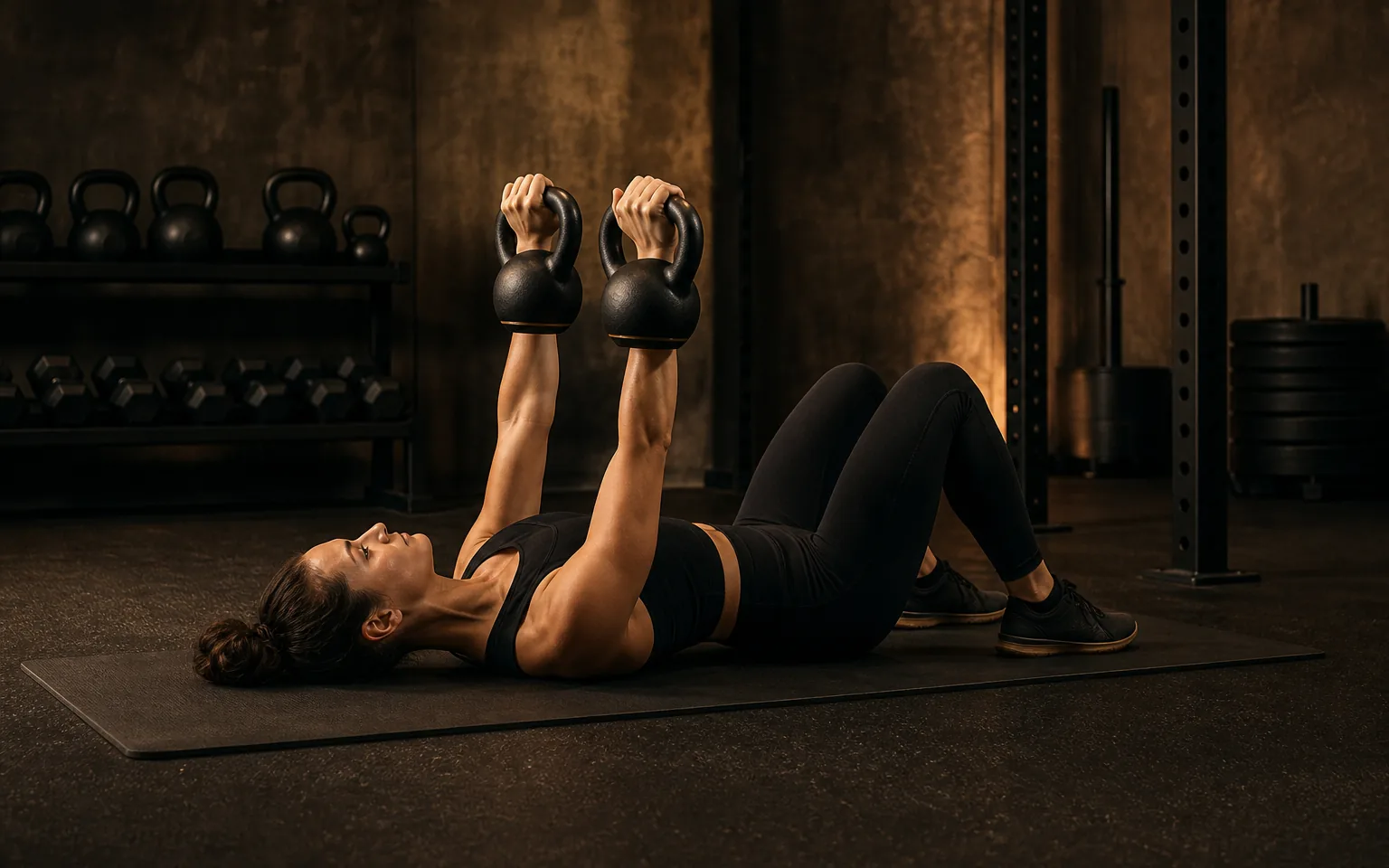
Lie on your back with knees bent. Hold one bell in each hand if you have a pair, or work one side at a time. Keep your wrists stacked above your elbows. Lower until your upper arm touches the floor gently, then press back up. Keep your ribs down rather than arching your back to finish the rep.
Use 3 sets of 8 to 12 reps. Rest about 60 to 90 seconds. Choose a load that lets you lower smoothly and keep your wrist straight. A kettlebell’s handle and offset load can feel different from a dumbbell, so practice with a light weight before you build the set.
The floor press has less range than a bench press. That’s useful if you want a simple home push, but it won’t fully replace every chest exercise. If your goal is more chest work and you later add a bench, you can include a bench press as another push pattern.
8. Kettlebell Thruster: Pair a Squat with an Overhead Press
A kettlebell thruster links a squat with an overhead press. It’s a time-efficient whole-body move, but the press often limits the weight before your legs do.
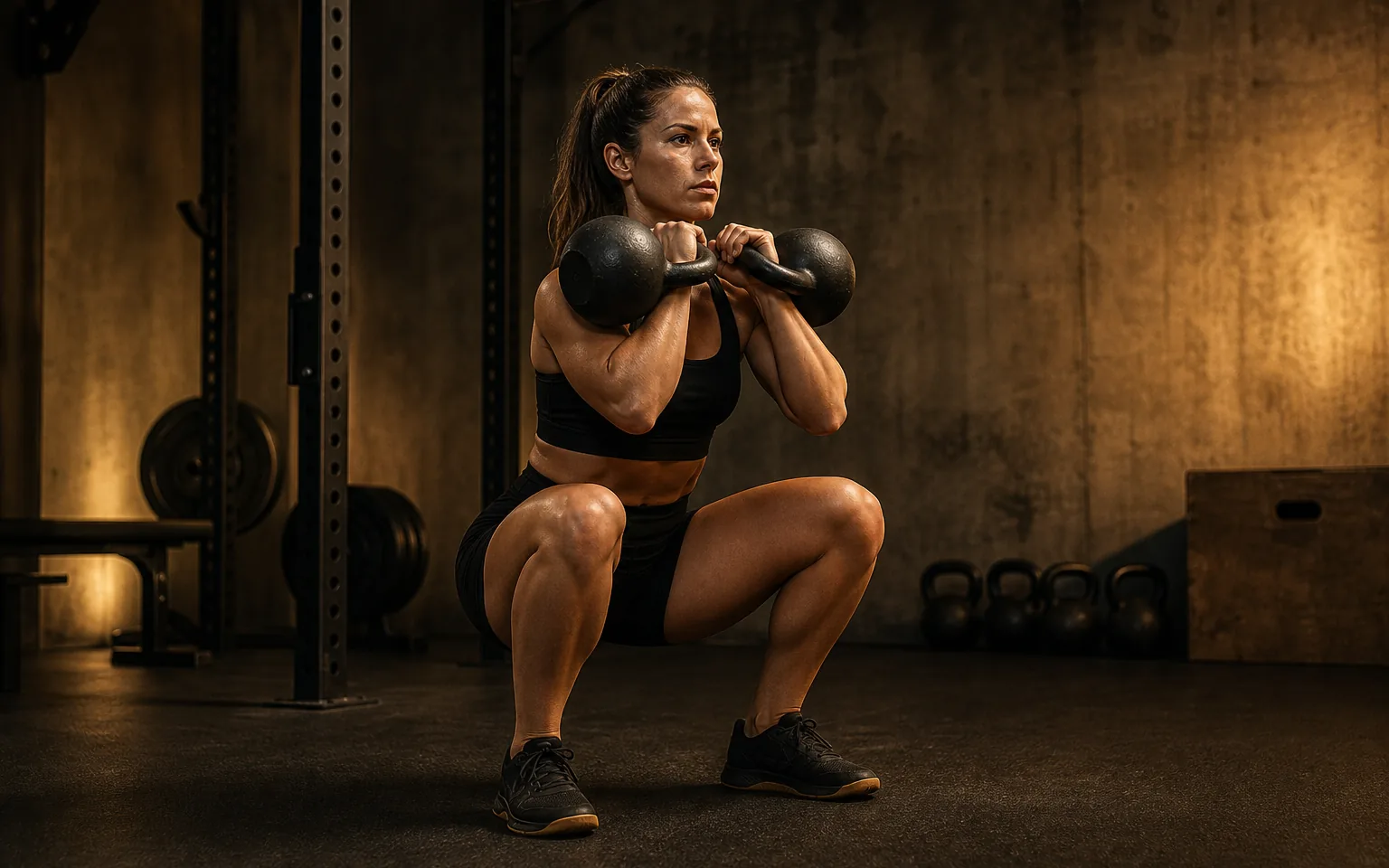
Hold one or two bells in the rack position. Squat with control. As you stand, use the drive from your legs to help press the bell overhead, then lower it back to the rack. Keep your ribs stacked over your hips. If the press turns into a backward lean, stop and choose a lighter bell.
For muscle-focused training, use 3 sets of 5 to 8 reps. Rest 90 to 120 seconds. Keep the reps steady rather than racing. Thrusters can raise your breathing rate fast, which may make your lungs give out before the target muscles get enough work.
Build a strict press and comfortable squat before linking them. If you can’t control the rack or press the bell overhead for a few clean reps, use separate squats and presses for now. The combined move isn’t a shortcut around basic strength.
9. Kettlebell Romanian Deadlift: Add Slow Hamstring-Focused Reps
The kettlebell Romanian deadlift, or RDL, puts your hamstrings under load as you hinge and lower the bell. It’s a useful choice when you want slower, more controlled work than swings provide.
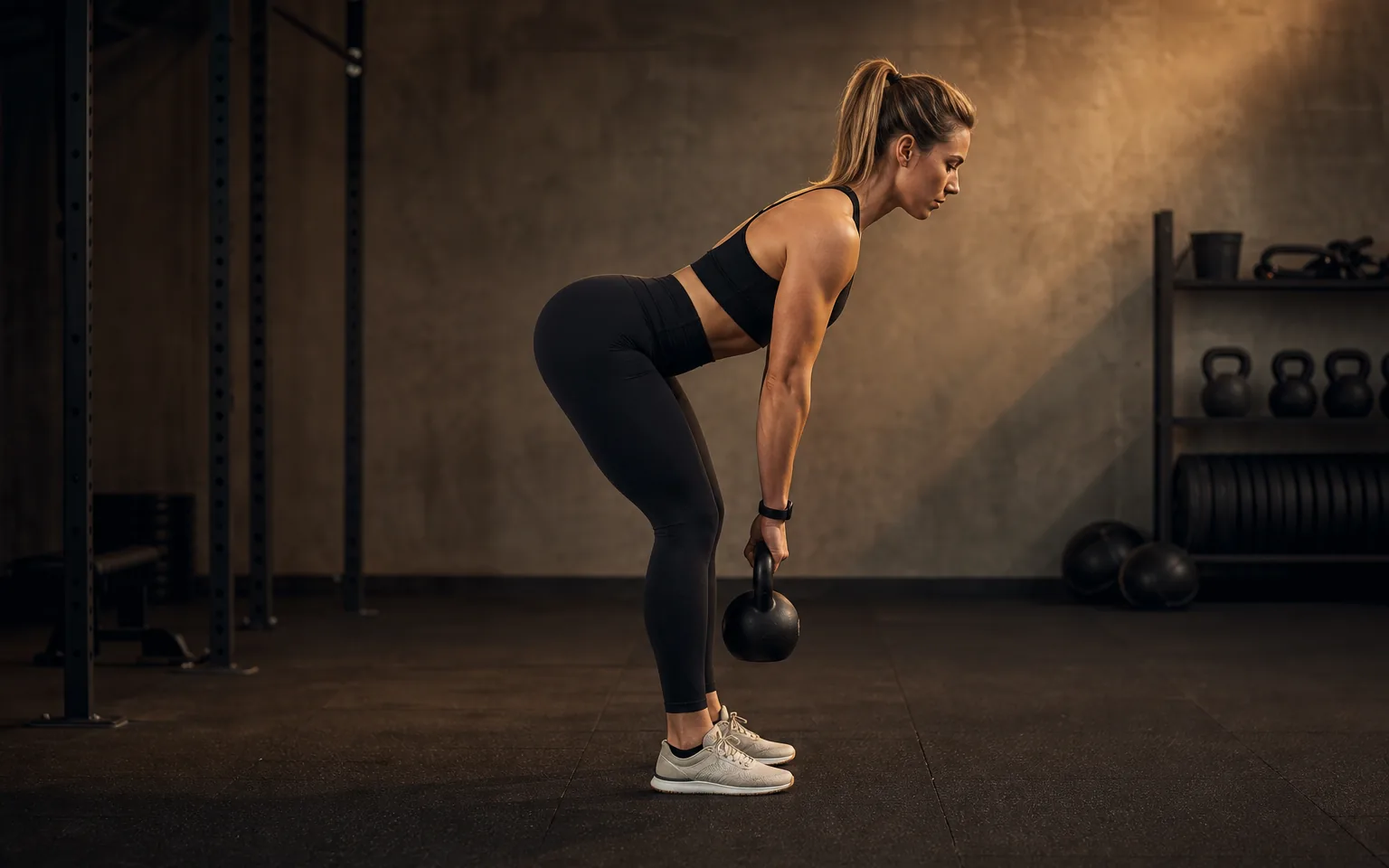
Hold the bell in front of your thighs. Soften your knees, then push your hips back as the bell slides down your legs. Stop when you feel a strong hamstring stretch and can still keep your back steady. Stand by driving your hips forward. The bell doesn’t need to touch the floor.
Try 3 sets of 8 to 12 reps with a three-second lowering phase. Rest 90 seconds between sets. Keep the bell close to your body. If your back rounds to reach lower, shorten the range. Depth is not the goal; a steady hinge is.
Use the RDL as your slower hinge and the swing as your power hinge. You don’t need both to be heavy in one workout. If you feel back pain rather than muscle effort, stop and reassess your range and load before continuing.
10. Farmer’s and Suitcase Carries: Challenge Grip and Trunk Strength
A farmer’s carry uses a weight in each hand. A suitcase carry uses one bell at your side. Both train grip and require your trunk to hold a steady position while you walk.
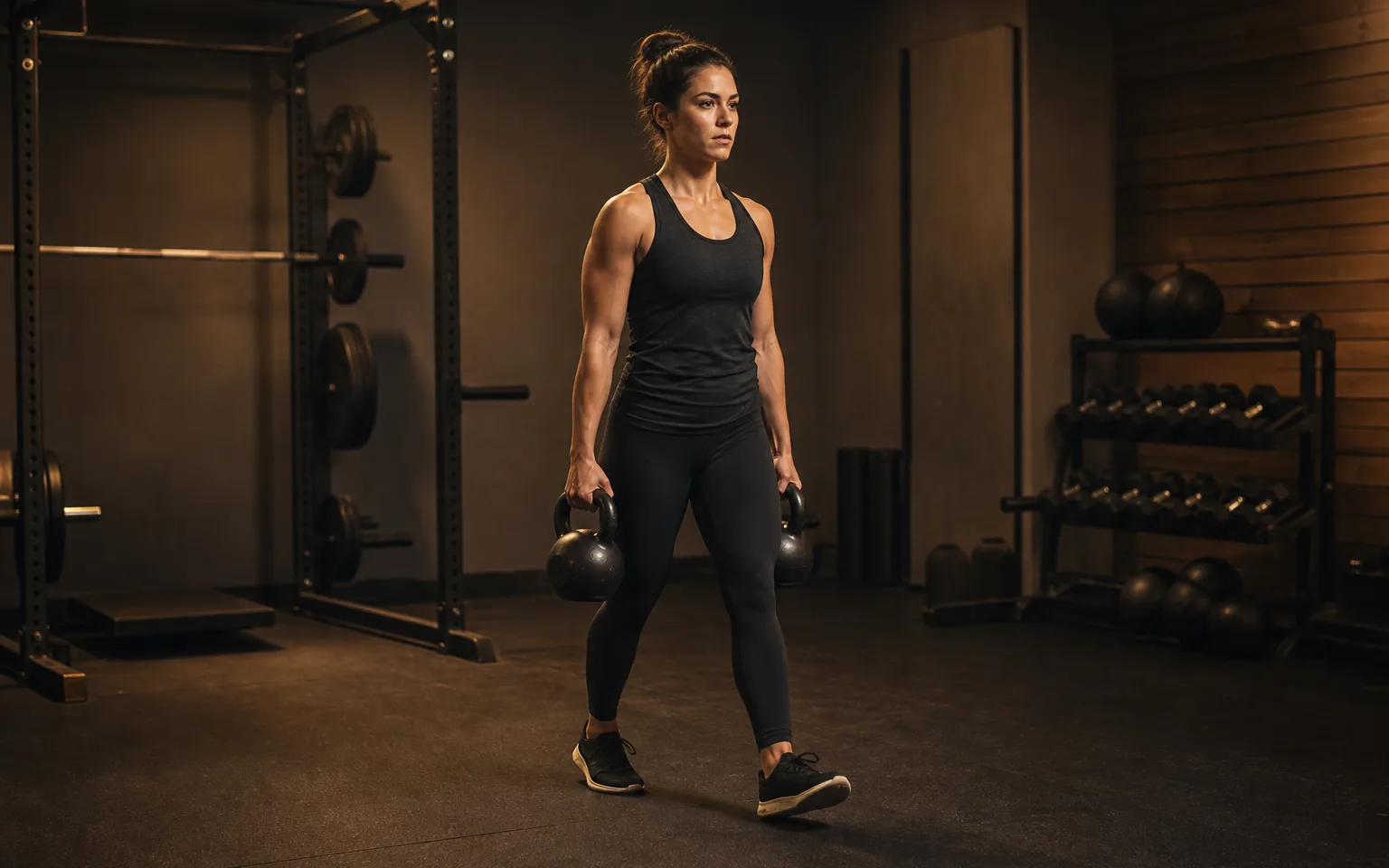
Stand tall with the bell close to your body. Walk at a steady pace without leaning or letting the weight swing. For a suitcase carry, resist bending toward the loaded side. Turn around with care, then carry the bell in the other hand for the same time or distance.
Start with 3 rounds of 20 to 40 seconds per side. Rest about 60 to 90 seconds between rounds. Pick a load that lets you walk without your posture shifting. If your grip gives out first, shorten the carry rather than shrugging or leaning to keep going.
Carries are easy to fit into a small home session. Clear your walking path before you start. They work well after rows or deadlifts, but don’t let them replace your squat, hinge, push, and pull work.
Kettlebell Exercise Comparison: Choose by Movement Pattern
For a balanced kettlebell workout for muscle gain, choose exercises by what your body does, not by which move looks hardest. A hinge and a squat both train the lower body, but they load it differently. Use the table to spot gaps in your week.
| Movement pattern | Exercise | Good fit when | Watch for |
|---|---|---|---|
| Hinge and power | Swing | You can hinge well and want fast hip drive | Arms lifting the bell or back rounding |
| Squat | Goblet squat | You want a simple two-leg strength move | Depth that breaks your control |
| Push | Floor press or clean and press | You need chest or overhead pressing | Wrist position or a leaning back |
| Pull | One-arm row | You want upper-back work at home | Twisting to move the bell |
| Single-leg | Reverse lunge | You want each leg to work on its own | Balance taking over the set |
| Carry | Farmer’s or suitcase carry | You want grip and trunk practice | Leaning or swinging the bell |
Build skill with stable reps before moving to heavier or more advanced drills. Let that guide your exercise order: stable reps first, faster or more complex work later.
Build a Full-Body Kettlebell Workout with Sets, Reps, and Rest
A full-body session doesn’t need all 10 moves. Choose one squat, one hinge, one push, one pull, and a carry if time allows. This covers the main patterns without turning a short workout into an exercise parade.
Here’s a sample session for someone with basic kettlebell skills:
- Goblet squat: 3 sets of 8 to 10 reps.
- One-arm row: 3 sets of 8 to 12 reps per side.
- Floor press: 3 sets of 8 to 12 reps.
- Romanian deadlift: 3 sets of 8 to 10 reps.
- Suitcase carry: 3 rounds of 20 to 30 seconds per side.
Rest 60 to 120 seconds between most sets. Take longer if you need it to keep the next set strong. For swings or clean and press, stop each set before your speed or technique falls apart. These are strength movements, not a race against the clock.
Train this session two or three times a week on non-consecutive days, adjusting the number of days to your recovery and schedule. If you have only 25 minutes, do the first four movements and leave carries for another day. Keep a simple log of weight, reps, and how hard the last set felt.
Hybrid Fit Mom’s six-week program is built around progressive home workouts, filmed demonstrations, and an eating framework. You train four sessions a week: three that run 30 to 40 minutes and a core day of about 20 minutes. See Hybrid Fit Mom’s six-week kettlebell plan if you want a set schedule rather than picking each workout yourself.
Progress the Load, Slow the Lowering, and Keep Training Sustainable
Your muscles need a reason to adapt. That means your work should gradually get harder, but the next step doesn’t always have to be a heavier bell. Kettlebells often come in sizeable jumps, and a jump that feels fine for a squat may be too much for a press.
Use a rep-first approach. If your plan calls for 3 sets of 8 to 12, stay with the same weight until you can complete all three sets at 12 reps with clean form. Then move up in weight and return to 8 reps. If the next bell is too big a jump, add one rep per set or slow the lowering phase.
For a slower lowering phase, take about three seconds to bring the bell down on squats, rows, presses, or RDLs. Don’t slow swings this way. A swing is a ballistic move, so keep it crisp and stop when your hip drive loses speed.
Leave about one to three good reps in reserve on most working sets. That means you could do one to three more clean reps if you had to. You don’t need to grind every set to failure, especially with movements that put a weight overhead or move quickly.
Change one training variable at a time. Add a rep first, then consider load once you own the top of the range. If sleep has been poor or family life has made the week unusually heavy, repeat your last workout rather than forcing a jump. Consistency includes adjusting the plan when needed.
Progression should feel earned, not guessed. If your form shifts to finish a rep, that rep doesn’t count as a reason to move up. Keep a note of the bell and reps you used. It makes the next session much easier to plan.
Support Muscle Gain with Enough Food, Protein, and Recovery
Training gives your body a reason to build muscle. Food and rest give it the resources to respond. If you train hard but eat too little for your needs, gaining muscle may be slower, especially if you’re already experienced.
A common protein target used in resistance-training guidance is about 1.6 to 2.2 grams per kilogram of body weight each day. Your own needs can vary with health, training, and total food intake. If tracking grams feels like one more job, include a protein-rich food at meals and snacks you already eat.
A small calorie surplus can support muscle gain. You don’t need to force a large change in portions. Start by eating enough to feel fueled for training, then watch your energy and strength over several weeks. If your weight is steadily falling while you’re trying to gain, you may need more food. People returning to training or new to lifting may gain strength and muscle without a deliberate surplus.
Meal timing can stay simple. A meal with protein and carbohydrates within a few hours of training is useful, but your total daily intake matters more than a narrow post-workout window. A normal lunch or dinner after your workout can do the job.
Leave roughly 48 hours before training the same muscles hard again. Sleep as well as your circumstances allow. If performance drops for several sessions or soreness keeps changing how you move, reduce the work for a short stretch rather than trying to make up missed sessions all at once.
Hybrid Fit Mom’s program includes an eating framework alongside its workouts. That can help if you want training and food guidance in one place, but it isn’t a substitute for advice from a qualified health professional when you have a medical condition or specific dietary needs.
Frequently Asked Questions
Can you build muscle with kettlebells?
Yes, you can build muscle with kettlebells when the load challenges you and you progress over time. Use controlled sets for squats, presses, rows, and deadlift variations. Swings can build power, but they shouldn’t be your only exercise for muscle gain. As your strength improves, you may need heavier bells or another tool for certain lifts.
How many reps should I do with a kettlebell to build muscle?
For most muscle-building kettlebell exercises, start with 6 to 12 controlled reps per set. Use a weight that makes the last few reps challenging while your form stays steady. Carries use time or distance instead of reps. Rest long enough to perform your next set well.
How often should I do kettlebell workouts?
Two or three full-body sessions per week can work well for many people, with a rest day between hard sessions. Your best schedule depends on the exercises, total sets, sleep, and other activity in your week. Start with two sessions if your schedule or recovery is uncertain, then add a day only if you’re recovering well.
What weight kettlebell should I use to gain muscle?
Choose a bell that lets you finish the planned reps with clean form and roughly one to three reps left in reserve. The right weight can differ by movement. You’ll usually use less for a press than for a deadlift. If the bell swings your body around or shortens your range, it’s too heavy for that set.
Are kettlebell swings enough to build muscle?
No, swings alone leave gaps in a kettlebell workout for muscle gain. They train a fast hip hinge, but they don’t replace controlled squats, presses, and rows. Add a slow hinge such as an RDL for more time under tension, then include a push and pull so your whole body gets balanced work.
Make the Plan Fit Your Week
Start with a squat, hinge, push, and pull you can perform with control, then record your reps and build from there. If you want a structured home schedule, review Hybrid Fit Mom’s six-week program details and choose the plan that fits the time you can actually protect each week.