Best Kettlebell Workouts for Glutes: 5 Moves

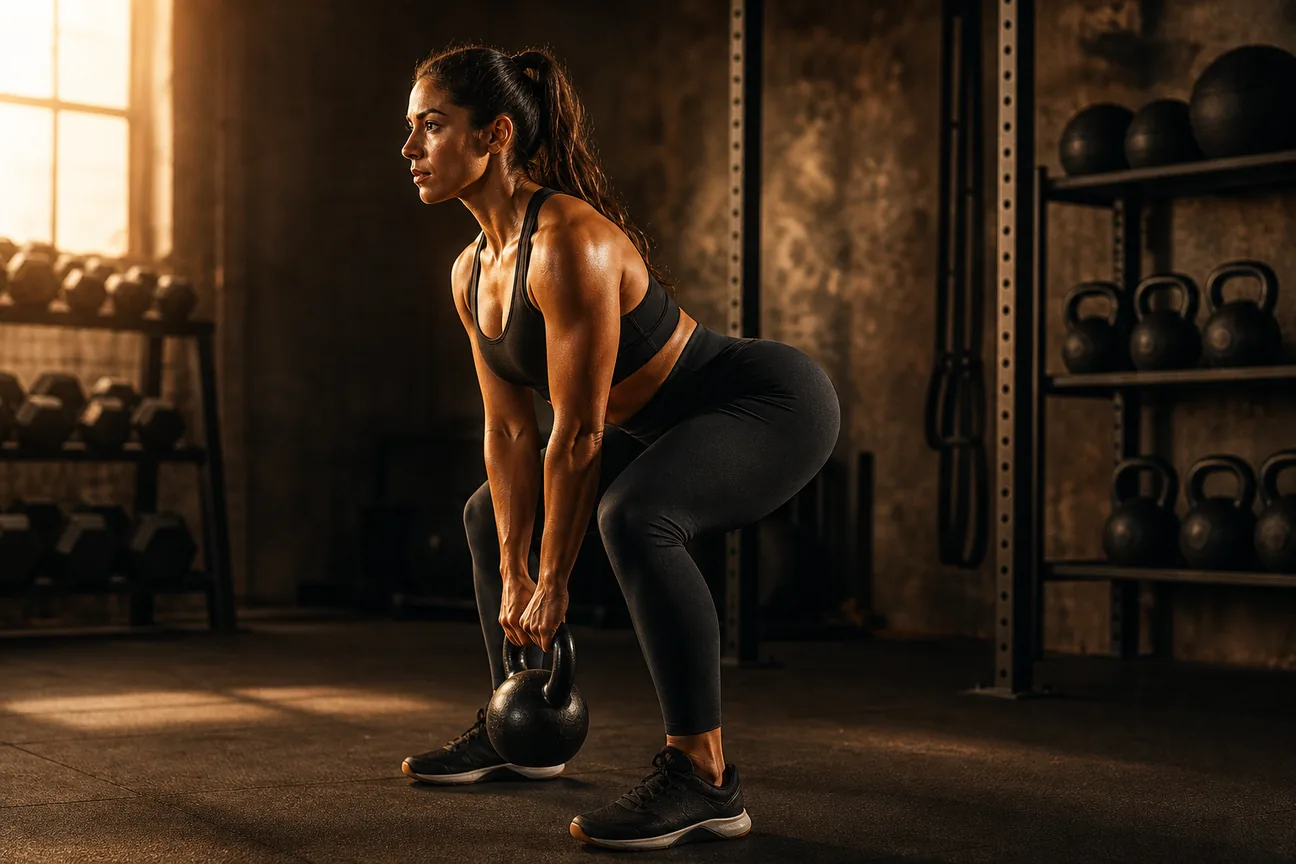
Kettlebell workouts for glutes can fit into a living room session, no gym slot required. The key is choosing moves you can control, then giving them a steady place in your week. Here are five options, with cues for your hips, knees, and load.
An analysis of 45 YouTube comments about glute focused kettlebell workouts found that 33% mentioned different weight options.
1. Kettlebell Swing: a hinge-powered glute workout
The kettlebell swing is a fast hip hinge. Your glutes drive the bell forward as you stand, while your arms guide it. It suits you if you already know how to hinge and want to train hip power alongside lower-body strength.
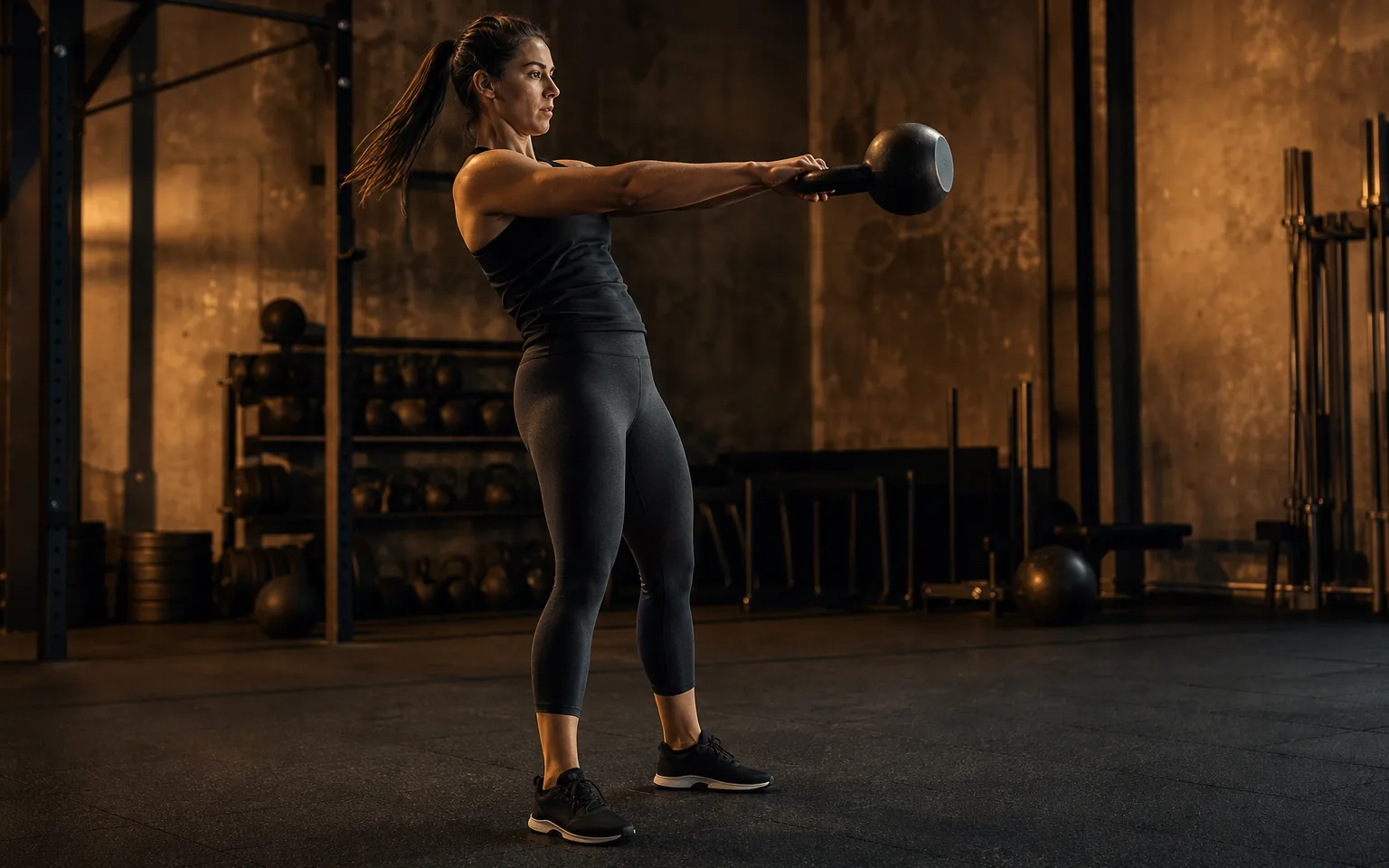
Start with the bell on the floor a short step in front of you. Push your hips back, keep your spine long, and hike the bell between your thighs. Then snap your hips forward and stand tall. The bell should float from that hip drive, not from a shoulder lift.
Keep the knees soft, but don't turn the movement into a squat. At the top, stop with your ribs stacked over your hips. Leaning back can shift the work to your lower back. For more setup and form detail, see how to do a kettlebell swing.
A useful first target is 3 sets of 10 to 15 reps, with enough rest to keep each rep crisp. Choose a bell that lets you maintain the hinge through the final rep. If you feel your back taking over, stop the set and practice unloaded hip hinges before trying again.
Build the skill before chasing speed. A swing is a strength and conditioning move, but a rushed swing with a collapsing back is just a rushed mistake.
2. Goblet Squat: a straightforward squat-pattern choice
A goblet squat is a front-loaded squat with the bell held close to your chest. It works well if you want a clear squat pattern and can sit between your feet without losing a steady trunk.
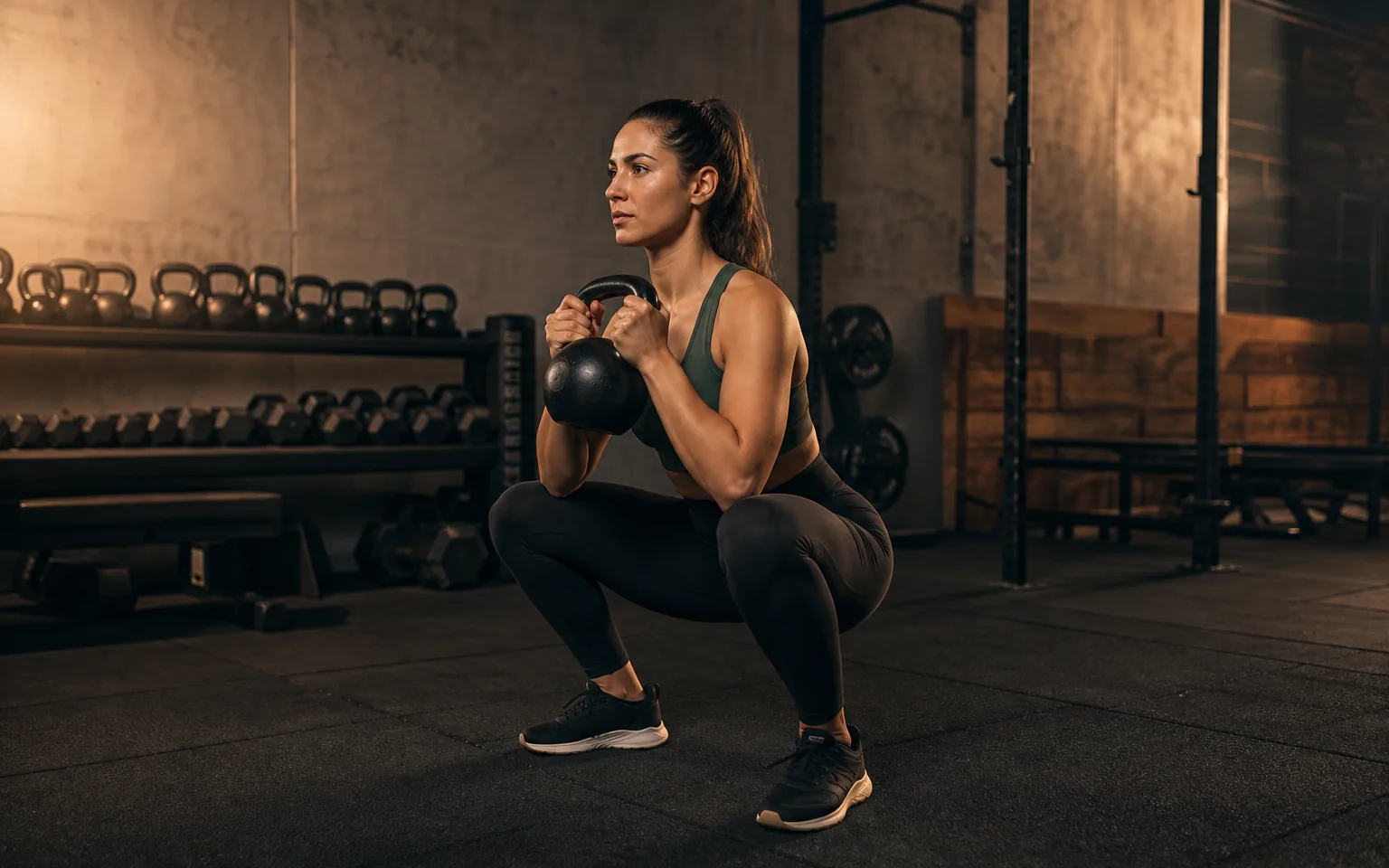
Hold the bell by the sides of its handle. Keep it near your chest as you bend your knees and hips together. Descend only as far as you can keep your heels down and your back in a comfortable, steady position.
As you lower, imagine gently spreading the floor apart with your feet. Let your knees follow the line of your toes. This cue can help you keep your knees from falling inward. The gluteus maximus helps extend the hip as you stand, while your legs and trunk help control the squat.
Start with a load that lets you complete 8 to 12 smooth reps. If you can't keep the bell close, or your heels lift before you reach a useful depth, use a lighter bell or squat to a higher target. Depth first. Add load only when the same range feels steady.
To make the squat harder without buying a new bell, pause briefly near the bottom or lower more slowly. Don't force a deeper position by rounding your back. A clean rep is worth more than a dramatic one.
3. Sumo Deadlift: a wide-stance glute and hip hinge
The sumo deadlift uses a wider stance than a regular kettlebell deadlift. It can suit you if a wide foot position feels comfortable and you want a grounded hinge that is easier to set up than a swing.
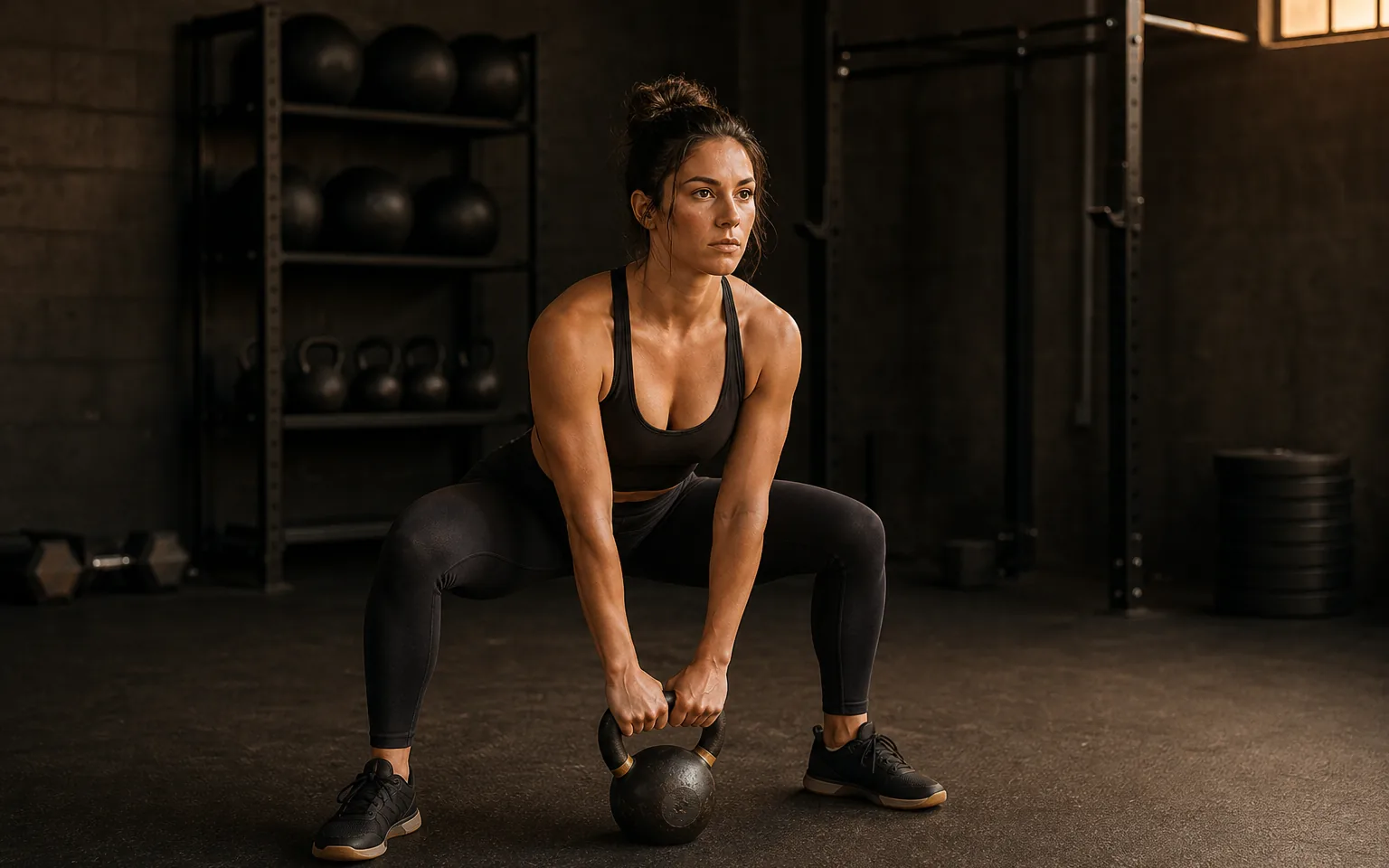
Place the bell between your feet. Turn your toes slightly out, then bend your hips and knees to reach the handle. Keep your chest open and your back long. Push the floor away as you stand, and finish tall without pushing your hips past neutral.
Keep the bell close to your body. If your lower back rounds as you reach down, raise the bell on a stable, low surface or shorten the range. A wider stance should feel strong, not forced. Your knees should track in the same general direction as your toes.
Try 3 sets of 8 to 12 reps at a controlled pace. A useful load allows you to stand with intent while keeping every rep alike. Once you can complete your target reps with good form, build reps first or move up one bell size. A common lower-body jump is about 4 kg, but your control comes first.
This is a good place to add a second hinge pattern to your week. For more lower-body movement ideas, these kettlebell leg workouts for strength can help you plan a wider session.
4. Reverse Lunge: a single-side glute strength option
A reverse lunge works one leg at a time while the other steps back. It suits you if you want to build single-side control and can step back without losing balance. Start with body weight if the movement is new.
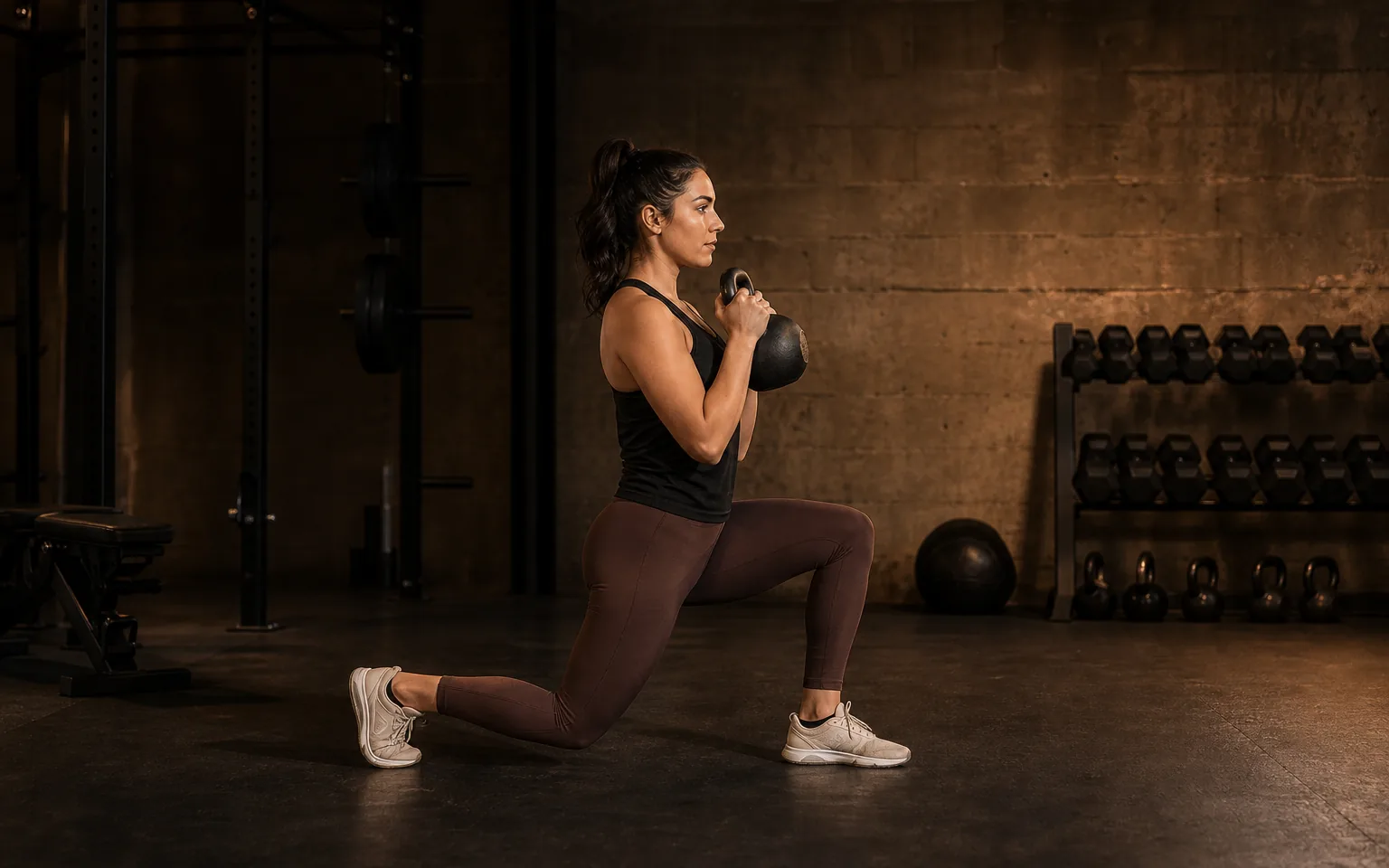
Stand tall with your feet about hip-width apart. Step one foot back and lower until the front leg is bent comfortably. Push through the whole front foot to stand, then switch sides. Keep the front knee aligned with your toes instead of letting it drift inward.
Hold one bell at your chest when the body-weight version feels steady. Keep your trunk tall and let the front hip bend as you lower. The gluteus medius helps steady the pelvis during single-leg work, while the gluteus maximus helps drive the front hip back to standing.
A starting range is 2 to 3 sets of 8 to 10 reps per side. Use a smaller step if your balance wobbles. You can lightly touch a wall or sturdy support while you learn the pattern; the aim is controlled reps, not a balance test.
Reverse lunges also give you a simple way to notice side-to-side differences. If one side feels less steady, match the reps to that side rather than adding extra work to the stronger leg.
5. Single-Leg Romanian Deadlift: a balance-and-hinge challenge
The single-leg Romanian deadlift, or single-leg RDL, is a hinge performed while standing on one leg. It suits you if you already know the basic RDL and want to challenge hip stability. Start with a light bell or no weight.
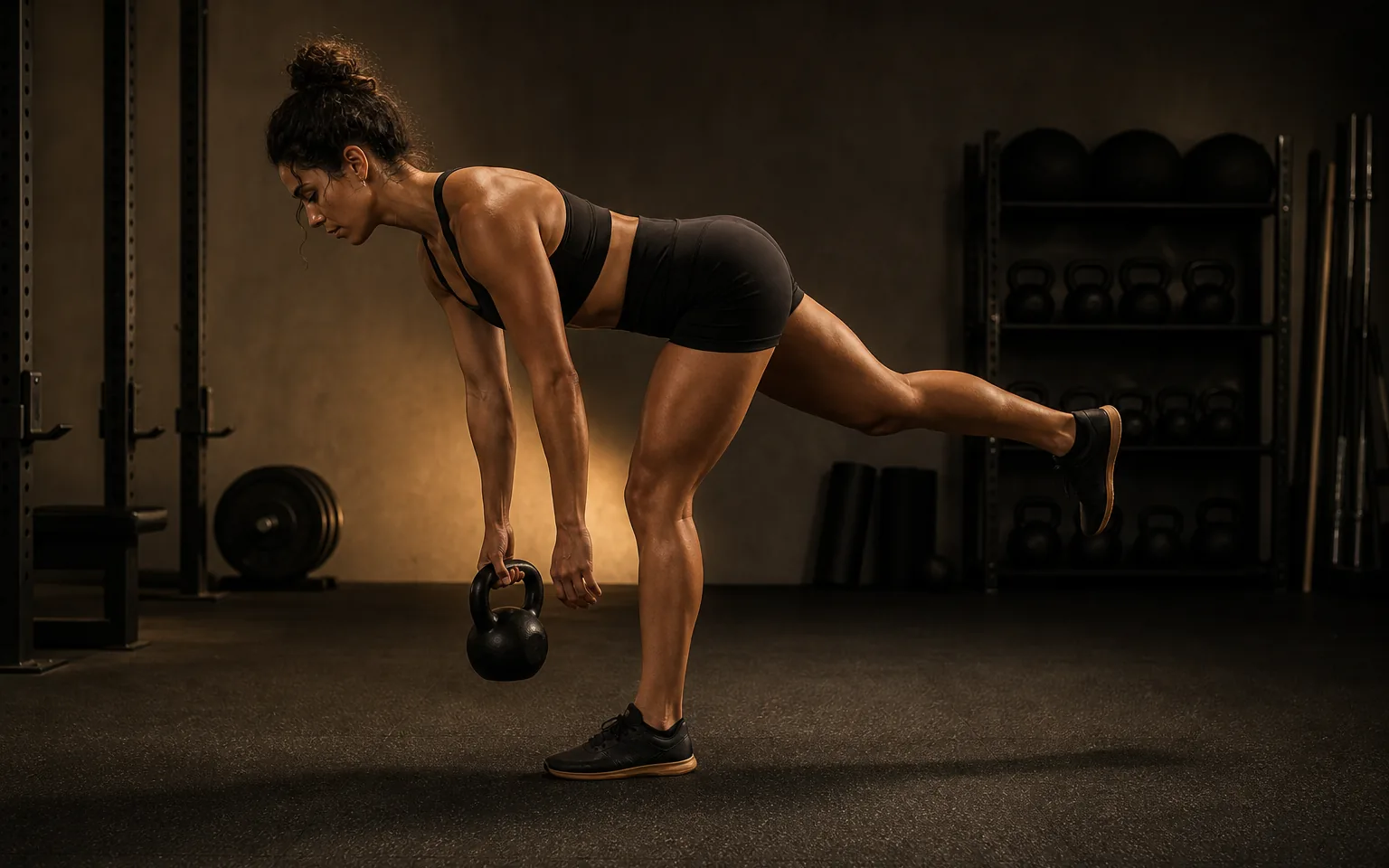
Hold the bell in the hand opposite your standing leg, or use both hands if that feels steadier. Soften the standing knee. Send your hips back as your free leg reaches behind you. Keep your hips square, with your belt buckle facing the floor rather than turning out.
Stop the reach when your back begins to round or your hips rotate. You don't need to touch the bell to the floor. The goal is a steady hinge, not maximum range. If balance is the main problem, keep one hand on a wall or chair and focus on the working hip.
Try 2 to 3 sets of 6 to 10 reps per side. Begin with the side that feels less coordinated, then do the same number on the other side. A lighter bell is often a better choice here than on a two-leg deadlift because balance and control can limit the load.
Use a small increase when all reps look alike. Add a rep or two first; then move to the next bell size if your hips stay level. For more ideas on building muscle with a bell, see kettlebell exercises for muscle gain.
Kettlebell Glute Workout Comparison: Match a Move to Your Goal
Pick the move that fits your skill and the kind of work you need today. Hinges train hip extension. Squats and lunges add knee bend, while single-leg work asks you to steady your pelvis. A useful session can mix patterns instead of repeating the same one until your form slips.
| Move | Best fit | First cue | Good next step |
|---|---|---|---|
| Kettlebell swing | Hip power and conditioning | Hinge, then snap the hips | Keep reps crisp before adding speed |
| Goblet squat | Squat strength and depth practice | Keep the bell close | Add a pause before adding load |
| Sumo deadlift | Controlled bilateral hinge | Push the floor away | Add reps, then a heavier bell |
| Reverse lunge | Single-side leg strength | Step back under control | Use support while learning balance |
| Single-leg RDL | Hip stability and hinge control | Keep your hips square | Use a lighter bell if balance limits form |
A short session you can repeat
For a 10-minute main workout, set a timer for 40 seconds of work and 20 seconds to rest or change moves. Do one round of all five exercises, then repeat. Move at a pace that keeps your form clear. If swings are not yet a reliable skill, use sumo deadlifts in their place.
Warm up first with a few minutes of easy movement. Try body-weight bridges, unloaded hip hinges, and a few comfortable squats. After the session, walk for a minute or use gentle hip mobility if that feels good. Stretching should feel mild, not sharp.
Choose a load and build it over time
For strength work, pick a bell that lets you finish each set with about two good reps still possible. If your back rounds or your balance fails, lower the load or use a simpler version. When you can complete all planned reps with control, add reps before moving up one bell size. A common next step is around 4 kg, but smaller jumps are fine.
Train these moves on two days each week, with a rest or easier day between hard sessions. You can split the five moves across both days rather than doing all of them at once. Keep a note of the bell and reps you used. That small record makes it easier to see when it's time to progress.
For a ready-made schedule, Hybrid Fit Mom has a six-week kettlebell strength and conditioning program with four sessions each week. It includes 24 sessions, filmed movement demonstrations, an eating framework, and lifetime access for a one-time $29 purchase, with a 14-day refund. Mari's program is built for women who want a plan that tells them what comes next, not another saved workout to sort through.
FAQ: Kettlebell Workouts for Glutes
Can kettlebell workouts build stronger glutes?
Yes, kettlebells can help build stronger glutes when you use challenging, controlled reps and increase the work over time. Swings and deadlifts train hip extension, while squats and lunges add other lower-body patterns. Start with loads you can handle well. Consistency and sound form matter more than choosing the heaviest bell in the room.
How often should I train my glutes with a kettlebell?
Two focused sessions a week are a useful starting point for many people. Leave a rest or lighter day between hard lower-body sessions, especially if you are still learning swings or single-leg hinges. If soreness changes how you move, give yourself more recovery before repeating the same hard session.
What kettlebell weight should I use for glute exercises?
Choose a weight that lets you finish the set with about two clean reps left. You may use a heavier bell for a two-leg deadlift than for a single-leg RDL, where balance adds difficulty. If your hinge, knee position, or balance breaks down, reduce the load and rebuild control before increasing it.
Are kettlebell swings enough for glute growth?
Swings are useful, but they don't need to be your only glute exercise. They train fast hip extension and conditioning. Pair them with a controlled strength move such as a squat, deadlift, or lunge. If your swing form gets sloppy as you tire, end the set rather than turning it into a high-rep test.
Conclusion
Start with goblet squats, sumo deadlifts, or reverse lunges if you want controlled reps; add swings once your hinge is solid. Pick two moves for your next session, write down the bell and reps, and repeat them next week. Hybrid Fit Mom's six-week plan is there if you'd rather follow a set schedule.