Best 20-Minute Kettlebell Workouts for Women

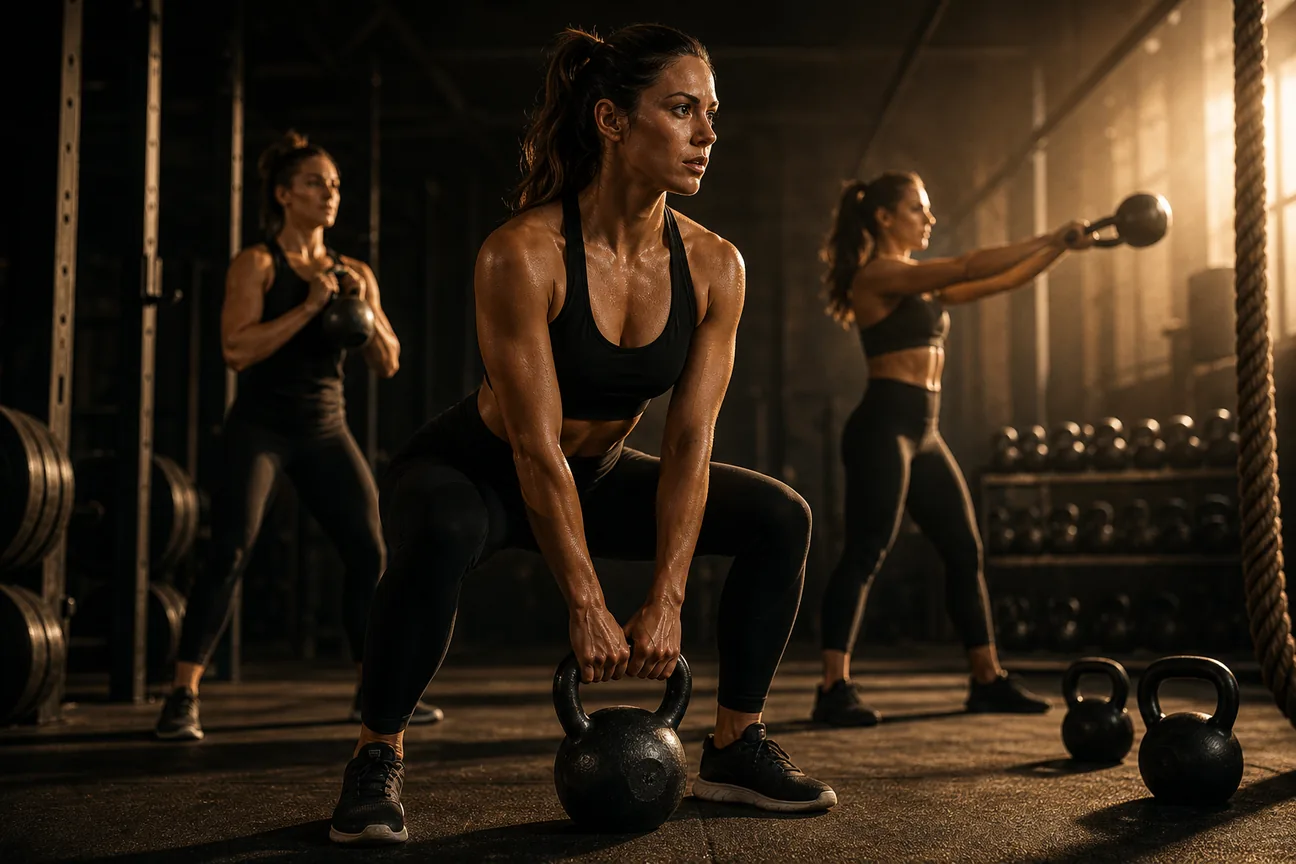
Got a kettlebell and a tight gap in your day? A 20-minute session can build strength and get your heart working, if you choose a format that fits your skills. Here are five options, from a short timed circuit to a structured plan that pairs a 20-minute core day with longer strength sessions.
An analysis of 51 YouTube comments about twenty MINUTE kettlebell workouts found that 31% mentioned beginner-friendly difficulty.
1. The 20-Minute Gauntlet: a timed circuit with round-based progression
The 20-Minute Gauntlet is a timed circuit where you work through rounds and aim to build more clean rounds over time. It suits you if you know the basic moves and want a clear start and stop without a long workout plan.
A timer makes the session easy to fit between work and family tasks. The point isn’t to race. Keep your reps smooth, rest when you need to, and stop a round if your swing turns into a squat or your back starts to round.
To build your own version of this circuit style, choose familiar moves such as a kettlebell deadlift, goblet squat, row, and press. A clean can link a deadlift to a rack hold, but practice it slowly before adding it to a fast circuit. Use moves you can do well while a little tired. A snatch is a poor pick if you’re still learning the hinge.
The swing is a hip hinge, not an arm raise. Send your hips back, then stand tall and let the bell rise from that drive. The kettlebell’s shape and handle make it useful for swings and other loaded movements, but the clock shouldn’t decide your form.
For a simple progression, record your rounds and how steady your reps felt. Add a round only when you finish the session with control. If you’d rather use work-rest intervals than chase rounds, try these kettlebell HIIT workout formats as another way to set the clock.
2. Simple and Sinister: a focused routine covering major movement patterns
Simple and Sinister centers on two moves: kettlebell swings and Turkish get-ups. It fits you if you like repeat practice and want to focus on a hinge plus a slow, controlled floor-to-standing movement.
In the swing, send your hips back as if closing a car door with them. Then drive your hips forward. Your arms guide the bell; they don’t lift it. A Turkish get-up asks you to move from lying down to standing while keeping the bell overhead. Take it slowly, and learn each position before you add speed or load.
The routine’s fixed menu can make it easier to get started. You don’t need to stop mid-session to pick a new exercise. But the reported session length is about 20 to 30 minutes, so it may run past your slot once you add warm-up time or take longer rests.
Be especially careful choosing a bell for get-ups. A weight you can swing may still feel too heavy overhead. Start with a load you can control while pausing through each position. If your shoulder shifts or you lose track of the bell, set it down and practice without weight.
Simple and Sinister is an ongoing practice, not a short block with a set finish date. That can suit you if repetition helps you stay consistent. If you want more movement variety or a fixed progression, use a different plan for your main training and keep this routine as a focused skill day.
For more exercise ideas and form cues before you build a session, browse these kettlebell workouts for women. Start with the moves you can control, not the ones that look hardest.
3. Full-Body Kettlebell Workout For Beginners: one bell, whole-body training
This beginner-friendly format uses one kettlebell to train the whole body. It suits you if you have basic skills and want familiar movements instead of a workout built around advanced lifts.
A full-body session can include a deadlift for the hip hinge, a goblet squat for the legs, a row for the upper back, and a press for the shoulders. A swing can add a faster conditioning move once your hinge is steady. You don’t need to cram every exercise into 20 minutes. Pick a few patterns, then leave time to rest and reset.
Try a short warm-up before the first work set. March in place, practice a few unloaded hip hinges, and do easy bodyweight squats. During the session, use controlled sets instead of racing through a circuit. Finish with a slow walk and gentle hip or shoulder stretches until your breathing settles.
There’s no one best kettlebell weight for every person or every move. Pick a load you can control through the hardest exercise in your session. If your grip slips or your back changes shape, put the bell down or use a lighter one. Beginners should start with a weight they can control and ask a health professional if they’re unsure about safe training.
Fitness benefits depend on how you train and how often you repeat it. Strength moves challenge your muscles; a circuit with short rests can also raise your heart rate. That makes kettlebell work a useful mix of strength and cardio, but it doesn’t mean every session needs to leave you exhausted.
If balance, mobility, pain, pregnancy, or an injury affects your training, check with a qualified health professional about suitable changes. A chair or wall can offer support for some standing moves, but don’t use a workaround that causes pain.
4. 5-Day Kettlebell Kickstart: daily 20-minute sessions at your own pace
The 5-Day Kettlebell Kickstart gives you daily 20-minute workouts, coaching videos, and community support. It suits you if a short, guided start feels easier than planning each session yourself.
Five days can help you test whether a daily workout slot fits your week. You can progress at your own pace, so you don’t have to treat each session as a race. If your day gets disrupted, the key is to return to the plan when you can rather than trying to make up every missed minute at once.
Guided videos can be useful when you’re learning a movement. Watch for cues on setup and control, especially in the hinge, clean, and press. If the demo moves faster than you can follow, pause it and practice the position without a timer. Speed is optional. A sound rep isn’t.
This is a short kickstart, so think of it as a way to begin and build a small routine. It isn’t the same as a longer training block with planned progression across several weeks. If you finish the five days and want a next step, look for a schedule that tells you what to repeat and how to progress.
Busy weeks don’t always offer five matching workout windows. You might do a session before the household wakes up, then miss the next day when plans change. Self-paced training can help you resume without turning one missed workout into a reason to quit. The main question is whether you want a short trial or a plan that maps out more of your training.
5. Aggressive Conditioning Program: a five-week swing-focused challenge
The Aggressive Conditioning Program is a five-week challenge built around high-volume swings paired with strength movements. It suits you if you already have solid swing form and want conditioning work with a set training block.
High-volume swings ask a lot of your hinge and grip. The power should come from your hips, not from pulling the bell up with your arms. Keep your ribs steady and your back long as the bell passes between your legs. If your swing starts to look like a squat, stop the set and reset.
This isn’t the best place to learn the swing from scratch. Practice with deadlifts and unloaded hinges first. Once those feel familiar, do small sets of swings with enough rest to keep each rep crisp. If your grip gives out or your lower back feels strained, end the set. More reps aren’t worth losing control.
Don’t assume a high-volume workout will fit a 20-minute window just because it’s a kettlebell session. Allow time for a warm-up and rest, or choose a lower-volume circuit on a packed day.
For a beginner, the sensible progression is skill before pace. Learn to hinge, then build a small amount of swing practice. Only add reps or weight while your form holds. The kettlebell swing workout ideas can help you compare different swing-based formats without treating a high-rep challenge as a starting point.
How These Kettlebell Workouts Compare
Session length is only one part of the fit. A 20-minute workout can be easy to schedule but still be a poor match if you’re learning a technical move. Look at the skill demand and the kind of structure you want before you pick.
| Workout | Time or length | Best fit | Watch for |
|---|---|---|---|
| The 20-Minute Gauntlet | 20 minutes | You want timed rounds and a clear progression | Don’t chase rounds when form slips |
| Simple and Sinister | About 20 to 30 minutes | You like repeating two core skills | Get-ups need control and a suitable load |
| Full-Body Kettlebell Workout For Beginners | Set aside about 20 minutes | You want one bell and familiar moves | Leave time to warm up and rest |
| 5-Day Kettlebell Kickstart | 20 minutes a day for five days | You want guided short sessions | It’s a short start, not a six-week plan |
| Aggressive Conditioning Program | Five-week program | You already handle swings well | High swing volume needs good form |
If you need a longer-term structure, Hybrid Fit Mom’s six-week kettlebell program is built for busy women and mothers. It has 24 home sessions, with four workouts a week: three strength sessions of 30 to 40 minutes and one core session of about 20 minutes. It also includes prerecorded demonstrations, an eating framework, lifetime access, and one-time purchase access for $29, with a 14-day refund.
That schedule makes a useful distinction: a 20-minute core day can fit a tight window, while the other sessions leave more room for strength work. Coach Mari Grossi is weightlifting L1 certified, a hybrid athlete, a teacher, and a mom of two. Hybrid Fit Mom is aimed at women with basic kettlebell skills who want a plan beyond a handful of saved workouts.
FAQ
Can a 20-minute kettlebell workout build strength?
Yes, a 20-minute kettlebell workout can build strength when the moves challenge you and you repeat them over time. Choose a load you can control, then track reps or rounds. Progress slowly by adding a rep or weight when your form stays steady. Short sessions can be useful, but they still need a clear training goal.
What kettlebell weight should I use as a beginner?
Start with a weight you can move with steady form through the hardest exercise in your workout. A press or get-up may need a lighter bell than a deadlift. If you can’t keep your grip or posture, reduce the load. If you’re unsure because of an injury or health concern, ask a qualified health professional.
Which kettlebell moves work well in a 20-minute circuit?
Familiar moves such as deadlifts, goblet squats, rows, and presses can fit a short circuit. Add swings only after you can hinge well. Cleans need practice too, since the bell should settle into the rack without banging your wrist. Use fewer exercises if you need extra time to learn each movement.
How often should I do kettlebell workouts?
Your weekly schedule should match your training level and recovery. A short session may be easier to fit, but doing hard workouts every day isn’t a rule. Start with a pace you can recover from, then watch how your energy and form hold up. A structured plan can set training days so you don’t have to guess.
Can I do kettlebell workouts during pregnancy or with an injury?
Get advice from a qualified health professional before starting or changing training during pregnancy or while managing an injury. Your safe range of motion and load may depend on your health and training history. Stop any movement that causes pain, dizziness, or unusual symptoms. Don’t rely on a general workout video to assess your personal needs.
Conclusion
If you want a quick circuit, start with a timed format and keep your reps controlled. If you want strength work mapped across several weeks, Hybrid Fit Mom’s six-week plan is built around that need, with a dedicated 20-minute core day. Choose your training days now, then set out the bell you can control.