Best Kettlebell HIIT Workouts: 5 Home Routines


Want a hard workout that fits between work and the next family task? Kettlebell HIIT workouts pair short bouts of focused effort with planned rest, so you can train strength and cardio in one home session. Here are five routines, each with a different pace and skill demand.
An analysis of 54 comments and questions from Reddit, YouTube and Quora about Kettlebell HIIT workouts found that 31% mentioned comparative effectiveness and training benefits.
1. Swing-and-Squat EMOM, A Simple Full-Body Cardio Push
This routine alternates two-hand swings with goblet squats, using an EMOM format: start the work at the top of each minute. It suits you if your hinge and squat feel steady and you want a brisk session with simple transitions. Mari Grossi, Hybrid Fit Mom’s coach, is weightlifting L1 certified and builds home training around clear movement cues.
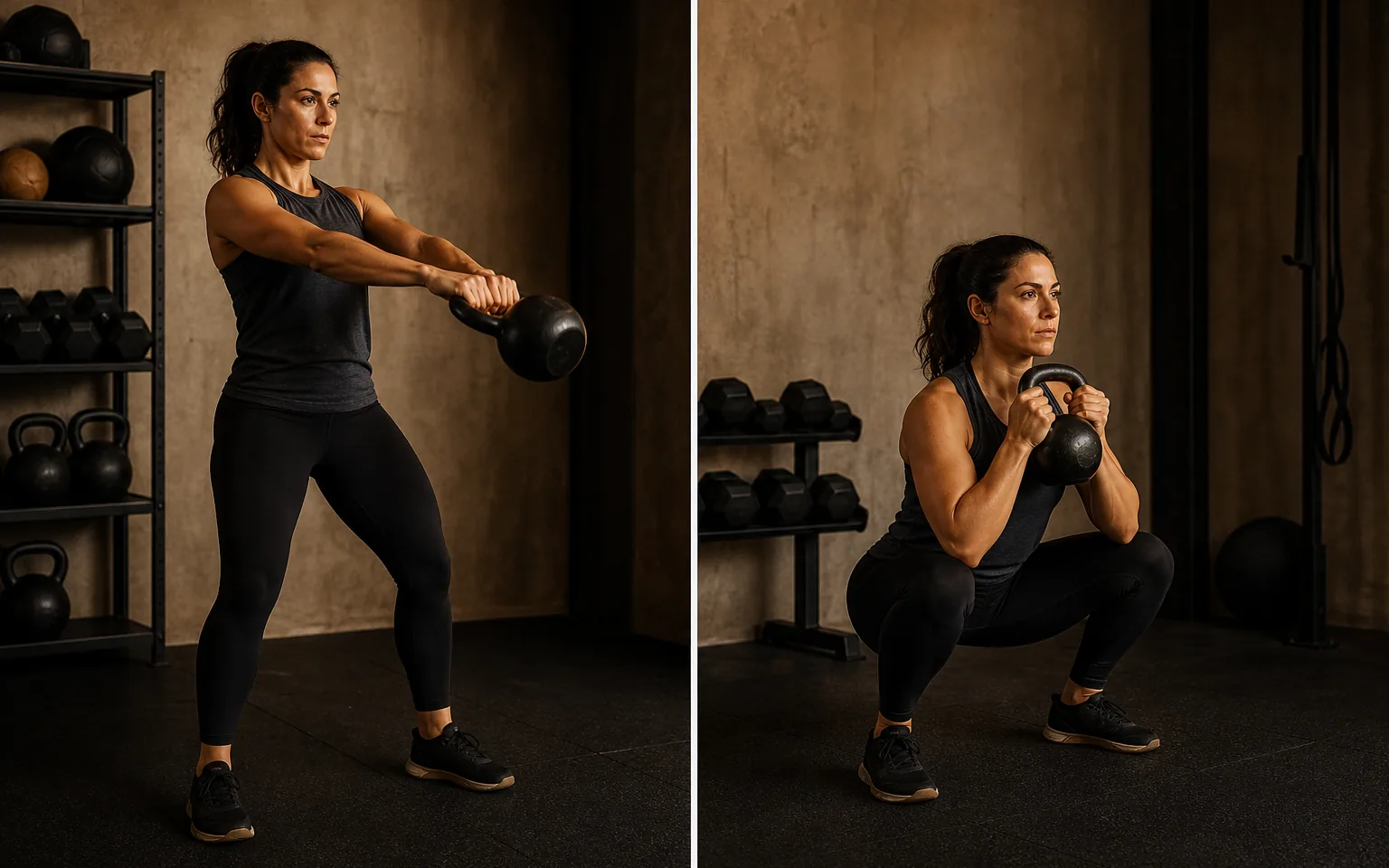
Warm up for five minutes first. March in place, rehearse a few unloaded hip hinges, then do easy squats and light kettlebell deadlifts. The goal is to practise the shapes, not tire yourself out. For swing form, push your hips back with a long spine, then drive your hips forward. Your arms guide the bell; they don’t lift it.
Set a timer for 10 minutes. On odd minutes, do 10 to 15 two-hand swings. On even minutes, do 8 to 10 goblet squats. Rest for the time left in each minute. Repeat the block once after a one-minute break for a 21-minute session. Pick a bell that lets you finish every set with control, even near the end.
If you want more swing-focused formats, this collection of kettlebell swing workouts for busy women includes other ways to pace the hinge. In your own session, stop the swings if they turn into deep squats or your back rounds. Switch to deadlifts instead.
2. The Kettlebell Deadlift-and-Row Interval, A Lower-Impact Strength Option
This interval pairs a controlled deadlift with a supported one-arm row. It’s a good fit when you want a challenging session without swings, jumps, or overhead lifts. The deadlift trains the hinge at a slower pace, while the row gives your upper back and arms focused work.
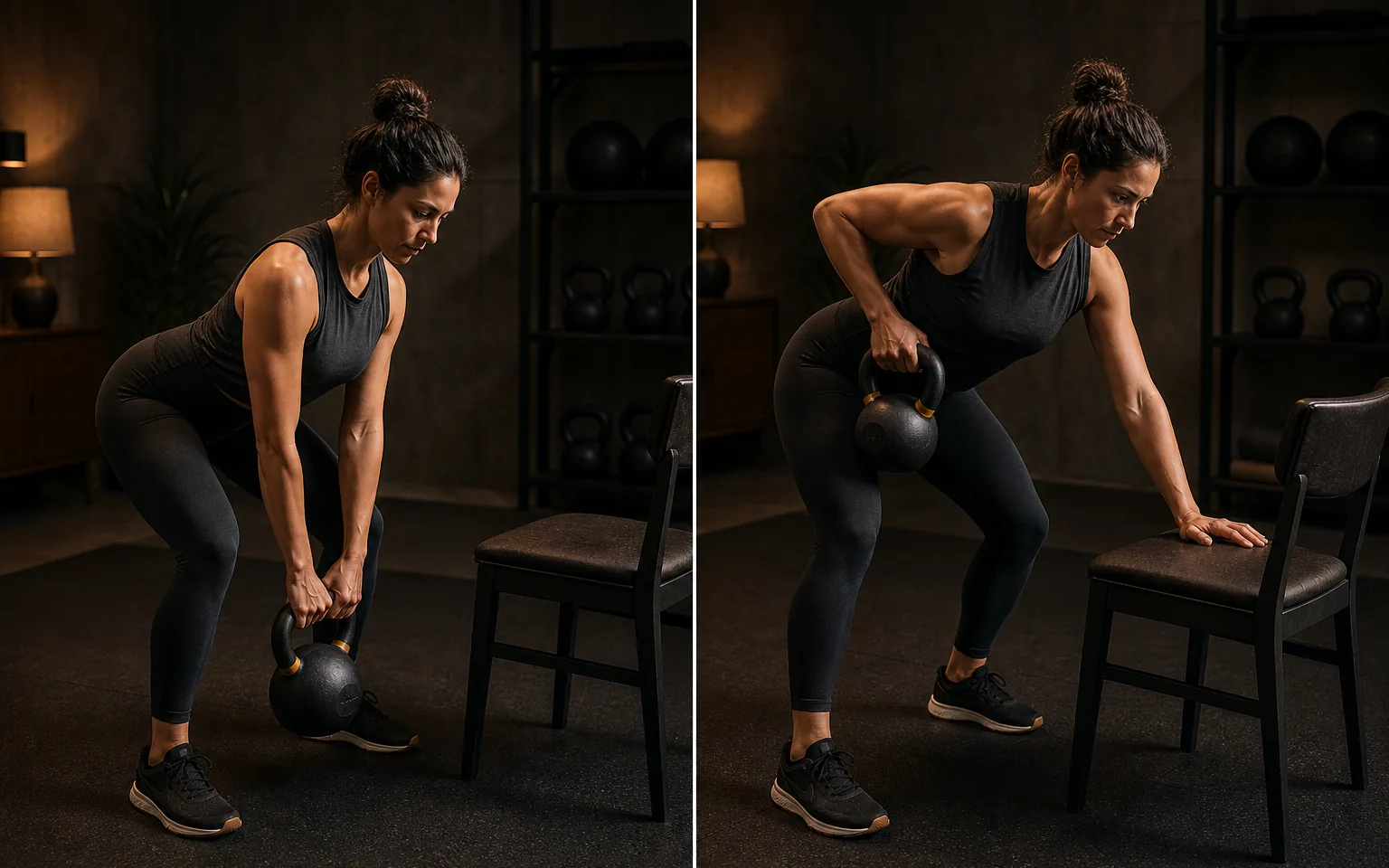
Set a timer for 30 seconds of work and 30 seconds of rest. For the first work period, do controlled deadlifts. For the next, place one hand on a sturdy chair or bench and row with the other arm. Switch arms halfway through the interval. Continue alternating for 10 rounds, or five minutes. Rest for one minute, then repeat the block twice more. That’s about 17 minutes, before warm-up and cool-down.
Keep the bell close as you lift. Start each deadlift by sending your hips back, then stand tall without leaning back at the top. For the row, draw your elbow toward your hip and keep your shoulders level. If you twist your body to move the bell, reduce the load or shorten the work period.
Choose the bell for the more demanding movement, not the one that feels easiest. A weight you can deadlift may be too heavy to row with good control. With one bell, take more rest between sides rather than rushing the switch. Add a few reps only after all rounds look much the same.
For a session that includes more movement patterns, the 30-minute kettlebell workout with low-impact moves gives you other options for a home routine. Keep this interval steady enough that your last row is as controlled as your first.
3. The Goblet Squat and Suitcase March Circuit, A Core-and-Legs Challenge
This circuit alternates goblet squats with a suitcase march, where you hold one bell at your side and march without leaning. It suits you if you want more leg work and a simple way to challenge your trunk. The one-sided load asks you to resist tipping as each foot lifts.
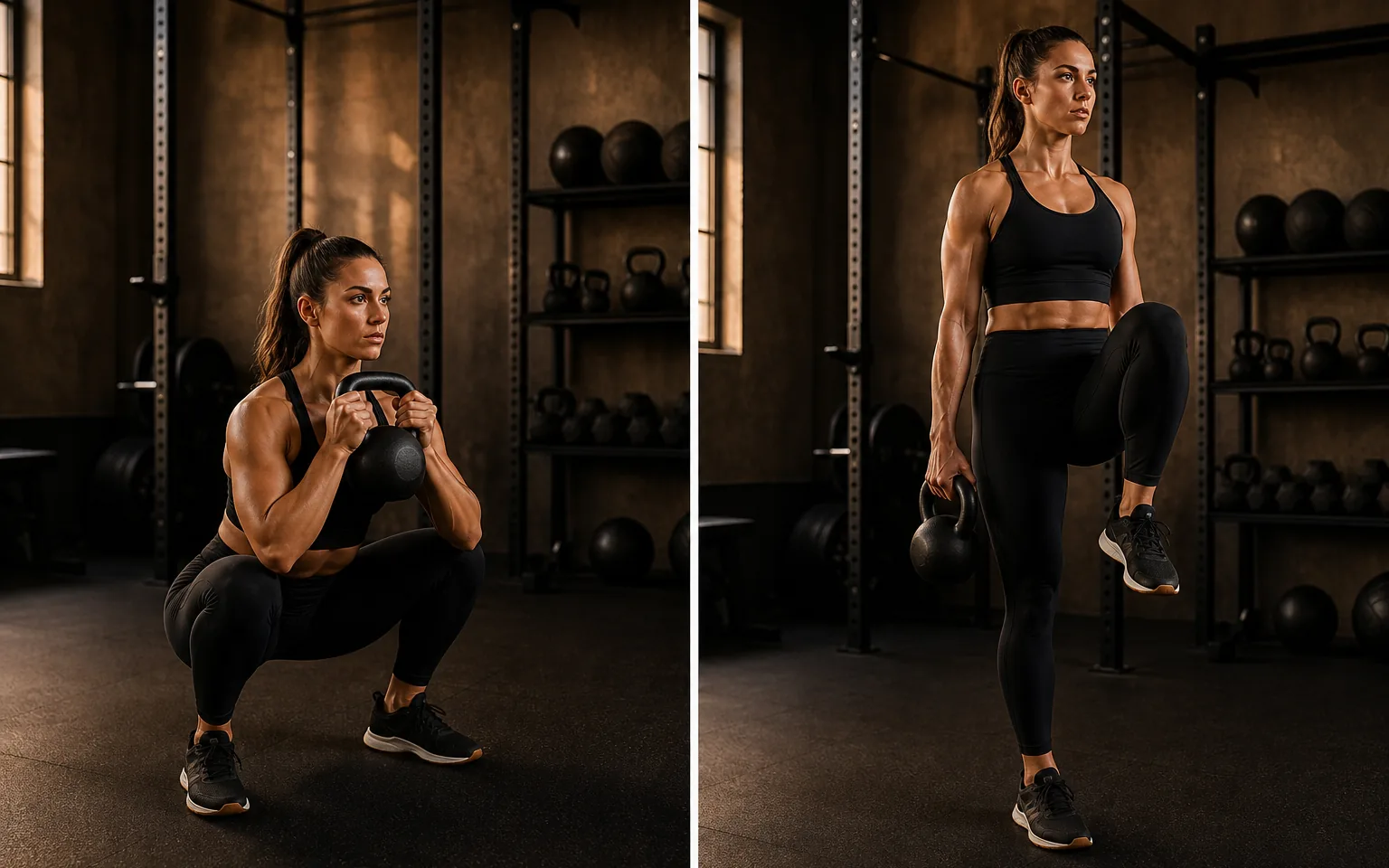
Set a timer for 40 seconds of work and 20 seconds of rest. Do goblet squats for the first station, then march with the bell in your right hand. Rest, then squat again and march with the bell in your left hand. That is one round. Complete four rounds for eight minutes of work, then rest for one minute and repeat once.
Hold the bell close to your chest for the squat. Keep your whole foot on the floor and let your knees follow the line of your toes. Sit only as low as you can while keeping your balance. For the march, take small steps and keep your ribs above your hips. If you lean toward or away from the bell, pause or switch to a suitcase hold with both feet planted.
Use a load that lets you move smoothly for the full interval. When the bell feels light, slow the lowering part of each squat rather than racing through more reps. When the march feels too hard, shorten the interval to 20 or 30 seconds and keep the rest at 20 seconds. Quality comes first.
Want a longer session with timed stations? The kettlebell workout ideas for fat loss include more sample pacing and home-training options. No one exercise can promise fat loss on its own; your overall training and eating habits matter.
4. The One-Arm Row and Goblet Squat 30/30, A Balanced Strength Interval
This 30/30 interval alternates a supported row with a goblet squat. It’s a balanced choice when you want upper- and lower-body work without ballistic moves. It also gives you a full 30 seconds to reset, which can help you keep good positions as the rounds add up.
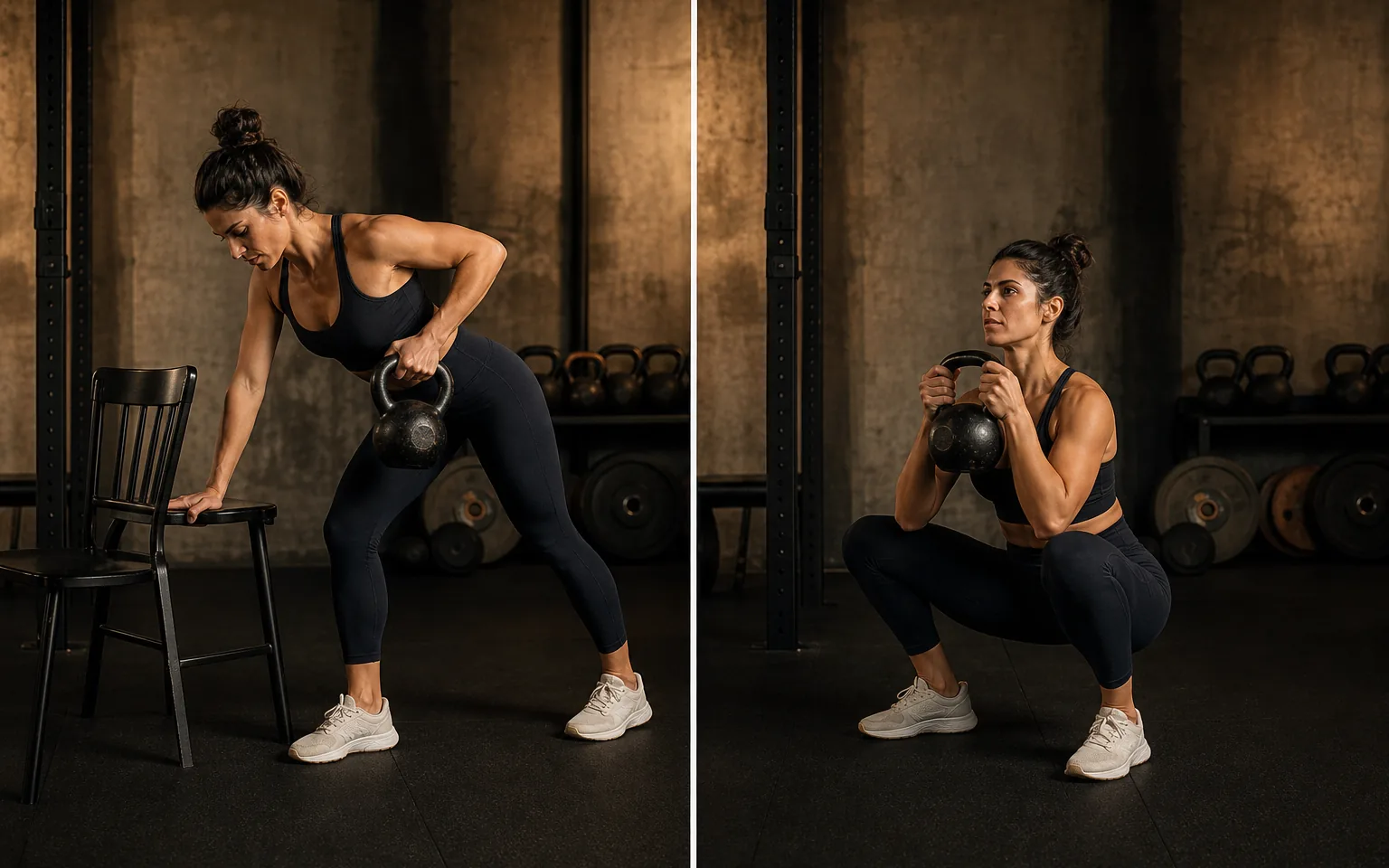
Work for 30 seconds, then rest for 30. Start with a one-arm row, switching arms after 15 seconds. Use the next work period for goblet squats. Repeat the pair six times. The main set takes 12 minutes. Add a five-minute warm-up and a few minutes of easy walking or gentle mobility afterward.
For the row, brace one hand on a stable surface and keep your back long. Pull the bell toward your hip, then lower it under control. For the squat, hold the bell close to your chest and stand by pressing through the floor. Choose a pace that leaves you able to reset your grip and stance before the next interval.
Start with a load that allows a couple of clean reps in reserve. If the row pulls your torso around, use a lighter bell. If your squat depth changes as you tire, shorten the range or end that interval early. The timer is a guide, not a demand to finish every second.
Interval training alternates work bouts with recovery periods. The right pace depends on the person and movement, so don’t treat one timer format as a rule for everyone.
5. The No-Swing Kettlebell HIIT Circuit, A Quieter Home Workout
This circuit uses deadlifts, squats, rows, and a suitcase hold instead of swings. It suits you when you want to keep the noise and impact down, or when you’re still practising the swing hinge. The moves can raise your effort while keeping the bell’s path close to the floor or your body.
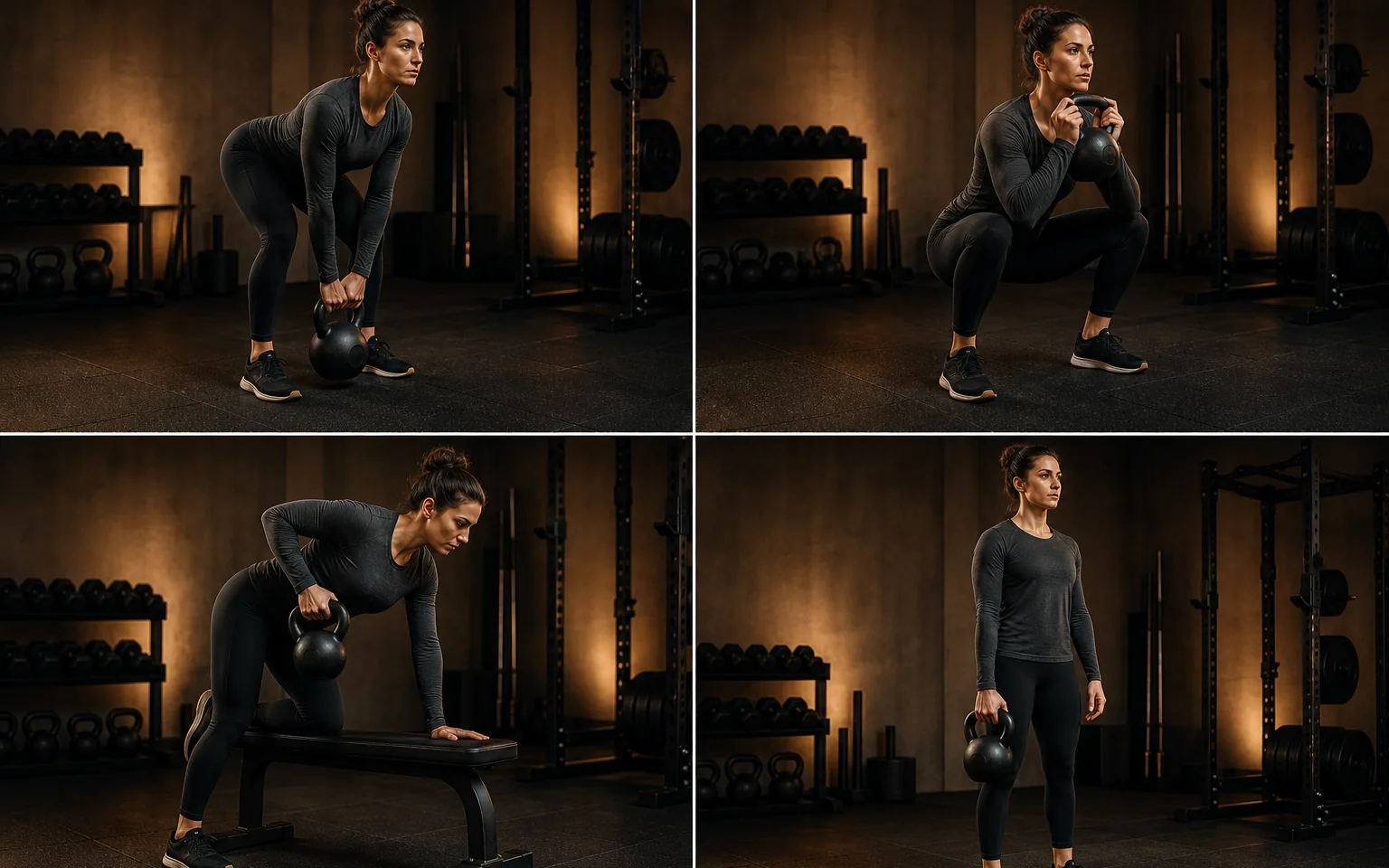
Set a timer for 30 seconds of work and 30 seconds of rest. Cycle through these four stations: kettlebell deadlift, goblet squat, supported one-arm row, and suitcase hold. Switch hands halfway through the hold. Complete four rounds for 16 minutes of work and rest. Take an extra minute between rounds if your form needs it.
Before the timer starts, clear a space where you can set the bell down safely. Wear shoes with a stable base and check that the floor isn’t slippery. For the deadlift, send your hips back and stand by pressing your feet into the floor. For the hold, stand tall without letting the bell pull one shoulder down.
Use a load that fits every station. If the bell makes the row or hold hard to control, go lighter or use a shorter interval. A lighter bell can still challenge you: lower slowly during squats, pause briefly at a comfortable depth, or march in place during the hold. Stop for sharp pain, dizziness, or a sudden loss of control.
Finish with a few minutes of easy walking. Let your breathing settle, then stretch gently if it feels good. Start with one or two weekly sessions and leave time between harder days to recover. If you’re new to timed training, begin with fewer rounds rather than trying to match someone else’s pace.
Compare the 5 Kettlebell HIIT Workouts
Pick the routine that matches your current skill and the kind of effort you can repeat. A swing workout has more speed and coordination. The no-swing circuit keeps the movements simpler. None of these formats needs a large home gym, but each needs enough clear floor space to move and set the bell down safely.
| Workout | Best fit | Timing | Skill focus |
|---|---|---|---|
| Swing-and-Squat EMOM | You know the swing | 10-minute block, repeat once | Hinge and squat |
| Deadlift-and-Row | You prefer slower reps | 30 seconds on, 30 off | Hinge and pull |
| Squat and Suitcase March | You want a core challenge | 40 seconds on, 20 off | Squat and resist leaning |
| Row and Goblet Squat | You want an even pace | 30 seconds on, 30 off | Pull and squat |
| No-Swing Circuit | You want less impact and noise | 30 seconds on, 30 off | Basic strength patterns |
For a more structured path than repeating sample circuits, Hybrid Fit Mom has a self-guided six-week kettlebell strength and conditioning program. It includes 24 sessions across four workouts per week, prerecorded demonstrations, an eating framework, and lifetime access. The program costs $29 as a one-time purchase and has a 14-day refund.
Its training moves through endurance, resistance, and power across six weeks. That gives you a plan for what comes next, rather than a saved workout with no next session attached. If you need a less demanding start, use one routine twice a week and build from there.
Frequently Asked Questions About Kettlebell HIIT Workouts
Can beginners do kettlebell HIIT workouts?
Yes, if you know the movements and choose a pace you can control. Start with deadlifts, goblet squats, and supported rows before timed swings or overhead lifts. Try 20 seconds of work followed by 40 seconds of rest. Practice each move outside the timer first, and stop a set when your form changes.
How many times a week should I do kettlebell HIIT?
Start with one or two sessions a week, with at least a day between harder workouts. If you already do strength training or run, count those sessions as part of your overall workload. Add another interval day only if you’re recovering well and keeping steady form. An easy walk or conversational zone 2 session can fill another day.
How heavy should my kettlebell be for HIIT?
Choose a weight you can move with control through the hardest exercise in your circuit. A bell that works for deadlifts may be too heavy for rows or presses. Test a few clean reps before starting the timer. If your back rounds, your balance shifts, or the bell path gets messy, use a lighter load.
Is it normal to feel sore after a kettlebell workout?
Mild muscle soreness can happen, especially after a new exercise or more work than usual. It should ease over time. Sharp pain, worsening pain, numbness, or dizziness isn’t a normal training target. Stop the workout if those symptoms appear, and seek advice from a qualified health professional if they persist or concern you.
How do I make the workouts harder over time?
First make every rep steady at the current load. Then add a round or a few seconds of work, changing one thing at a time. Only increase the bell when you can keep the same control in later rounds. If the new challenge changes your hinge, squat, or row, return to the prior version and build again.
Conclusion
Choose the no-swing circuit if you’re learning, or the EMOM if your swing is already steady. Set out one bell and a timer, then complete the first session at a pace you can repeat next week. For a progressive home plan built for busy women and mothers, take a look at Hybrid Fit Mom’s six-week program.