Best Kettlebell Workout With One Kettlebell


One bell is enough to train your whole body at home. This list gives you 10 moves, from steady strength work to faster conditioning, plus a circuit you can fit around work and family.
An analysis of 43 YouTube comments about single kettlebell full body workouts found that 21% mentioned a lack of technique guidance.
Mari Grossi of Hybrid Fit Mom built her training around the margins of a busy life. Keep the moves crisp, leave room to rest, and let the plan do the organizing.
1. Goblet Squat: A Simple Full-Body Strength Builder
The goblet squat is a squat with the kettlebell held close to your chest. It’s a strong first pick when you want to train your legs while practicing a steady, upright squat.
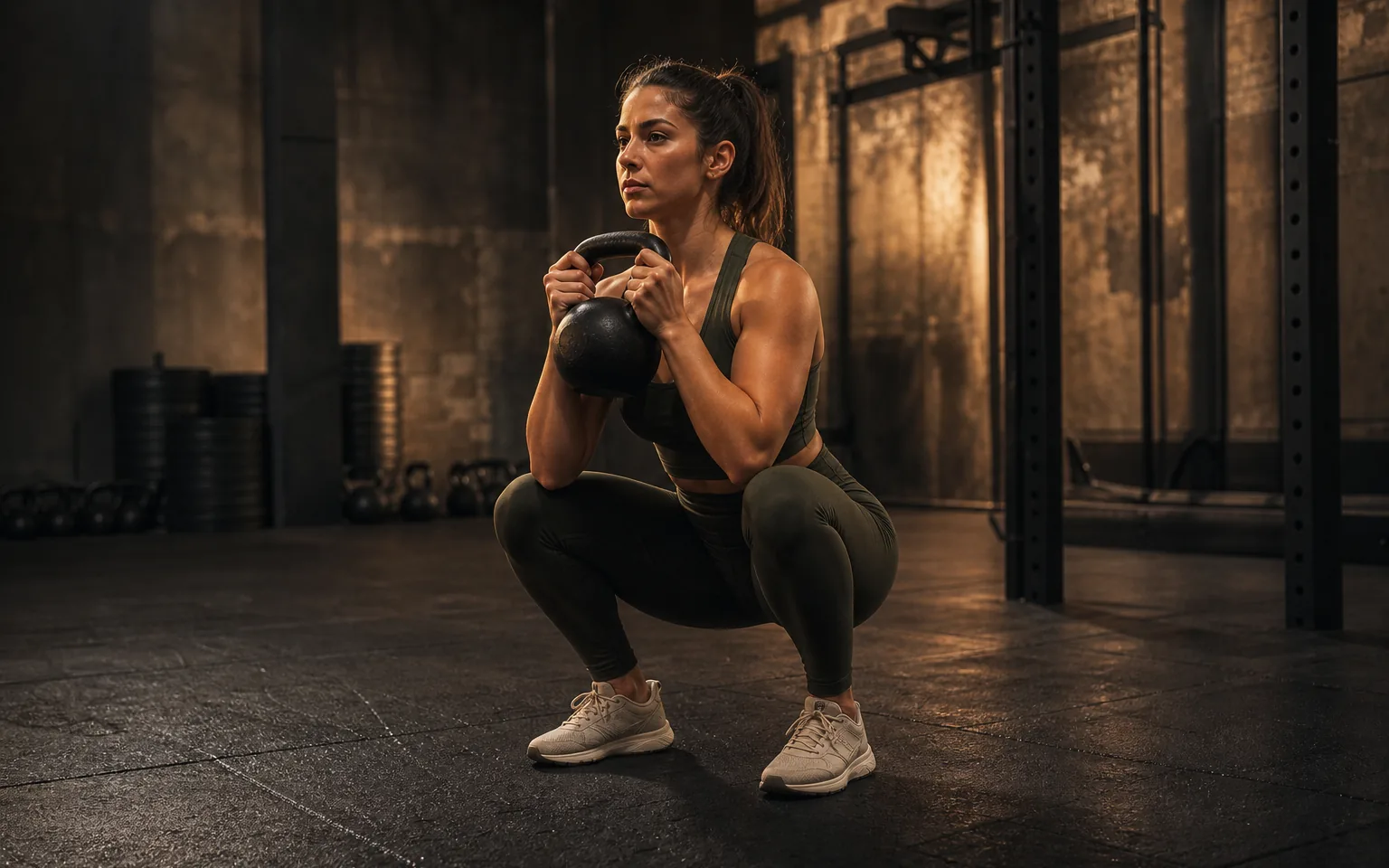
Hold the bell by the sides of its handle. Keep your elbows angled down, brace your middle, then sit between your feet. Let your knees follow your toes. Stand by pressing through your whole foot, not by leaning back at the top.
Start with 2 or 3 sets of 8 to 12 smooth reps. If your heels lift or your depth shrinks, shorten the range or use a lighter bell. This kettlebell leg workout guide has more cues for choosing squat depth and pace.
2. Two-Hand Kettlebell Swing: A Hip-Power Conditioning Move
The two-hand swing is a fast hip hinge, not a squat or an arm raise. It suits you when you already know how to hinge and want to add a short conditioning block.
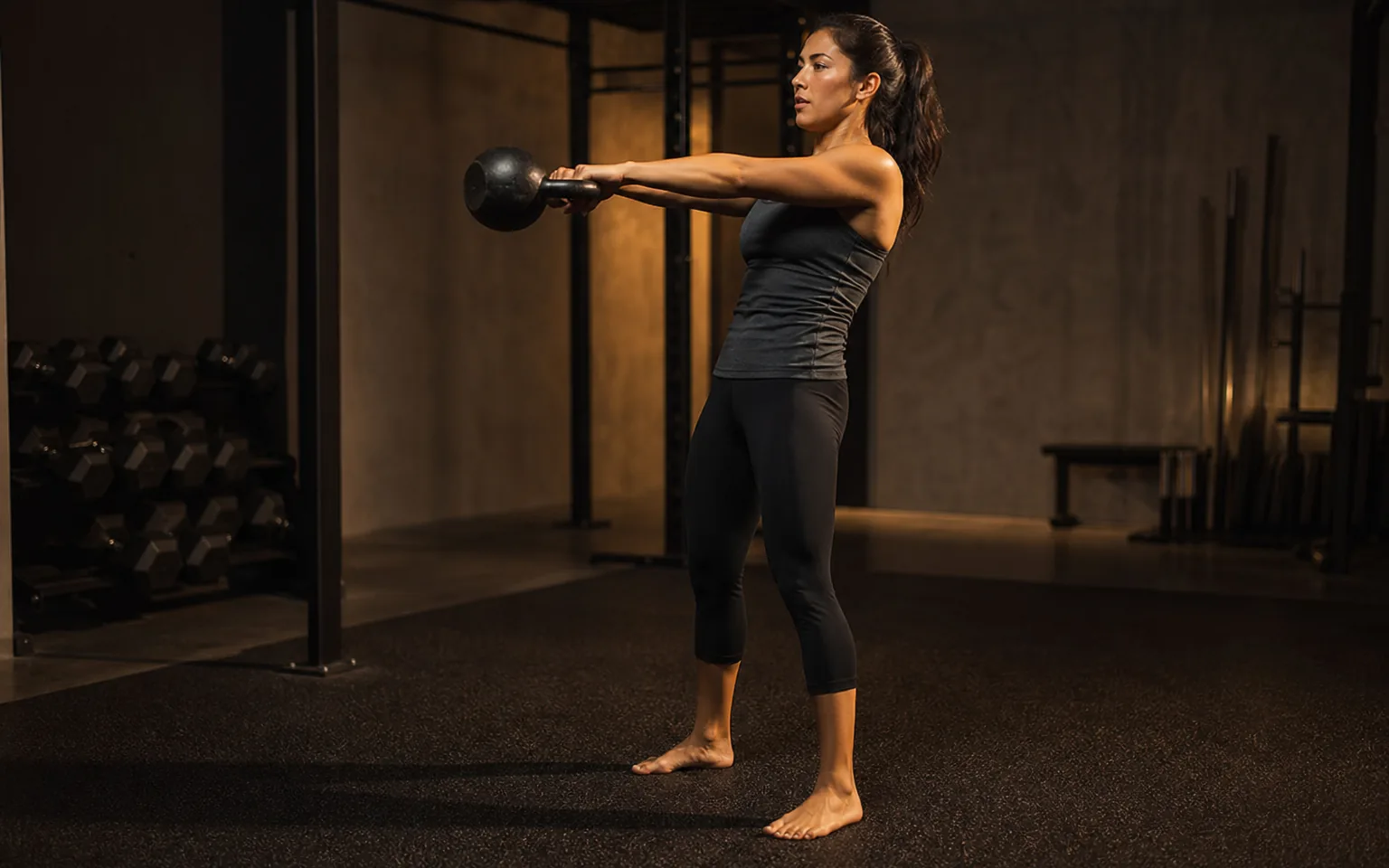
Set the bell a short way in front of you. Hike it back between your thighs, then snap your hips forward. Your arms guide the bell; your hips create the drive. Finish tall with your ribs stacked over your hips. If your back rounds or the bell feels hard to control, switch to deadlifts.
Try 20 seconds of work followed by 40 seconds of rest for 6 to 10 rounds. Shorten the work period if your swing slows or your form changes.
3. Single-Arm Kettlebell Press: Unilateral Upper-Body Strength
The single-arm press moves one kettlebell from your shoulder to overhead. It’s a useful upper-body strength move, and the one-sided load asks your trunk to stay steady.
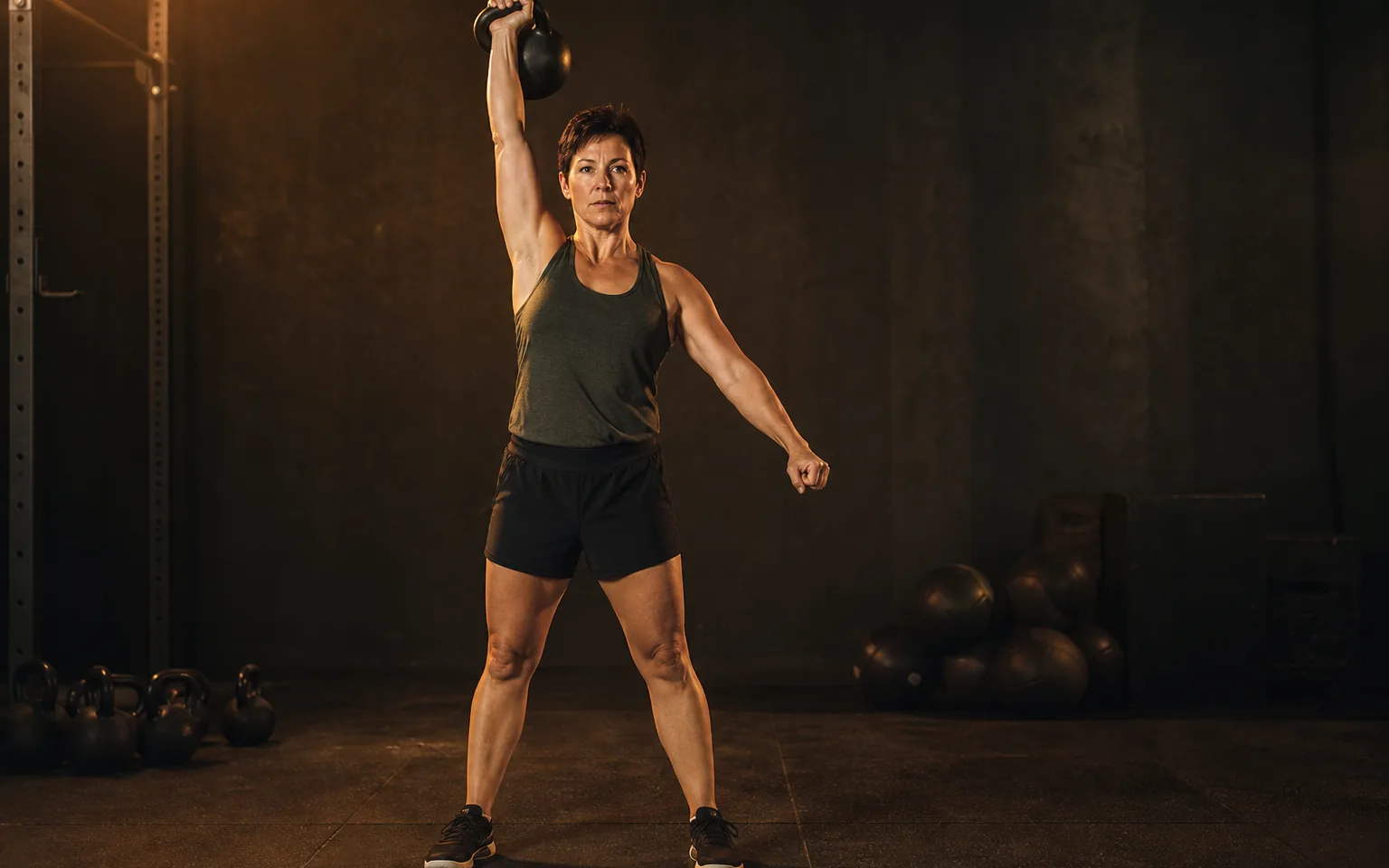
Start in the rack position, with the bell resting near your forearm and your wrist straight. Squeeze your glutes and keep your ribs over your hips. Press up without dipping your knees or leaning to the side. Lower the bell with control.
Do 5 to 8 reps per side for 2 or 3 sets. Use a weight you can press without changing your posture. Stop the set if you need leg drive or your lower back arches to finish a rep. Log your load and reps so you can compare each side from week to week.
4. Supported Kettlebell Row: A Back Exercise With a Stable Setup
A supported row trains your upper back with one hand free to steady you. Choose it when a bent-over row feels hard to hold without your torso shifting.
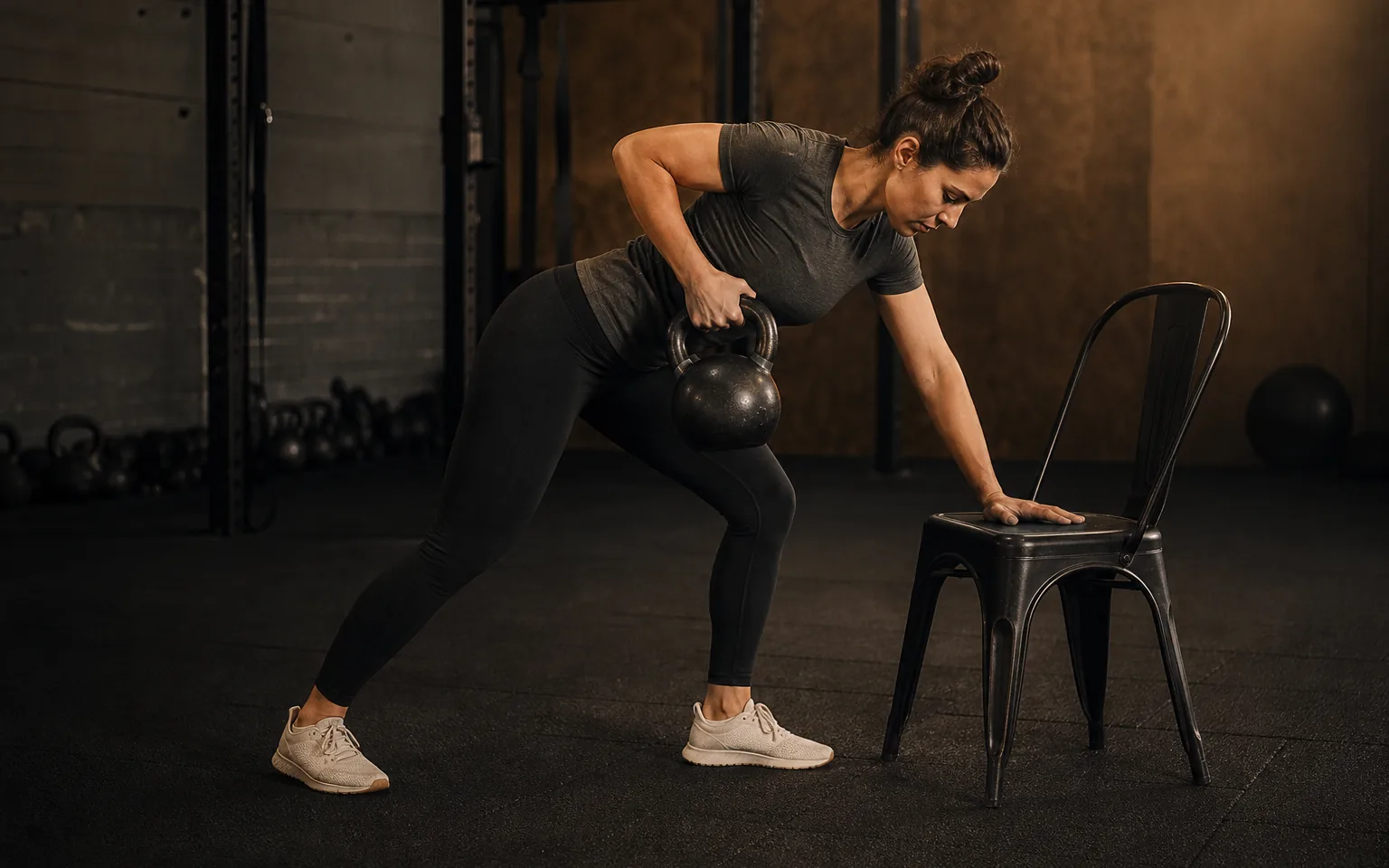
Place your free hand on a sturdy chair or your front thigh. Hinge forward and keep your back long. Let the kettlebell hang under your shoulder, then draw your elbow toward your lower ribs. Lower the bell slowly instead of letting it drop.
Try 8 to 12 reps on each side for 2 or 3 sets. Keep your shoulders level and avoid twisting to lift the bell. If your grip gives out first, rest before the next set. The point is a controlled pull, not a race to finish both arms.
5. Push-Up: A No-Extra-Equipment Chest and Core Pairing
The push-up pairs well with one-bell training because it adds a pressing move without asking you to hold the kettlebell. It’s a good choice when you want more chest and arm work in the same session.
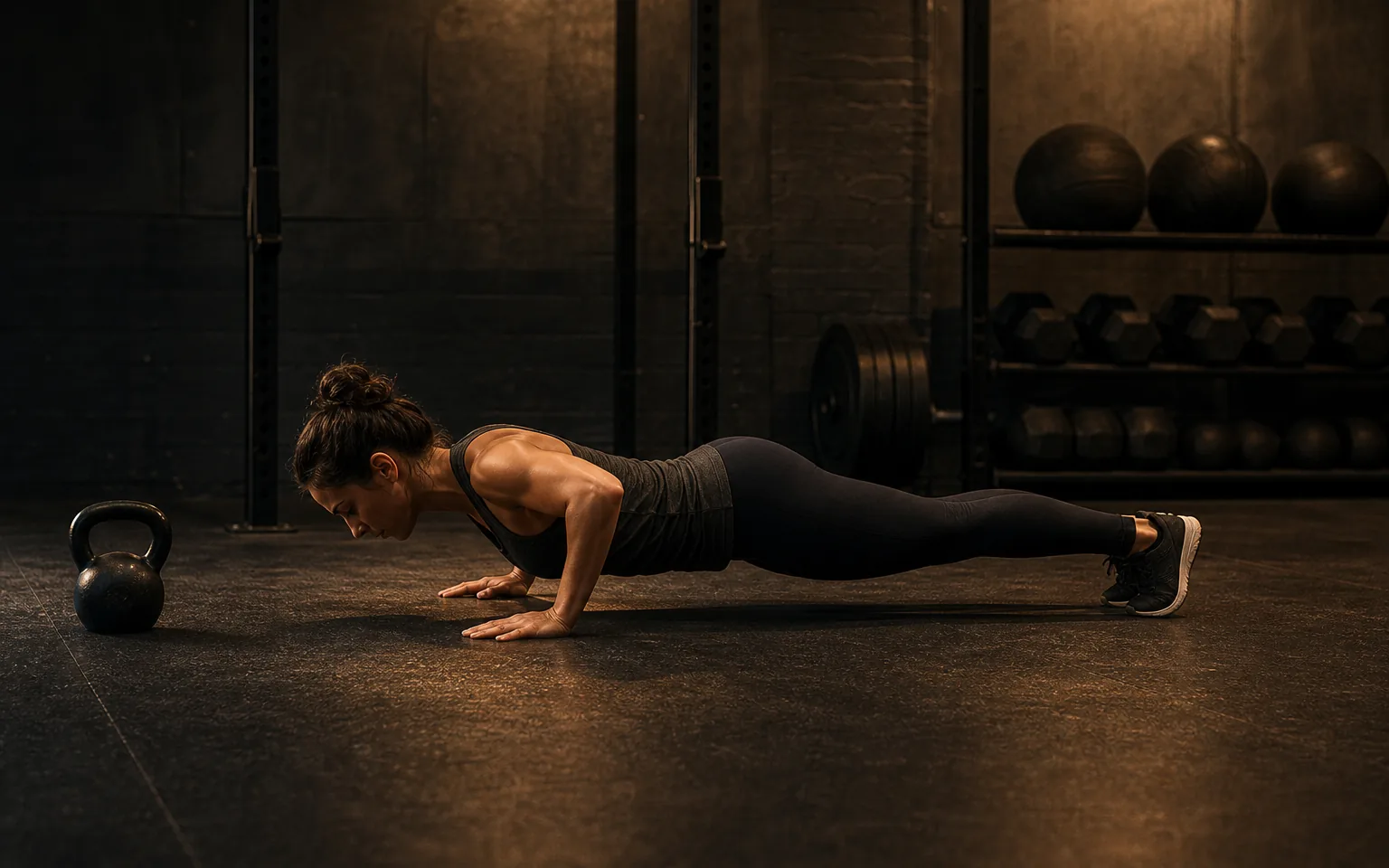
Set your hands under your shoulders and make a straight line from head to hips. Lower only as far as you can keep that line, then press the floor away. If a floor push-up is too hard, raise your hands on a firm counter. If you use the kettlebell handle as a hand hold, check that the bell is stable first.
Do 2 or 3 sets of 6 to 12 reps, stopping before your hips sag. You can alternate push-ups with rows to balance pushing and pulling. There’s no need to add an unstable version just to make a familiar move look harder.
6. Kettlebell Deadlift: A Low-Impact Hinge for Building Confidence
The kettlebell deadlift is a slow hinge that teaches the same hip action used in swings. It’s a sound place to start if you’re still learning to move the bell from the floor.
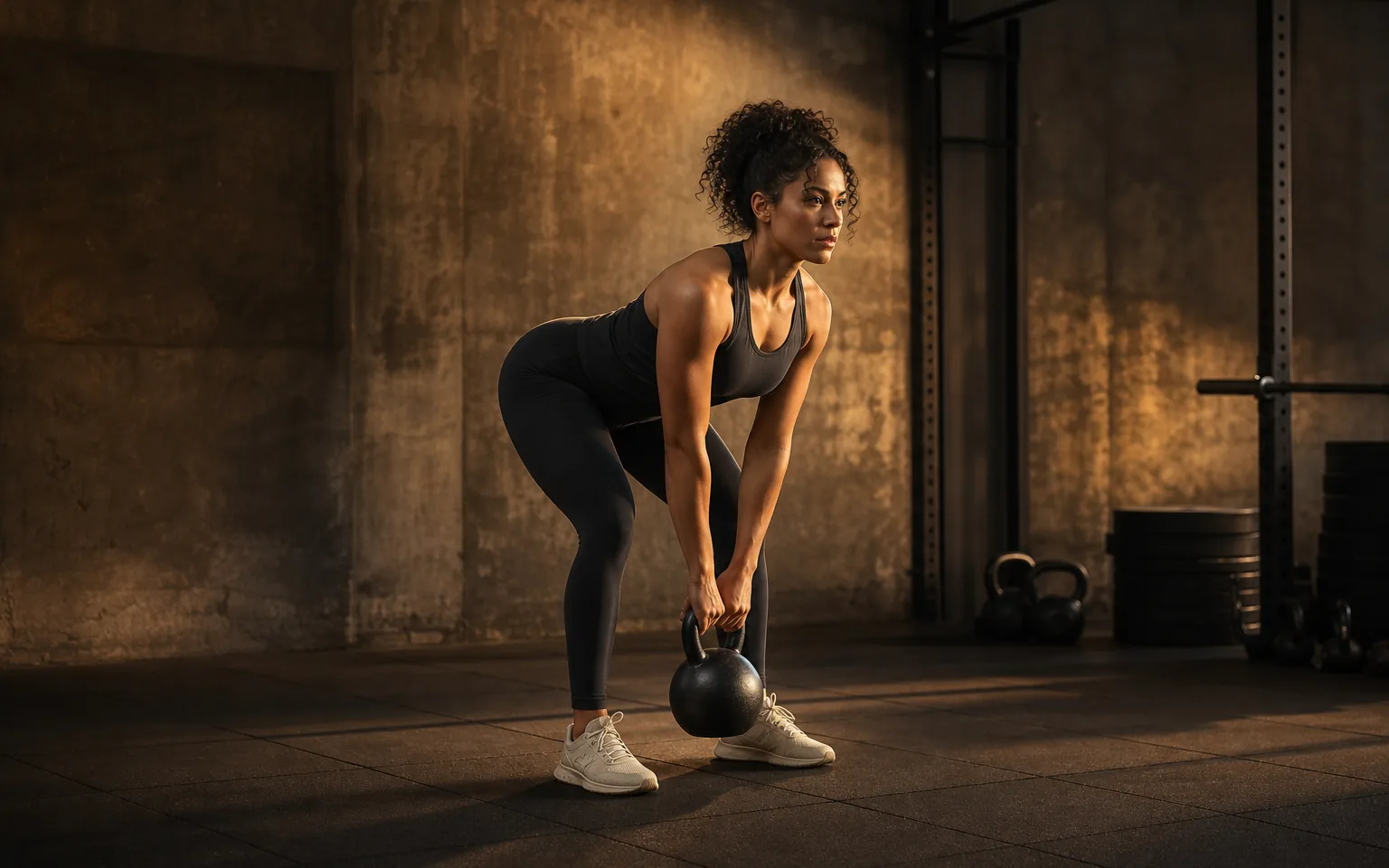
Place the bell between your feet. Push your hips back with a soft bend in your knees, grip the handle with both hands, then stand tall. Keep your back long and the bell close. On the way down, send your hips back again instead of turning the rep into a squat.
Use 2 or 3 sets of 8 to 10 reps. Choose a load that lets you finish with a few good reps still in reserve. If the bell feels light, slow the lowering part or pause just above the floor. This kettlebell deadlift form guide breaks down the setup in more detail.
7. Kettlebell Reverse Lunge: Single-Leg Strength and Balance
The reverse lunge trains one leg at a time and gives you a way to practice balance under load. Hold the bell at your chest if that position feels secure.
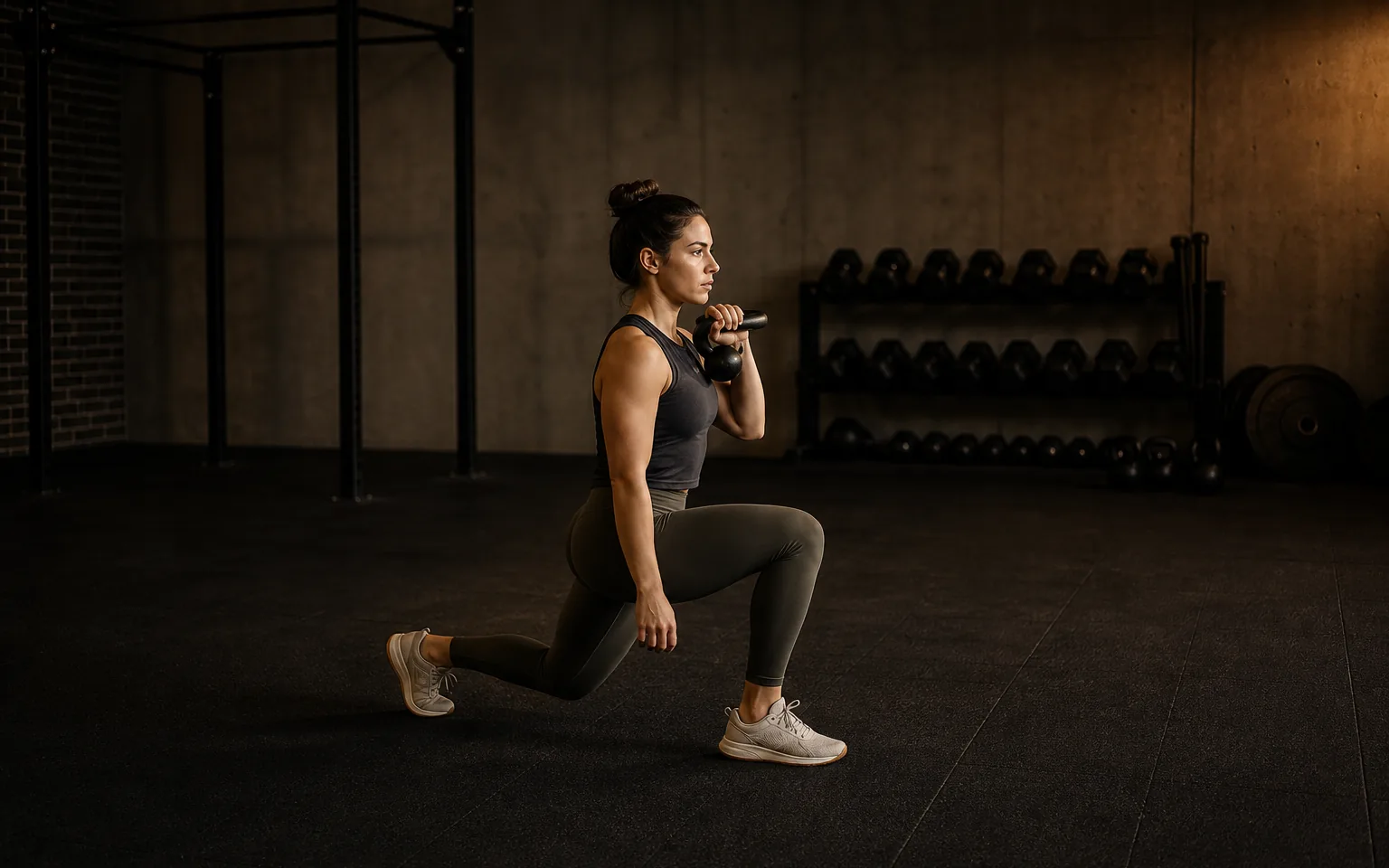
Step one foot back and slightly out to the side. Bend both knees only as far as you can stay steady, keeping the front knee in line with your toes. Press through the front foot to stand. Complete the reps on one side, then switch, or alternate if that helps you keep your balance.
Begin with 6 to 8 reps per leg for 2 sets. Use body weight first if the bell makes your steps wobbly. You can also hold a wall or chair with your free hand while you learn the movement. A smaller, controlled lunge beats a deep one you can’t own.
8. Kettlebell Clean: A Skill-Building Link Between Floor and Rack
The clean moves the kettlebell from the floor to your shoulder rack. It’s useful when you want to press the bell but don’t want to lift it into position with two hands each set.
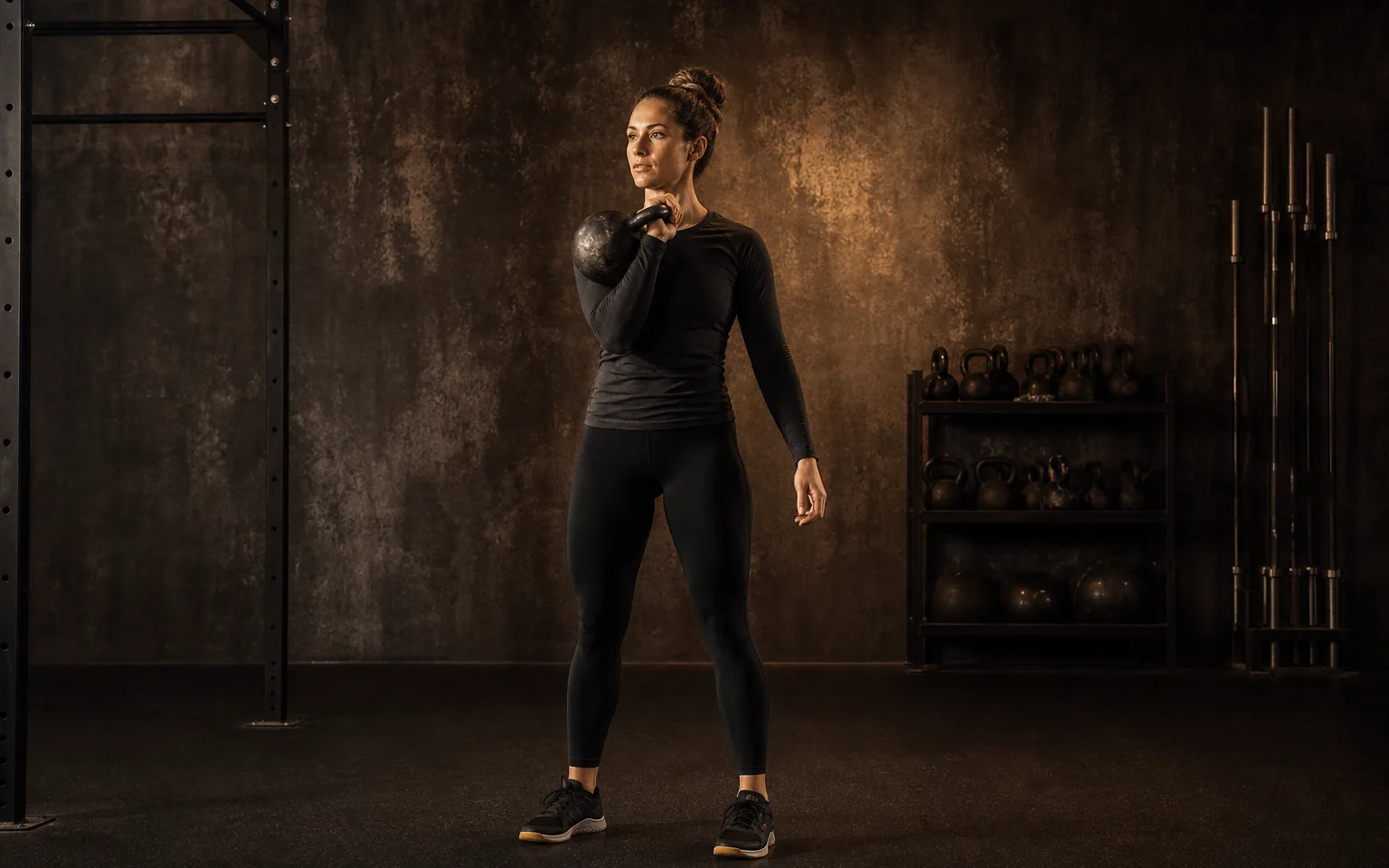
Start with a hinge and a firm grip. Drive through your hips to guide the bell close to your body, then rotate your hand so the bell settles softly against your forearm. Keep the wrist straight. The bell should not crash into your arm.
Practice 3 to 5 controlled reps per side before adding cleans to a fast circuit. If the catch is loud or your wrist folds back, stop and return to deadlifts or a lighter bell.
9. Kettlebell Windmill: A Controlled Core and Mobility Challenge
The windmill combines a hip hinge with a loaded overhead hold. It suits experienced kettlebell users who can keep their shoulder steady while their torso moves.
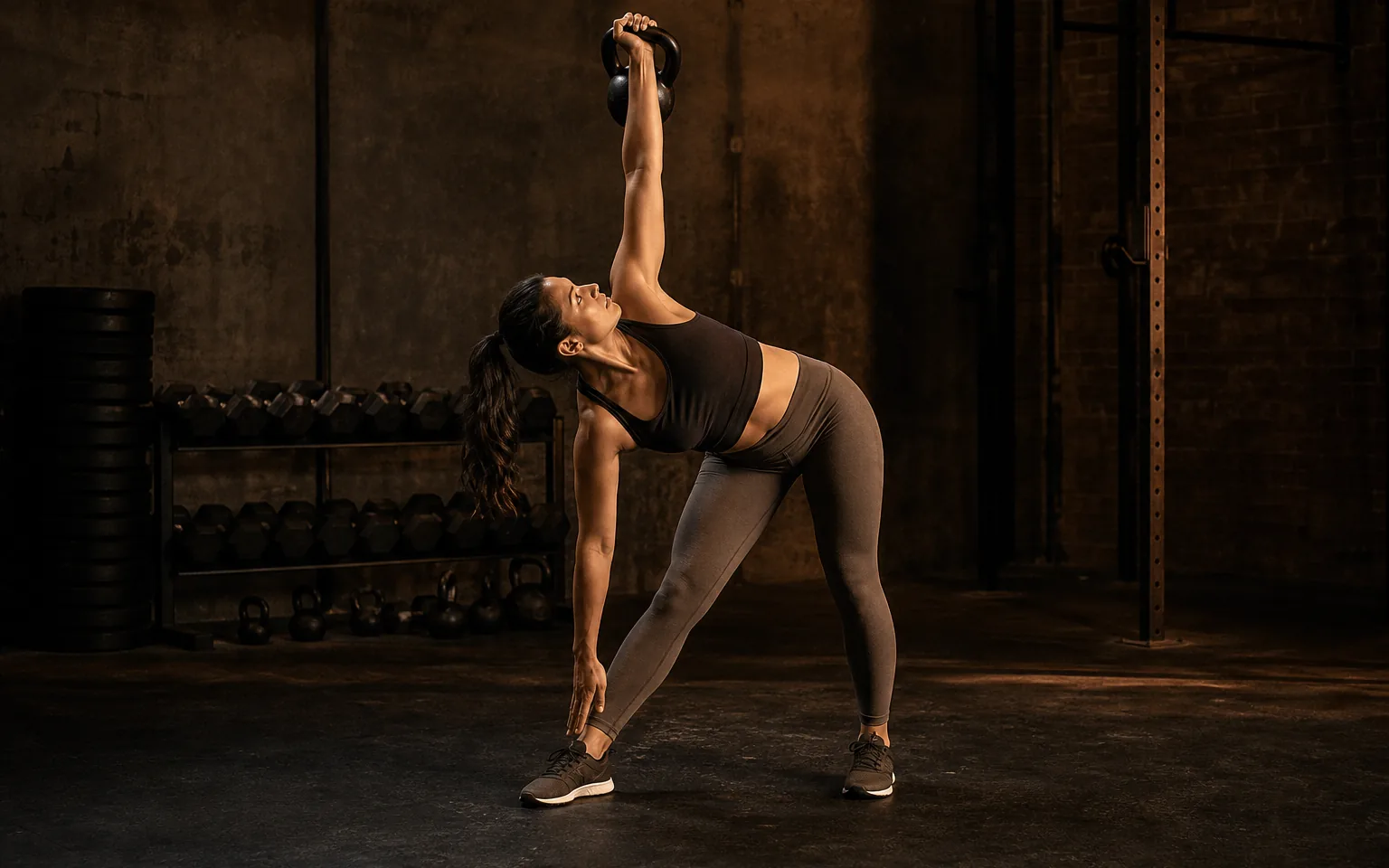
Begin without weight or with a light bell. Hold one arm overhead and look toward the bell. Send your hips back as you hinge and reach your free hand down your leg. Stop when you can no longer keep the overhead arm stacked and your back controlled. Touching the floor isn’t the goal.
Try 3 to 5 slow reps per side. Skip the loaded version if your shoulder feels painful or you can’t keep your arm overhead without shrugging. A half-kneeling or unloaded practice version can help you learn the pattern first.
10. Cossack Stance Row: A Lateral Strength Variation
The Cossack stance row pairs a side-to-side squat position with a row. It’s a more advanced choice when you want to train laterally, rather than doing every leg move forward and back.
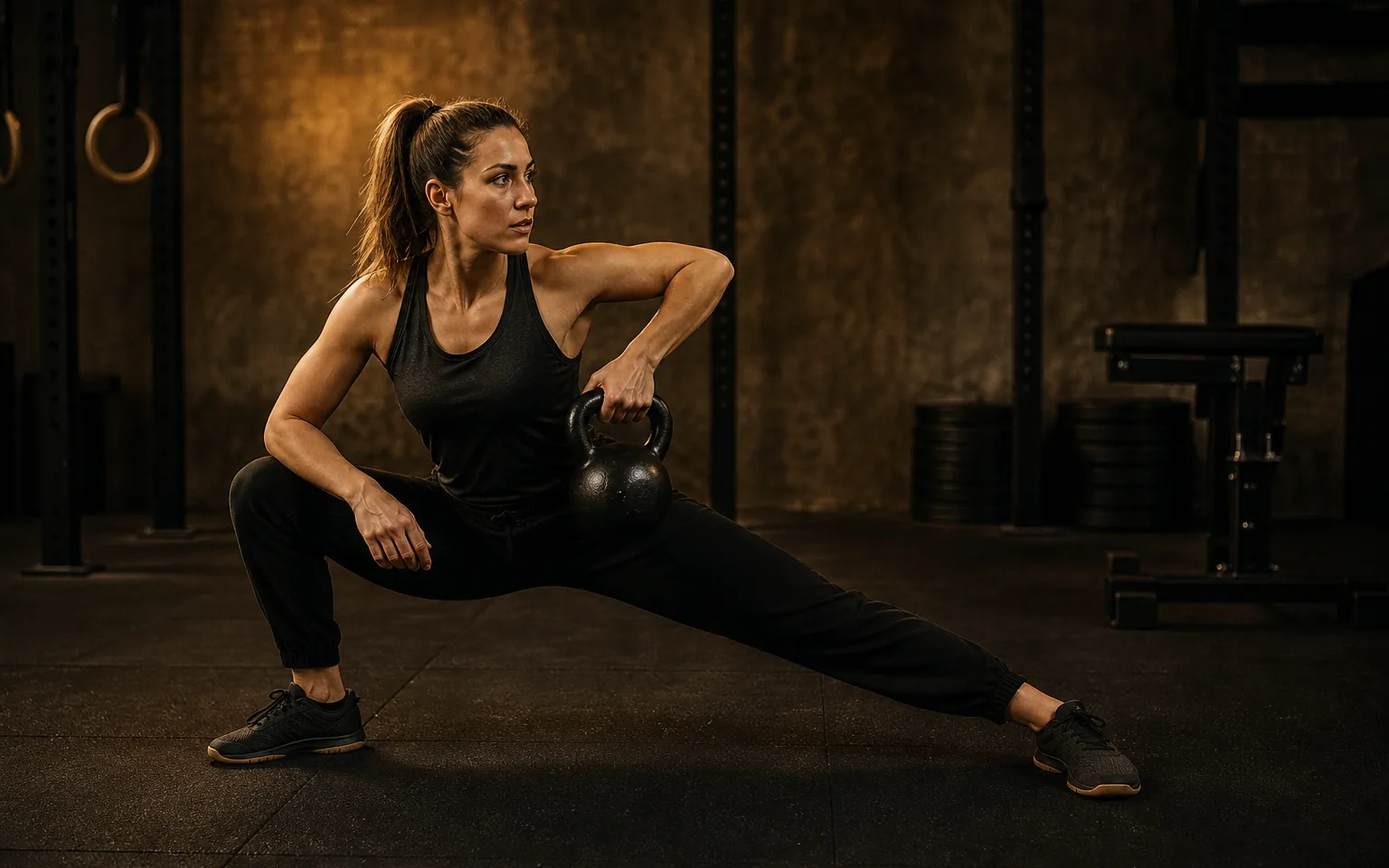
Take a wide stance and shift your hips toward one side, bending that knee while the other leg stays longer. Hinge slightly and row the bell toward your ribs. Keep the bell close, then lower it with control. Practice the side shift without weight first; the goal is a stable position, not maximum depth.
Start with 5 or 6 rows per side for 2 sets. Use a chair or wall for balance if needed. If your knee caves inward or your torso twists to move the bell, make the stance narrower or leave this variation out for now.
Build a One-Kettlebell Circuit That Fits Your Schedule
A circuit strings exercises together with planned rest. For a full-body session, include a squat, a hinge, a press, a pull, and a bodyweight push. You don’t need to use all 10 moves every time. Pick four or five, then leave enough time to keep each rep clean.
Warm up for about five minutes. March in place, rehearse a few unloaded hinges, and do easy squats and shoulder circles. After the circuit, walk gently for a few minutes and stretch your hips or shoulders if that feels good.
| Time available | Format | Good fit when |
|---|---|---|
| About 15 minutes | 3 moves, 30 seconds work and 30 seconds rest, 2 rounds | You need a short practice session |
| About 20 to 25 minutes | 5 moves, 40 seconds work and 20 seconds rest, 2 or 3 rounds | You know the moves and can keep control as you tire |
| About 25 to 30 minutes | 3 sets of 8 to 10 reps per move, with 60 to 90 seconds between rounds | You want steadier strength work and longer rests |
For the timed version, use a goblet squat, deadlift, supported row, press, and push-up. Switch arms during the row and press interval. Rest longer if your breathing is still rushed or your technique is slipping. Swings can replace deadlifts only when your hinge is solid.
Choose your bell based on the hardest move, which is often the press. You should be able to do several controlled presses without leaning back or bending your wrist. If the bell is too heavy overhead, use a lighter one if available, or leave out the press. If it feels easy for squats, slow the lowering phase or use a reverse lunge.
Train two or three times a week, with a rest or easy-movement day between harder sessions. To progress, first add a rep, a round, or a little work time. Change one thing at a time. A saved workout can tell you what to do today. A plan tells you what changes next week. Hybrid Fit Mom’s six-week kettlebell program gives you four sessions a week, prerecorded exercise demos, an eating framework, one-time payment, and lifetime access. See full-body kettlebell workout formats for more ways to arrange your week.
Frequently Asked Questions
Can you get a full-body workout with one kettlebell?
Yes, one kettlebell can train your whole body when you include different movement patterns. Use a squat or lunge for your legs, a deadlift or swing for your hips, a press for your shoulders, and a row for your back. Add push-ups for extra pressing work. You can adjust reps and rest without changing equipment.
What weight kettlebell should I use?
Choose a weight you can control through the hardest exercise in your session, often the overhead press. Keep your wrist straight and avoid leaning back. A bell that works for swings may be too heavy to press. If you own only one, let the press guide your choice and use more reps or a slower tempo for easier leg moves.
How often should I do kettlebell workouts?
Two or three full-body sessions a week is a useful starting schedule for many people. Leave a rest or easy-movement day between harder sessions so you can recover. If you follow a program with more frequent workouts, use its planned pace and adjust when soreness or fatigue changes how well you move.
Are kettlebell swings hard on your joints?
Swings are a fast hip-hinge exercise, so learn the hinge with deadlifts first. Keep your feet planted and stop if you lose control of the bell or feel sharp pain. You can build conditioning with deadlifts, marching holds, or a steady circuit instead. If you have an injury or a medical restriction, ask a qualified health professional for personal guidance.
How do I make a one-kettlebell workout harder?
Progress one variable at a time. Add a few reps, a round, or a little work time while keeping the same load. You can also slow the lowering phase or choose a single-leg version, such as a reverse lunge. Move to a heavier bell only when you can keep the same controlled form across your planned sets.
Conclusion
Start with the goblet squat, deadlift, supported row, press, and push-up. Choose a bell you can control overhead, then schedule your first two sessions. If you want that week mapped out for you, explore Hybrid Fit Mom’s six-week program and follow the sessions at your own pace.