Kettlebell vs Dumbbell Workout: Which Fits You?

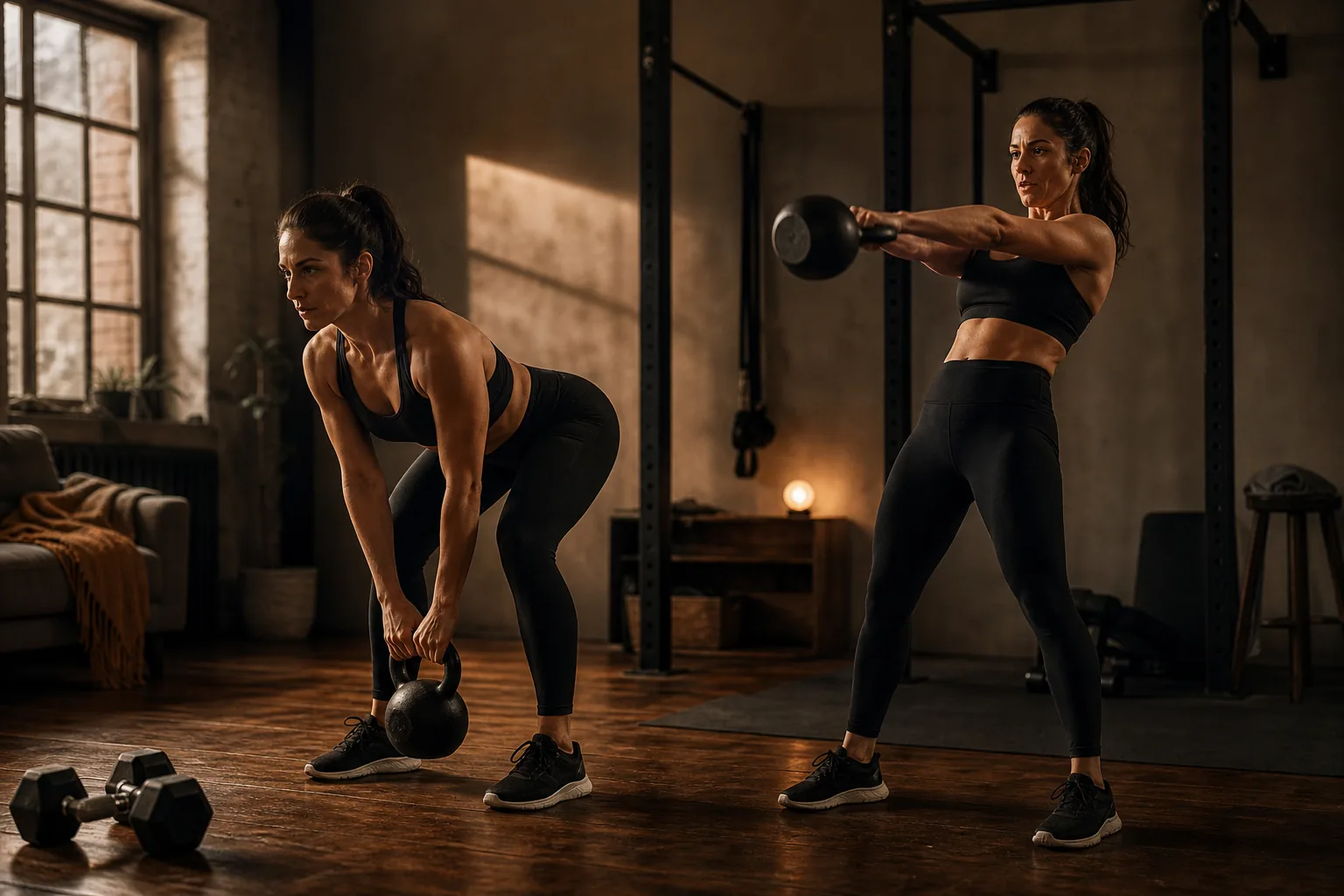
A kettlebell vs dumbbell workout can build strength, but the two weights feel different in your hands and suit different kinds of training. Kettlebells favor swings and full-body conditioning. Dumbbells make controlled reps and targeted muscle work easier to manage.
An analysis of 48 YouTube comments about kettlebell vs Dumbbell Workouts found that 42% mentioned functional strength over muscle building.
If you have a small home setup and basic kettlebell skills, a plan can matter as much as the tool. Here’s how the two compare, and when each is a better fit.
Movement and Training Feel: Ballistic Swings vs. Controlled Reps
A kettlebell’s weight hangs below its handle. That offset makes it natural to swing the bell between your legs, then drive it forward with your hips. Swings, cleans, and snatches are quick, flowing lifts. Your hips start the move, while your arms guide the bell.
A dumbbell holds its weight on both sides of a straight grip. It feels more balanced during slow lifts, so presses, rows, curls, and raises are easier to control. You can use either tool for squats, hinges, and presses. The feel changes, though: the kettlebell moves around your wrist, while the dumbbell stays more fixed in your hand.
That difference affects the work you feel. A kettlebell swing asks your glutes and hamstrings to drive the movement. Your grip and trunk also work to control the bell’s path. A dumbbell curl or lateral raise lets you focus more directly on the muscle doing the lift.
If a swing is new to you, learn the hinge before adding speed. Push your hips back, keep your trunk braced, and let hip drive move the bell. A step-by-step kettlebell swing form guide can help you check those parts before you build a faster set.
For slow, focused reps, reach for the dumbbell. For a hip-driven movement that links strength with conditioning, the kettlebell has the edge.
Strength, Muscle, and Conditioning: What Each Workout Emphasizes
Both weights can train your whole body. A dumbbell session might pair a squat with a press, then use a row or curl to work a smaller area. The design makes it easier to train one arm at a time, which can help you notice when one side feels less steady.
Kettlebell training often uses compound moves. A goblet squat works your legs while your upper body holds the bell close. A swing trains the hip hinge and asks your trunk to stay firm. With a one-sided carry, you walk while resisting the pull of the bell toward one side.
For muscle growth, dumbbells are usually the more direct tool. It’s easier to choose a lift that targets a specific muscle, then increase the load in small steps as you get stronger. Lower-body lifts with either tool can build strength and muscle when the weight and effort match your ability. Dumbbells make it simpler to add targeted work after a squat or hinge.
Kettlebells stand out when you want strength work to feel more like conditioning. A set of swings can raise your breathing rate while your hips and grip work hard. That doesn’t make every kettlebell session cardio, and it doesn’t mean dumbbells can’t be used in circuits. The kettlebell’s shape simply suits fast, linked movements.
Choose the tool based on the main job of the session. For a steady muscle-building plan, controlled dumbbell sets are easy to track. For a mix of hinge power and conditioning, kettlebell work fits well. Either way, leave enough rest to keep your reps clean.
Progression and Home Setup: Weight Options, Space, and Time
Progress comes from asking your muscles to do a little more over time. With dumbbells, you can add weight when your current load feels manageable for the planned reps. Adjustable pairs keep several loads in one storage spot. Fixed pairs need more room as you collect more weights.
Kettlebells also allow progression, but the jumps between fixed bells can feel larger. You can first add a rep or a set, or shorten rest if you can still keep good form. Move to a heavier bell when you can control the current load through the full movement. Don’t rush a bigger swing just to make the workout feel harder.
| Home training question | Kettlebell | Dumbbell |
|---|---|---|
| What movement feels most natural? | Swings, cleans, carries, and linked lifts | Presses, rows, curls, and controlled lifts |
| How can you progress? | Add reps or sets, adjust rest, then move up in load | Add reps or load in smaller steps when possible |
| What does storage look like? | One bell can fit in a corner | An adjustable pair saves space; fixed pairs need more room |
| What suits a tight schedule? | Compound moves can link strength with conditioning | Planned sets make focused strength work easy to track |
One kettlebell can cover many movement patterns without a rack of weights. If you want ideas for building a session around a single bell, these one-kettlebell workout options lay out different ways to use it at home.
For a busy week, the right setup is the one you can use without a long reset. Clear enough floor space to swing safely if you choose a kettlebell. For dumbbell presses, make sure you have room to set the weights down with control.
Hybrid Fit Mom’s program, The Hybrid Method, is built around one kettlebell. It runs for six weeks and includes 24 sessions, with four sessions per week. The one-time purchase is $29 and includes lifetime access, prerecorded exercise demonstrations, and an eating framework. It may suit you if you already know basic kettlebell skills and want a set schedule at home.
Learning Curve and Safety: Matching the Tool to Your Experience
Dumbbells are often easier to learn because many lifts use a slow, clear path. A press moves from beside your shoulders to above your chest. A row pulls the weight toward your ribs. You can pause at any point and reset your position.
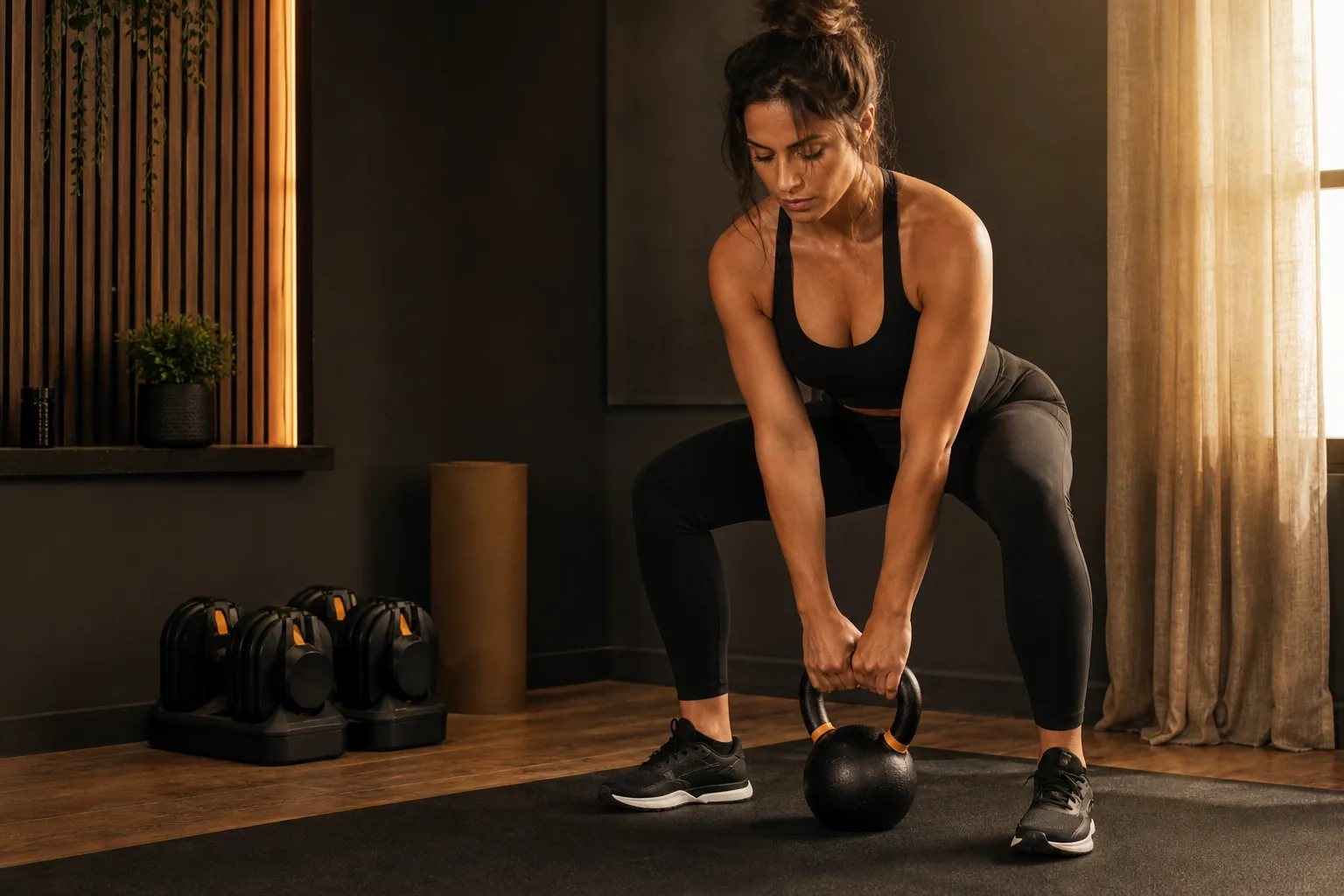
Kettlebell basics can also be learned, but swings and cleans need more attention to timing. A swing is a hip hinge, not a squat with the bell lifted by your arms. Start with a light, controlled hinge drill. Add the swing only when you can keep your back firm and let your hips drive the bell.
Neither tool is automatically safe or unsafe. The main issue is whether you can control the load and use the right form for that lift. A rushed swing can pull you out of position. A dumbbell that’s too heavy can make a press or row hard to control, especially near the end of a set.
Give yourself room to move. Keep people, pets, and breakable items outside the path of a swinging bell. For dumbbell work, set each weight down gently rather than dropping it near your feet. Stop a set when you can’t keep the same motion from rep to rep.
Already have basic kettlebell skills? A structured plan can help you build on them without guessing what to do each day. Hybrid Fit Mom includes prerecorded demonstrations with its six-week program, so you can check Mari’s movement cues as you train. If you’re new to lifting, start with controlled moves and get help with technique before trying fast lifts.
When a Kettlebell or Dumbbell Workout Is the Better Choice
Pick a kettlebell when you want to train swings, carries, and other hip-driven moves in a small space. It’s a strong fit for a home session that blends strength with conditioning. It can also be a good choice if you have basic skills and prefer one tool over a room full of weights.
Pick dumbbells when your main goal is controlled strength work or muscle growth in specific areas. They suit presses, rows, curls, and other lifts where you want a steady path and a clear way to increase load. An adjustable set can also help if storage space is tight but you want several weight options.
You don’t have to make this a forever choice. If you own both, use dumbbells for the main strength lifts and a kettlebell for swings or carries. If you only have one tool, build your plan around what it does well rather than trying to force every exercise into the same shape.
For busy women and mothers who already know the kettlebell basics, a plan can remove the daily question of what to train. Hybrid Fit Mom is one option for that structure, with progressive home workouts across six weeks and lifetime access after a one-time purchase. Its focus is training you can fit around work and family, not collecting more gear.
To explore why many women use the bell for both strength and conditioning, read about the benefits of kettlebell workouts for women. Keep the choice simple: use dumbbells to make targeted loading easier; use kettlebells when you want more dynamic hinge work.
Frequently Asked Questions
Are kettlebells or dumbbells better for building muscle?
Dumbbells are usually easier to use for targeted muscle growth because they support controlled lifts and small load increases. Kettlebells can build muscle too, especially through squats, presses, and other compound lifts. Your results depend on training with enough effort and progressing over time, not on the shape of the weight alone.
Can I get a full-body workout with one kettlebell?
Yes, one kettlebell can support a full-body session. You can use it for a squat, hinge, press, row, or carry, as long as the load suits each movement. A single bell keeps the setup simple, but you may need to change reps or exercise choice when one weight feels too light for one lift and too heavy for another.
Are dumbbells safer for beginners than kettlebells?
Dumbbells are often easier for beginners to learn because many exercises use slow, controlled paths. Kettlebell swings and cleans need more practice with timing and hip-hinge form. Either tool can be used safely when you choose a manageable weight, learn the movement, and stop when your form starts to change.
Can I use kettlebells and dumbbells in the same workout?
Yes. You might use dumbbells for presses or rows, then finish with a few controlled kettlebell sets if you know the movements. There’s no need to use both in every session. Start with the lifts that match your goal, and keep the total work at a level you can recover from.
Conclusion: Choose the Tool You’ll Train With Consistently
Choose dumbbells for controlled strength work and targeted muscle training. Choose a kettlebell for swings, compact home training, and strength mixed with conditioning. If you have basic bell skills and want a six-week schedule, look at Hybrid Fit Mom’s program details, then pick the setup you can return to next week.