Top Benefits of Kettlebell Workouts for Women

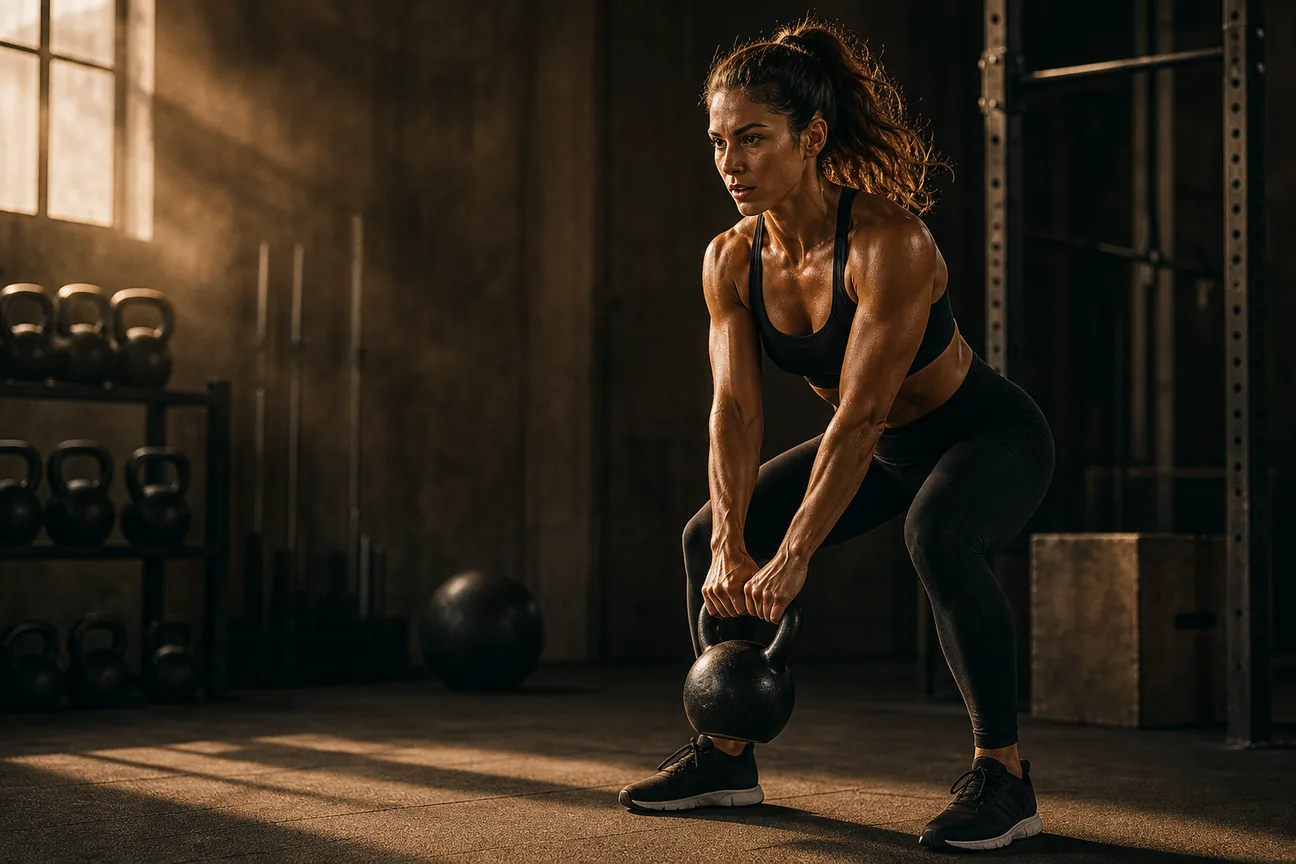
The benefits of kettlebell workouts go beyond lifting one weight. A single bell can help you train strength, conditioning, and control at home, without needing a full gym. Here are five useful benefits, plus ways to make each one fit a busy week.
An analysis of 70 comments from YouTube and Reddit about kettlebell workout benefits found that 19% mentioned enhanced cardio and weight loss.
Hybrid Fit Mom builds that kind of structure into its six-week home program for women and mothers.
1. Full-Body Strength in One Compact Workout
A kettlebell session can train your legs, hips, back, arms, and trunk through a few basic movement patterns. A goblet squat works your legs while the bell held at your chest asks your trunk to stay firm. A row trains your upper back. A hinge, such as a deadlift or swing, loads the hips and back of the legs.
That variety matters when your workout window is short. Instead of setting up several machines, you can use one bell and move through a squat, a hinge, and a press. Keep the exercises you know well, and your workout can feel like training rather than equipment setup.
For example, you might do a set of goblet squats, rest, then do deadlifts and one-arm rows. Use the same bell only if you can control it for every move. The right weight for a squat may feel too heavy for an overhead press, so change the movement or load when needed.
One-sided work adds another useful challenge. A one-arm row or a suitcase carry makes each side work on its own. That can help you notice differences in balance or control, but it doesn't fix an imbalance by itself. Use smooth reps and the same range of motion on both sides.
If you want movement ideas with form cues, Hybrid Fit Mom’s full-body kettlebell workouts for busy women can help you map out a session. A single bell also takes up little floor space, which makes home training easier to set up.
2. Cardiovascular Conditioning Without Long Gym Sessions
Kettlebell training can blend strength work with a faster pace. Swings, for example, use repeated hip hinges. Done in short sets with rest, they can raise your breathing rate while your hips and legs produce the force. You don't need to turn every workout into a sprint to get conditioning work.
Try pairing a controlled set of swings with a slower move, such as a goblet squat. Work for a short interval, then rest until you can keep your form. If you can't maintain a strong hinge, shorten the set. The aim is steady work, not a race against the clock.
There are different ways to train cardio. A brisk circuit asks you to work harder for brief periods. Zone 2 to 3 training is a steadier effort, where you can speak in short phrases but likely wouldn't want to sing. Kettlebell sessions can feel demanding, so pay attention to your breathing and leave room to recover between hard sets.
Not every swing workout gives the same cardio effect. Your pace, rest, skill, and load all shape how hard a session feels.
For a mother fitting training between work and family tasks, shorter blocks can be easier to schedule than a long gym visit. You might complete a few rounds while dinner is in the oven, then stop when the planned work is done. If cardio is your main goal, Hybrid Fit Mom’s kettlebell cardio workout ideas can help you compare formats and pacing.
Don't chase a high swing count just because a challenge sets one. Some swing challenges are built around very high volume, such as 500 swings in a session. That's a demanding target for people who already handle swings well, not a starting point for every trainee.
3. More Training in Less Time With Efficient Exercise Pairings
Exercise pairings save time by letting one movement pattern rest while another works. You could do a set of goblet squats, then a supported row, then rest before repeating. Your legs get a break during the row, and you don't need a long list of separate exercises.
Keep the pairing simple. Match a lower-body move with an upper-body move, or pair a strength exercise with a brief conditioning interval. For instance, do controlled deadlifts followed by a short set of swings only if your hinge stays crisp. If swings are still new, use a second strength move instead.
Timing should serve your form. A 30-second work interval can be useful for a move you already know, but it shouldn't force you to rush a clean, snatch, or Turkish get-up. Those movements need more attention. Pause the clock if you need to reset your grip or find a stable position.
Simple and Sinister is an open-ended routine built around swings and Turkish get-ups, with sessions of about 20 to 30 minutes. It suits someone who wants to repeat a small set of movements. By contrast, a pressing ladder program focuses on overhead strength. Each format has a different purpose, so choose based on the skill you want to practice.
A saved workout can give you an idea for today. A progression plan tells you what changes next week. Hybrid Fit Mom’s six-week program gives busy women a set training arc, with four sessions per week and prerecorded exercise demonstrations. That structure can take the guesswork out of choosing a pairing on a day when you have little time to plan.
4. Better Coordination, Core Control, and Everyday Movement
The kettlebell's weight hangs below its handle, so you have to control the bell as it moves. In a one-arm carry, your trunk works to keep you from leaning toward the loaded side. In a swing, your hips drive the bell while your middle stays braced. Your hands also work to hold the handle, which can challenge grip strength over repeated sets.

That control can carry into everyday tasks such as carrying groceries or lifting a bag from the floor. The movements aren't identical, but practicing a hinge teaches you to send your hips back instead of rounding your lower back to reach down. Start with a slow deadlift if you haven't learned the swing yet.
Balance and coordination come into play with one-sided exercises. A suitcase march, for example, asks you to hold a bell at one side while lifting your knees without tipping. Move slowly at first. If your shoulders twist or your steps wobble, set the bell down and make the task easier.
Core work doesn't have to mean endless crunches. A standing press asks you to keep your ribs stacked over your hips as the bell moves overhead. A light halo, where you guide the bell around your head, asks for controlled shoulder movement and a steady trunk. Use a load you can move without arching your back.
Some people find kettlebell flows enjoyable because one move can lead into another, almost like a short dance. But transitions add skill demands. Learn each exercise on its own before linking them, and stop the flow if your grip slips or your positions get loose.
For a few focused core movements, Hybrid Fit Mom’s kettlebell core exercises can give you ideas to add to home training.
5. Progressive Training That Can Support Long-Term Strength
Strength grows through repeatable work that gradually asks a little more of you. That doesn't always mean grabbing a heavier bell. You can first improve your range of motion, make each rep smoother, or complete the planned sets without losing your position.
Once a movement feels controlled, change one thing at a time. Add a rep, add a set, use a heavier bell, or shorten rest. Keep the other parts of the session steady so you can tell what changed. If your back rounds during deadlifts or your press turns into a backbend, the next step is to reduce the load or return to an easier version.
A six-week block gives training a clear start and finish. Hybrid Fit Mom’s program includes progressive home workouts, prerecorded demonstrations with cues, and an eating framework. It costs $29 as a one-time purchase and includes lifetime access to future programs. Mari Grossi, a weightlifting L1 certified coach, built the program for women and mothers with busy lives.
The eating framework is not a meal plan. That distinction matters if you're looking for a fixed menu. It's a separate part of the program that sits alongside the training, while the workout plan gives you a structure to follow across the six weeks.
Long-term strength is about staying capable as life changes. Training your hinge can help you lift from the floor with more control. Pressing builds a skill for moving a load overhead. Carrying a bell tests whether you can keep your posture while walking under load. These are useful reasons to train beyond appearance or a short-term challenge. The goal is to age like an athlete, with strength you can keep using.
Small, steady increases beat sudden jumps. Build confidence with the bell you can control today, then progress when the reps stay solid.
Frequently Asked Questions
Can kettlebell workouts build muscle?
Yes, kettlebell workouts can build muscle when you train consistently and make the work harder over time. Use movements that challenge the muscles you want to train, such as squats for your legs or presses for your shoulders. Add reps or load only when your form stays controlled, and allow time to recover between hard sessions.
Are kettlebell workouts good for cardio?
Yes, kettlebell circuits can raise your heart rate while you work against resistance. Swings and other repeated movements can feel demanding, especially with short rests. Start with a pace that lets you keep good form. For a steadier cardio effort, choose manageable sets and take enough rest to keep breathing under control.
How often should I do kettlebell workouts?
How often you train depends on your experience, schedule, and recovery. A structured plan can help you spread sessions across the week instead of cramming them together. Start with a schedule you can repeat. If soreness affects normal movement or your form breaks down, take more recovery time before your next hard session.
Can I work out at home with one kettlebell?
Yes, one kettlebell is enough for a home session that includes a squat, hinge, press, row, or carry. Choose a load you can control for the hardest move in your workout. Keep enough clear space around you, especially for swings, and learn the movement before adding speed or linking exercises into a flow.
Do kettlebell swings help with back pain?
Kettlebell swings aren't a treatment for back pain, and they may not suit everyone. The swing is a fast hip hinge, so it takes skill and control. If you have pain or a health concern, ask a qualified health professional about suitable exercise. Start with a slow hinge or deadlift if you're learning the pattern.
Conclusion
Kettlebells can make home strength and conditioning easier to fit into a busy week, but good form and a clear progression matter more than rushing through reps. If you want a set plan, look at Hybrid Fit Mom’s six-week program and see whether its schedule fits your life. Then choose a light, controlled first session and get started.