Kettlebell Swing Form: A Step-by-Step Guide

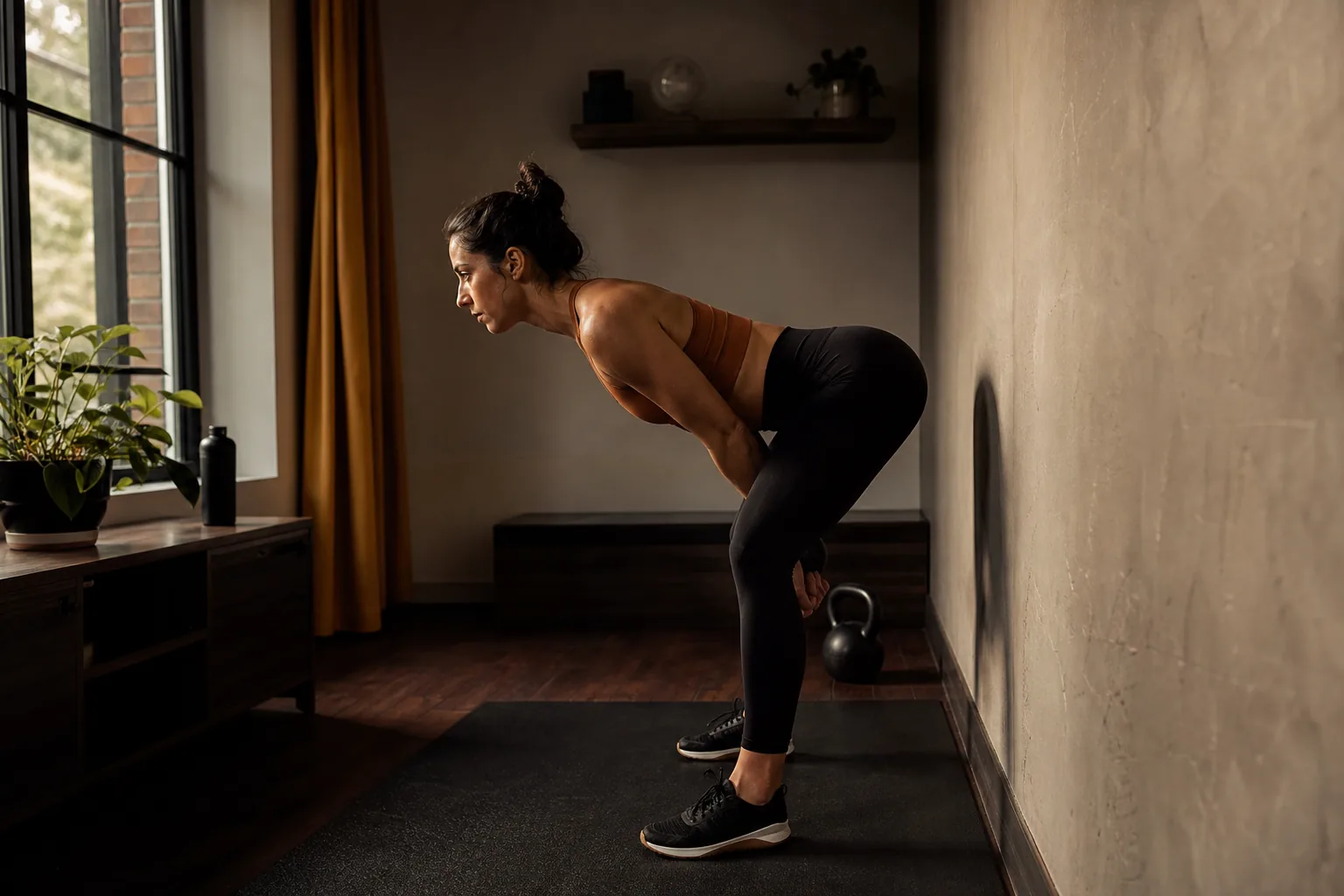
A kettlebell swing should feel like a sharp hip snap, not a squat with a bell attached. Good kettlebell swing form starts with a flat-back hinge, then uses your hips to send the bell forward while your arms guide it.
Follow these steps in order. You’ll learn the setup, the hike, the drive, and the controlled return, plus how to spot common form slips.
An analysis of 5 top-ranking kettlebell swing guides for a pre-swing hip-hinge drill, a Russian-versus-American swing height distinction, and a list of 4 or more named form errors found that only 1 of 5 covered all three elements. Three of the five skipped the hip-hinge drill before introducing the kettlebell entirely.
Step 1: Practice the Hip Hinge Before You Pick Up the Bell
Your goal is to move at your hips while keeping your spine long and steady. Get that pattern first. The bell adds speed and load, so it shouldn’t be your first test.
Stand about a foot from a wall, with your back to it. Set your feet around shoulder-width apart. Soften your knees, then push your hips back until they touch the wall. Your chest will tip forward as your hips travel back. Keep your shins fairly upright, and don’t let your knees bend into a squat.
Step farther from the wall as the drill gets easy. You should feel your hamstrings lengthen, not feel your lower back round. If you can’t reach the wall without bending your knees a lot, move closer and make the range smaller.
Next, practice the same motion without the wall. Place your hands on your hip creases and push them back as your torso leans forward. Then stand by squeezing your glutes and bringing your hips forward. Think of closing a car door with your hips, not lowering yourself onto a chair.
ACE describes the swing hinge as a flat-spine movement with slight knee bend and relatively vertical shins in its two-handed kettlebell swing instruction. Those cues help you tell a hinge from a squat.
If the pattern still feels awkward, practice a light kettlebell deadlift first. Set the bell between your feet, hinge down to grip it, then stand by driving your hips forward. Repeat slowly. You can also use the cues in How to Do a Kettlebell Swing: Step-by-Step Form once you’re ready to connect the hinge to the full swing.
Milestone: You can do several smooth hip hinges without rounding your back or turning them into squats.
Step 2: Set Your Grip and Hike the Kettlebell Back
Your goal is to start the bell moving with a strong hike between your legs, not by lifting it with your arms. Use a two-handed swing first. It’s easier to control while you learn the timing.
Place the kettlebell on the floor about a foot in front of you. Stand with your feet slightly wider than shoulder width, then hinge and grip the handle with both hands. Keep your back flat. Tilt the handle toward you so the bell rests on its body, rather than standing upright.
Before you move the bell, brace your middle as if you’re about to cough. Keep your shoulders away from your ears and draw them slightly back. Your arms stay long. Feel your upper back tighten, but don’t shrug or squeeze the handle as hard as you can.
Now hike the bell back between your thighs. Tip it toward you and pull it high behind you, as if you’re snapping a football. Keep the bell above your knees. Your hips move back to make room; your knees bend a little, but they don’t travel far forward.
The hike sets up the next swing. If the bell drops low near your shins, or your chest sinks between your knees, pause and reset. A clean start gives you room to send the bell forward without turning the movement into a squat.
For busy home sessions, set the bell down between practice sets instead of holding it while you rest. That keeps the floor clear and gives your grip a break. Each rep should begin from the same stable stance.
Milestone: You can hike the bell high between your thighs with your back steady and arms relaxed.
Step 3: Drive Your Hips to Send the Bell Forward
Your goal is to power the bell with hip extension. The arms connect you to the handle, but they don’t lift the weight.
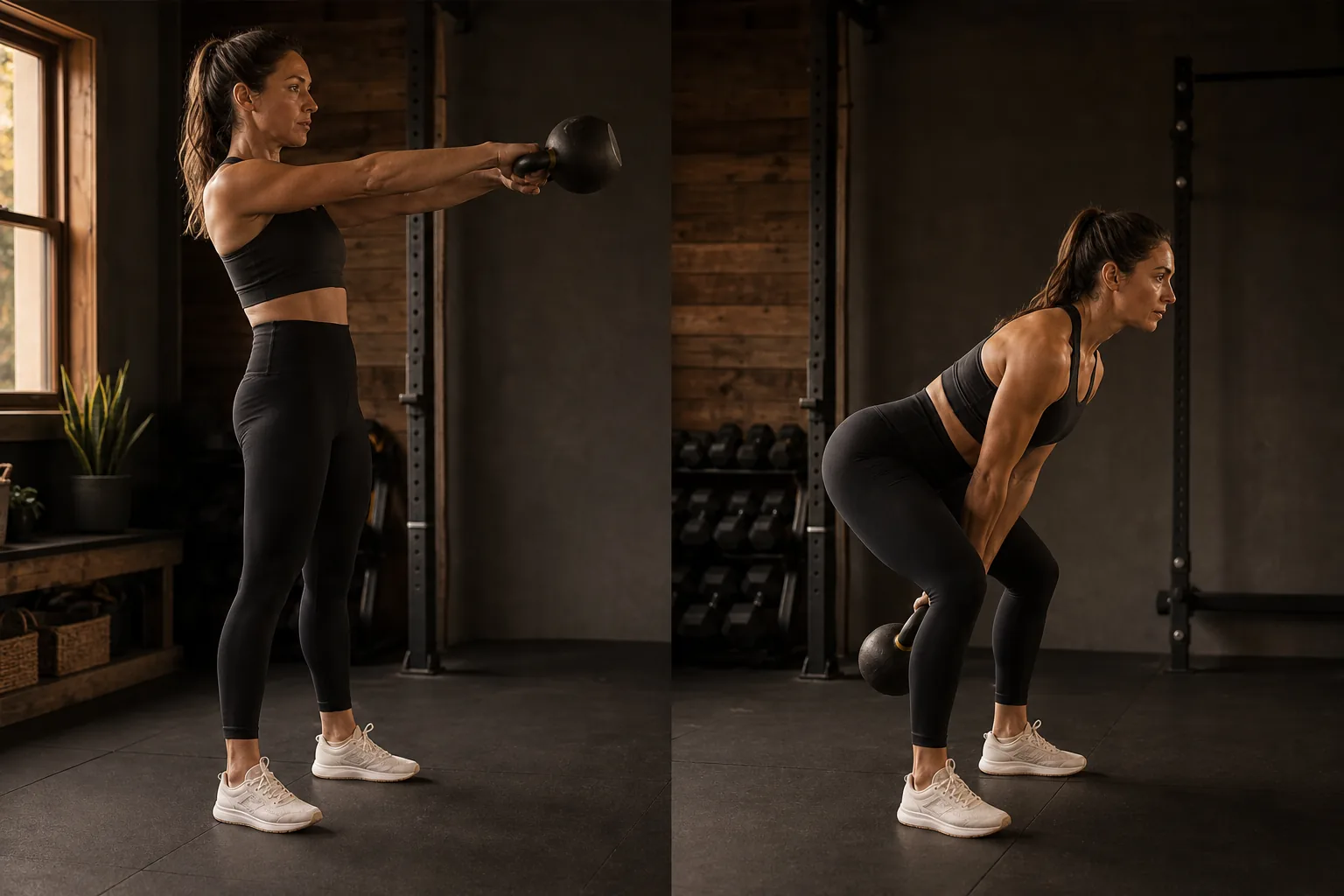
As the bell reaches the back of its path, snap your hips forward. Squeeze your glutes and stand tall. Imagine pushing the floor away as your hips move from behind you to directly under your ribs. Keep your knees soft, then straighten them as you finish the drive.
Let the bell float forward from that force. For a standard Russian swing, it usually travels to chest or shoulder height. Don’t pull it higher with your shoulders. If the bell only moves when you lift your arms, use a lighter load or return to the hip hinge drill.
At the top, your body should look like a standing plank. Ribs stay over hips. Glutes are firm. Your back stays neutral, and you don’t lean behind your heels. A hard lean back can turn a strong finish into pressure on your lower back.
Match your breath to the work: exhale as you snap your hips forward, then inhale as the bell returns. A short, firm exhale can help you brace. Don’t hold your breath for a long string of reps.
The swing’s main force comes from the hip extensors, including the glutes and hamstrings, while the arms and shoulders guide the bell. That’s why this move can train strength and conditioning in one pattern. Carrying a child or lifting a bag from the floor also asks you to control a hip hinge, though those tasks aren’t swings.
Once the two-hand rhythm feels steady, keep practice sets short enough to preserve the snap. If you want a planned session, these kettlebell swing workouts for busy women include short formats and pacing cues.
Hybrid Fit Mom’s six-week kettlebell strength and conditioning program gives you a planned path for training at home, rather than leaving you to piece sessions together from saved clips. It includes progressive workouts and prerecorded exercise demonstrations with cues.
Milestone: The bell floats forward because your hips drive it, and you finish tall without leaning back.
Step 4: Reach a Tall Top Position, Then Hinge Into the Descent
Your goal is to control the bell’s return and use it to load the next hinge. Don’t let it pull you forward or drop straight down.
At the top, stand tall and let the bell’s momentum carry it briefly. Keep your arms long, shoulders low, and core firm. You don’t need to raise the bell overhead for a standard swing. The Russian swing stops around chest or shoulder height. The American swing continues overhead and asks for more shoulder range, so learn the lower finish first.
As the bell starts to fall, wait until your upper arms reach your sides. Then push your hips back and hinge. Let the bell pass close to your body, high between your thighs. Bend your knees only as much as needed to make space. This is a hinge, not a deep squat.
Don’t chase the bell toward the floor. The handle shouldn’t drop below your knees in the backswing. Keep your eyes on a steady spot ahead and slightly down, so your neck follows the line of your spine.
The return is fast, but it isn’t loose. Your hamstrings and glutes take the load as your hips travel back. Then they help reverse the movement on the next rep. If you feel a tug in your low back, stop the set and check your hinge depth, brace, and load before trying again.
Use a clear rhythm: hike, snap, float, hinge. The bell should feel light near the top because your hip drive sent it there. On the way down, your lats help keep it close and guide it between your legs.
Milestone: You can let the bell fall, hinge at the right time, and catch its return without rounding your back or squatting low.
Step 5: Practice Smooth Repetitions and Correct Common Form Errors
Your goal is to repeat the same clean swing without rushing. A few crisp reps beat a long set that turns sloppy.
Begin with a light bell that lets you keep your back steady and drive from your hips. Practice a small set, then rest long enough to reset your grip and breathing. Add weight only when you can make each rep look much the same. If a bell feels so light that you can raise it with your shoulders, that’s a sign to review your hinge and hip drive before changing the load.
ACE suggests building a loaded hinge before moving to a ballistic swing. One useful readiness check in its technique guidance is whether you can perform 12 to 15 loaded hinge reps with control. That’s not a test you need to rush. It’s a reminder that the swing builds on a skill you can already repeat.
Watch for these common slips:
- Squatting: Your knees bend a lot and your hips drop down. Push your hips back instead.
- Arm lifting: Your shoulders pull the bell up. Let the hip snap create the swing.
- Leaning back: Your ribs flare at the top. Finish tall with ribs over hips.
- Swinging too low: The bell drops toward the floor behind you. Hinge as it falls and keep it above your knees.
- Rushing: Your stance or back changes from rep to rep. Park the bell, rest, and restart.
To build stamina, place swings in a short circuit after you can keep your form under control. Pair a small set of swings with a floor-based strength move, rest, then repeat. Don’t use fatigue as a reason to keep going when your hinge slips.
Progress from a deadlift to a two-hand swing. Once that version is steady, you can learn a single-arm swing with a lighter bell and more attention to balance. Don’t jump to the overhead American swing just because it looks bigger. A shoulder-height swing is enough to train the hip drive.
Hybrid Fit Mom is built for women who want structure around home strength training. Its six-week program includes 24 sessions, four per week, with demonstrations and a self-paced format. Mari Grossi, a weightlifting L1 certified coach, built the plan around training in a busy life.
Milestone: You can stop a set as soon as your posture changes, then resume with a lighter load or fewer reps.
Frequently Asked Questions
How do I know if my kettlebell swing form is correct?
Correct form starts with a flat-back hip hinge, then a hip-driven swing and a tall finish. Your knees bend slightly, while most of the movement happens at your hips. The bell should float forward without an arm pull. If your back rounds, you squat deeply, or you lean back at the top, stop and reset.
Should I feel kettlebell swings in my lower back?
You may feel your back muscles working to keep your spine steady, but sharp pain or a deep ache isn’t a normal training cue. Stop if pain appears. Check that you’re not rounding your back, hinging too low, or using a load you can’t control. If discomfort keeps coming back, ask a qualified health professional for guidance.
How heavy should a beginner kettlebell be?
Choose a bell you can hike and swing without changing your posture. Start light enough to learn the motion, but not so light that you lift it with your shoulders. The right load depends on your strength and skill, so judge it by control rather than a fixed number. Add weight only after your reps stay consistent.
Should I swing a kettlebell overhead?
No, you don’t need to swing overhead to learn the basic move. A Russian swing ends around chest or shoulder height and keeps the focus on hip drive. An American swing continues overhead and needs more shoulder range. Start with the lower finish, and only use overhead swings if you’ve learned that variation safely.
How many kettlebell swings should I do?
Start with a few controlled reps per set, then rest before your form changes. As your technique and fitness improve, you can adjust the sets and reps to fit your workout. For strength, keep the reps crisp. For conditioning, use intervals that still let you hinge well. Stop a set when your back or timing slips.
Conclusion
Learn the hinge before you add speed, then let your hips drive each rep. Keep sets short enough to stay sharp, and build load only when your form holds. If you want a plan that links technique practice to a weekly routine, compare kettlebell programs for women and busy moms and choose a pace that fits your life. Strong today, independent for the long run.