Best Kettlebell Upper Body Workouts: 5 Routines


A kettlebell can train your upper body without taking over your living room or your calendar. These five kettlebell upper body workouts give you options for strength days, a quick session, or a simple plan with one bell.
An analysis of 37 YouTube comments about kettlebell upper body workouts found that 30% mentioned short, quick workouts.
1. Kettlebell Push-Pull Strength Circuit: a balanced upper-body session
This circuit pairs a press with a row, so your front and back get work in the same session. It suits you if you want a balanced home workout and can press your bell with steady form. One kettlebell is enough; train one side at a time and switch arms.
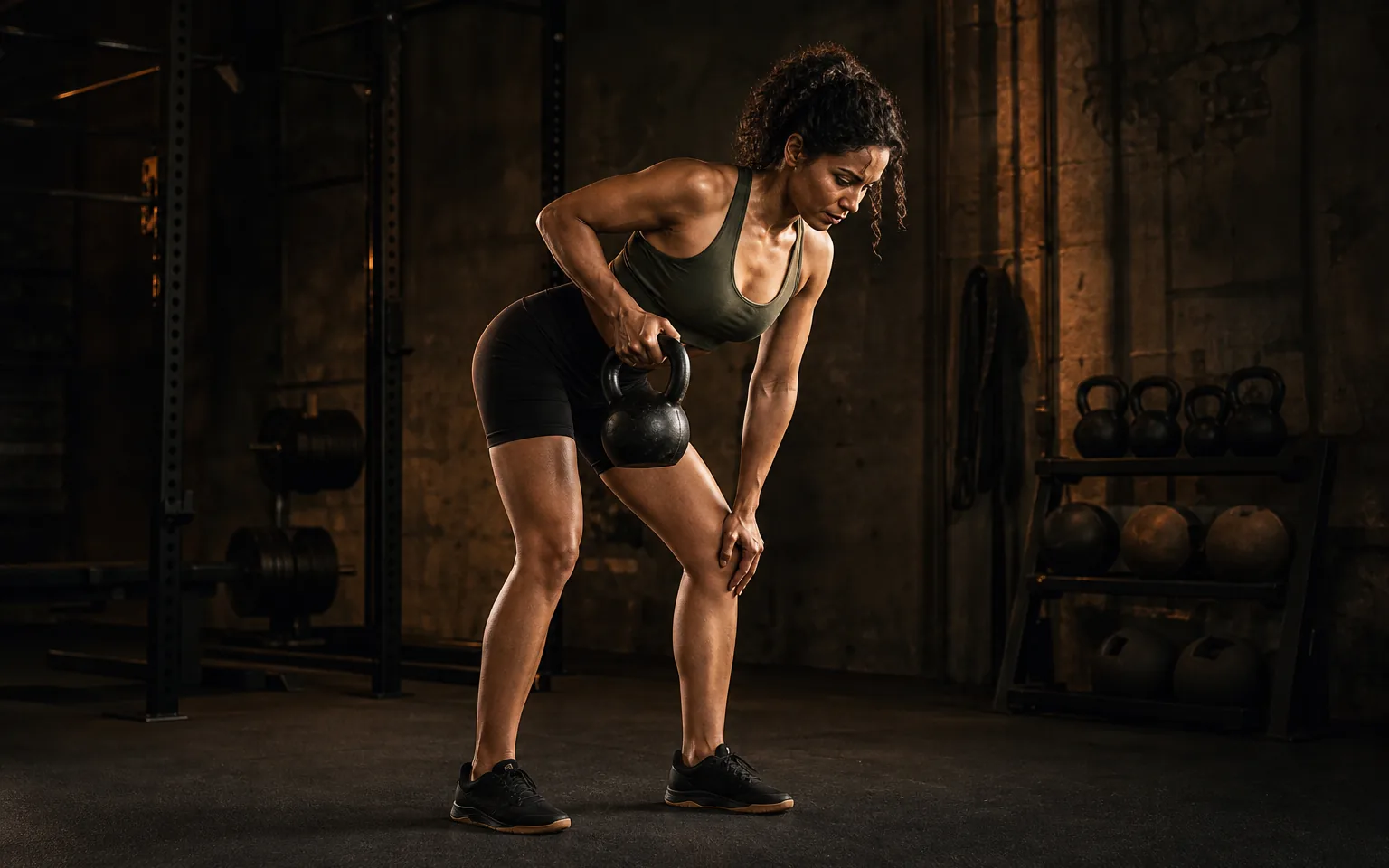
Start with a shoulder roll and a few slow arm circles. Then do one light set of presses and rows to rehearse the movement. For the main work, complete three rounds of six to ten single-arm presses per side, followed by eight to twelve rows per side. Rest about a minute between moves, or longer if your breathing is still rushed.
For the press, keep your ribs stacked over your hips and finish with your arm near your ear, not behind your head. In the row, hinge at your hips and keep your back long. Pull the bell toward your hip, not straight up toward your shoulder. A heavy bell that makes you twist or shrug is too much for this set.
Keep the sets crisp. If you can finish every rep without changing your shape, add a rep or two next time. You can find more no-bench press ideas in these kettlebell chest workouts.
2. Single-Arm Press and Row Workout: build strength with simple pairings
This pairing is a good fit when you want clear strength work without a long circuit. Do one set of presses, rest, then row with the same arm. Repeat on the other side. Unilateral means one side works at a time. It makes a single bell useful, while your trunk resists turning as you press or row.
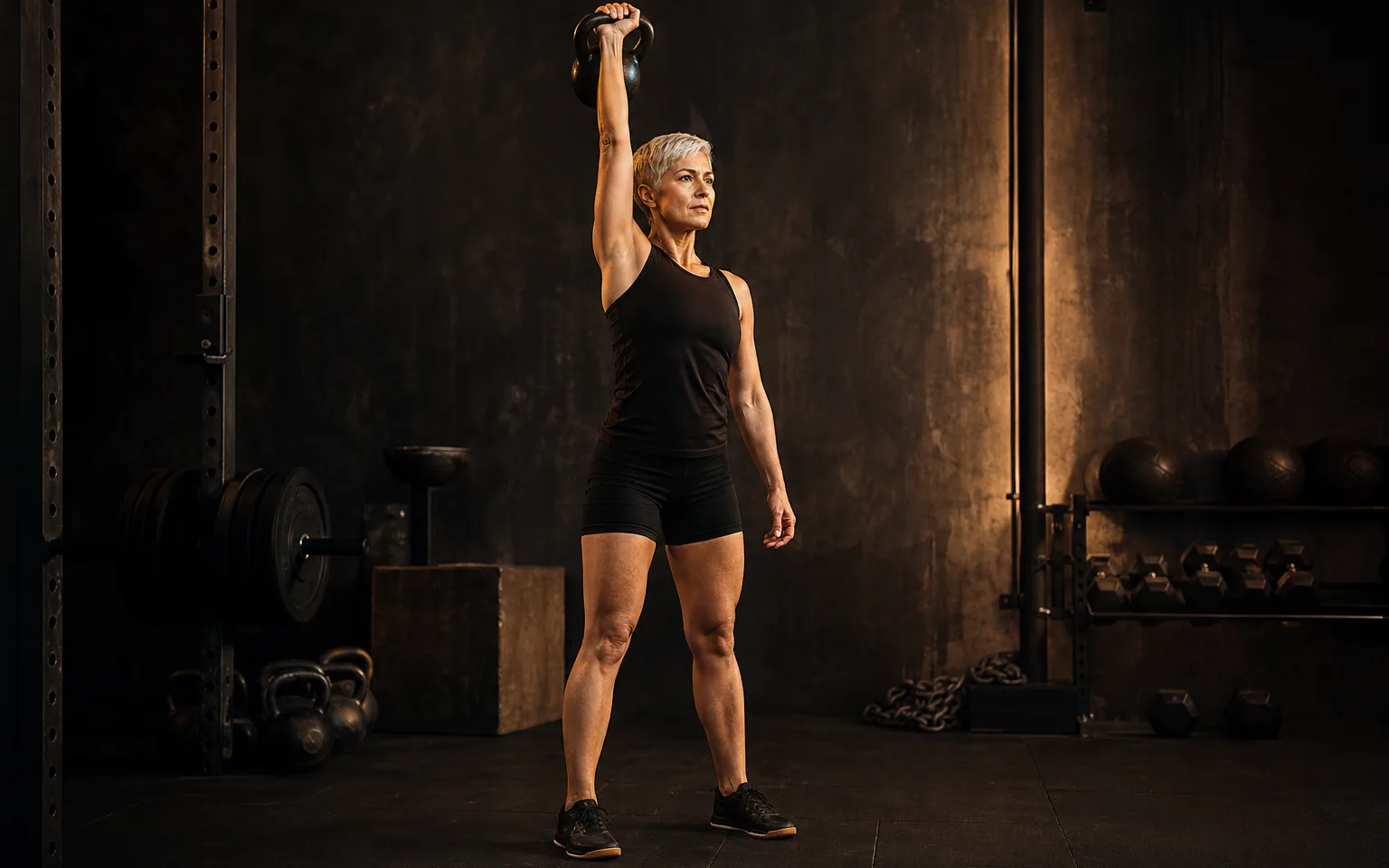
Try three or four sets of five to eight strict presses per side. Then do three or four sets of eight to ten rows per side. Rest long enough to keep the next set controlled. A strict press has no knee dip or leg drive. If you need a little push from your legs, make that a separate push-press variation rather than quietly changing the exercise mid-set.
For the row, brace your free hand on a stable chair or your thigh. Keep your shoulders level and let the bell return under control. If your torso rocks, reduce the reps or use a lighter bell. The goal is to move the arm while the rest of your body stays steady.
Choose a load that lets the final rep look much like the first. Add a rep before adding weight. The kettlebell’s offset handle and weighted body can feel different from a straight bar, so take time to settle your grip before each set.
Pressing overhead may not suit every shoulder on every day. Work in a pain-free range, and swap the press for a floor press if reaching overhead feels uncomfortable.
3. Kettlebell Floor-Press Workout: train chest and triceps at home
The floor press is a strong pick when you want chest and triceps work without a bench. The floor stops your upper arm from traveling far below your body, which can make setup feel more stable. It’s a useful option if overhead pressing doesn’t feel good or you’re training in a small space.
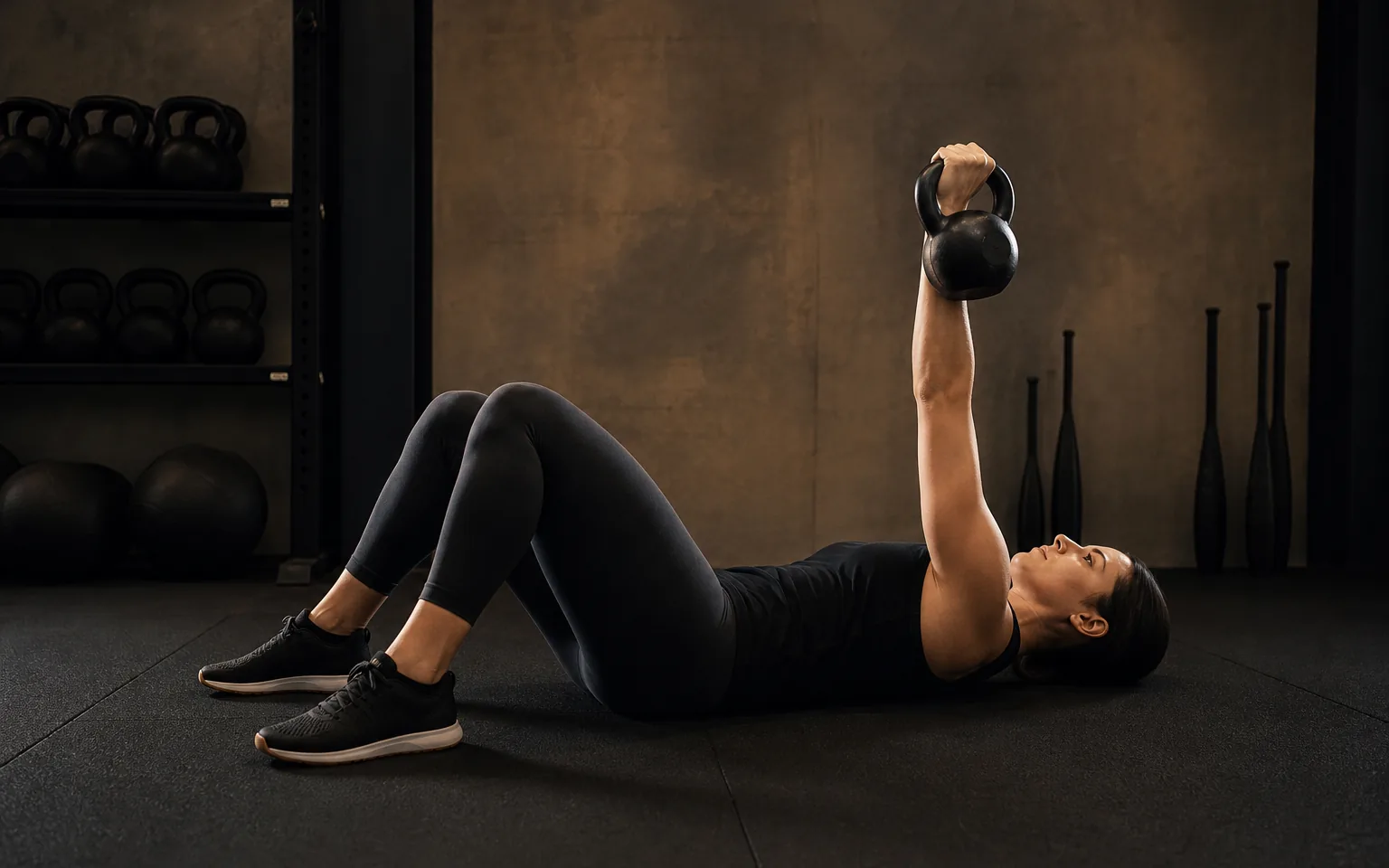
Lie on your back with knees bent and feet planted. Roll onto your side to bring the bell into position, then roll back with control. Press the bell above your chest. Lower until your upper arm meets the floor, pause briefly, and press again. Try three sets of eight to twelve reps per arm.
Keep your wrist straight over your elbow. Don’t let the bell tip toward your face as you lower it. If you have two bells and can control both, a two-arm floor press is another choice. With one bell, switch sides after each set and match the reps.
For a little more trunk work, hold a glute bridge while you press. Keep your ribs down and hips level. If your lower back arches, set your hips down and return to the regular floor press. Chest and triceps work can also fit into a broader session; these kettlebell arm workouts cover more direct biceps and triceps options.
Go slow on the way down. A controlled lowering phase gives you time to keep your shoulder and wrist in line.
4. Kettlebell Back-and-Shoulder Workout: rows, halos, and carries
This session shifts the focus to your upper back and shoulders. It works well after a day with plenty of pressing, or as a standalone workout when you want to train your back without a machine. Do three rounds of eight to ten rows per side, six slow halos in each direction, and a 30-second suitcase carry per side.
For the row, use a hip hinge and keep your torso still. In a halo, hold the bell by its horns near your chest and guide it around your head. Move slowly. Keep the bell close, and don’t force your shoulders into a range that feels pinched. The carry is a walk with the bell at one side. Stay tall and resist leaning toward or away from the load.
A halo is a controlled circle, not a fast swing around your head. If the handle bumps your neck or your elbows flare, use a lighter bell. Keep your grip secure before you begin, especially when moving from the halo to the carry.
Back work helps balance a routine that has lots of presses. This kettlebell back workout list has more row variations if you want to swap an exercise without changing the session’s focus.
For shoulder-specific work, repeat the circuit once or twice a week, with a rest day between hard sessions for the same muscles. Keep the halo light enough that each circle stays smooth.
5. 15-Minute Upper-Body Kettlebell Workout: a compact option for busy days
This short circuit is for days when a full session won’t fit. Set a timer for 15 minutes and move through the exercises at a pace that lets you keep clean reps. You’ll need one bell. Pick a weight that’s manageable for the press, since that’s often the limiting move in a mixed circuit.
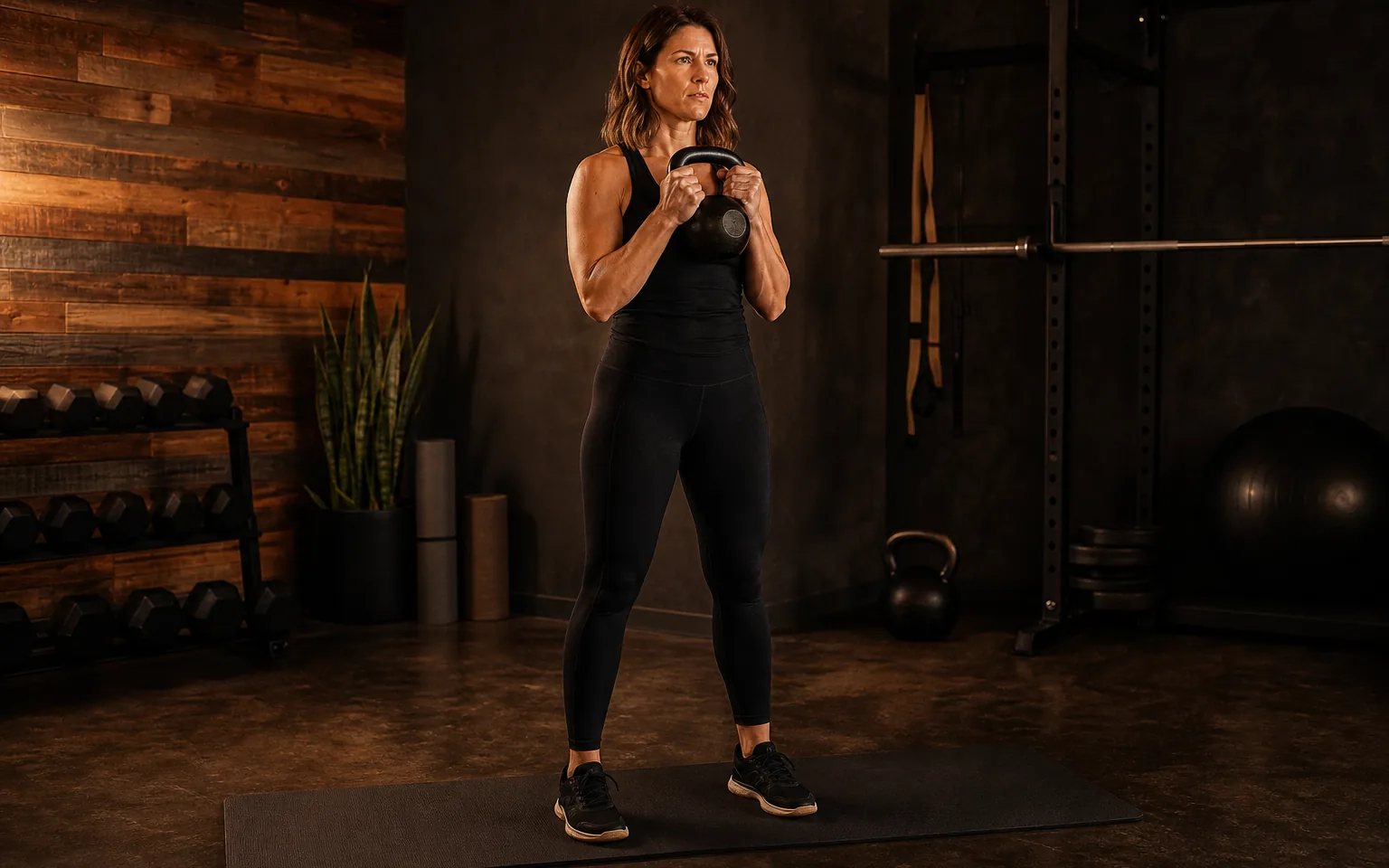
- Six single-arm presses per side.
- Eight rows per side.
- Eight two-hand curls.
- Six floor presses per side.
Complete the circuit in order, then rest briefly before starting again. Stop when the timer ends, even if you’re partway through a round. Keep a note of completed rounds and the bell you used. Next time, aim for one more clean rep or a steadier pace, not a rushed finish.
Short rests make this feel more like conditioning than heavy strength work. If your form slips, take a longer break. A circuit is not a test of how long you can hold onto the bell. Grip fatigue is a reason to pause, not a cue to squeeze harder until your wrist bends.
Hybrid Fit Mom’s six-week kettlebell program gives busy women a set schedule instead of another saved workout: three 30-to-40-minute sessions each week, plus a 20-minute core day. It includes progressive home workouts with prerecorded exercise demos, an eating framework, and lifetime access after a one-time $29 purchase. The program is self-guided, with a 14-day refund period.
Compare the five kettlebell upper-body workouts
Use this quick comparison to match a workout to your day and your training goal. The rep ranges are starting points, not a rule to push through when form breaks down. Rest longer when a set feels demanding.
| Workout | Main focus | Time guide | Best fit |
|---|---|---|---|
| Push-pull circuit | Press and row balance | About 20 to 30 minutes | A full upper-body session |
| Single-arm press and row | Strength with one side working at a time | About 25 to 35 minutes | Steady sets with longer rests |
| Floor-press workout | Chest and triceps | About 15 to 25 minutes | Home training without a bench |
| Back-and-shoulder workout | Rows, shoulder control, and carries | About 20 to 30 minutes | More pulling and shoulder work |
| 15-minute circuit | Mixed upper-body work | 15 minutes | A compact training window |
For strength, favor the press-and-row pairing and rest enough to repeat good reps. For muscle growth, use a load that makes the last few reps challenging while your form stays steady. If you’re new to these movements, begin at the lower end of the rep range and add reps gradually.
To progress, change one thing at a time. First add a rep or a set. Then, once you can complete all the work with control, consider moving to a heavier bell. If you own only one weight, slower lowering or a one-arm variation can make a set harder without adding gear.
Hybrid Fit Mom is built around progression across six weeks, with endurance work in the first two weeks, resistance in weeks three and four, then power in weeks five and six. Mari Grossi is a weightlifting L1 certified coach, a hybrid athlete, a teacher, and a mom of two. Her program is for women with basic kettlebell skills who want a plan that accounts for life outside the workout.
FAQ
How often should I do kettlebell upper-body workouts?
Two sessions a week is a sensible place to start for focused upper-body training. Leave at least a day between hard sessions for the same muscles, and pay attention to how your shoulders and elbows feel. If you also do full-body strength work, count its presses and rows toward your weekly workload.
Can I train my upper body with one kettlebell?
Yes, one kettlebell is enough for presses, rows, floor presses, curls, halos, and carries. Work one side at a time, then match the reps on the other side. Choose the bell based on the hardest move in your workout, and adjust reps or rest when a lighter move feels easy.
What kettlebell weight should I use for upper-body exercises?
Choose a weight you can move through the full set without twisting, shrugging, or losing a straight wrist. Your press may need a lighter bell than your row. If you can’t control the lowering part of a rep, reduce the load or stop the set and build back up gradually.
What should I do if my shoulder or elbow hurts?
Stop the movement that brings on pain and don’t try to push through it. You can try a smaller, comfortable range or a different exercise, such as a floor press instead of an overhead press. Pain that persists or affects daily movement is a reason to speak with a qualified health professional.
How can I make a workout harder if I only have one kettlebell?
Add a rep, add a set, or slow the lowering phase while keeping the same load. You can also work one arm at a time or shorten rest slightly, as long as your form stays clean. Change just one variable at once so you can tell what made the next session harder.
Conclusion
Start with the push-pull circuit if you want a balanced session, or use the 15-minute option when the day is packed. For a week-by-week structure, look at the self-guided plan from Hybrid Fit Mom, then set aside your first training slot and choose a bell you can control.