Best Back Workouts With a Kettlebell: 5 Moves


A kettlebell can train your back without a cable stack or a full gym. These five back exercises with a kettlebell cover rows, hinging, and core control, with simple cues to help you keep your spine steady. Hybrid Fit Mom focuses on structured home training for women and mothers, so this list includes options you can fit around a busy week.
An analysis of 51 comments and questions from Reddit, YouTube and Quora about kettlebell BACK workouts found that 20% mentioned potential back injuries.
1. Single-Arm Kettlebell Row: A focused lat and upper-back builder
The single-arm row trains your lats and upper back while your trunk resists turning toward the weight. It’s the best first pick if you’re learning to pull with control, especially when you support your free hand on a bench or sturdy chair.
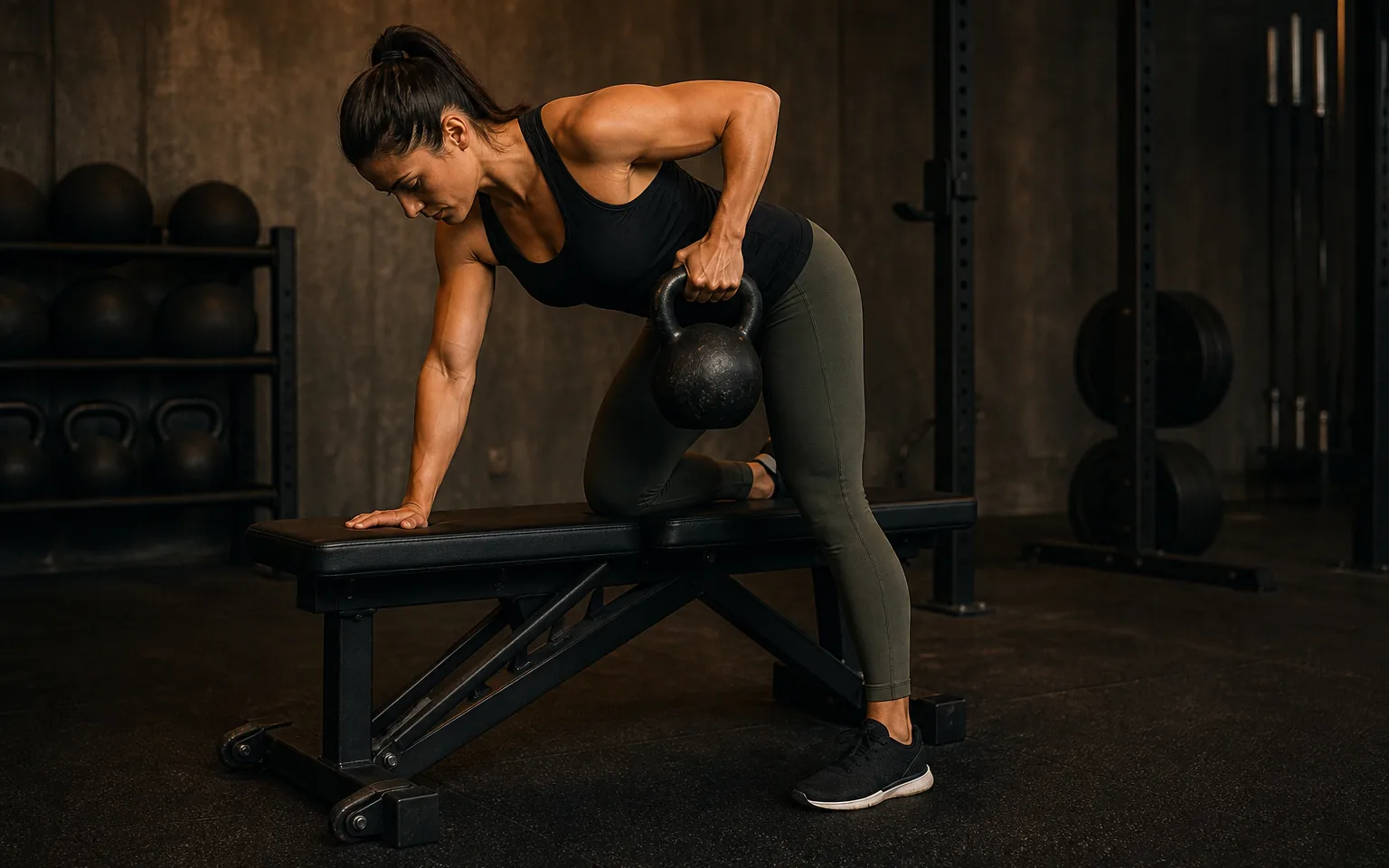
Set one knee and one hand on the support, or brace your free hand on your thigh. Hinge until your back is nearly level with the floor. Let the bell hang under your shoulder, then pull your elbow toward your hip. Keep your shoulders facing the floor rather than opening your chest as the bell rises.
Try 3 sets of 8 to 12 reps per side. Lower the bell with control. If you can row it to your hip for every rep without twisting, add a small amount of load when you have it. If your only bell feels light, pause briefly at the top or take three seconds to lower it.
This supported version gives you a stable place to focus on the pull before adding more balance demands. A dumbbell can do the same basic job, but the bell’s hanging weight may feel different in your hand. To build more pulling work into a home routine, see kettlebell exercises for muscle gain.
Keep the motion smooth. If your torso starts to turn, reduce the weight or shorten the set.
2. Gorilla Row: A two-sided row for a short home workout
The gorilla row uses two kettlebells and alternates sides from a wide hip hinge. It suits you if you already know how to hinge and want to work both sides of your back without standing up between reps.
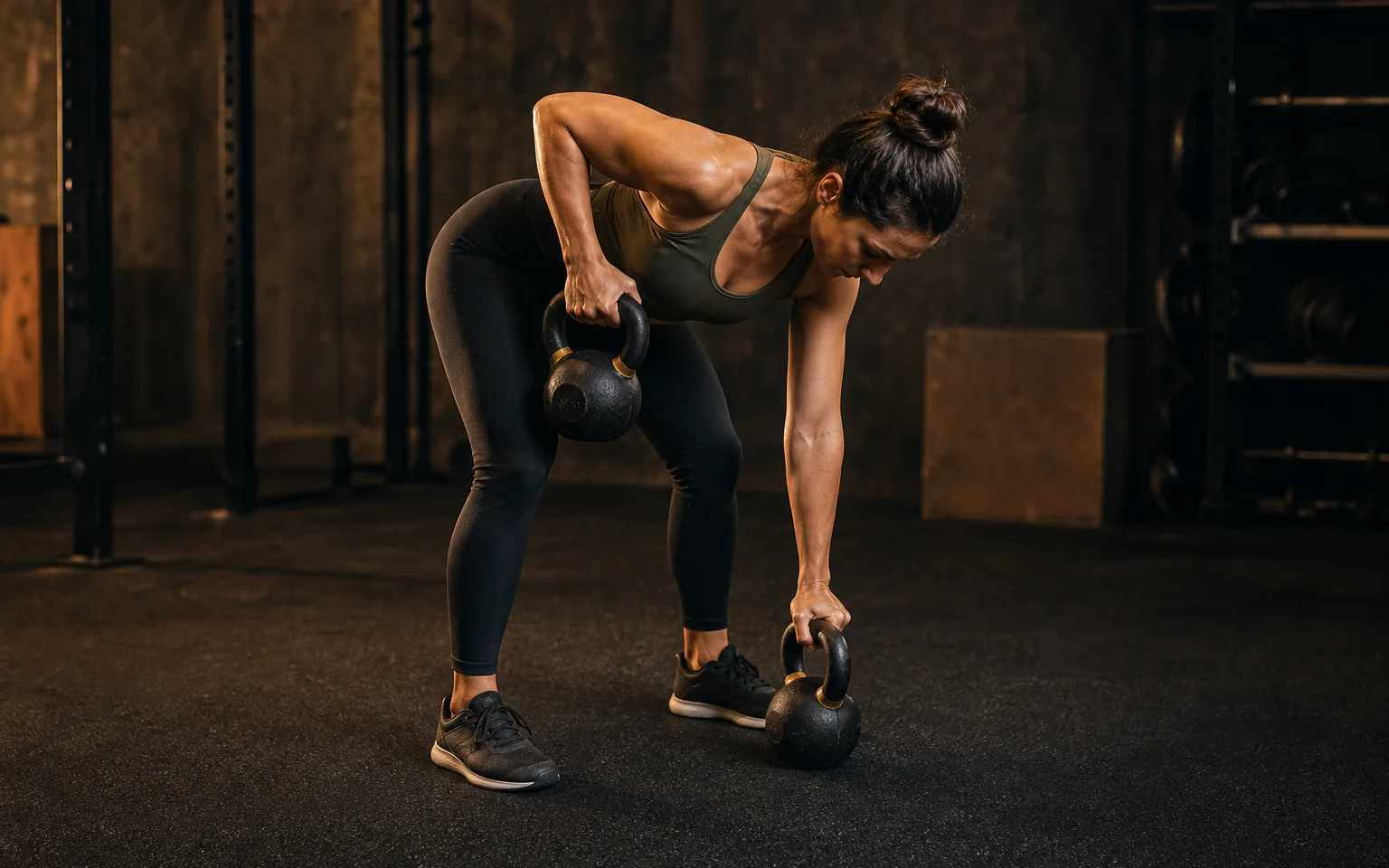
Place the bells between your feet, which should sit a little wider than hip width. Push your hips back and hold your torso still. Row one bell toward your hip as the other stays grounded. Set it down with control, then switch sides. Keep your weight balanced across both feet.
Start with 2 to 3 sets of 6 to 10 reps per side. The planted bell gives you a point of contact, but the deep hinge still asks your back muscles to hold your torso in place. Don’t chase speed. If your hips sway or your back rounds, use lighter bells or go back to the supported row.
Think of the working elbow moving toward a back pocket, not flaring high toward your shoulder. That cue can help keep the pull focused on your back instead of turning the rep into a shrug. Exhale as you row, then breathe in as you lower the bell while keeping your ribs stacked over your hips.
Two bells can save setup time, but they aren’t required for a useful home session. A single-arm row is a better choice if you don’t own a matched pair or need more support. Gorilla rows make sense once you can keep the hinge steady through each side.
3. Kettlebell Deadlift: A simple way to train the posterior chain
The kettlebell deadlift trains your glutes and hamstrings through a hip hinge, with your back muscles working to hold a steady trunk. Choose it when you want a basic strength move that helps build the hinge pattern used in other kettlebell lifts.
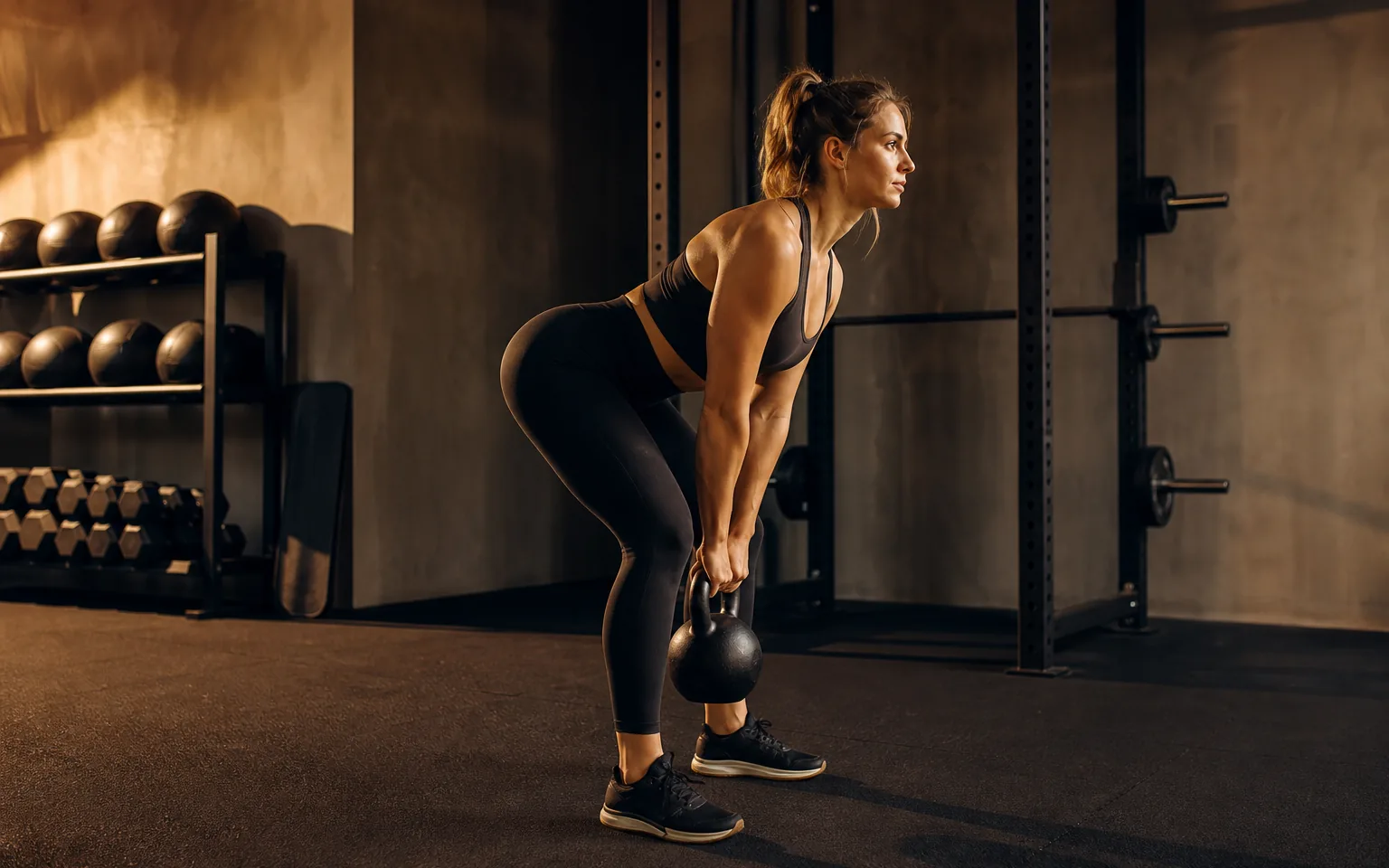
Set the bell between your feet. Stand with feet about hip width apart, then send your hips back and soften your knees until you can grip the handle. Brace your middle as if preparing for a firm nudge. Push the floor away and stand tall, finishing with your hips under you rather than leaning back.
Begin with 2 to 3 sets of 8 to 12 controlled reps. Lower the bell by pushing your hips back again. Let your knees bend as needed, but don’t turn the movement into a squat. A useful check: the bell stays close, your back keeps its natural shape, and you feel the work in your hips and legs rather than a sharp pull in your lower back.
Use a load that lets you repeat the same shape on every rep. For a broader overview of physical activity, see the physical activity resource.
Hybrid Fit Mom’s self-guided six-week kettlebell program is built around progressive home training. Its website describes filmed movement demos and sessions that include strength work, with a shorter core session in the weekly schedule. Details are on the Hybrid Fit Mom program page. A plan can help you decide what to do next, but the deadlift itself starts with one job: hinge well before you add load.
4. Renegade Row: A challenging row with a core-stability demand
The renegade row combines a plank with an alternating pull. Your back works, but your main challenge may be stopping your hips from rotating. Choose it when you can hold a solid plank and control a lighter row without shifting your body.

Place two stable, flat-based bells under your shoulders and set your feet wider than your hips. Brace your trunk. Pull one bell toward your side without letting your hips roll, then lower it slowly and switch. Use a non-slip floor, and make sure the bells don’t rock under your hands.
Start with 2 sets of 5 to 8 reps per side using a light load. If the plank is the hard part, keep one hand on the floor and row a single bell with the other. You can also do the plank from your knees before trying the full version. If your hips twist or sag, end the set rather than forcing extra reps.
This isn’t the best choice for lifting your heaviest row weight. Stability sets the limit, so a smaller bell lets you keep the movement clean. If you have concerns about back pain, review general back-pain information and contact a health professional.
Use renegade rows as a short accessory, not a test of toughness. A steady five-rep set does more for your practice than a longer set built on hip swings.
5. Kettlebell Pullover: A floor-based option to target the lats
The floor pullover trains your lats through a controlled shoulder movement while you lie on your back. It’s a useful choice when you want a break from hinged rows or need a simple exercise that doesn’t ask you to balance in a standing position.
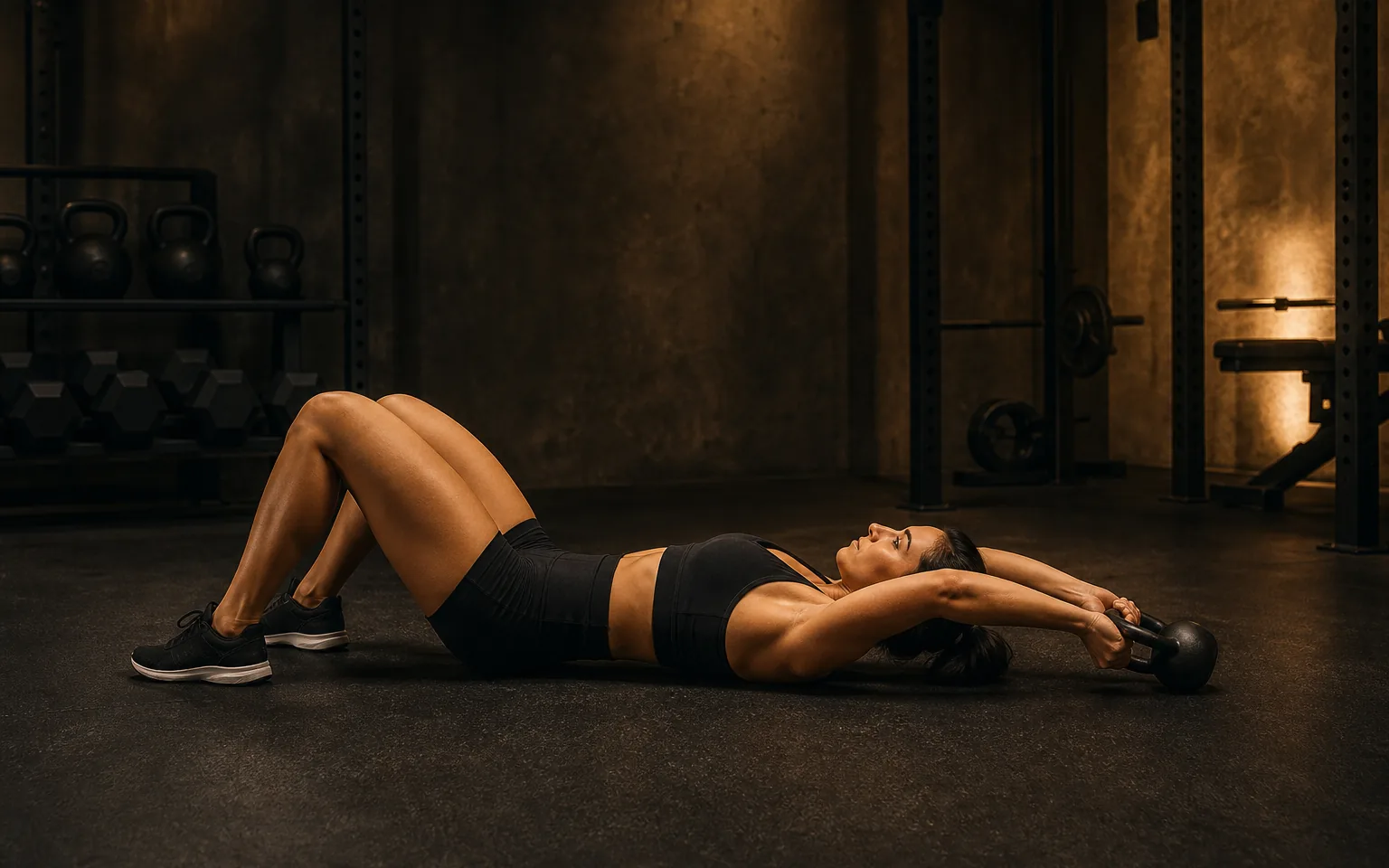
Lie on your back with knees bent and feet flat. Hold one light kettlebell by the horns, with both hands around the sides of the handle. Start with the bell over your chest and elbows slightly bent. Slowly move it back toward the floor behind your head, stopping before your ribs lift or your lower back arches.
Pull the bell back above your chest without changing the bend in your elbows. Try 2 to 3 sets of 8 to 12 reps. Use a range that feels controlled and comfortable through your shoulders. The floor gives your upper arms a clear stopping point, but it doesn’t mean you should force the bell down to touch it.
Make the lowering phase slow enough to stay in charge of the weight. If your back arches, shorten the range or choose a lighter bell. The movement works best as an accessory after a row or deadlift, rather than as your only back exercise.
For home training, the pullover needs little floor space and no bench. It can round out your session when you have a few minutes left, but skip it if the overhead position feels uncomfortable.
Quick Comparison: Match Each Kettlebell Back Exercise to Your Goal
Each movement asks something different from you. Use the table to pick a good fit for today, not to cram all five into one session. Two or three moves are enough for a focused workout.
| Exercise | Best fit | Main demand | Start with |
|---|---|---|---|
| Single-arm row | Learning to pull with control | Upper-back pull and trunk control | Bench-supported reps |
| Gorilla row | Alternating pulls from a hinge | Holding the hinge steady | Light pair, slow reps |
| Deadlift | Building hinge strength | Hip drive and a braced trunk | Bell between the feet |
| Renegade row | Adding plank stability | Resisting hip rotation | Light load or hand on floor |
| Floor pullover | Back work without a standing hinge | Controlled shoulder range | Light bell, short range |
A simple session could pair deadlifts with supported rows, then finish with pullovers if your shoulders feel good. Try 2 to 3 sets per movement and leave at least a day between harder sessions for the same muscles. Add reps before load when you’re still learning the movement.
Swings train the hip-driven posterior chain, but they aren’t a direct stand-in for rows. Turkish get-ups ask for full-body control and shoulder stability, so they can complement back work rather than replace a pulling exercise. If you’re deciding among structured home plans, kettlebell programs for women and busy moms can help you compare schedules and training formats.
FAQ
What is the best kettlebell exercise for your back?
The supported single-arm kettlebell row is a strong starting choice for back training. Support your free hand, keep your torso still, and pull the bell toward your hip. It lets you focus on the pulling motion without also managing a full plank or a deep two-bell hinge.
How many times a week should I train my back with kettlebells?
Two sessions a week is a sensible place to start if you recover well between them. Leave at least a day between focused sessions, then adjust based on how your back and grip feel. You can include rows in a broader strength plan instead of making every workout a back-only session.
Can kettlebell exercises help lower-back pain?
Kettlebell training can strengthen muscles used to brace and hinge, but it isn’t a guaranteed treatment for back pain. Stop a movement that causes sharp or worsening pain. If pain follows an injury, persists, or comes with numbness or weakness, seek medical advice before returning to loaded exercise.
What weight kettlebell should I use for back exercises?
Choose a bell you can move through the full planned set without rounding your back, twisting, or rushing. Your row weight may be lighter than your deadlift weight. When the next available bell feels too heavy, slow the lowering phase or add a short pause instead of forcing a jump in load.
Are kettlebell rows better than dumbbell rows?
Neither is always better. Both can train your pulling muscles. Use the weight you can hold securely and row with control. A dumbbell may give you smaller jumps between loads, while a kettlebell is a useful option if that’s the equipment you have at home.
Conclusion
Start with supported rows and kettlebell deadlifts, then add harder variations as your control improves. Pick two moves for your next session and write down the weight and reps. That small record gives you a clear place to begin next time.