Best Kettlebell Chest Workouts: 5 Exercises
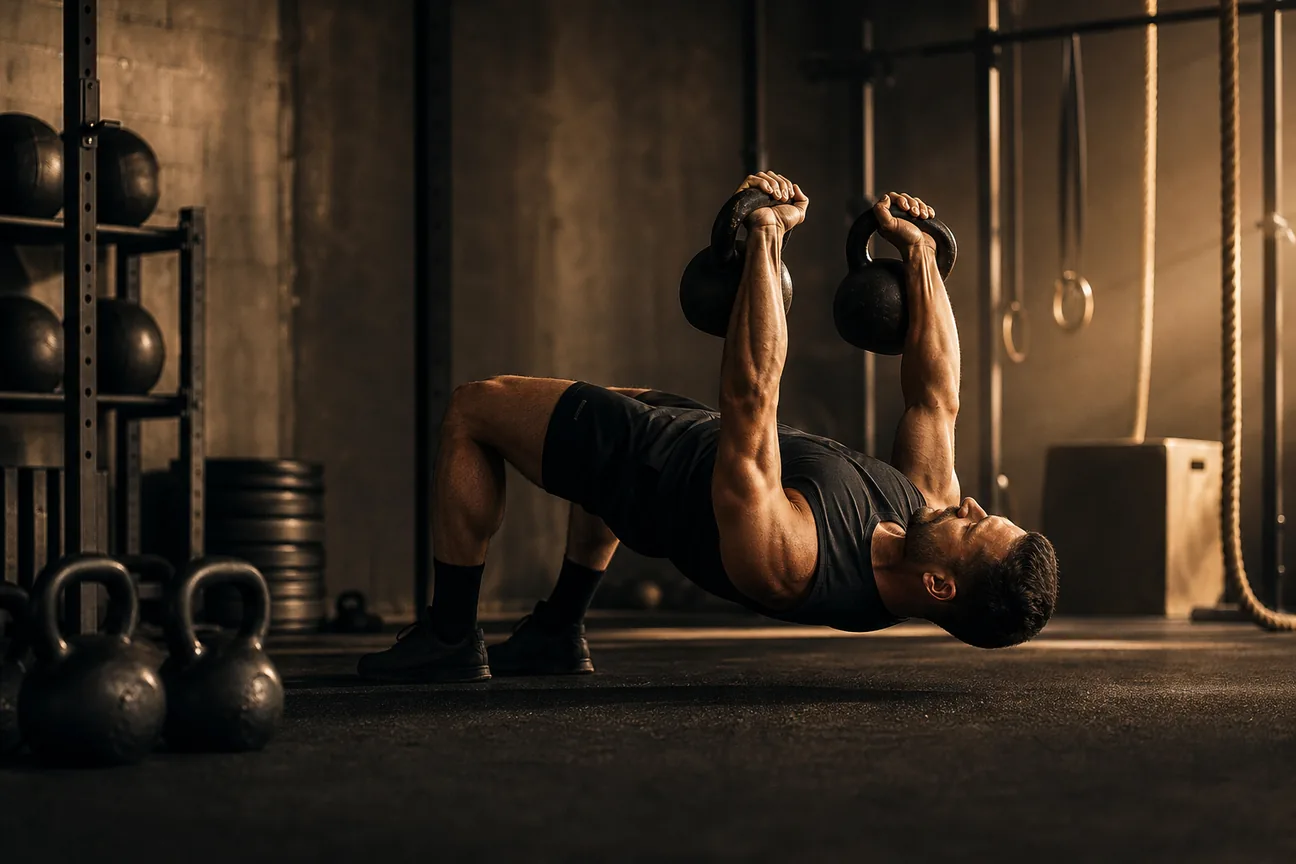
You don’t need a bench to train your chest with a kettlebell. A few controlled presses can fit into a busy day and still challenge your chest, shoulders, and triceps. Try these five kettlebell chest workouts as individual moves or build them into a short session.
1. Single-Arm Kettlebell Floor Press: A steady starting point
This floor press is a good first choice if you want a clear pressing pattern without a bench. It trains one side at a time, so your trunk has to stay firm while your arm moves. Your shoulder and triceps help with each rep, too.
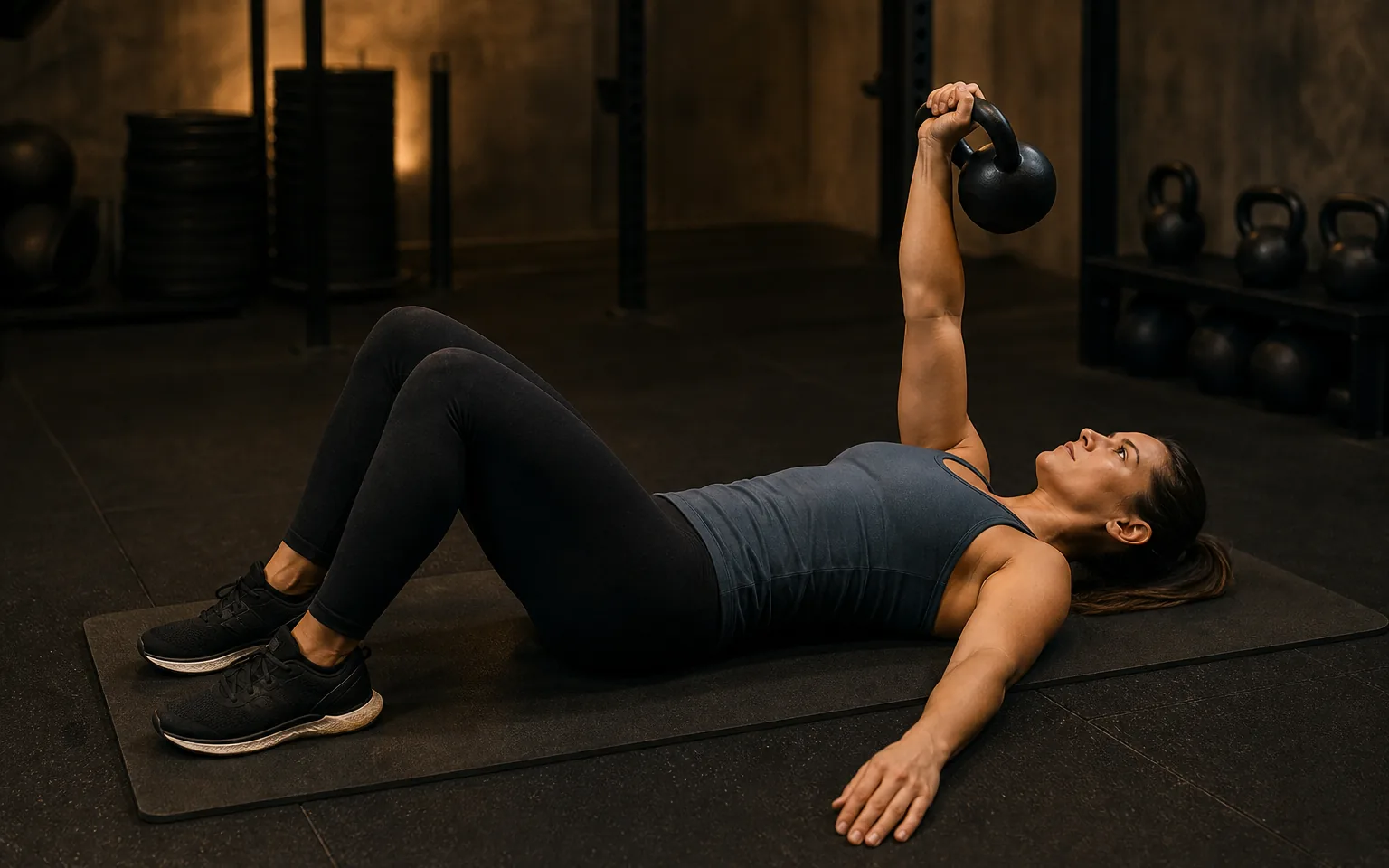
Lie on your back with knees bent and feet flat. Hold the kettlebell beside your chest in a rack position, with your wrist straight and elbow resting on the floor. Brace your midsection. Press the bell toward the ceiling, then lower it slowly until your upper arm meets the floor.
The floor limits how far your elbow can drop, which gives you a clear stopping point. Don’t bounce your arm off the floor. Keep your ribs down rather than arching your back to push the bell higher. Stop just short of snapping your elbow straight.
A useful starting range is 6 to 15 reps per side, with a rest before you switch arms. Pick a load you can lower under control. If your wrist bends back or your torso twists, the bell is too heavy for clean reps today.
Keep your core braced and lower the bell with control as you learn the move.
2. Alternating Kettlebell Floor Press: A unilateral challenge
An alternating floor press is a kettlebell chest exercise for when one-arm pressing feels steady and you want more coordination. You’ll press one bell while the other stays in the rack position. That changing load asks your torso to resist rolling from side to side.
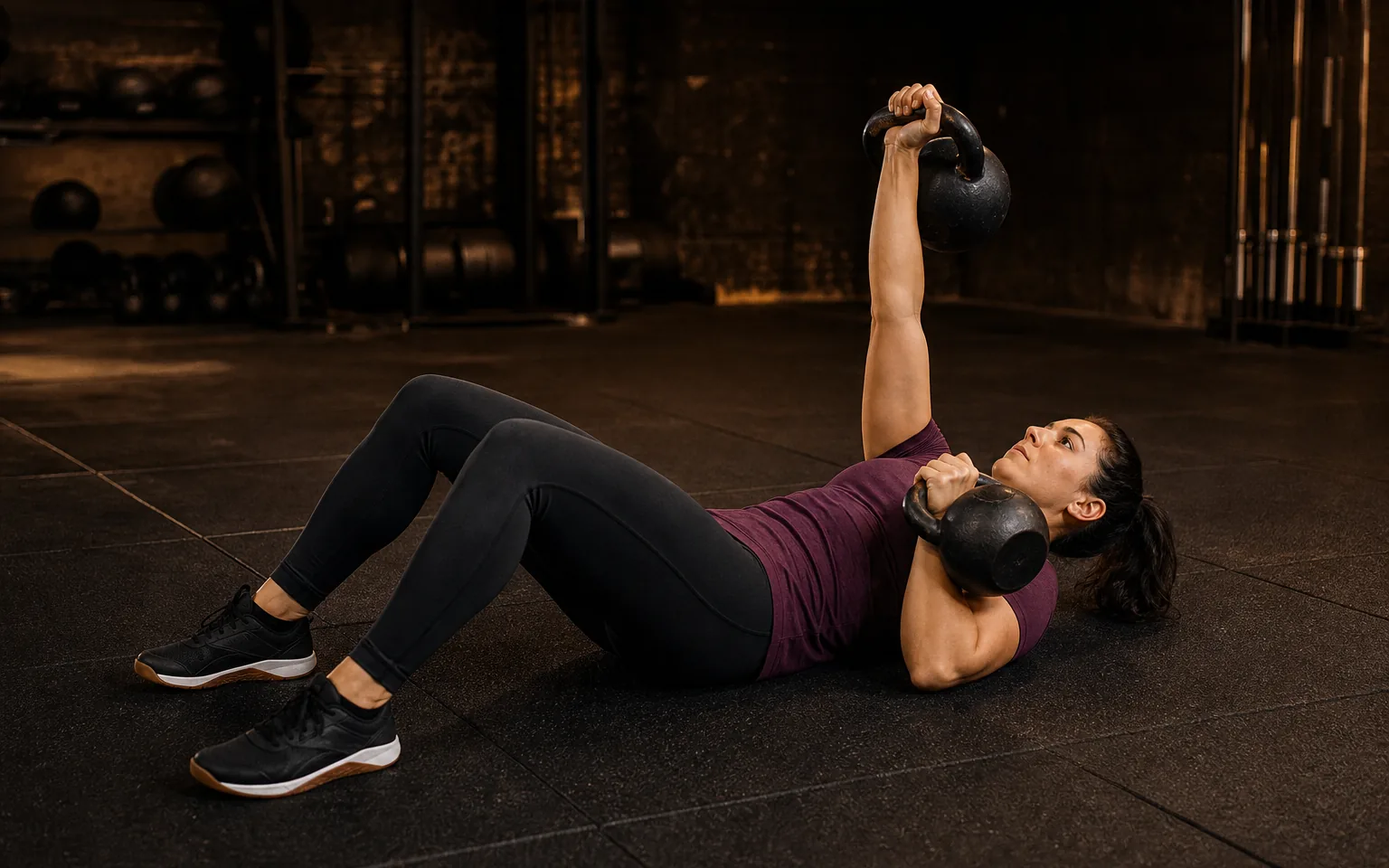
Lie on the floor with a kettlebell in each hand, if you have two. Keep both elbows close enough to your sides that your shoulders feel comfortable. Press one bell up while the other stays still. Lower the moving bell with control, then switch sides. One rep can mean one press per arm.
Keep your hips and ribs facing the ceiling. If your body rocks with each press, slow down or use one lighter bell at a time. Don’t chase speed. Your chest should help drive the press, while your triceps straighten the elbow and your shoulders steady the arm.
Try 8 to 12 alternating presses per side, then rest. A single bell works, too: hold it at your chest with both hands and press it up, but you won’t get the same side-to-side challenge. If you only have dumbbells, the same alternating pattern can be done with them.
Keep this move early in a session while your grip and focus are fresh. It pairs well with lower-body work on a full-body day, or after the single-arm floor press if chest strength is the main goal. Don’t add it to every short circuit just because it feels busy. Clean reps count more than a rushed timer.
Keep the other bell in rack as you press, and use a lighter load than you’d choose for a matched two-arm press if control starts to slip.
3. Kettlebell Crush-Grip Floor Press: A close-grip pressing variation
The crush-grip floor press uses one kettlebell held with both hands. It suits you if you have one bell at home and want a simple press that keeps your hands close together. Your chest works with your triceps and shoulders as you press from the floor.
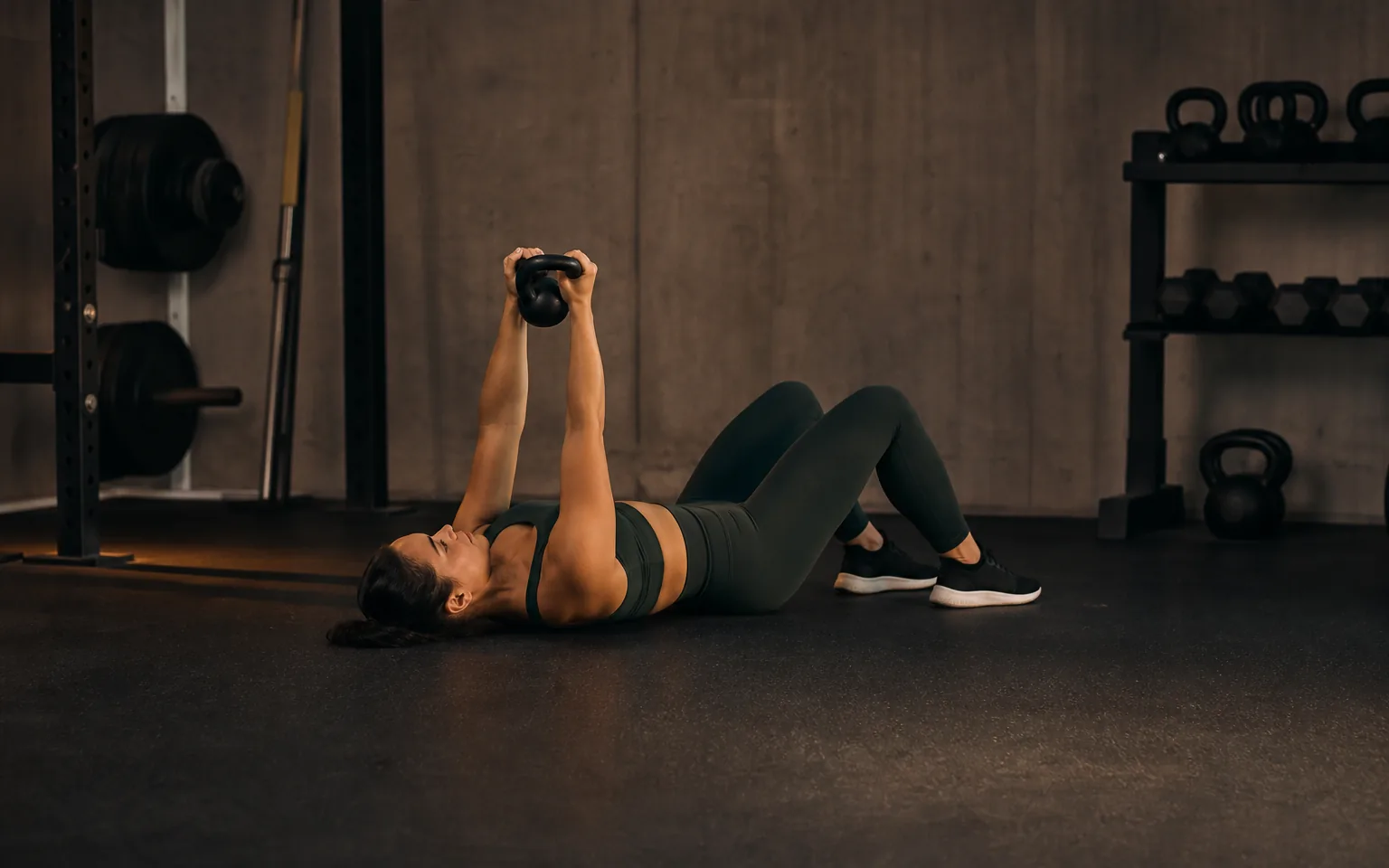
Lie back with knees bent and feet planted. Hold the kettlebell by its horns, the two sides of the handle, and keep it over the middle of your chest. Press your hands inward against the horns as you push the bell up. That gentle squeeze is the “crush” grip. Keep the wrists straight.
Lower the bell slowly until your upper arms touch the floor. Pause briefly, then press back up. Keep the bell balanced over your chest instead of letting it drift toward your face. If the grip feels awkward, don’t force it. Set the bell down and choose a floor press grip you can hold safely.
Start with 2 or 3 sets of 8 to 12 reps. Those are general starting points, not a rule. Stop a set when your shoulders roll forward or your elbows flare wide. A slightly tucked elbow path often feels more natural than pointing both elbows straight out.
Use this variation when you have only one kettlebell or want a slower, focused press. It doesn’t replace the one-sided core demand of a single-arm press. Instead, it gives you a two-handed option that’s easy to set up in a small room. Keep your attention on the squeeze and the smooth lower, not on lifting the heaviest bell you own.
4. Kettlebell Pullover: A chest-and-upper-body option
The kettlebell pullover is a different kind of chest exercise. Your arms travel overhead rather than pressing straight up, so your lats and shoulders also work. Choose a light bell while you learn the range, since the weight moves behind your head.
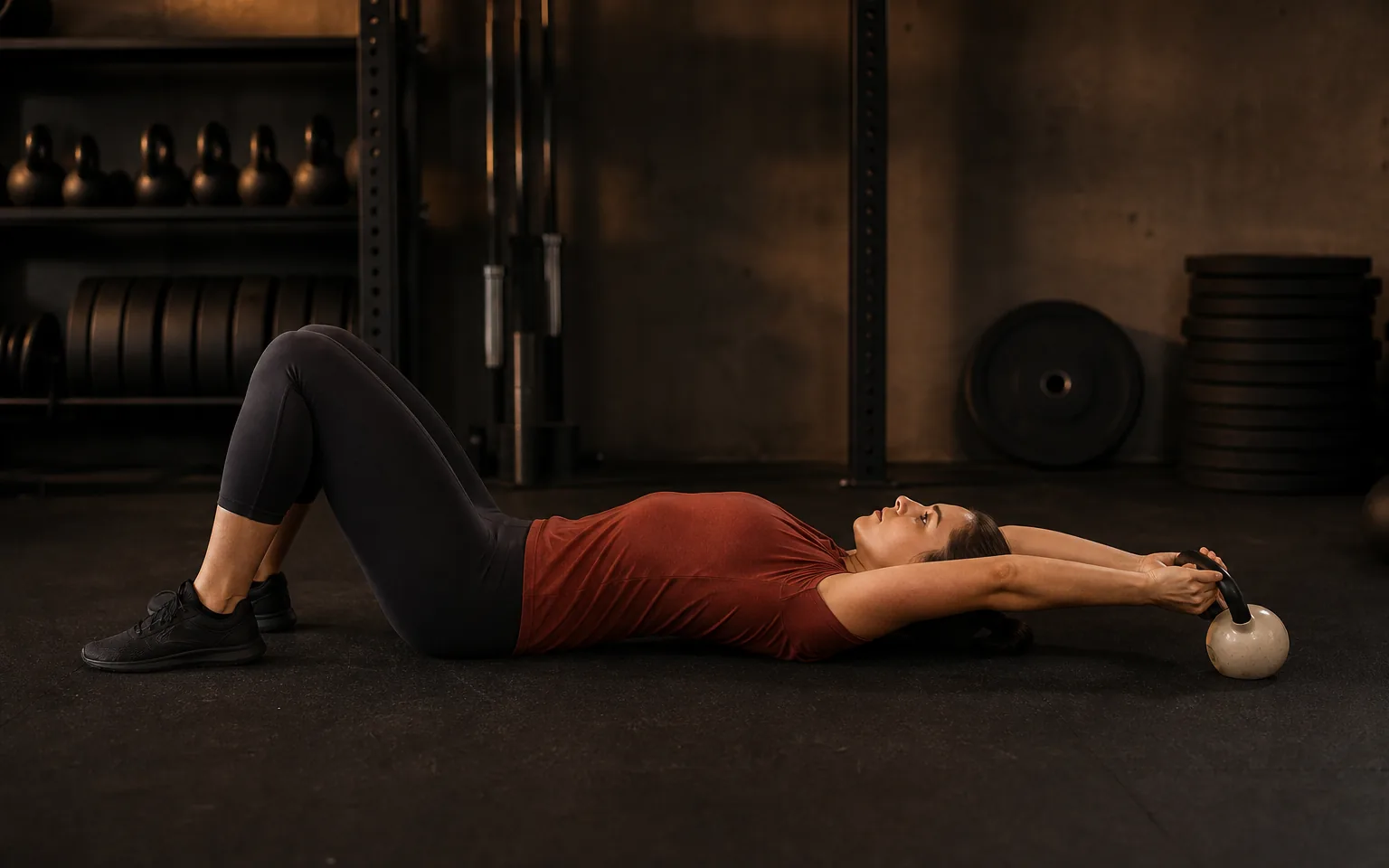
Lie on your back with knees bent. Hold the kettlebell by its horns with both hands, arms above your chest and elbows slightly bent. Slowly move the bell back toward the floor behind your head. Stop when your shoulders allow the reach without your lower back arching. Bring the bell back over your chest.
Think about keeping your ribs pulled down as the bell moves back. If your back arches, shorten the range. Keep a soft bend in your elbows instead of turning the movement into a triceps extension. The goal is a controlled shoulder reach, not forcing the bell to the floor.
Keep a slight elbow bend and limit the range to what your shoulders and back can control. Keep the motion smooth. Try 8 to 12 reps, then rest before repeating.
Pair pullovers with a floor press if you want a short upper-body session. For a quick circuit, alternate a set of pullovers with push-ups, then rest before the next round. A five-minute timer can make a session feel brisk, but don’t rush the overhead part. Stop if you can’t keep the bell secure or your shoulders feel painful.
5. Kettlebell Push-Up: A bodyweight press with stable handles
A kettlebell push-up adds handles to a bodyweight chest press. It’s best for you if standard push-ups already feel controlled and you can keep the bells from shifting. Your chest does much of the work, with help from your shoulders and triceps.
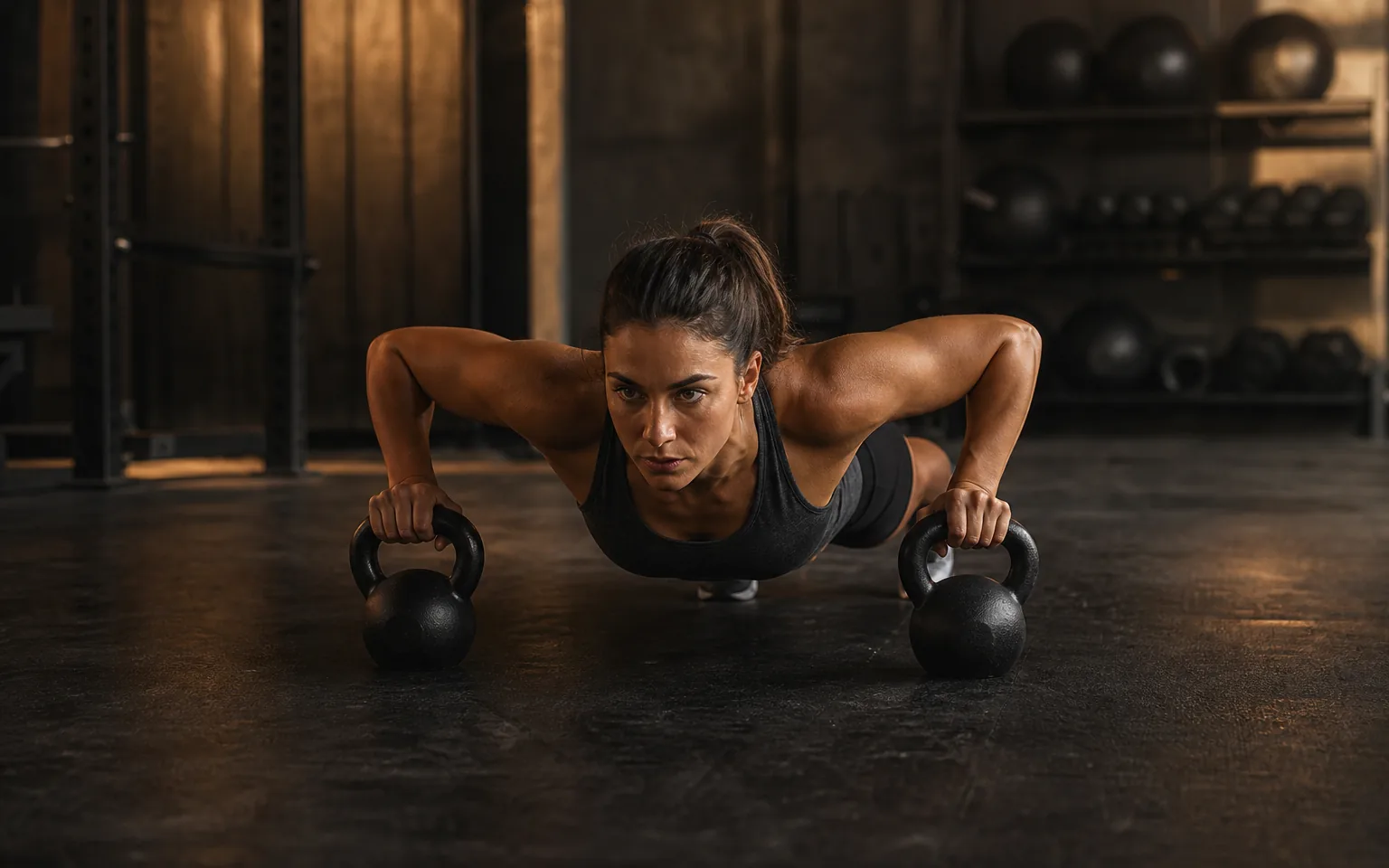
Place two kettlebells shoulder-width apart on a firm, level floor. Grip the handles and set your hands under your shoulders. Make a straight line from your head to your heels. Lower your chest between the bells, then press the floor away to return to the top.
The raised handles may let your chest travel lower than in a floor push-up. That extra range isn’t a goal by itself. Only lower as far as you can while keeping your shoulders comfortable and your body in line. If the bells rock, slide, or feel unstable, stop and do push-ups on the floor instead.
| Choose this version | When it fits | Make it easier |
|---|---|---|
| Push-up on kettlebell handles | You can hold a firm plank and control the full rep. | Use a standard floor push-up. |
| Push-up from knees | You want to practice the press with less body load. | Keep your hips in line with your shoulders. |
| Single-arm or crush-grip floor press | You want a stable pressing option without a push-up position. | Use a lighter bell or fewer reps. |
For a first session, try 2 sets of 6 to 10 controlled reps. Rest long enough that your next set looks like your first.
If your home setup has one kettlebell, skip this variation rather than balancing the bell in an improvised way. You can still train your chest with floor presses.
FAQ
Can you work your chest with kettlebells?
Yes, kettlebell chest workouts can include floor presses, pullovers, and push-up variations. The floor press is a useful place to start because the floor sets a clear lower limit for your elbows. Keep your wrist steady and choose a load you can lower with control. Your shoulders and triceps will help with pressing.
What is the best kettlebell chest exercise for beginners?
The single-arm floor press is a strong starting point for kettlebell chest workouts if you can safely get into position with the bell. Use a light load and practice a smooth lower. If holding one bell feels uncertain, choose a two-handed crush-grip press or use a dumbbell instead.
How many reps should I do for a kettlebell chest workout?
For kettlebell chest workouts, a starting range of 6 to 15 controlled reps can work for floor presses, while push-ups may call for fewer reps. Stop when your form changes. Add reps first only when you can keep the same steady pace and body position through the set.
Can I do chest workouts without a kettlebell?
Yes. You can use dumbbells for floor presses and pullovers, or use a band for a pressing pattern if you have a safe anchor point. Standard push-ups are another option. Kettlebell chest workouts are convenient, but the bell itself isn’t required to practice a controlled press.
Conclusion
Start with the single-arm floor press, then add one variation once your reps stay controlled. If a repeatable plan would help you train around work and family, look at Hybrid Fit Mom’s six-week kettlebell program. For your next session, pick one move, set a modest rep target, and focus on clean form.