Best Kettlebell Arm Workouts for Stronger Arms
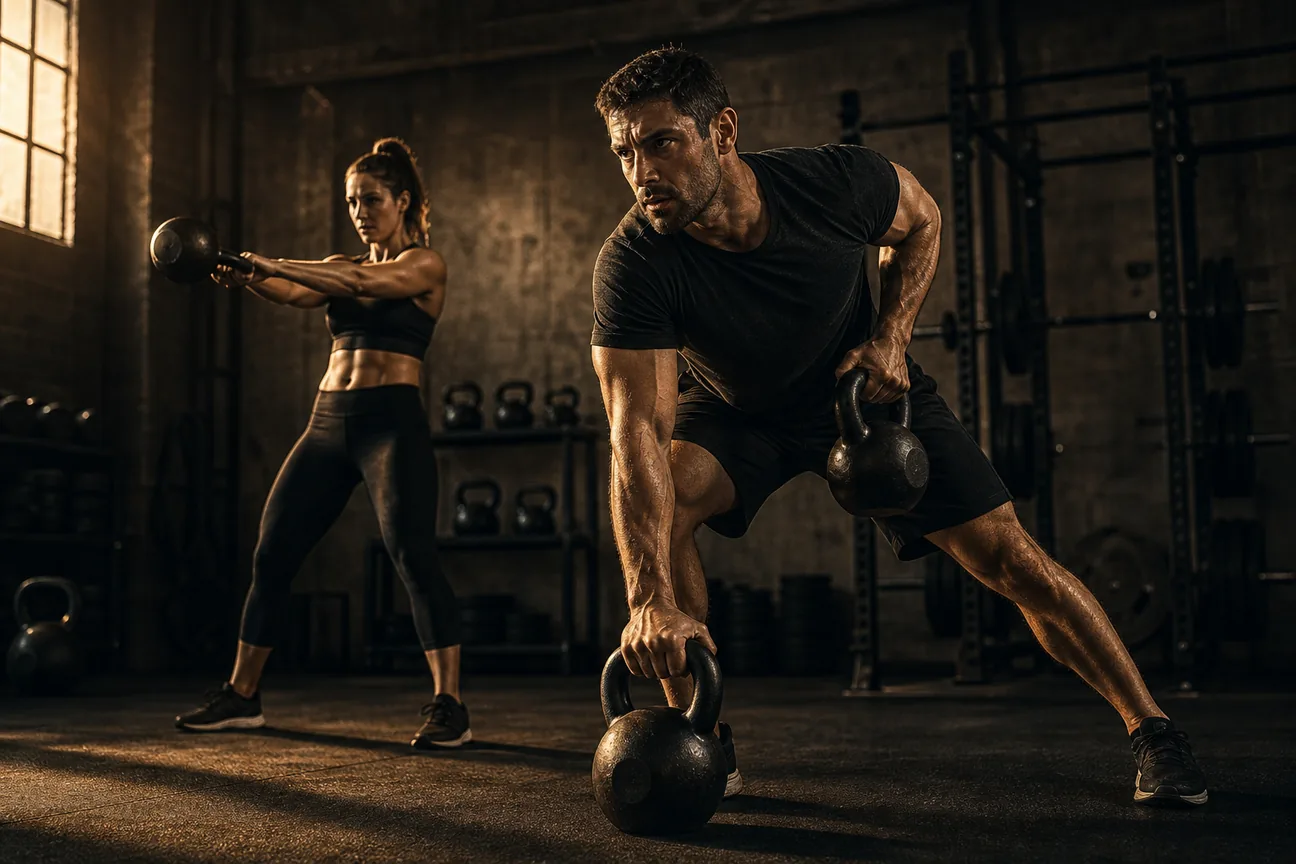
A kettlebell can train your arms without turning your workout into a long gym session. These kettlebell arm workouts cover direct curls and triceps work, plus presses that build arm strength in a full-body setting. Hybrid Fit Mom’s six-week program gives you a scheduled option if you’d rather follow a plan than save another workout and guess what comes next.
An analysis of 37 comments and questions from Reddit, YouTube and Quora about Kettlebell arm workouts found that 24% mentioned short workout durations.
1. Kettlebell Strict Curl: A focused biceps option
The strict curl trains your biceps with one arm at a time. It’s a good pick when you want to practise control, spot side-to-side differences, or add direct arm work at home without much setup.
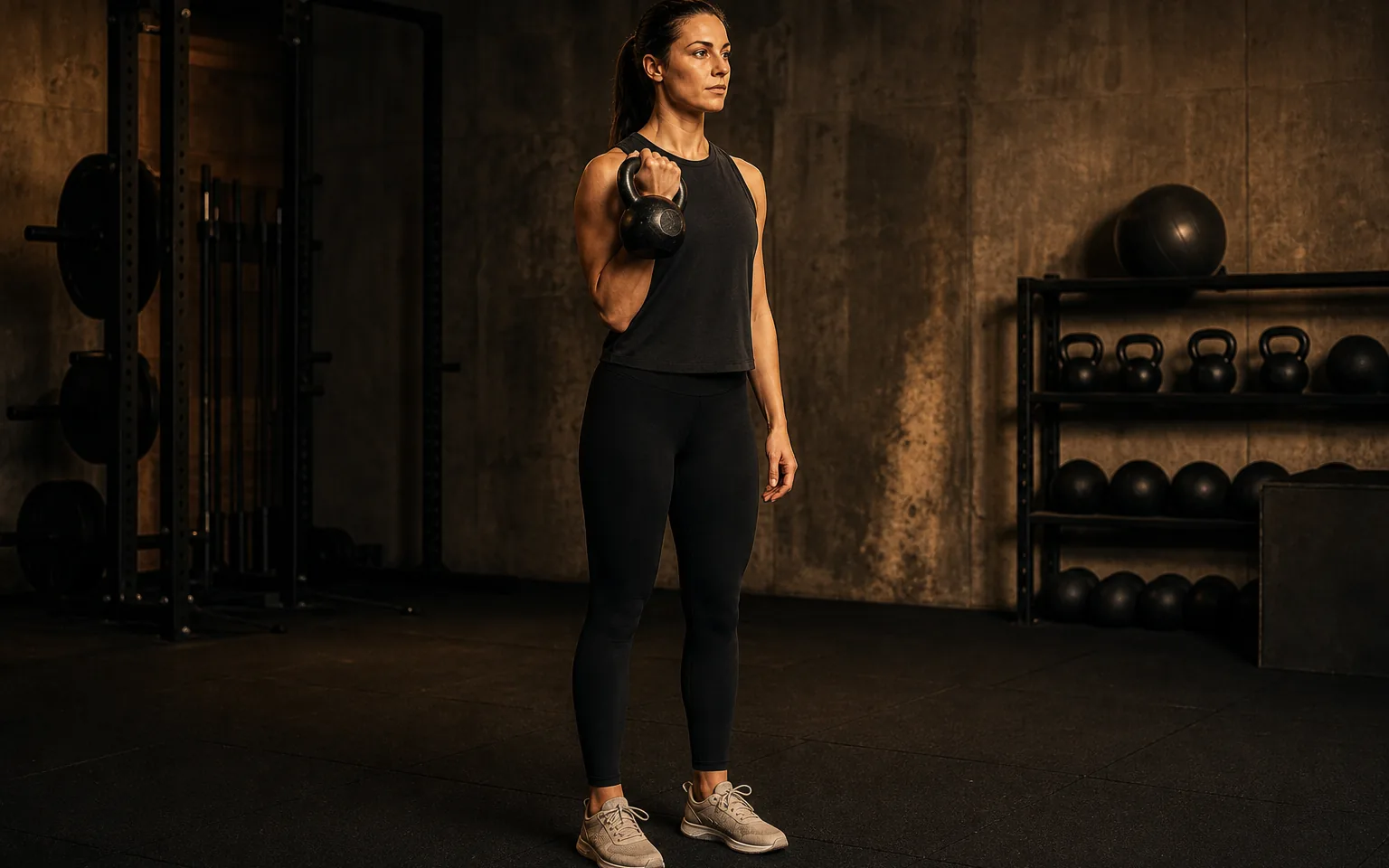
Stand tall with the bell at your side. Keep your elbow close to your ribs, then bend only at the elbow to bring the bell toward your shoulder. Lower it under control. Your torso stays still; if your hips swing or you lean back, use a lighter bell.
A kettlebell’s weight hangs below its handle, which gives it a different feel from a straight bar or dumbbell. That is why a firm grip matters during a curl: your wrist and forearm need to keep the bell steady as you move.
Try 3 sets of 8 to 12 reps per arm. Keep about 2 reps in reserve, meaning you could still do two clean reps when the set ends. If the bell swings, your elbow drifts forward, or you can’t lower it smoothly, stop the set and adjust the load.
When you can reach the top of your rep range with steady form, add a small amount of load if you have that option. Kettlebells often come in larger jumps than dumbbells. If the next bell feels too heavy, add a rep or slow the lowering phase before moving up.
If you want to build curls into a broader muscle-focused session, Hybrid Fit Mom also has a kettlebell workout for muscle gain with exercise and progression ideas for home training.
2. Kettlebell Overhead Triceps Extension: Direct work for the back of your arms
The overhead extension targets your triceps, the muscles at the back of your upper arm. Use it when you want focused elbow-extension work and can keep your upper arms steady overhead.
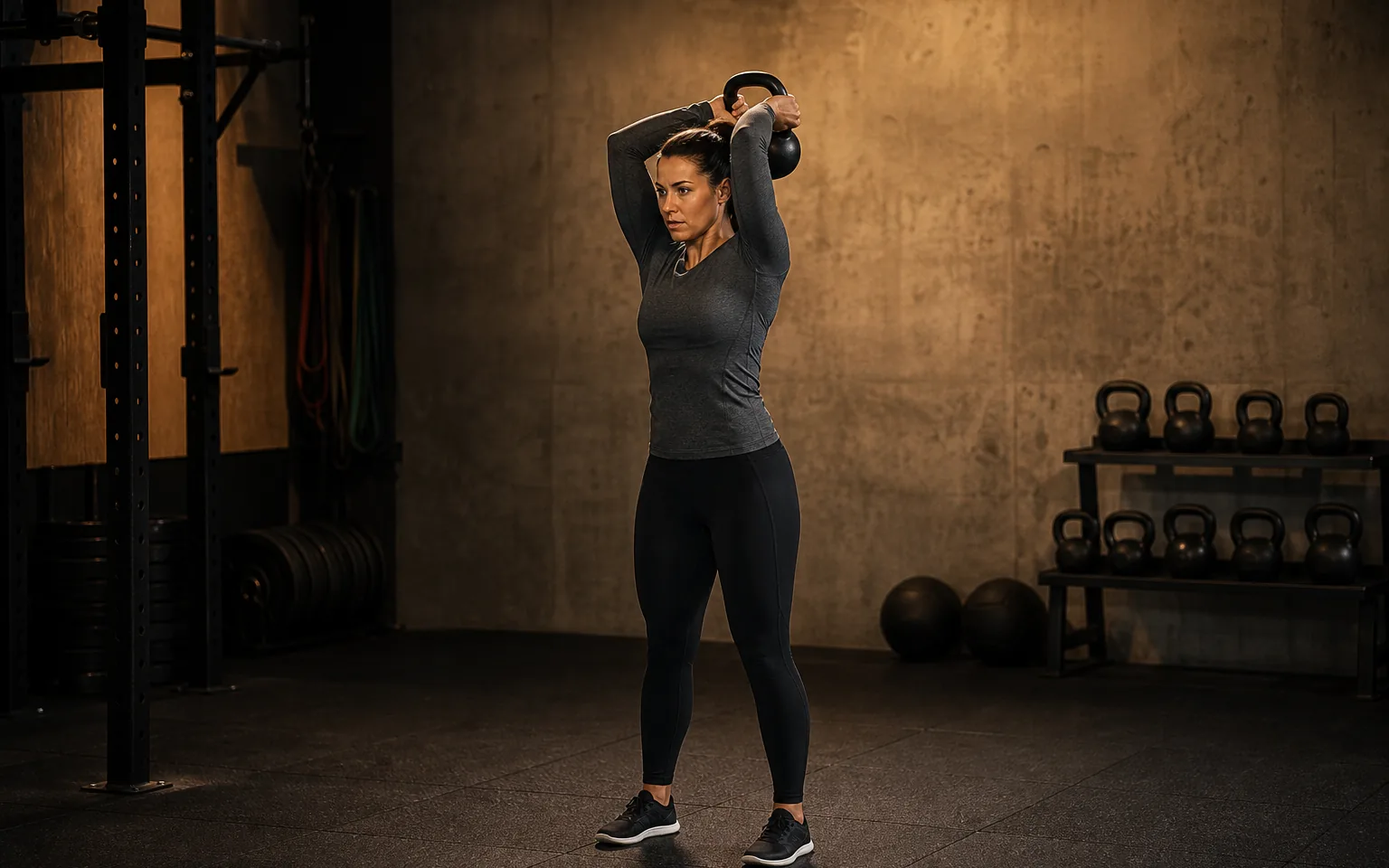
Hold one bell securely with both hands, or use one arm if you already have the control for it. Stand or sit tall, brace your middle, and raise the bell overhead. Bend your elbows to lower the bell behind your head. Then straighten your arms without letting your ribs flare or your lower back arch.
Your elbows don’t need to touch. Keep them pointing mostly forward and close enough to your head that the movement stays controlled. A small amount of natural movement is fine; forcing your elbows into a fixed position can make the rep feel awkward.
Start with 2 or 3 sets of 8 to 12 reps. Take about two seconds to lower the bell, and stop before your form changes. If you feel sharp pain or can’t control the bell near your head, end the set. You can practise the elbow motion with a lighter load before building up.
This move can fit after a press or on a separate arm-focused day. But count your pressing too: strict presses and floor presses already ask your triceps to straighten the elbow. Add direct work based on what you’re doing that week, not just because the exercise feels easy to add.
3. Kettlebell Floor Skull Crusher: A floor-based triceps choice
The floor skull crusher trains your triceps while you lie on your back. It suits home workouts when you want a stable setup and prefer to keep your upper body supported rather than standing through another set.
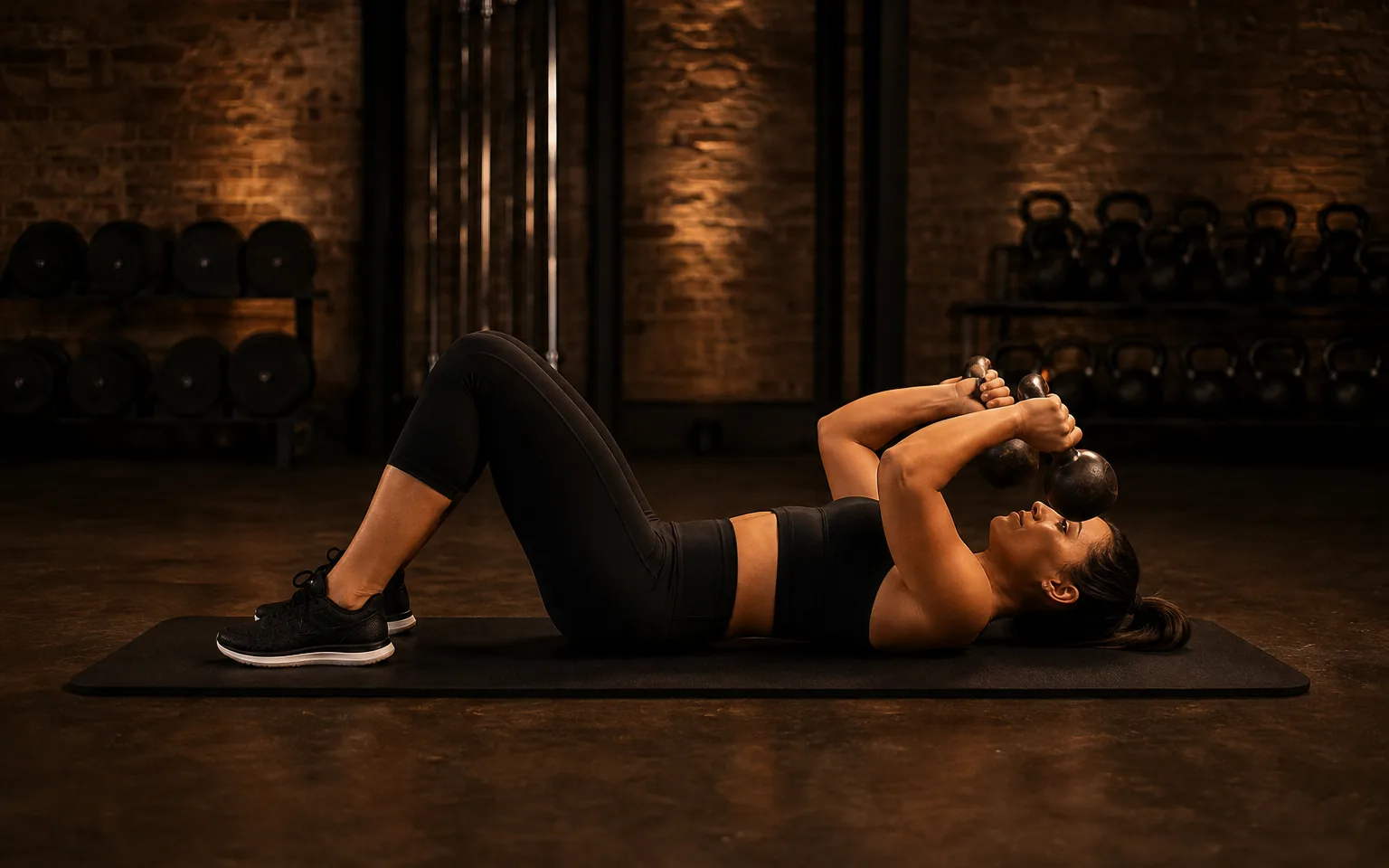
Lie on the floor with knees bent and feet planted. Hold a light kettlebell in each hand, arms reaching up over your chest. Bend at the elbows to lower the bells toward the sides of your forehead. Keep your upper arms mostly still, then straighten your elbows to return the bells overhead.
The floor gives your upper arms a clear stopping point if they touch down. Don’t use that as a reason to drop the bells or bounce your elbows. Lower slowly, keep your wrists straight, and make sure you can grip both handles securely before starting.
Begin with 2 or 3 sets of 8 to 12 reps. Choose a load that lets you move without rushing. If your elbows flare wide or your upper arms travel back and forth, reduce the weight or shorten the range until you can control each rep.
Floor skull crushers are a direct triceps exercise, not a replacement for pulling work. Pair them with a row or another back exercise across your training week to keep your upper-body plan balanced.
Keep the bell path close to your head and shoulders. If handling two bells feels clumsy, use one bell with both hands only if its shape and grip feel secure. A clean rep matters more than matching someone else’s load.
4. Kettlebell Strict Press: Arms and shoulders with a stable stance
The strict press trains your shoulders and triceps while your torso resists the pull of a one-sided load. It’s a strong choice when you want arm work to sit inside a larger strength session rather than isolate one muscle at a time.
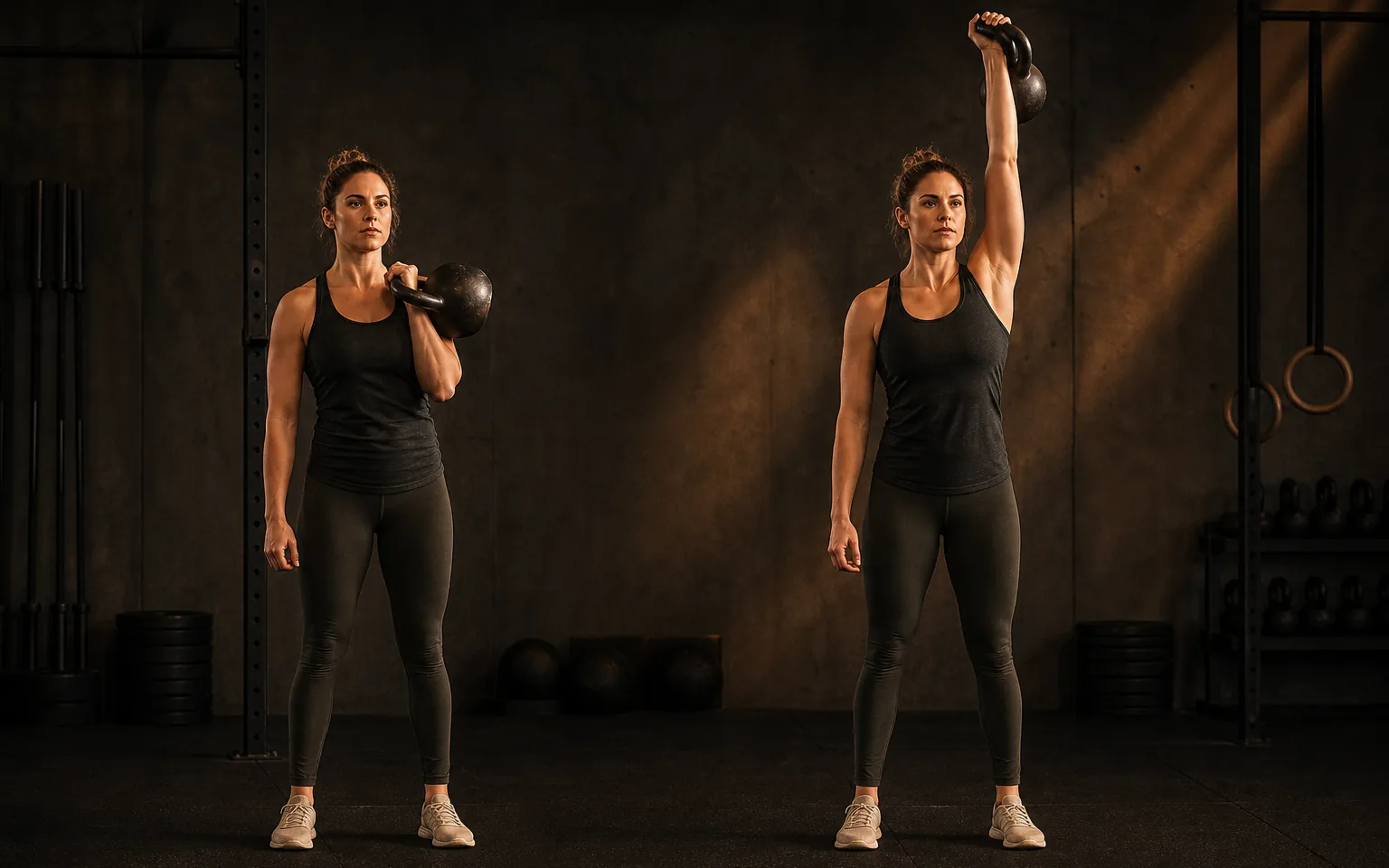
Bring the bell to the rack position, with it resting against your forearm and your elbow tucked near your side. Stand with feet planted. Tighten your middle and glutes, then press the bell overhead without bending your knees. Lower it back to the rack with control.
Think ribs over hips. If you lean away from the bell or arch your back to finish the rep, the load is too heavy for a strict press. Keep your other hand relaxed, and avoid twisting to help the working arm.
Try 3 sets of 5 to 8 reps per side as a starting point. Rest long enough to press each rep without rushing. A lighter bell can still make a hard set when you pause briefly in the rack or lower slowly. Add load only after you can press through the full range without leg drive.
The strict press is also a useful check on your single-arm control. If one side feels much less steady, train each side with the same number of reps and let the weaker side set the pace. Don’t force the stronger arm to do extra work just because it can.
Mari Grossi includes the strict press in Hybrid Fit Mom’s training approach. She coaches from her own practice as a weightlifting-certified trainer, teacher, and mother of two.
5. Kettlebell Curl-to-Press Complex: A time-efficient upper-body combination
The curl-to-press links a biceps curl with an overhead press. Choose it when you have room for one combined movement and want your arms to work through both a pull and a press in the same set.
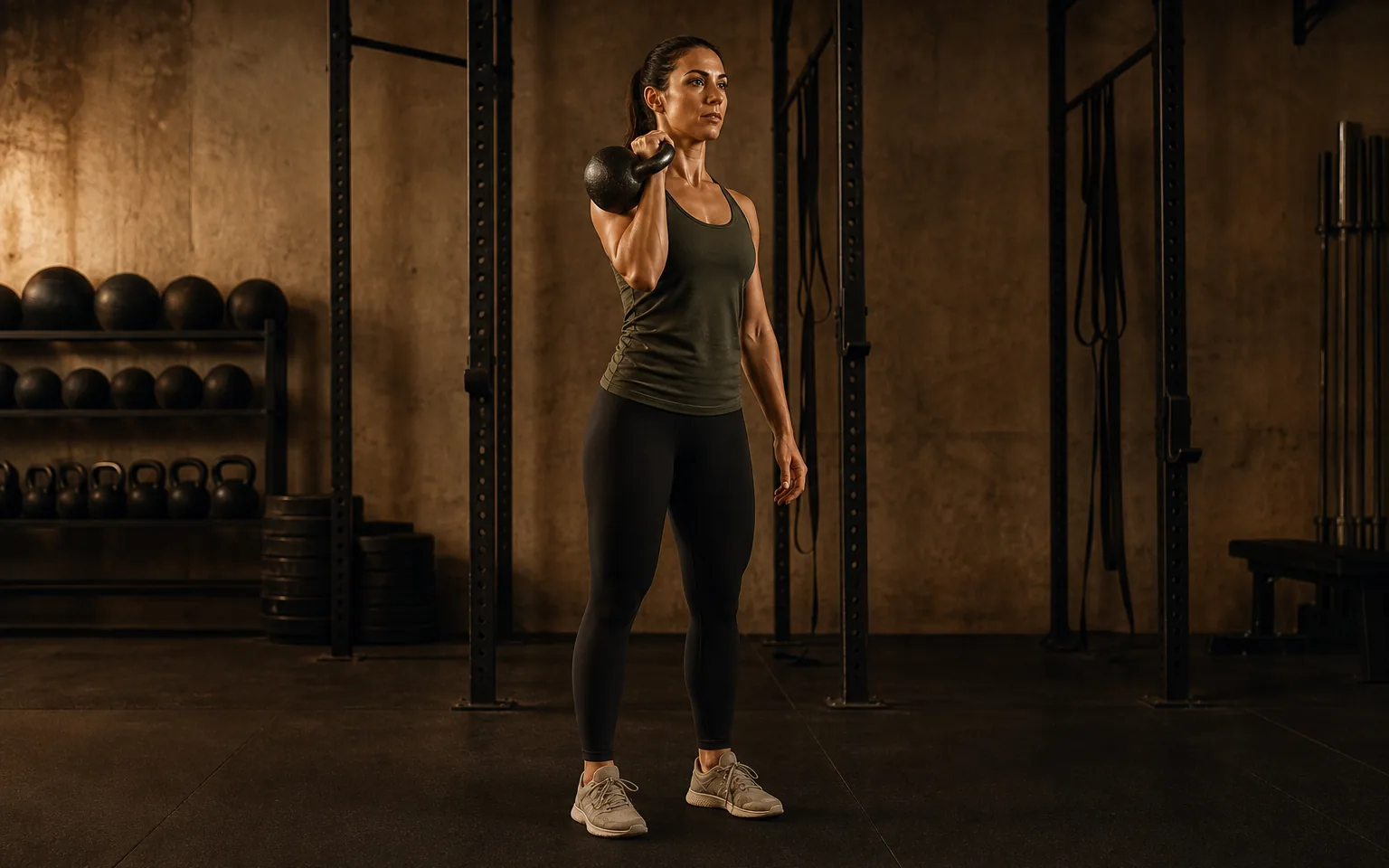
Start with the bell at your side and your elbow close to your ribs. Curl it to shoulder height. From there, press overhead without using a knee dip. Reverse the path with control: lower to the shoulder, then lower the arm to your side. That full sequence is one rep.
Use a lighter load than you’d choose for a curl alone. The press often sets the limit. If you have to swing the bell to curl it or lean back to finish the press, split the movements into separate exercises until each feels steady.
One simple format is 3 rounds of 6 to 8 reps per side, with a short rest between sides. Keep the same bell for each rep, and stop the round if you lose control on the way down. This is a useful circuit choice, but it doesn’t need to replace focused curls or triceps extensions.
Think of the combination as a time-saver, not a shortcut around good technique. A busy day may call for fewer movements. It doesn’t call for rushing the part where the kettlebell passes your shoulder.
For another way to structure home training, Hybrid Fit Mom’s comparison of kettlebell programs for women and busy moms can help you weigh a self-paced plan against other training formats.
Compare These Kettlebell Arm Workouts by Focus and Setup
Each movement has a different job. Use this table to choose based on the kind of work you need today, rather than trying to fit all five into every session.
| Exercise | Main focus | Setup | Good fit when | First form check |
|---|---|---|---|---|
| Strict curl | Biceps | Standing, one bell | You want direct arm work | Torso stays still |
| Overhead triceps extension | Triceps | Standing or seated | You can control a bell overhead | Ribs stay down |
| Floor skull crusher | Triceps | On the floor | You want a supported position | Upper arms stay steady |
| Strict press | Shoulders and triceps | Standing, one bell | You want a compound press | No leg drive or side lean |
| Curl-to-press | Biceps, shoulders, and triceps | Standing, one bell | You need a combined movement | Both parts stay controlled |
For a short arm session, pair a curl with one triceps move, then choose the strict press if your shoulders feel ready. You don’t need five exercises in one workout. A few focused sets, repeated consistently, are easier to progress than a long list you can’t fit into the week.
Most arm exercises use lighter loads than full-body kettlebell lifts. General beginner weight guidance for isolation moves often falls around 8 to 12 kg, but that isn’t a rule for every person or every exercise. Use the bell that lets you complete clean reps, and choose a different load for a curl than for a press if needed.
For a strict curl, a clear rule is to increase the load by 2 to 4 kg once you can complete the top of the rep range with about two reps in reserve. If your bells jump by more than that, build reps or slow the lowering phase first.
Hybrid Fit Mom’s six-week program takes a different route from a stand-alone arm routine. It schedules 24 sessions, four each week, and starts load selection with a bell you can deadlift for 10 clean reps. That approach places arm work within full-body strength and conditioning, rather than making lighter isolation work the whole plan.
Frequently Asked Questions
Can I build arm strength with one kettlebell?
Yes, one kettlebell can cover curls, overhead extensions, floor skull crushers, and single-arm presses. You may need to change the load between moves because a weight that suits your press may be too heavy for a curl. Keep your reps controlled and track what you use so you can progress instead of guessing next week.
How many reps should I do for kettlebell arm workouts?
For most of these moves, try 8 to 12 controlled reps per set, then adjust based on the exercise and your skill. A strict press may call for fewer reps, while a lighter curl can support more. Finish each set with a couple of clean reps still possible, rather than pushing until your form breaks.
How often should I train my arms with a kettlebell?
Start with one or two weekly sessions that include direct arm work, and account for pressing and pulling in your other workouts. Leave time between hard sessions if your arms or elbows still feel sore. If you follow a structured plan, use its schedule instead of adding extra sets by default.
What’s a good kettlebell weight for arm exercises?
The right weight depends on the movement and your control. Beginner suggestions often cluster around 8 to 12 kg, but overhead work may need a lighter bell than a strict curl. Test a few slow reps. If you can’t keep your wrist steady or lower the bell smoothly, choose a lighter load.
Conclusion
Choose one curl and one triceps move to start, then add strict presses if you want a fuller upper-body session. If a weekly schedule would help more than a list of exercises, explore Hybrid Fit Mom’s six-week kettlebell program, then set aside your first training slot.