Kettlebell Swings vs Deadlifts: Which Fits You?

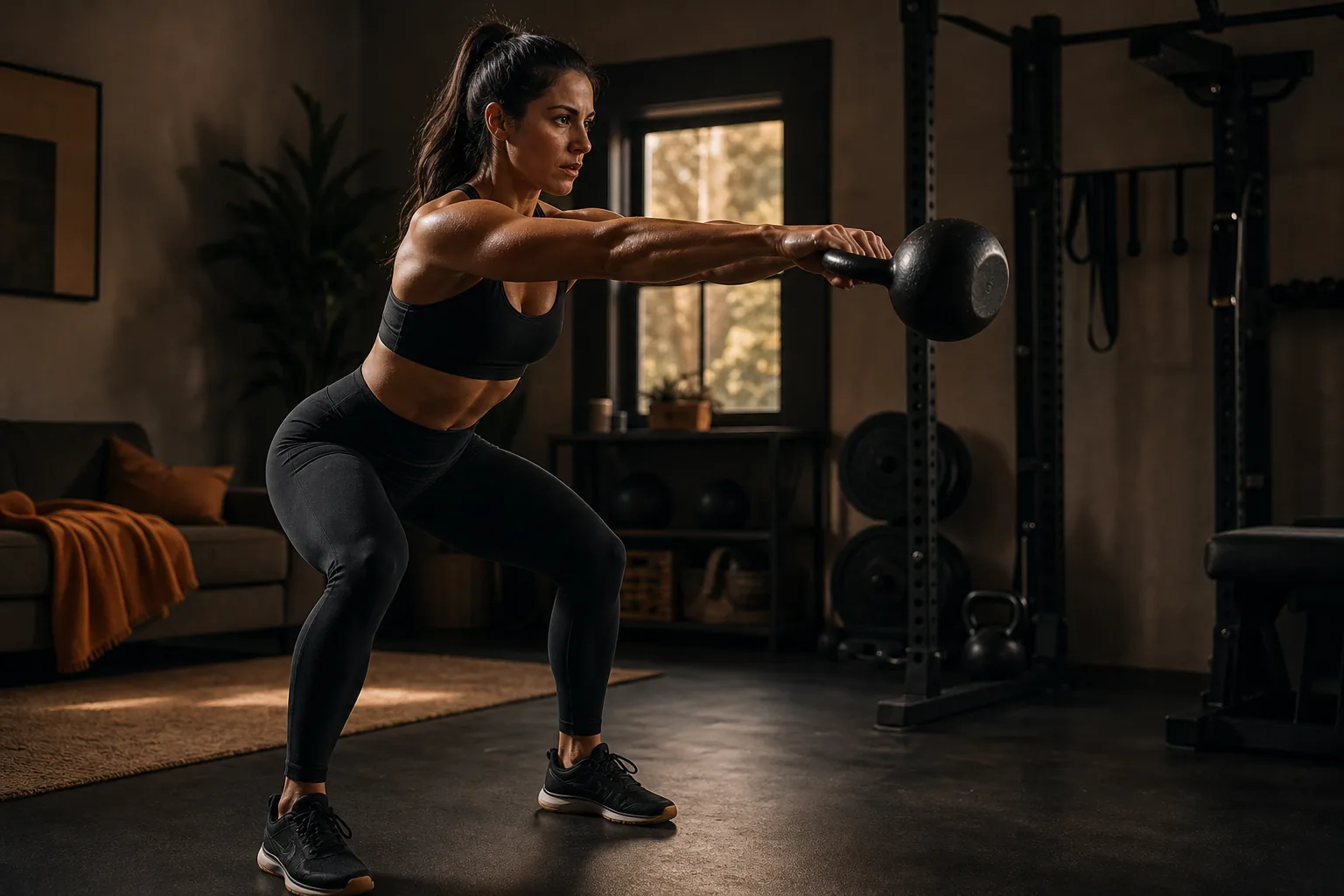
Kettlebell swings vs deadlifts comes down to two different ways to train your hinge: fast, repeated hip snaps or controlled pulls from a dead stop. Swings suit power and conditioning; deadlifts make it easier to work with heavier loads. Your goal, gear, and available time can point to one, or make room for both.
An analysis of 79 comments and questions from YouTube, Reddit and Quora about kettlebell swings vs deadlifts found that 27% mentioned muscle growth potential.
Movement and muscles: explosive hinge vs controlled lift
A kettlebell swing is a ballistic hip hinge. You send the bell back between your thighs, then drive your hips forward so the bell floats up. Your arms guide it, but your hips do the work. The main muscles are the glutes, hamstrings, and spinal erectors, which help keep your back steady.
A deadlift starts with the weight on the floor. You brace, grip the load, then stand by extending your hips and knees. It trains the glutes and hamstrings while asking more of your lats, upper back, and grip, especially as the load gets heavier.
The two moves share a hinge, but the pace and load change the feel. A swing has momentum. You guide the bell through each rep and snap your hips to reverse its path. A deadlift starts from rest each time, so you build tension before pulling. In a barbell deadlift, your hands usually grip the bar just outside your legs.
| Comparison point | Kettlebell swing | Deadlift |
|---|---|---|
| How each rep starts | Bell moves in a continuous arc after the first hike | Weight starts from a dead stop |
| Main action | Fast hip extension | Controlled hip and knee extension |
| Typical training feel | Explosive, often higher-rep | Deliberate, often heavier |
| Grip demand | Hold the kettlebell handle through the set | Grip the bar or other load before each pull |
| Best fit | Power and conditioning in a compact session | Heavy pulling strength and controlled practice |
Swings and deadlifts are not interchangeable. The useful distinction is still the task in front of you: repeated, fast hip extension or a controlled lift from the floor.
If the bell’s path or hinge is new to you, review kettlebell swing setup and form cues before adding speed.
Strength and conditioning: what each movement develops
Choose deadlifts when you want to get stronger at lifting a heavy object from the floor. Since the load begins at rest, you can set your feet, brace your trunk, and build tension before each rep. That makes the deadlift a clear way to practice heavy pulling strength. You can also track progress by adding weight or reps while keeping the lift controlled.
Swings train a different quality: producing force quickly, then doing it again. The bell is lighter than a heavy deadlift, but every clean rep asks your hips to reverse the bell’s momentum. Sets of swings can also raise your breathing rate, so they fit conditioning work as well as strength sessions.
Neither movement owns strength or power. A deadlift lets you use a heavier load; a swing asks you to move a lighter load fast. For home training that includes both qualities, explore these kettlebell strength workouts for busy women and choose a format that fits your time and skill.
For muscle growth, the name of the exercise matters less than the work you can repeat and progress with sound form. Deadlifts can provide a strong muscle-building stimulus, but heavy sets also take effort and rest. Swings make it easier to fit repeated hip work into a shorter interval, though rushing reps once your form slips is a poor trade.
Hybrid Fit Mom’s six-week kettlebell program is designed around home strength and conditioning, rather than a deadlift-only routine. Its plan includes progressive workouts and prerecorded demos; the program’s schedule pairs three 30-to-40-minute strength sessions with a shorter core day each week. That structure may suit you if a single movement doesn’t cover your training needs.
Setup and home-workout fit: equipment, space, and time
A swing needs one kettlebell and enough clear space to move it safely. The bell travels forward and back, so keep people, pets, and breakable items out of its path. You don’t need a rack or plates. That makes the movement easier to set up at home, provided you have room for the arc.
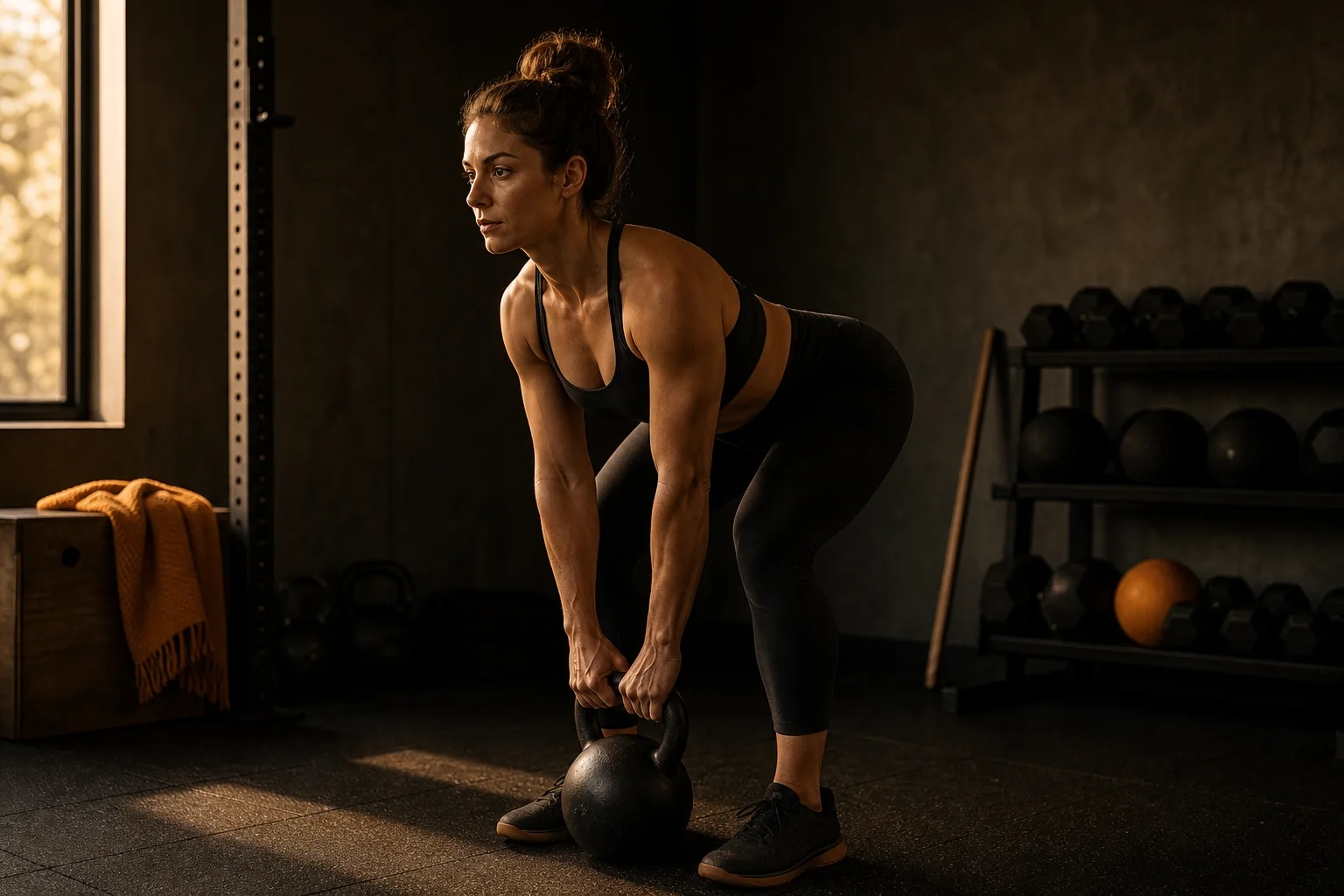
A kettlebell deadlift also works in a small space and uses one bell. You set it between your feet, grip the handle, then stand with control. A barbell deadlift takes more gear: a bar and plates, plus a clear area to load and lift. It’s a good fit when you have that setup and want to work with heavier weights.
Changing between swing and deadlift work is simple if you already have a kettlebell. The bigger difference is how the session feels. Swings often use sets with more reps or timed intervals. Deadlifts tend to use fewer reps with more rest, especially when the load is heavy. Neither needs to be crammed into every workout.
Equipment choice can also limit how you progress. A kettlebell gives you a fixed load for each set. You can build reps or keep the bell moving crisply before moving up in weight. A barbell lets you change the load in smaller steps, which is useful when a little more weight is the next goal.
Hybrid Fit Mom’s home program uses kettlebell workouts and gives you a set schedule, prerecorded demos, and lifetime access after a one-time purchase. The program uses one bell across its four weekly sessions. Choose a bell you can control for the movement you’re doing.
Want to see how a slower hinge fits beside swings? The cues in this kettlebell deadlift form guide walk through the setup and lift.
Technique, control, and risks: what beginners should consider
Both exercises ask you to keep control of your trunk as your hips move. Poor bracing or a rounded back under load can strain your lower back. The key isn’t to force a perfect-looking rep through fatigue. Stop the set when you can’t keep the same position and control.
Use a slower hinge to learn the pattern
For a deadlift, place the weight close to your feet. Push your hips back, soften your knees, and grip the load. Brace your middle, then stand by pushing through your feet. Lower the weight under control and reset before the next rep. Keep the load close rather than reaching it away from your body.
For a swing, start with a hike between your thighs. Hinge back rather than dropping into a squat. Snap your hips forward and let the bell float; don’t lift it with your shoulders. As it falls, guide it back between your thighs and repeat only while your back stays firm and the bell’s path feels controlled.
Let form set the pace
A swing moves faster, so small timing errors can repeat across a set. Learn the hinge with a controlled deadlift first if you’re not sure how to send your hips back. Then practice swings with a light enough bell to keep the movement crisp. A deadlift is slower, but heavier loading still calls for a steady brace and a load you can lift with control.
Stop if you feel sharp pain, new tingling, or a loss of control. If you have a back injury or a medical concern, get advice from a qualified clinician before adding ballistic or heavy lifting. Mari Grossi, Hybrid Fit Mom’s coach, is weightlifting L1 certified and includes prerecorded exercise demonstrations with clear cues in the program.
Which is better for you: kettlebell swings or deadlifts?
For maximal pulling strength, choose deadlifts. They let you practice producing force against a heavier load from a dead stop. They also give you a clear way to progress: add a small amount of weight or a rep when your current work stays controlled. If you’re training for a stronger barbell pull, swings alone don’t give you the same practice.
For power and conditioning, swings are often the better fit. They train fast hip extension and can raise your breathing rate in a short block. Hybrid Fit Mom’s sessions pair the bell with cardio on a clock, but no workout guarantees a set calorie burn.
For home training, either movement can work with a kettlebell. Swings need clear space for the bell’s arc. Deadlifts need less moving room, and the bell starts and ends on the floor. If you already have a barbell setup, deadlifts give you more room to increase the load over time.
For beginners, a controlled kettlebell deadlift is often an easier place to learn the hinge. Each rep starts from a stop, which gives you time to set your grip and brace. Once you can move through the hinge without rounding your back, learn the swing with coaching or clear demonstrations. Basic kettlebell experience helps, but it doesn’t remove the need to practice.
You don’t have to pick one for every session. A week could include deadlifts for strength and swings in a short conditioning block, as long as you can recover and keep your form. For busy women who want a plan instead of saved clips, Hybrid Fit Mom gives a six-week home-training structure with progressive workouts. Choose the exercise that fits today’s goal, then follow a schedule you can repeat.
FAQ
Are kettlebell swings better than deadlifts for fat loss?
No single exercise guarantees fat loss. Swings can add a conditioning element because repeated reps raise your breathing rate, while deadlifts focus more on controlled strength work. Your overall eating habits and activity matter too. If you enjoy swings and can do them with good form, they can be a useful part of a consistent training plan.
Can kettlebell swings replace deadlifts?
Swings can train your glutes and hamstrings, but they don’t replace the heavy, controlled pull of a deadlift. If your goal is a stronger deadlift, you need to practice deadlifting. If you train at home with a kettlebell, swings can still train hip power and conditioning, while kettlebell deadlifts offer a slower hinge option.
Should beginners start with swings or deadlifts?
Many beginners will find a controlled deadlift easier for learning the hip hinge because each rep starts from a stop. Push your hips back, keep the load close, and stand without rounding your back. Once that pattern feels steady, practice swings with a light bell and clear coaching cues before adding speed or reps.
Do kettlebell swings and deadlifts work the same muscles?
Both movements train the glutes and hamstrings, and both use the spinal erectors to help maintain trunk position. Deadlifts also challenge the grip, lats, and upper back as you pull the load. Swings add repeated, fast hip extension, so they ask you to manage the bell’s momentum through each rep.
Conclusion
Choose deadlifts when heavy pulling strength is your main goal; choose swings when you want hip power and conditioning in a compact session. If you want a structured home plan, look at Hybrid Fit Mom’s six-week program and start with the first workout that matches your current kettlebell skill.