Best 30 Minute Kettlebell Workout: 10 Full-Body Moves

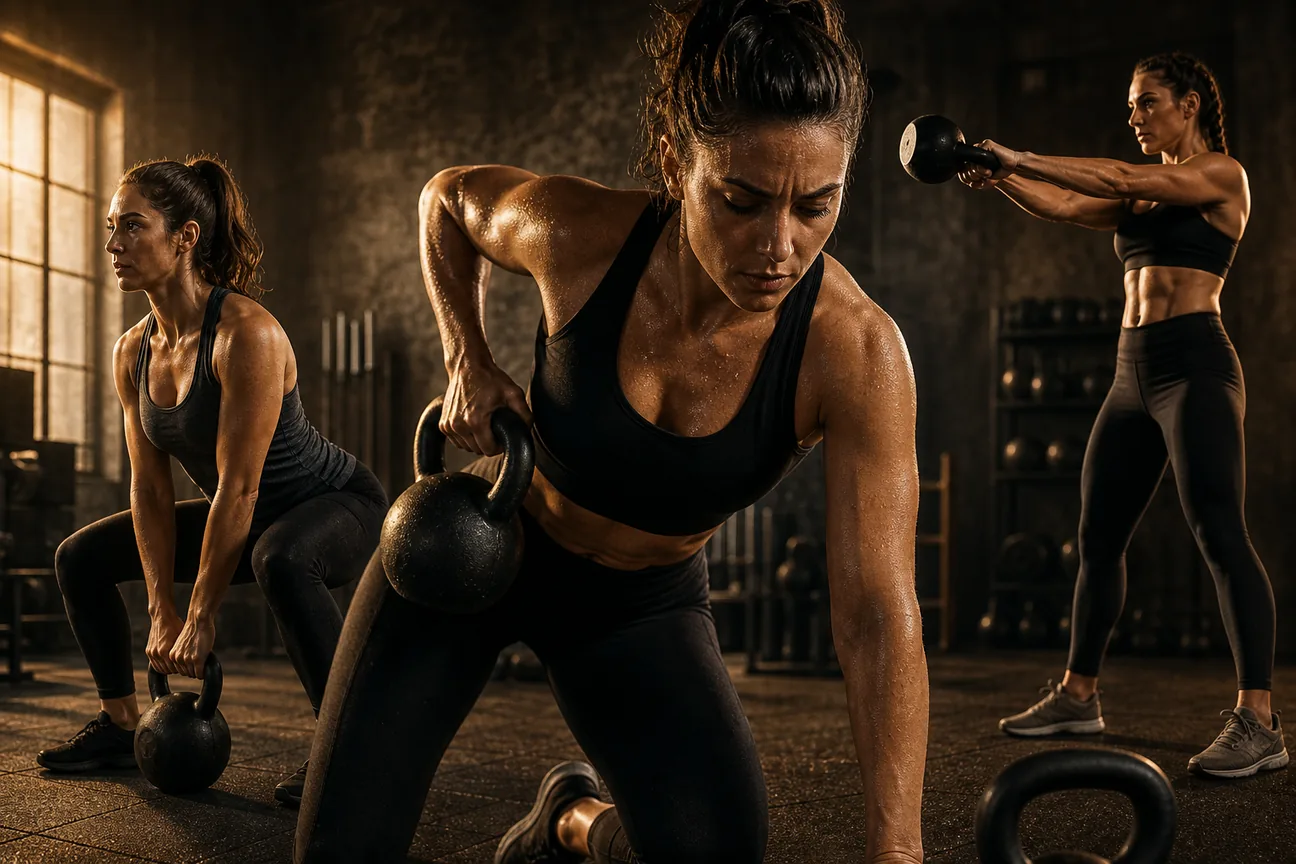
Grab one kettlebell, a mat, and some water. This 30-minute, no-jump session pairs strength moves with short rests, so you can train at home without needing much space.
Use the ten moves below as a full-body circuit. Start light, keep each rep controlled, and swap a move if your form slips.
1. Goblet Squat: Build Lower-Body Strength
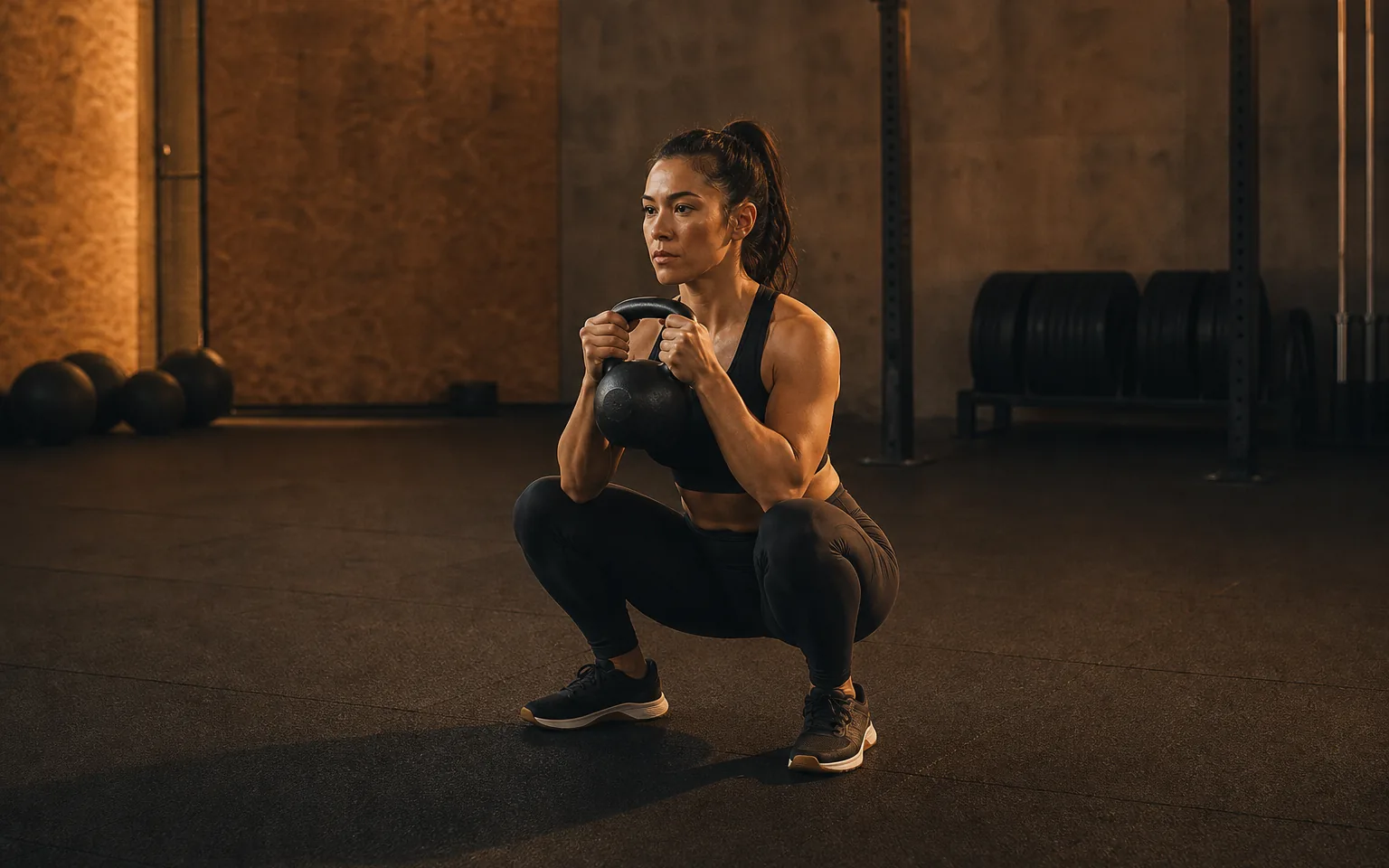
The goblet squat trains your thighs and glutes while the bell gives your upper body a counterweight. It’s a good first move because you can slow down, find a steady stance, and focus on depth before adding speed.
| What to check | Useful cue | Make it easier |
|---|---|---|
| Bell position | Hold it close to your chest | Use body weight |
| Squat depth | Lower only as far as you can stay steady | Use a chair as a target |
| Knees | Keep them pointed in line with your toes | Use a narrower range |
Stand with your feet about shoulder-width apart. Hold the bell by its horns near your chest, sit your hips down between your legs, then press through your feet to stand. Don’t force a deep squat if your heels lift or your back rounds.
For a lighter first session, use a chair to set your depth. The goal is a repeatable squat, not a dramatic one.
2. Kettlebell Swing: Train the Hip Hinge
The swing works your glutes and hamstrings through a fast hip hinge. Keep this move only if you already know how to hinge and can control the bell. For a new lifter, use the kettlebell deadlift in its place.
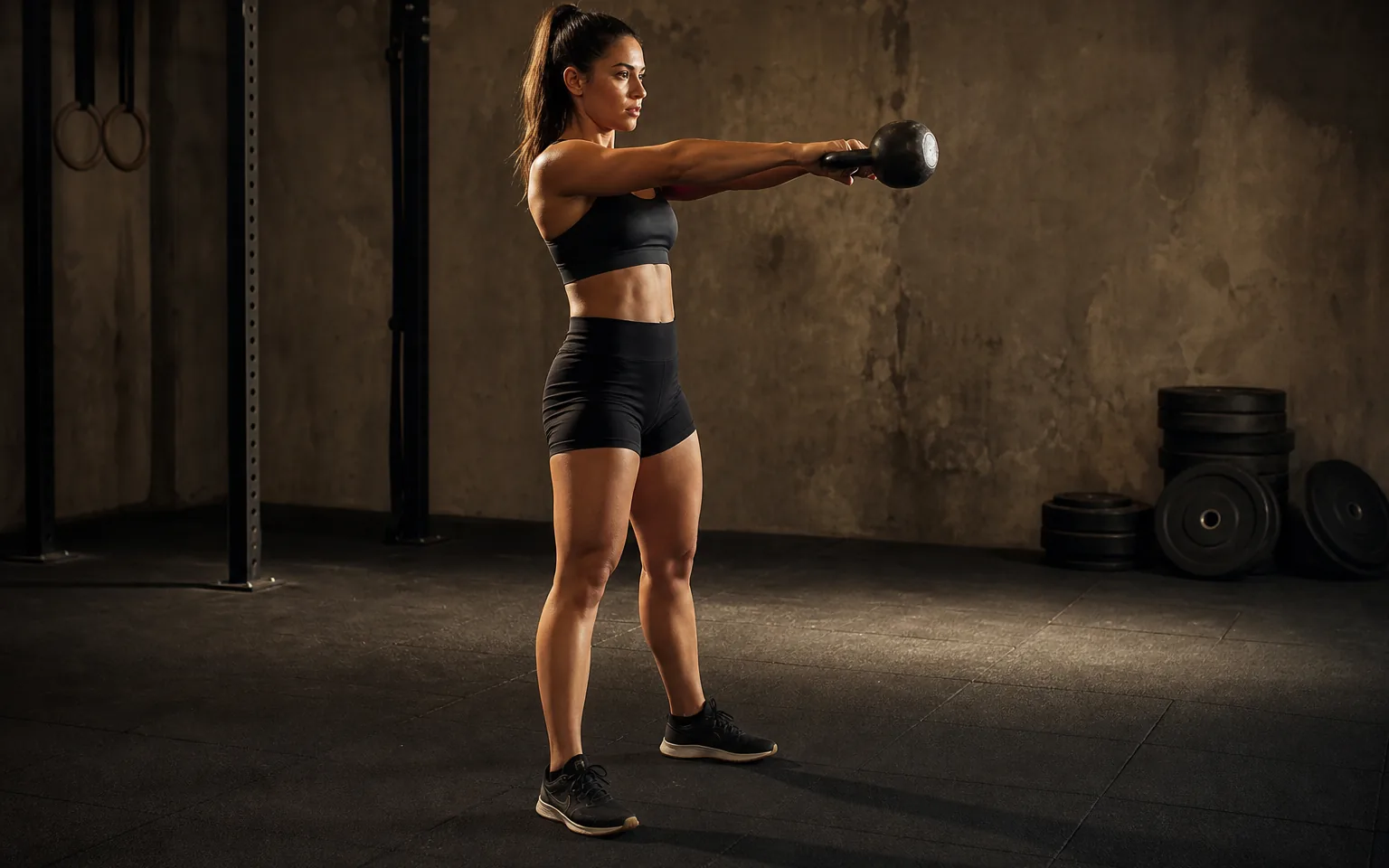
Set the bell a short step in front of you. Hinge back, grip the handle, and hike the bell between your thighs. Snap your hips forward to send it to about chest height. Let your arms guide the bell; your hips create the force.
Keep your knees soft and your back steady. This isn’t a squat, and it isn’t a front raise. Stop the set if the bell pulls you out of position or you feel sharp pain. A controlled deadlift is a better choice than a swing you can’t manage.
3. Bent-Over Kettlebell Row: Strengthen Your Back
The bent-over row trains your upper back and arms. It also asks your trunk to stay still while one side works, so use a stance that lets you brace without twisting.
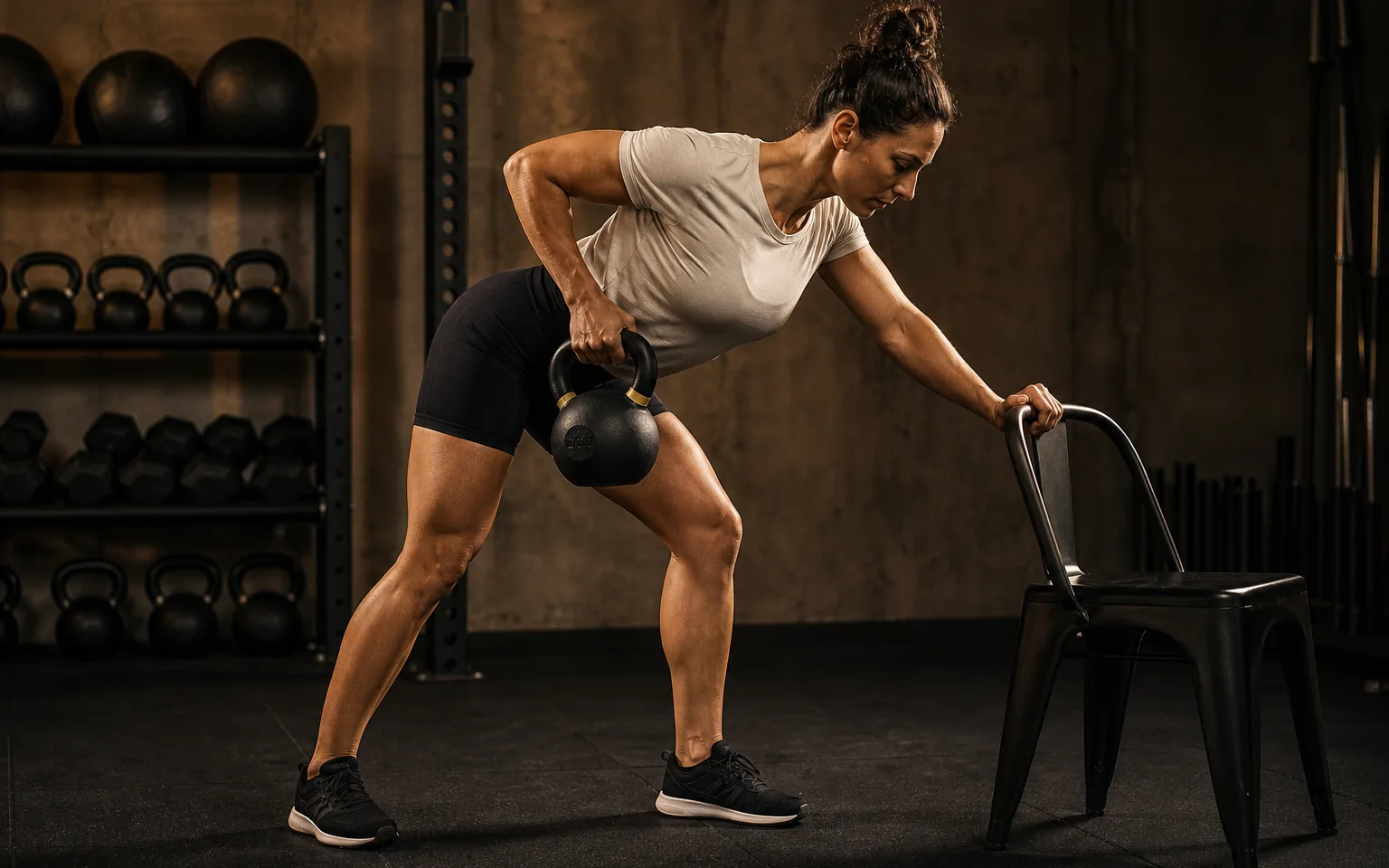
Hinge at your hips and rest your free hand on your thigh or a sturdy chair. Let the bell hang below your shoulder. Pull your elbow toward your hip, pause briefly, then lower the bell with control. Keep your spine long and your shoulders away from your ears.
For the 40-second interval, switch arms halfway through. If holding the hinge becomes tiring, stand up to reset before you row again. You can also use a lighter bell and make each rep slower.
4. Half-Kneeling Kettlebell Press: Build Overhead Strength
This press trains your shoulder and triceps while the half-kneeling stance makes it harder to lean back. Choose a bell you can press smoothly. If the position bothers your knee, stand and use a lighter load.
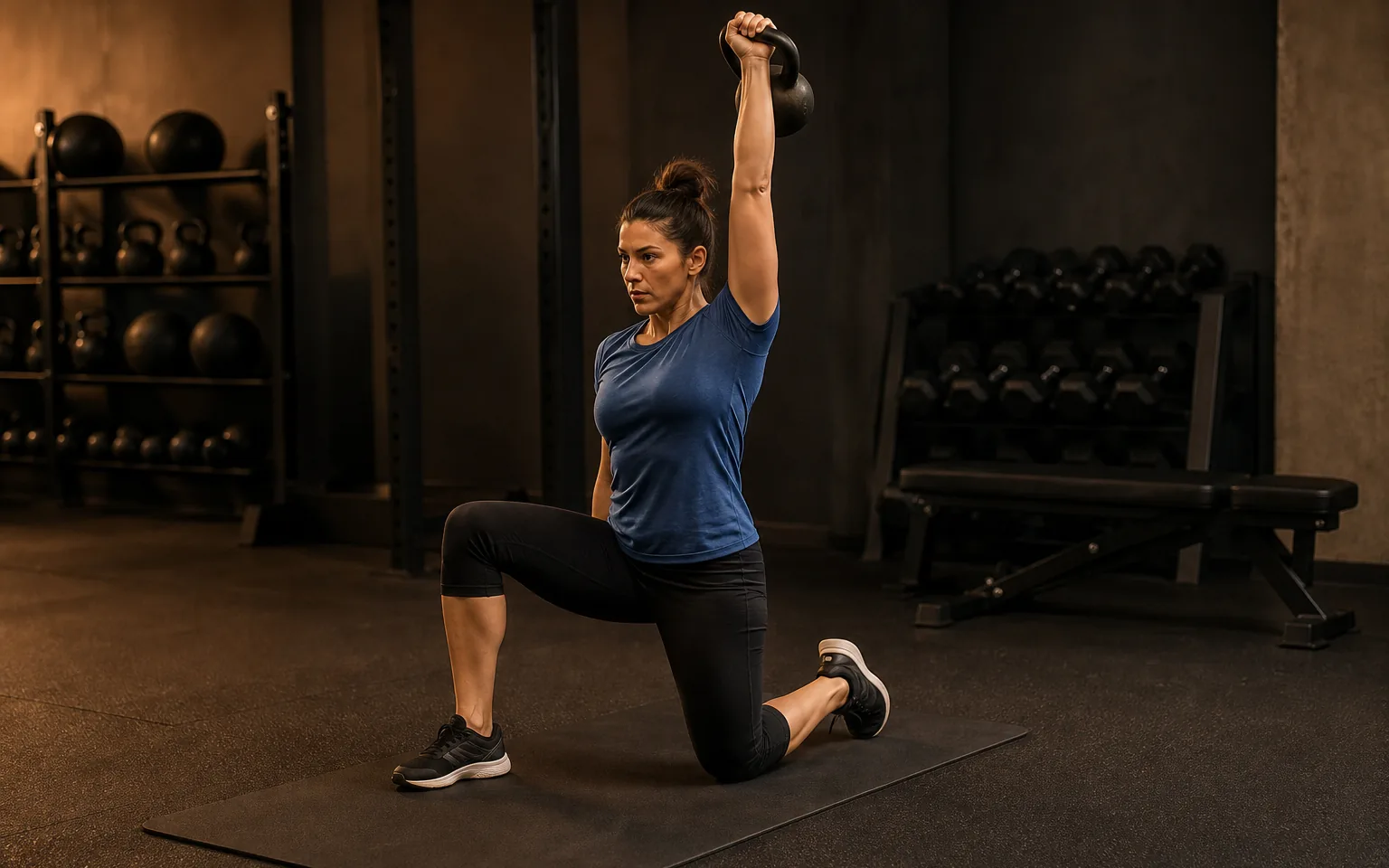
Kneel with one foot forward and the other knee on a mat. Hold the bell at your shoulder on the same side as the knee that’s down. Brace your middle, squeeze your glutes, and press overhead without arching your lower back. Lower to your shoulder under control.
Switch sides halfway through the work period. A press doesn’t need to be fast to count. If you can’t keep your wrist straight or your ribs stacked over your hips, reduce the weight or do the movement without a bell.
5. Kettlebell Deadlift: Practice a Strong Hip Hinge
The deadlift is the steady version of a hip hinge. It trains your glutes and hamstrings, and it’s a useful swap for swings when you’re learning the movement or want less speed in your workout.
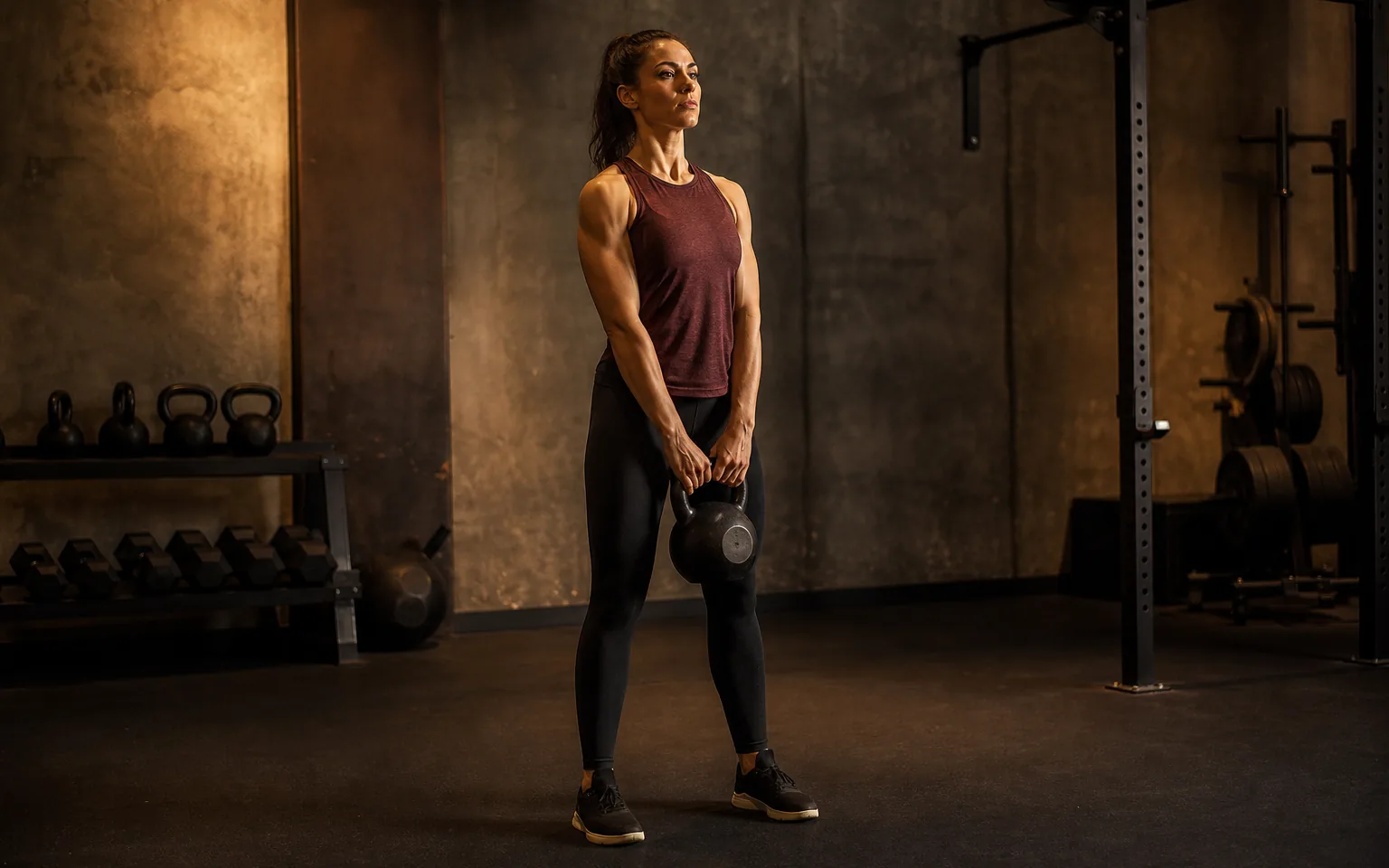
Place the bell between your feet. Push your hips back, bend your knees enough to reach the handle, then stand by pressing through your feet and bringing your hips forward. Keep the bell close to your body. Reverse the same path to set it down.
Pause at the bottom if you need to reset your back and grip. Don’t rush the return to the floor. Once each rep feels smooth, you can use the full 40-second interval at a calm pace.
6. Kettlebell Clean: Bring the Bell to the Rack Position
The clean moves the bell from between your legs to the rack position at your shoulder. It takes timing, so it belongs in this circuit only if you’ve practiced it. Beginners can repeat the deadlift instead.
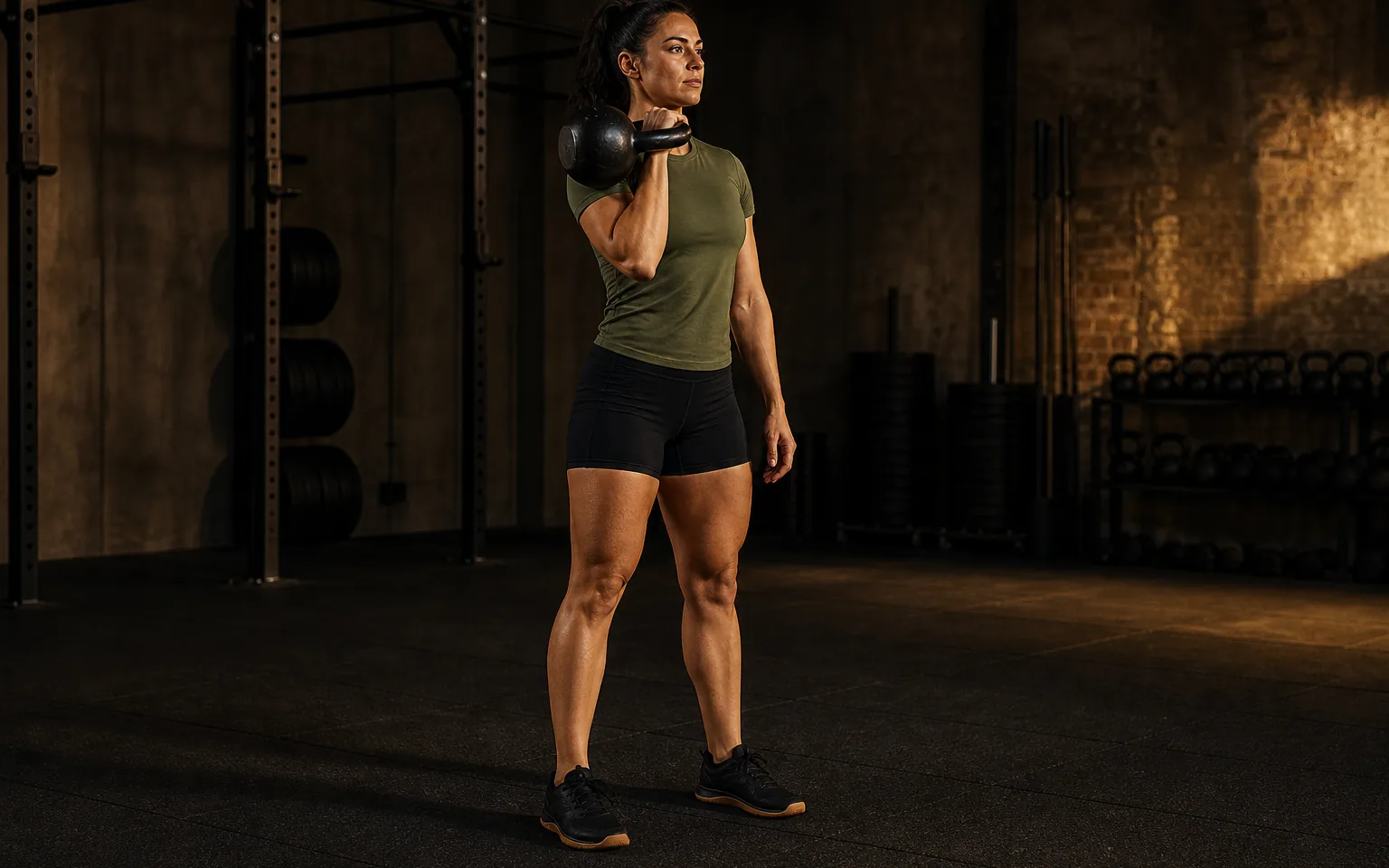
Start with the bell between your feet. Hinge and guide it close to your body as your hips drive forward. Let your hand move around the handle so the bell settles against your forearm, rather than flipping over and thumping your wrist. Keep your grip relaxed enough to let the bell turn.
Practice a few slow reps before the timer starts. Alternate arms halfway through. If the bell bangs your forearm or you lose control on the way down, stop and choose a deadlift for that round.
7. Reverse Lunge with Kettlebell: Add Single-Leg Strength
A reverse lunge trains one leg at a time and gives you a chance to work on balance. Holding the bell at your chest adds load, but body weight is enough while you learn the step.
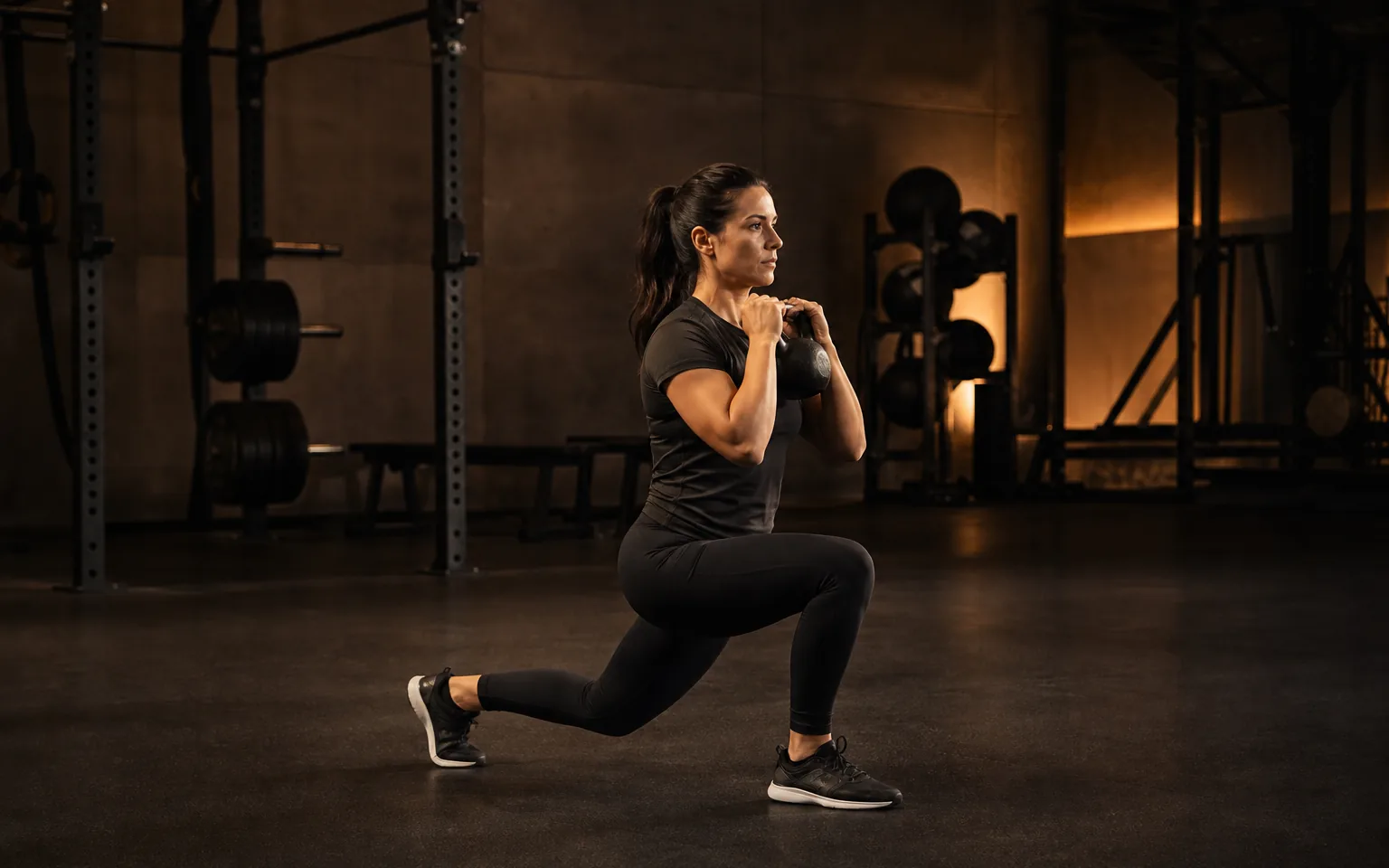
Stand tall with the bell held close to your chest. Step one foot back, lower until both knees bend as much as feels steady, then push through the front foot to return. Keep your front knee tracking in line with your toes. Alternate sides during the interval.
If your balance wobbles, hold a wall or chair with your free hand. You can also shorten the step or tap your back foot down without lowering far. Skip the bell if it makes the movement harder to control.
8. Kettlebell Floor Press: Train Your Chest at Home
The floor press works your chest and triceps without a bench. The floor limits how far your upper arm can travel, which can make the movement easier to manage in a small workout space.
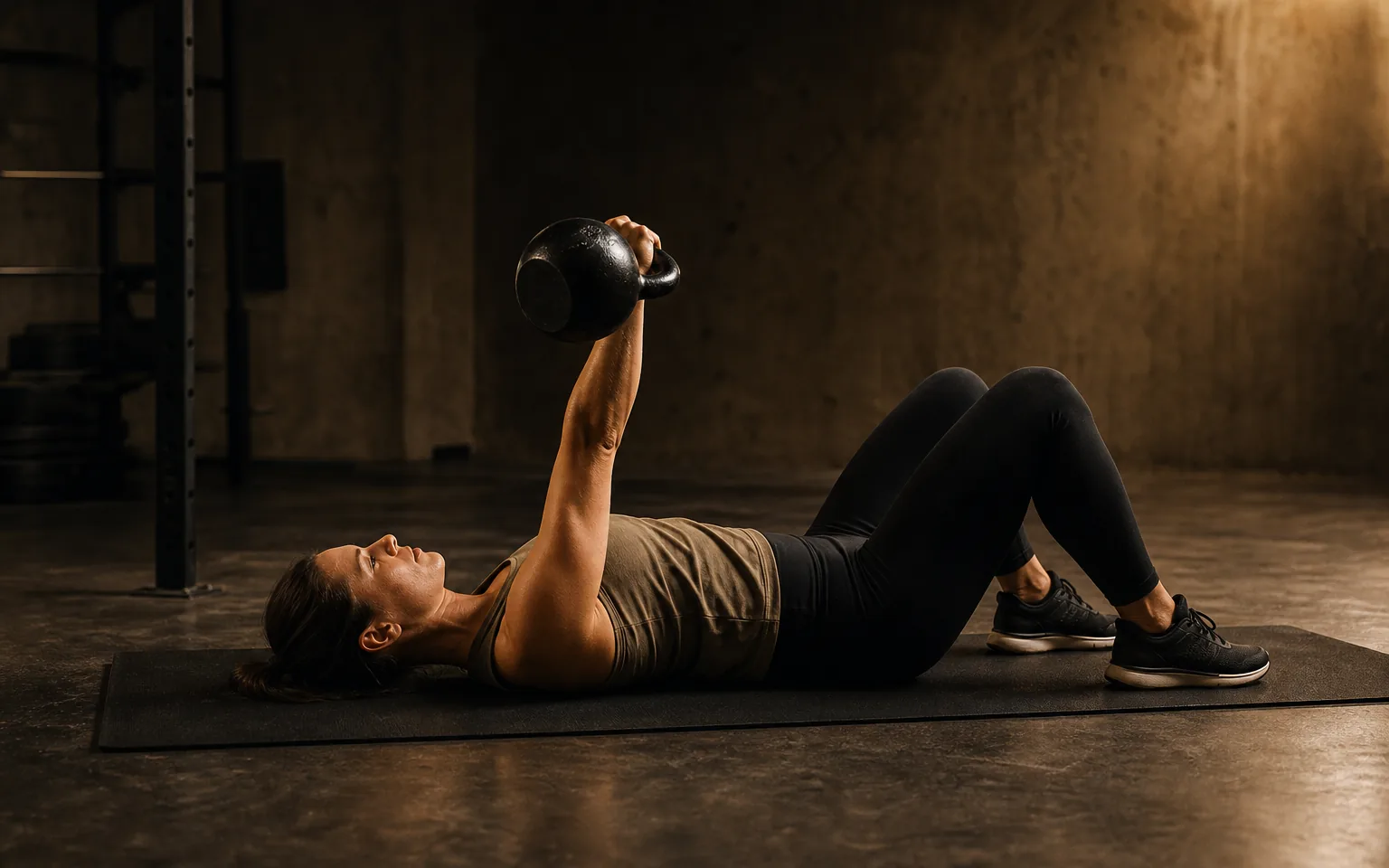
Lie on your back with your knees bent. Hold the bell securely beside your chest, with your wrist straight. Press it above your shoulder, then lower until your upper arm touches the floor. Do one side at a time, and use your free hand to help guide the bell into position if needed.
Switch arms halfway through. If getting into or out of the starting position feels awkward, skip the loaded version and do a slow push-up against a wall. Never try to catch a bell that’s slipping.
9. Kettlebell Romanian Deadlift: Challenge the Hamstrings
The Romanian deadlift focuses on the back of your legs and glutes. Unlike the floor deadlift, you keep a small bend in your knees and stop the bell before it reaches the floor.
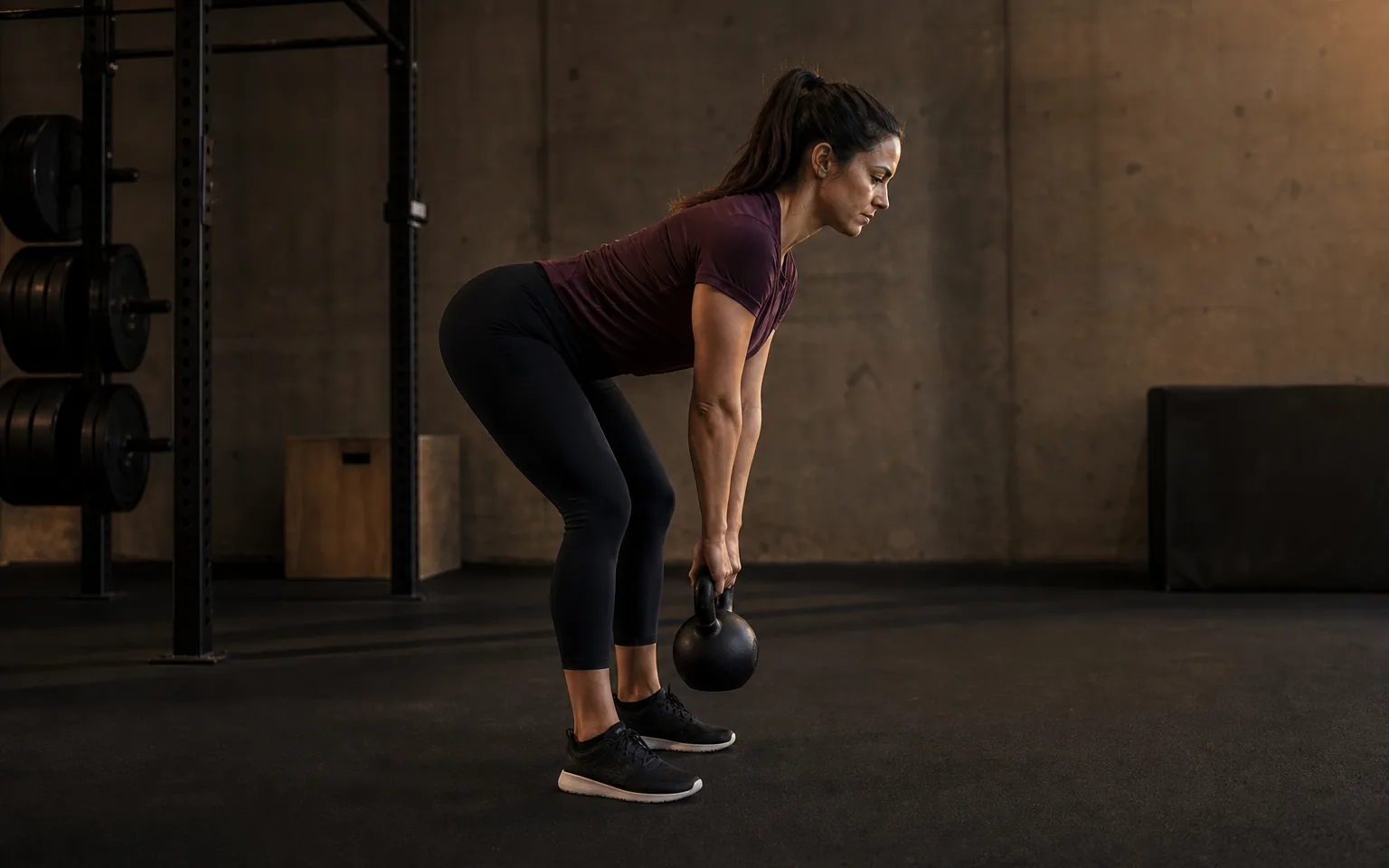
Hold the bell with both hands in front of your thighs. Soften your knees, push your hips back, and lower the bell along your legs. Stop when you feel a stretch in your hamstrings while your back stays steady. Stand by bringing your hips forward.
Keep the range short if you feel your lower back rounding. You don’t need to reach the floor for the rep to count. If your grip or back tires, put the bell down and finish the interval with body-weight hip hinges.
10. Kettlebell Halo: Finish with Controlled Core and Shoulder Work
The halo moves the bell in a slow circle around your head. It works your shoulders and asks your trunk to stay braced. Use a light bell, or practice the motion without weight.
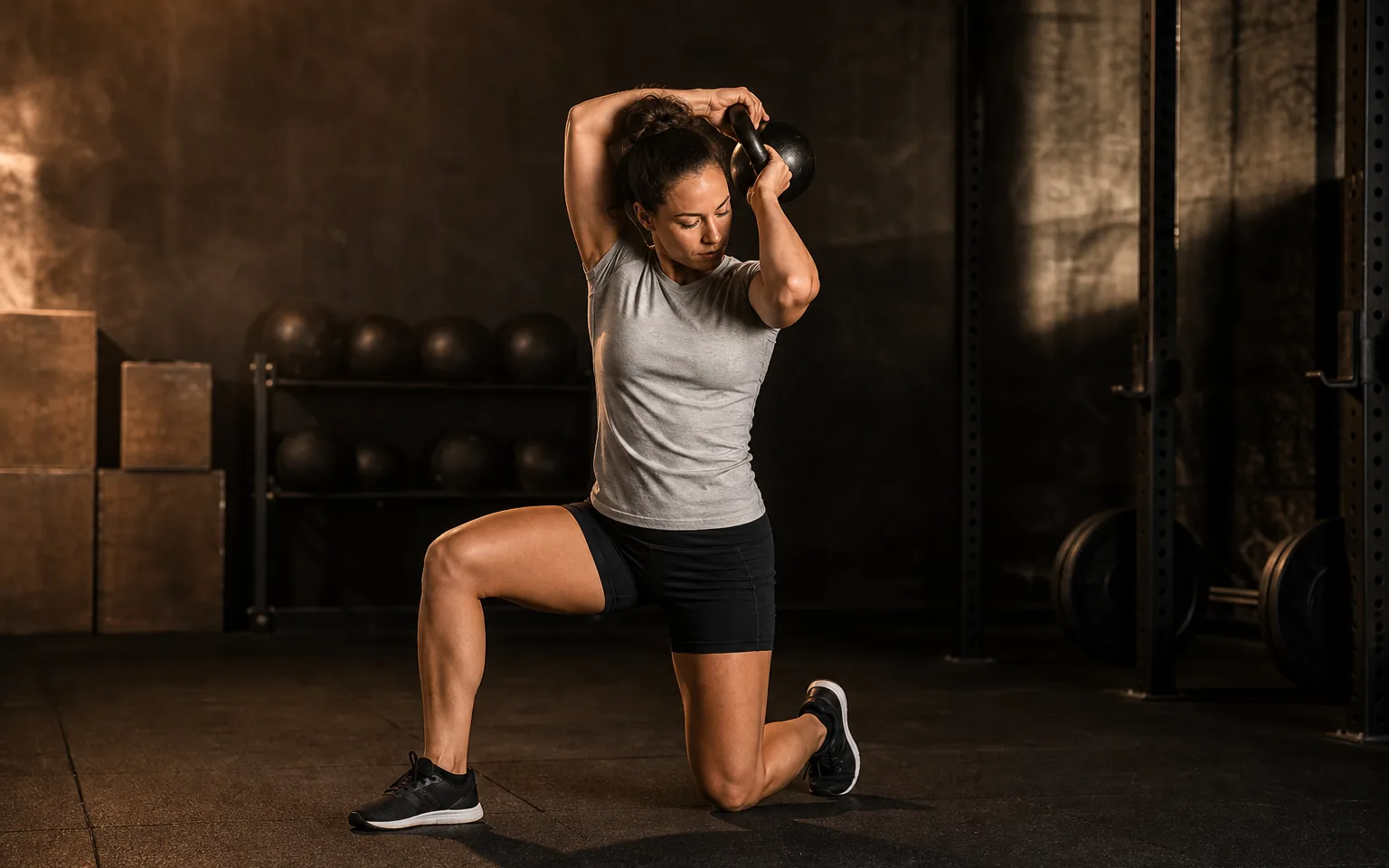
Stand with your feet steady and hold the bell by its horns at chest height. Guide it around your head, keeping it close without touching your neck. Keep your head still and ribs down. After several slow circles, change direction.
Don’t force your shoulder through a range that feels pinched. Smaller circles are fine. Treat this as controlled work, not a race to finish the last interval.
Make the Ten Moves a 30-Minute Workout
Set a timer for 40 seconds of work followed by 20 seconds of rest. Complete all ten moves in order, then repeat the circuit once. That gives you 20 minutes of intervals. Add a five-minute warm-up and a five-minute cool-down for a 30-minute session.
For your warm-up, march in place, circle your arms, practice body-weight squats, and rehearse hip hinges. Move at an easy pace. The goal is to feel ready, not tired before the first round.
For the cool-down, walk slowly until your breathing settles. Then stretch your hips, hamstrings, chest, and shoulders gently. Stop if a stretch causes pain.
This is a low-impact, no-jump circuit, but that doesn’t make every move beginner-friendly. Swings and cleans need skill. If you’re new to kettlebells, replace them with deadlifts and take extra rest when your form needs it. If you have joint pain or a health concern, ask a qualified health professional what’s right for you.
A single workout can fit today’s schedule. A plan helps you decide what to do next week. Hybrid Fit Mom’s six-week Kettlebell Build gives busy women a progressive home schedule, prerecorded demonstrations, an eating framework, and lifetime access through a one-time purchase. Mari’s plan builds skills over time, rather than asking you to stitch together saved workouts.
FAQ
Is a 30-minute kettlebell workout enough for a full-body session?
Yes, a 30-minute kettlebell workout can train your whole body if it includes lower-body, hinge, pull, and press movements. This circuit uses ten exercises with two rounds of timed work. Keep the bell light enough for clean reps, and take a body-weight option when a move is too advanced.
What do I need for a 30-minute kettlebell workout at home?
One kettlebell, a mat or soft surface, water, and enough clear floor space are enough for this 30-minute kettlebell workout. You don’t need two bells. A sturdy chair or wall can help with balance or provide support for a row, but it’s optional.
What interval should I use for a kettlebell circuit?
Try 40 seconds of work followed by 20 seconds of rest for each move. In this 30-minute kettlebell workout, ten intervals take ten minutes, and two rounds fill the main 20-minute block. If you can’t keep good form for 40 seconds, stop early and rest until the next interval.
Can beginners do this kettlebell workout?
Beginners can use the circuit, but should replace swings and cleans with deadlifts until they’ve learned those skills. Choose body-weight squats or lunges when a bell makes your form shaky. The 30-minute kettlebell workout is low-impact, yet good technique still matters more than completing every timed interval.
Conclusion
Use this circuit as a simple home session, and keep the skill-heavy moves optional until they feel steady. If you want a six-week structure beyond one workout, review Hybrid Fit Mom’s program details and choose a start day that works with your week.