Best Kettlebell Workouts for Fat Loss: 5 Options


Kettlebell workouts for fat loss can fit into a busy week, but no single move melts fat on its own. A good session pairs strength with conditioning, then leaves enough in the tank for you to come back.
An analysis of 58 comments from Reddit and YouTube about kettlebell workouts for fat loss found that 34% mentioned specific kettlebell exercises.
Here are five formats, with clear ways to scale the work. Hybrid Fit Mom’s approach is built for women who want a plan, not another saved workout: its six-week program includes progressive home sessions and an eating framework.
1. Kettlebell Swing Intervals: Short, Simple Conditioning
Swing intervals are a conditioning workout built around a hip hinge. They suit you if you know how to hinge without rounding your back and want a short, focused session.
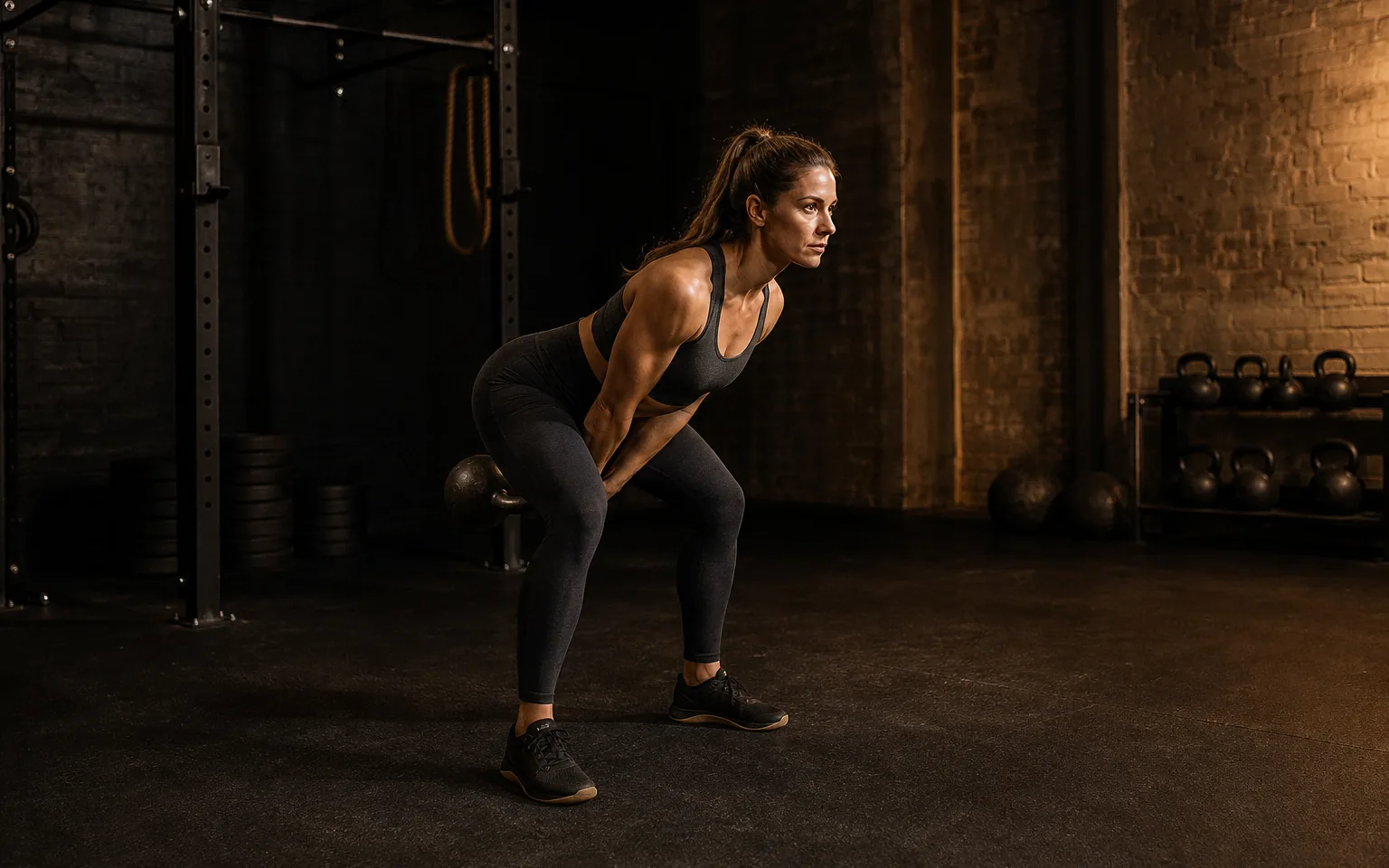
Start with a five-minute warm-up: brisk marching, bodyweight hip hinges, and easy squats. Then do 10 swings at the start of each minute for 10 minutes. Rest for whatever time remains in each minute. If your hinge stays crisp, try 12 reps next time. Don’t add reps and weight at once.
To swing, stand with the bell a foot in front of you. Push your hips back, grip the handle, and hike the bell between your thighs. Snap your hips forward to send it to chest height. Let your arms guide the bell; they shouldn’t lift it. At the top, stand tall without leaning back.
Stop the set if the movement turns into a squat or your back starts to round. If swings are new, practice kettlebell deadlifts first. They teach the hinge without the fast bell path. You can find more pace ideas in these kettlebell swing workouts for busy women.
Hard intervals raise your breathing rate, but they don’t guarantee fat loss. A consistent eating pattern still matters. A balanced weekly plan can include both strength work and aerobic activity. Use intervals as one part of your week, not your whole plan.
2. Clean-and-Press Complex: Strength Work With Flowing Transitions
A clean-and-press complex links two moves on one side before you switch arms. It’s for you if you already know the rack position and can press overhead without leaning back.
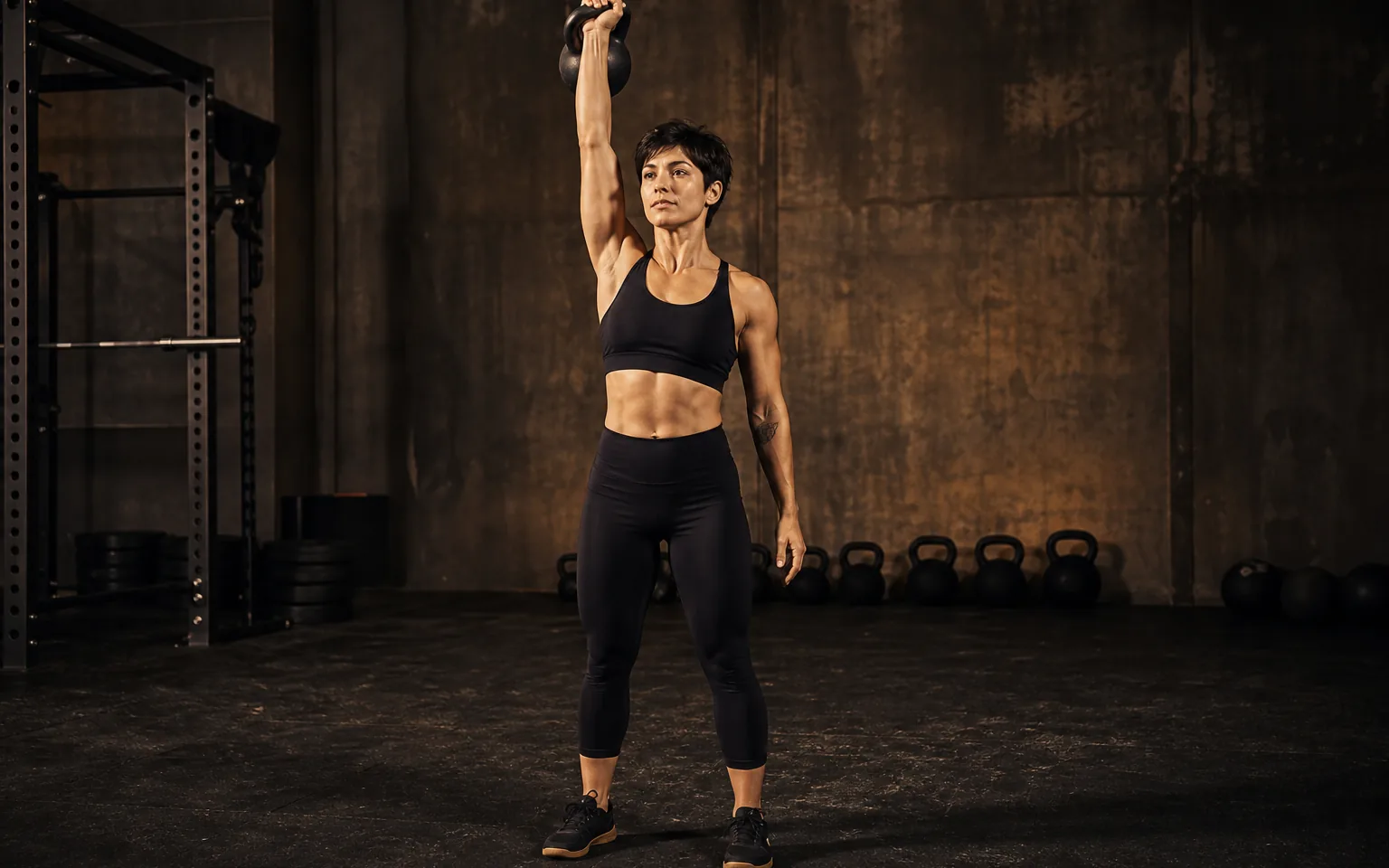
Try three rounds of five clean-and-press reps per arm. Rest 60 to 90 seconds between rounds. A clean brings the bell from a low position to the front of your shoulder, where it rests close to your body. From there, press overhead until your arm is straight and your wrist stays stacked above your shoulder.
For a clean, hike the bell between your legs, then drive through your hips. Keep the bell close as it rotates around your hand into the rack. Don’t let it flip over and bang your forearm. Brace your midsection before each press. If your ribs flare or you lean away from the bell, reduce the load or use a half-kneeling press.
Complexes cut down on pauses, so they can feel more like conditioning than straight strength work. Still, don’t race the transitions. Your weakest move sets the pace and the weight. If the press gets shaky, put the bell down and rest before continuing.
Keep this option for a day when you feel alert. A clean and press asks for more timing than a deadlift or goblet squat. If you’re building toward a longer sequence, add only one new move after the current pair feels steady for a few sessions.
3. Goblet Squat and Deadlift Circuit: A Strength-Focused Starting Point
This circuit builds basic squat and hinge strength with simple transitions. It’s a good fit if you’re new to training with a kettlebell or prefer controlled reps over fast intervals.
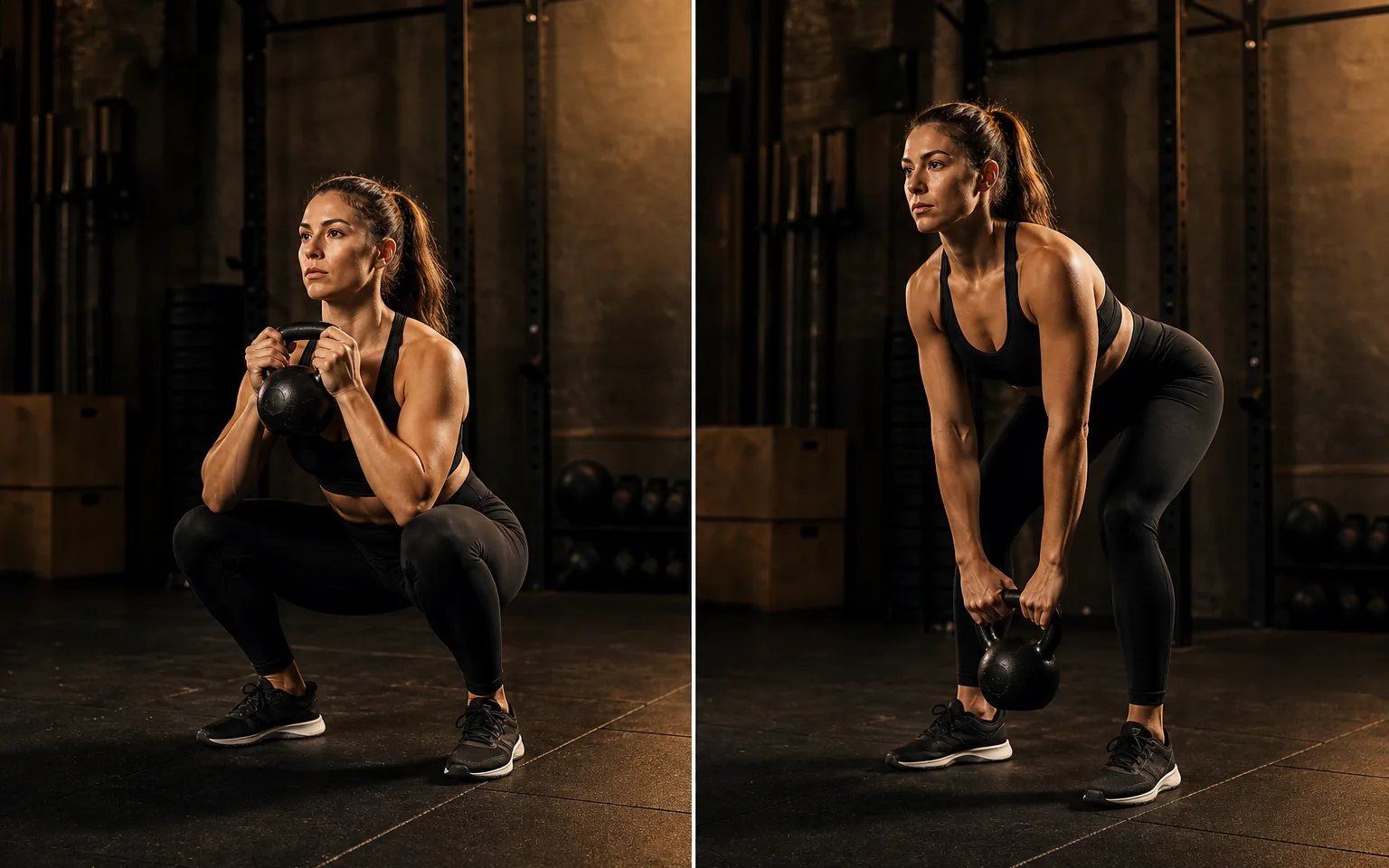
Do 8 goblet squats, then 10 deadlifts. Rest for about a minute and repeat for three rounds. Hold the bell close to your chest for the squat. Sit between your hips while keeping both feet planted. Stand by pressing through the floor. For the deadlift, set the bell between your feet, push your hips back, and stand with the bell close to your legs.
Use a load that lets you keep the same shape on the last rep as on the first. A simple starting check: pick a bell you could deadlift for 10 clean reps, then progress gradually. For more home training formats, see these full-body kettlebell workouts for busy women.
To make the circuit easier, do six reps of each move and rest longer. To make it harder, add a fourth round before you add weight. Keep at least a couple of good reps in reserve; grinding through a rep with a rounded back is not useful progress.
Strength work can help you maintain muscle while you work toward fat loss. It does not need to leave you breathless to count. A moderate pace gives you room to focus on depth, balance, and a steady brace. That’s a solid starting point if saved workouts have left you unsure what to do next.
4. Single-Arm Row, Reverse Lunge, and Carry Circuit: Unilateral Work With Low-Impact Options
This circuit works one side at a time and can stay low impact. Choose it if you want a quieter session or need to avoid jumping and fast swings.
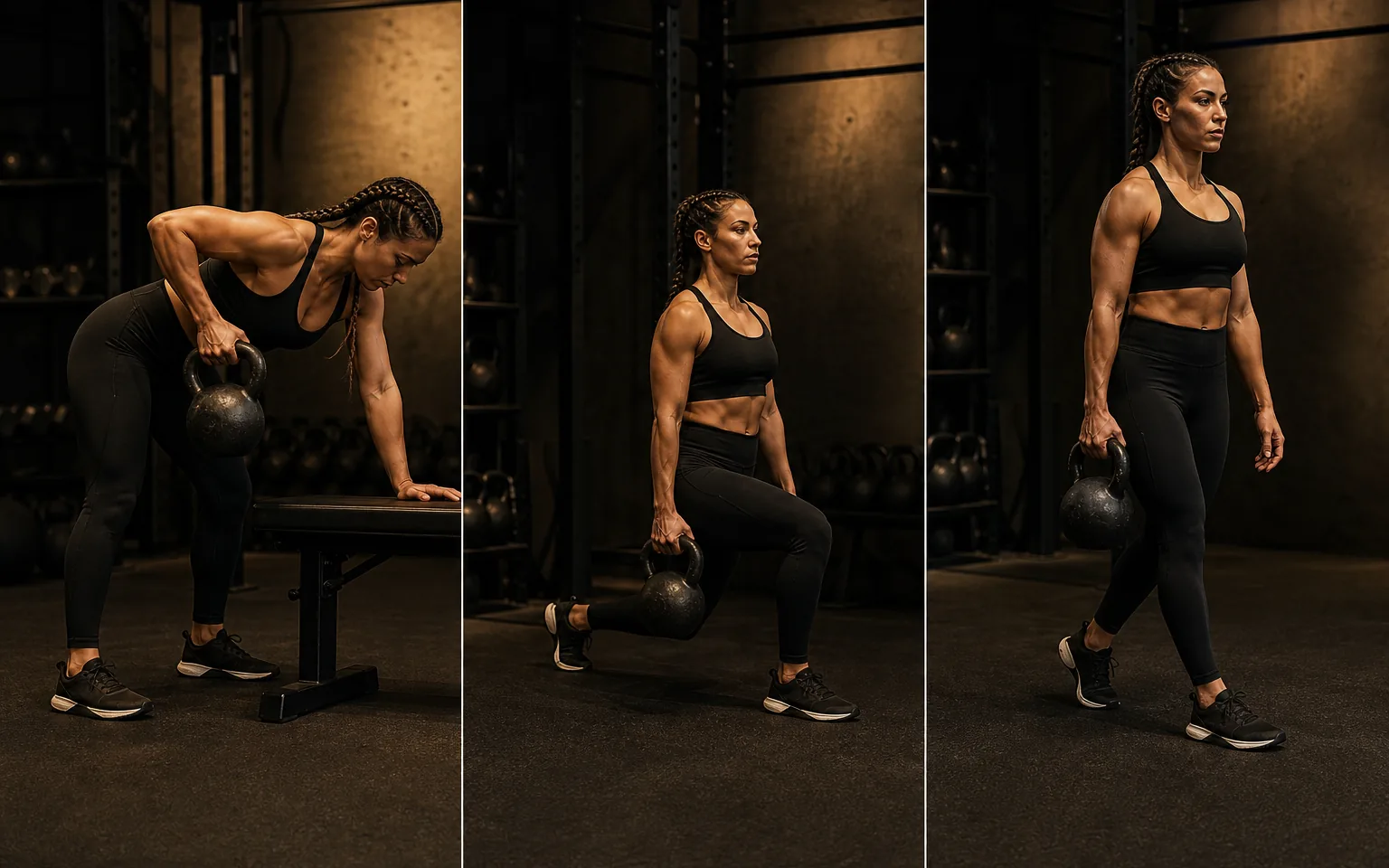
Complete 8 rows on each side, 6 reverse lunges per leg, then a 30-second suitcase carry on each side. Repeat for three rounds, resting as needed. For the row, hinge forward with one hand braced on a sturdy surface. Pull the bell toward your hip without twisting your trunk.
For a reverse lunge, step one foot back and lower only as far as you can control. Keep your front foot flat, then push through it to stand. If balance feels off, hold a wall or chair with your free hand. For the carry, hold the bell at your side and walk slowly. Keep your shoulders level rather than leaning toward the load.
This setup gives you several ways to scale effort: shorten the carry, use a shallower lunge, or rest between exercises. A row and a carry train your grip, so set the bell down if your hand starts to open. Sloppy reps are a poor trade for a few extra seconds.
Clear the space around you before carrying or lunging. If an injury or health condition affects your training, check with a qualified health professional about which exercises are safe for you. When in doubt, get guidance from a qualified health professional before adding load.
5. Kettlebell EMOM: A Clear Time Limit for Busy Training Days
An EMOM means “every minute on the minute.” You start a set when each minute begins, then rest for the time left. This format suits you if a defined finish time makes it easier to fit training around work or family.
Try this 12-minute version. On odd minutes, do 10 two-hand swings. On even minutes, do 8 goblet squats. Start with fewer reps if you need more than 40 seconds to finish a set. You should have time to breathe and reset before the next minute starts.
Each move has a clear job. Swings train a fast hip hinge; squats train a controlled bend at the knees and hips. Keep the same bell for both only if it feels manageable for each movement. If your squat form suffers, choose a lighter bell or reduce the reps.
Write down your reps and how much rest you had. Next session, repeat the same plan and look for clean, steady work. Only then consider adding one or two reps to a minute. Keep the clock honest, but don’t let it talk you into rushing.
EMOMs work well at home because they need little setup. But a timer won’t fix a movement you haven’t learned. Practice a lift on its own first, especially a swing or clean, and build the timed version once you can control the bell.
Compare the 5 Kettlebell Workouts by Time, Skill, and Training Feel
Pick the format you can repeat, not the one that looks hardest on paper. This comparison can help you match a session to your skill and energy on a given day.
| Workout | Suggested work | Skill level | Best fit |
|---|---|---|---|
| Swing intervals | 10 minutes, 10 reps each minute | Hinge practice needed | Short conditioning |
| Clean-and-press complex | 3 rounds, 5 reps per arm | Intermediate | Strength with flowing transitions |
| Goblet squat and deadlift | 3 rounds, 8 squats and 10 deadlifts | Beginner-friendly | Controlled strength work |
| Row, lunge, and carry | 3 rounds, both sides | Beginner to intermediate | Low-impact training |
| EMOM | 12 minutes, alternating moves | Match moves to skill | Training with a firm time cap |
These times cover the work, not your warm-up or cool-down. Leave five minutes before training to practice easy hinges and squats. Afterward, walk at an easy pace and let your breathing settle. The full session may take longer than the work clock.
For a simple four-week build, train two or three days each week with a rest day between harder sessions. In week one, use two rounds and learn the moves. In week two, use three rounds. In week three, keep the rounds and add a small amount of work only if your form stays firm. In week four, repeat the best-tolerated week or ease back if you feel run down.
Fat loss depends on your overall energy balance, not a special kettlebell effect. Pair training with an eating pattern you can maintain and enough food to support your day. Hybrid Fit Mom’s six-week Kettlebell Build pairs progressive workouts with an eating framework, so training and food guidance sit in one plan. Its structure includes four sessions per week, with three sessions around 30 to 40 minutes and a shorter core day.
There’s no need to choose kettlebells over all other cardio. Walking, cycling, or another form of steady movement can fit on a non-lifting day.
Frequently Asked Questions
How often should I do kettlebell workouts for fat loss?
Two or three kettlebell sessions per week is a reasonable starting point for many people. Leave a rest day between demanding sessions, especially when swings or complexes are new to you. You can add walking or other easy movement on other days. Adjust the schedule if soreness or fatigue makes it hard to keep good form.
Can kettlebell workouts help me lose belly fat?
Kettlebell training can support overall fat loss, but it can’t target fat from one body area. Swings, squats, and presses challenge your muscles and add activity to your week. Changes in body fat depend on your broader habits, including food intake and regular movement. Judge progress over time rather than by one workout or one weigh-in.
What kettlebell weight should I start with?
Choose a bell you can control for the move you’re doing. For a simple check, use a weight you could deadlift for 10 clean reps. Presses may need a lighter bell than deadlifts. If your back rounds, your wrist bends, or you can’t finish a rep smoothly, reduce the load or practice with an easier variation.
Is a kettlebell EMOM good for beginners?
It can be, if you already know the movements and keep the rep count low enough to preserve form. Start with a simple move such as a goblet squat or deadlift. Set the timer for fewer rounds and rest for the rest of each minute. Learn swings separately before adding them to a fast-paced workout.
Conclusion
Start with the goblet squat and deadlift circuit if you want the clearest path into training; choose intervals once your hinge is steady. For a schedule that builds across weeks, take a look at the kettlebell programs for women and busy moms, then pick two training days for this week and put them on your calendar.