Best Kettlebell Flow Workout Ideas for Home

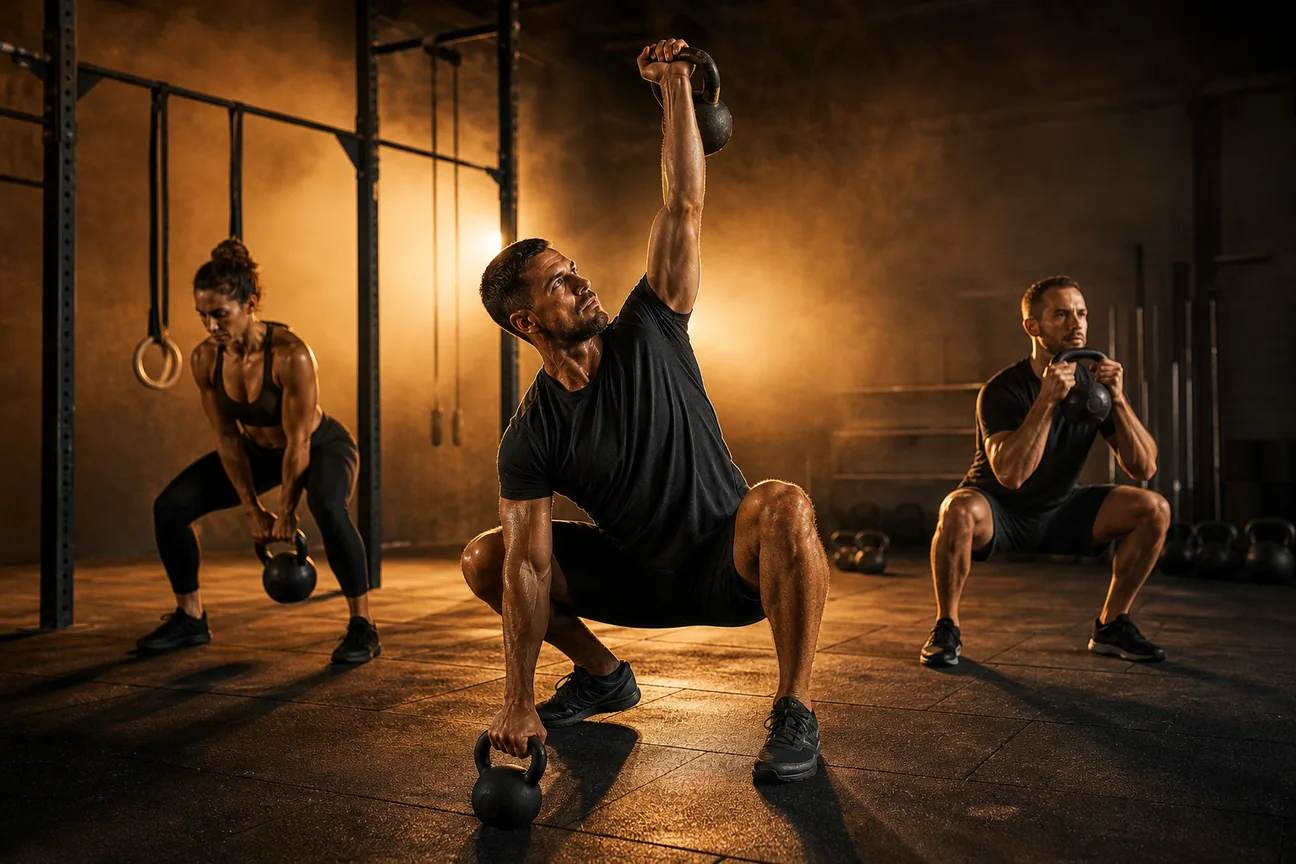
A kettlebell flow links moves into one steady sequence, so you spend less time resetting between exercises. These five home workout ideas range from basic swings and squats to more challenging cleans, presses, and carries. Hybrid Fit Mom’s six-week plan adds a set schedule for women who want more structure than a saved workout.
An analysis of 25 comments from YouTube and Reddit about kettlebell flow workouts found that 40% mentioned the specific movements performed.
1. Two-Hand Swing-Goblet Squat Flow - Simple Conditioning
This flow alternates a two-hand swing with a goblet squat. It suits you if you know the hip hinge and want a short conditioning block without a complex sequence.
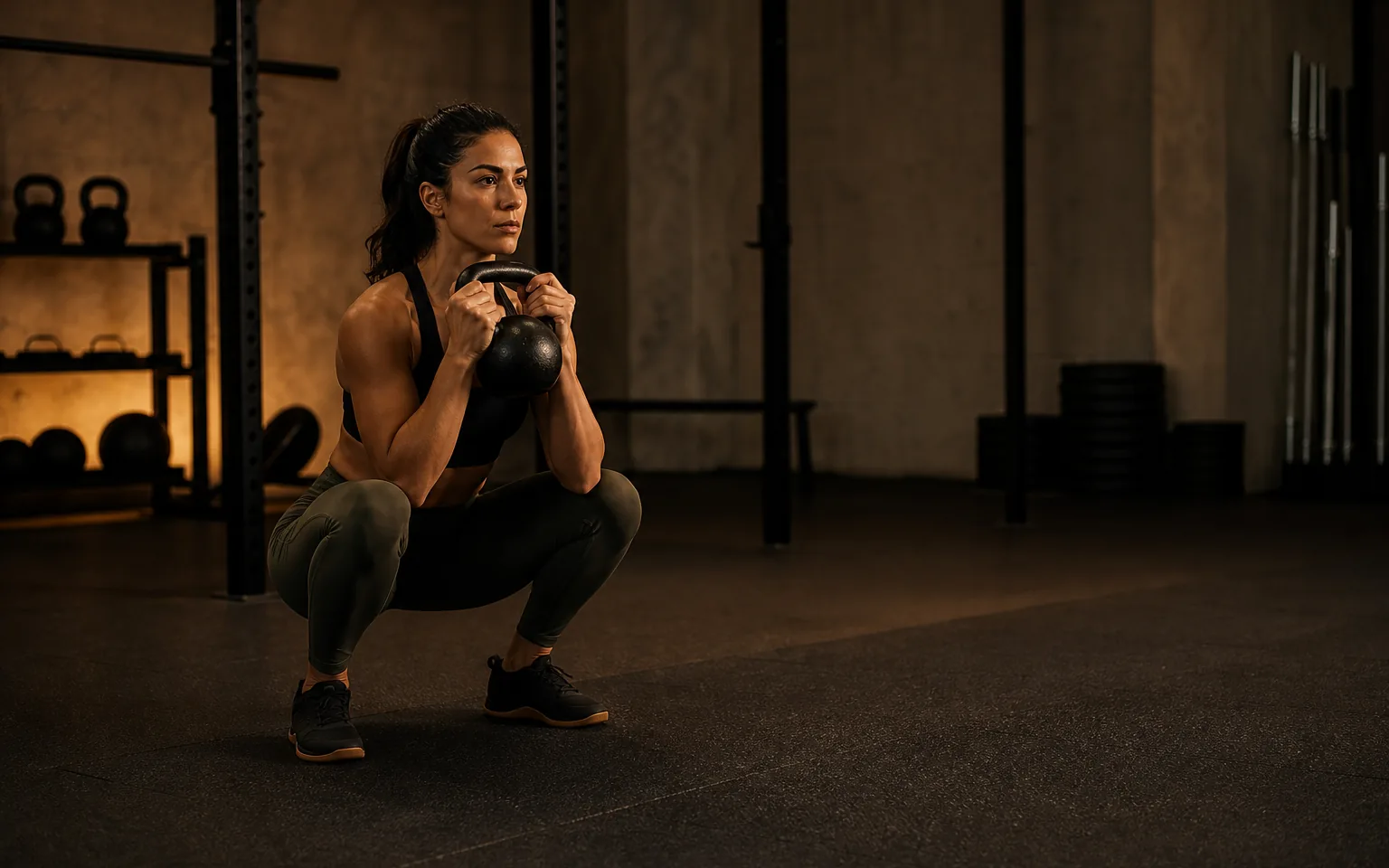
Start with five swings. Set the bell down with control, then pick it up at the horns and do five goblet squats. That’s one round. Rest until you can speak in a full sentence, then repeat for three to five rounds. If you want a timed option, set a timer for eight minutes and move at a pace that keeps each rep smooth.
In the swing, push your hips back as if closing a drawer. Then stand tall and let your hips send the bell forward. Your arms guide the bell; they shouldn’t lift it like a front raise. Keep the bell’s path close to your body. For the squat, hold it near your chest and keep your elbows tucked.
Use a lighter bell and fewer reps for a warm-up. A steady pace makes this a conditioning session; a heavier bell with longer rests makes it more strength-focused. A flow uses one rep or a small number of reps before moving on, while a complex usually keeps you on each exercise for several reps. The kettlebell complex workout ideas can help you compare those formats.
Keep the bell on the floor between moves if your grip starts to fail. The goal is a clean sequence, not a race.
2. Deadlift-Clean-Front Squat Flow - Full-Body Strength
This sequence moves from a deadlift to a clean, then into a front squat. It suits you when you can hinge and squat with control and want to practice the clean without adding an overhead press.
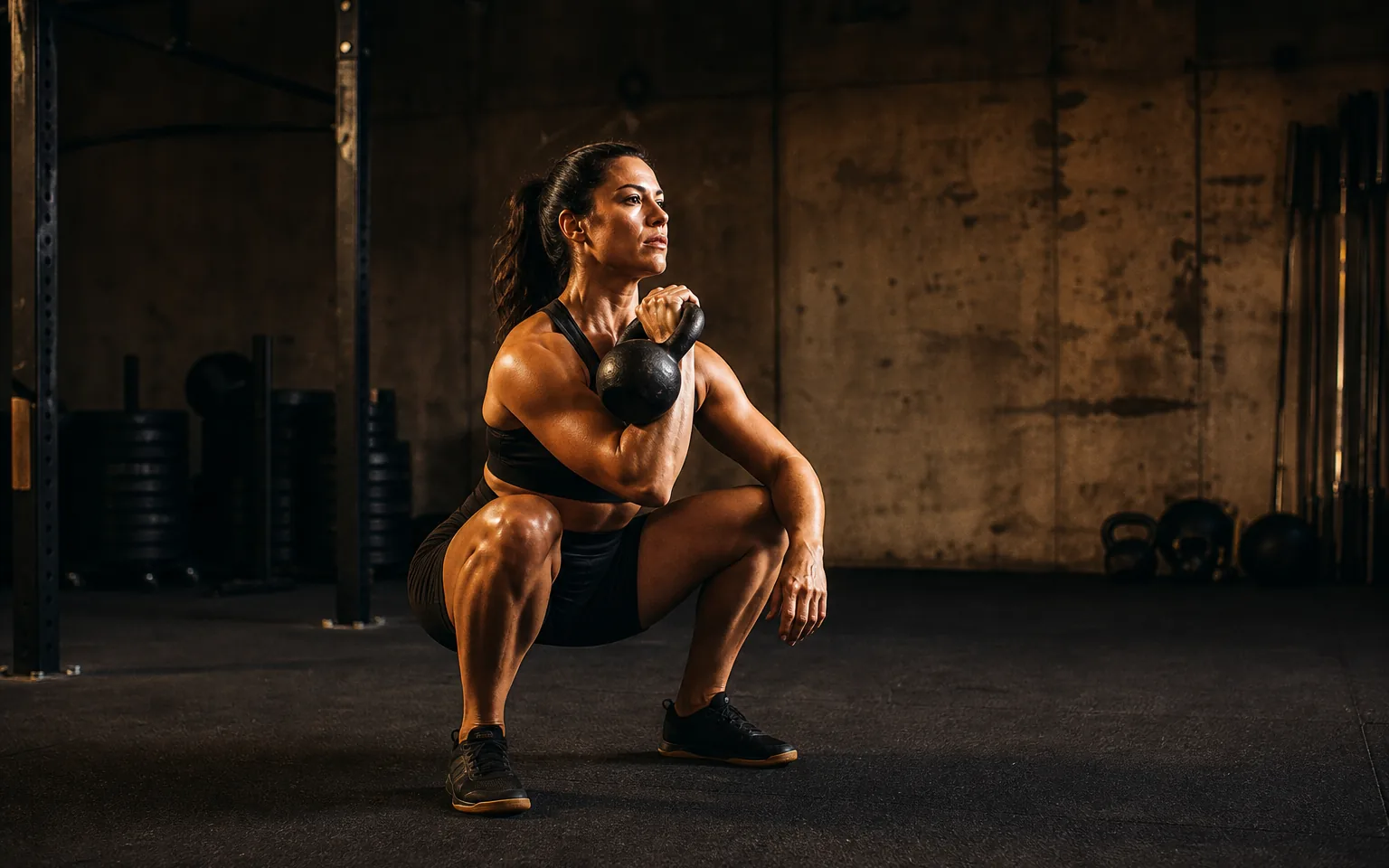
Try three deadlifts, one clean per side, then three front squats with the bell in the rack position. Rest, switch the clean side first next round, and complete three to five rounds. You can also use a simple interval: work for 30 seconds, then rest for 30 seconds. Keep the work period short enough that the clean stays tidy.
For the deadlift, set the bell between your feet and send your hips back. Stand by pressing through your feet. To clean, guide the bell close to your body and let it roll softly around your wrist. Avoid a wide arc that makes the bell bang against your forearm. In the front squat, keep your elbow close to your ribs and your wrist steady. If the rack feels awkward, return the bell to the floor between reps and rehearse the clean on its own.
Hybrid Fit Mom’s six-week program uses one kettlebell and four sessions each week, three of 30 to 40 minutes plus a short core day, with set progression across the block. That gives you a clear schedule when you’d rather follow planned workouts than decide what comes next. For more one-bell session ideas, see these single-kettlebell workouts for busy women.
If you’re learning the clean, practice it by itself before linking it to squats. Skill first. Then build the flow.
3. Clean-Reverse Lunge Flow - Unilateral Leg Strength
This flow pairs a clean with a reverse lunge while the bell stays in the front rack. It suits you if you want each leg to work on its own and can hold the rack without leaning back.
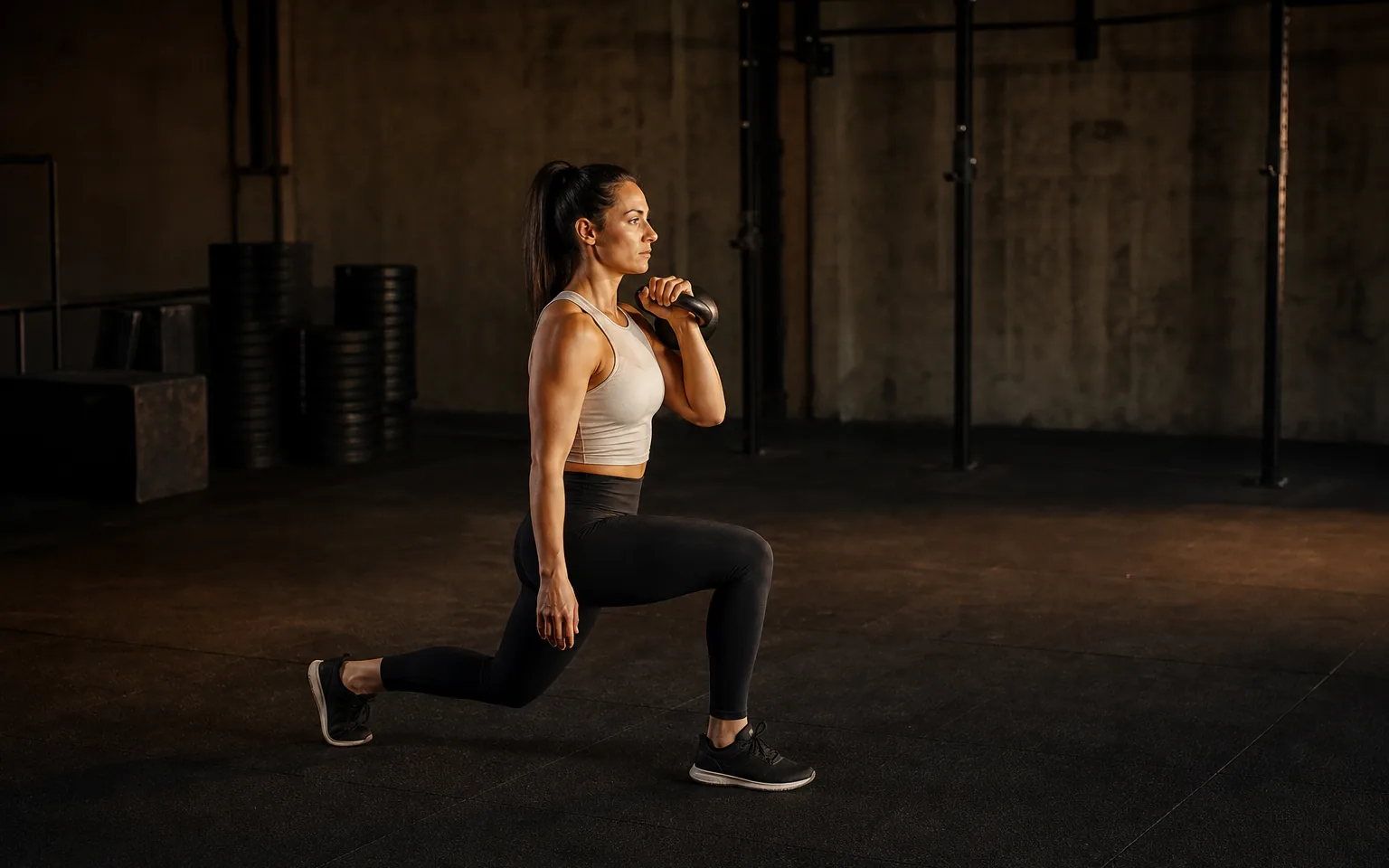
Clean the bell to your right shoulder, then step your left foot back for one reverse lunge. Stand, lower the bell safely, and repeat on the other side. Start with three reps per side for three rounds. If you’re comfortable with the sequence, try five reps per side or set a 30-second work period followed by 30 seconds of rest.
Take a small step back and let both knees bend. Keep your front foot planted. Your torso should stay tall, not tip toward the bell. If the rack pulls you off balance, use a lighter bell or hold it with two hands at chest height. You can also do the lunges without a bell, then add the clean once your steps feel steady.
Choose a load you can clean without yanking with your arm. The bell should travel close to your body, and your elbow should finish near your side. If your forearm takes a hard hit, pause and practice the clean at a slower pace.
This is a strength flow, not a test of how long you can lunge while tired. Rest between rounds if your steps get wobbly. A short pause is useful; a rushed rep is not.
When both sides feel balanced, you can use this as the strength segment of a home session. Keep the same reps on each side so one leg doesn’t quietly get extra work.
4. Clean-Squat-Push Press Flow - Strength With a Cardio Finish
This flow links a clean, front squat, and push press. It suits you if you already know the clean and can press overhead with a steady shoulder. The squat adds leg work; the push press uses a small knee bend to help drive the bell up.
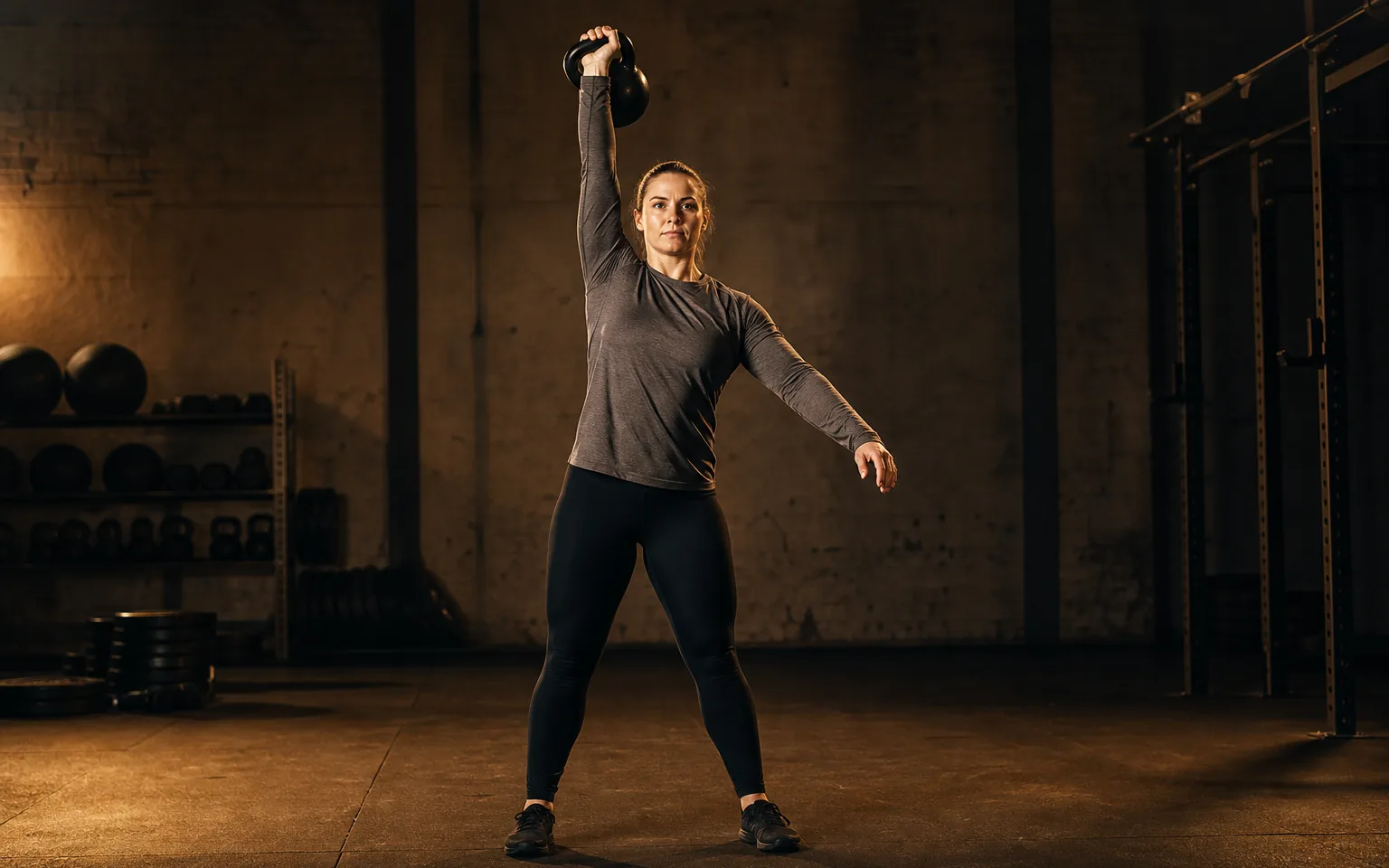
Do one clean, one front squat, then one push press. Lower the bell back to the rack with control. Complete two or three reps on one side, then switch. For a strength focus, use two or three reps per side and rest between sets. For conditioning, try 30 seconds of work and 30 seconds of rest for six rounds, alternating sides.
Before you link the moves, rehearse each one on its own. Start the clean from a hinge, not a squat. Keep your elbow close as the bell rolls into the rack. In the squat, brace your middle and stay tall. For the push press, dip a little, then drive through your legs. Don’t arch your back to reach overhead.
Stop the set if you lose control of the bell or can’t keep your ribs stacked over your hips. A lighter bell may let you move smoothly for longer. A heavier bell may suit short strength sets with more rest.
Once the sequence feels familiar, you can use it as a finisher after slower strength work. If you’re still building the basic patterns, keep this as a few careful practice rounds. You can also compare more conditioning formats in these kettlebell cardio workout ideas.
5. Deadlift-Goblet Squat-Suitcase Carry Flow - Controlled Core Work
This flow combines a deadlift, goblet squat, and one-sided carry. It suits you if you want steady strength work with a core challenge, but would rather skip fast overhead moves.
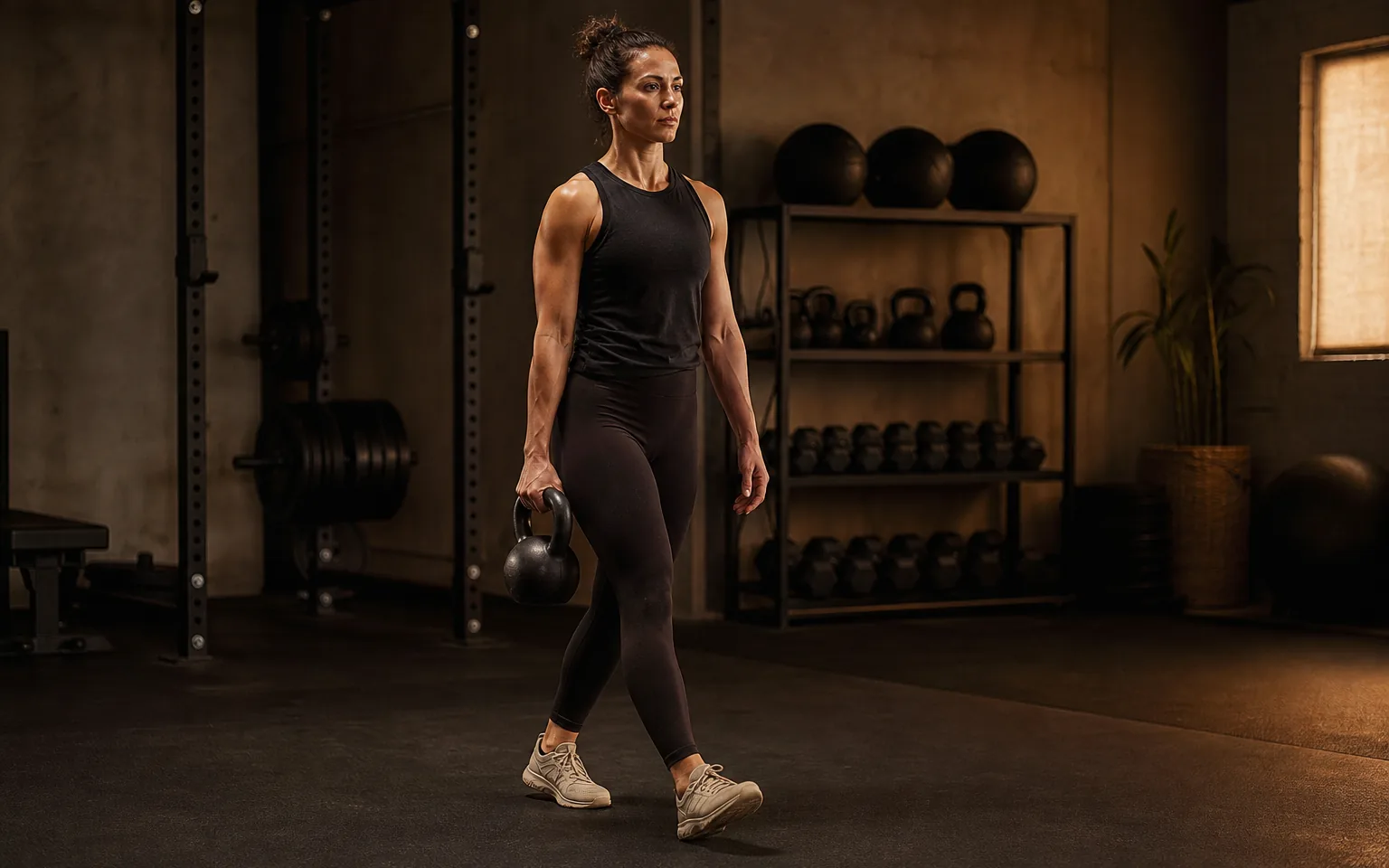
Do five deadlifts, then five goblet squats. Pick up the bell with one hand and walk for 20 to 30 steps. Set it down with control, turn around, and carry it back in the other hand. Complete two or three rounds. If you have limited floor space, march in place for 20 to 30 seconds per side instead of walking.
For the deadlift, keep the bell close to your legs as you stand. In the squat, hold it near your chest. During the carry, stand tall and keep your shoulders level. The weight will pull down on one side; your job is to resist leaning toward it. Switch hands each trip so both sides get similar work.
Keep the walk short enough that you can hold a quiet, steady posture. If your torso tips or your grip slips, set the bell down and rest. You can make the flow harder by adding a round or a few steps, but change one thing at a time.
This pattern also works as an easy strength day between faster sessions. It won’t feel like a cardio sprint, and that’s the point. You’re practicing control under a one-sided load.
Compare These Kettlebell Flow Workouts at a Glance
A kettlebell flow workout links movements with little or no rest between them. Use it as a warm-up with a light bell, as the main strength block with fewer reps and more rest, or as conditioning with timed rounds. The best format is the one you can do with sound form on a busy day.
| Flow | Main focus | Good starting format | Skill to check |
|---|---|---|---|
| Two-hand swing and goblet squat | Conditioning | 5 reps each, 3 rounds | Hip hinge |
| Deadlift, clean, front squat | Full-body strength | 3 deadlifts, 1 clean per side, 3 squats | Bell path in the clean |
| Clean and reverse lunge | One-leg strength | 3 reps per side, 3 rounds | Rack position and balance |
| Clean, squat, push press | Strength and conditioning | 2-3 reps per side | Stable overhead press |
| Deadlift, goblet squat, carry | Core control | 5 reps each, 20-30 steps per side | Upright posture |
Start lighter than you think you need when learning a new transition. Add load only when the bell stays close and each rep feels controlled.
FAQ
What is a kettlebell flow?
A kettlebell flow is a sequence of kettlebell exercises done one after another with little or no rest. For example, you might link a clean, squat, and press. Flows can work as a warm-up, strength block, or conditioning session. Keep the sequence simple enough that you can maintain good form as you move between exercises.
How long should a kettlebell flow workout be?
A short flow can take five to ten minutes when you use it as a warm-up or finisher. For a longer conditioning block, use timed rounds with planned rest and stop if your form slips. If you want a full home plan, Hybrid Fit Mom’s six-week program sets out four sessions per week: three of 30 to 40 minutes and a short core day.
What weight should I use for kettlebell flows?
Use a bell you can control through every movement in the sequence. A weight that works for swings may feel too heavy for a press or clean. Start light while learning transitions, then increase the load only when the bell stays close and your posture remains steady. If you’re unsure, practice the movements separately first.
Can beginners do kettlebell flows?
Yes, if you already know the basic moves and keep the sequence simple. Start with a two-hand swing and goblet squat, or use deadlifts instead of swings while you learn the hinge. Practice one movement at a time before linking them. Leave out cleans or overhead presses until you can do them with control.
Conclusion
Start with the two-hand swing and goblet squat if you want a simple conditioning flow, or choose the carry sequence for slower core work. Pick one, test it with a manageable bell, and write down your reps and rest. If you’d rather follow a plan than build each session yourself, Hybrid Fit Mom offers a self-guided six-week program with home workouts and prerecorded demonstrations.