Best Kettlebell Complex Workout Ideas for Home


Ready to make one kettlebell feel like a full session? A kettlebell complex workout links several lifts with the same bell and no rest between moves. Here are five home-friendly options, plus ways to scale them. Hybrid Fit Mom’s six-week program adds a set schedule for women who want more than saved workouts.
An analysis of 25 comments from YouTube and Reddit about kettlebell complex workouts found that 28% mentioned the workout's intensity.
1. The Full-Body Five-Move Complex: strength from head to toe
This complex pairs a hinge, a clean, a squat, a press, and a row. It suits you if you already know those lifts and want one short sequence that trains your whole body.
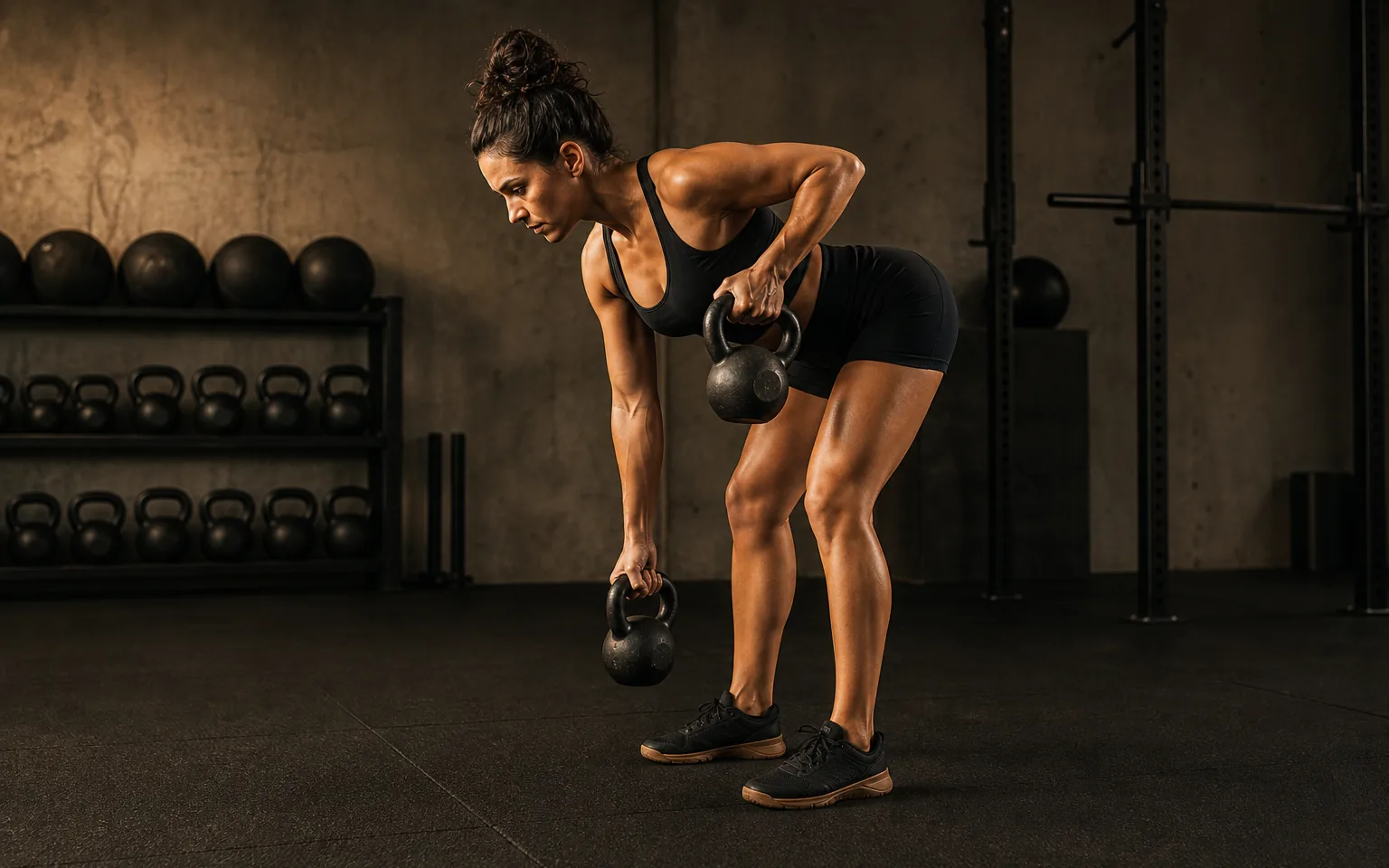
Try 5 two-hand swings, 3 cleans per side, 5 goblet squats, 3 presses per side, then 6 rows per side. Keep the bell in hand as you move between lifts. Set it down only after the row, then rest for 60 to 90 seconds. That’s one round. Start with two or three rounds.
The swing is the most technical move here, so keep it crisp. Hinge at the hips, then stand tall to send the bell forward. Your arms guide the bell. They don’t lift it. If the swing is new, use kettlebell deadlifts in its place. Build up with familiar movements and avoid using too much weight too soon. This guide to choosing a kettlebell weight can help you pick a starting bell.
Choose the load by your press, not your swing. If you can’t press it smoothly for every rep, use a lighter bell. For more ways to fit strength work into a home week, see these kettlebell strength workouts for busy women.
This sequence covers the main movement patterns without a second bell. Keep a little floor space clear for the row.
2. The Hinge-and-Core Complex: a compact conditioning option
This sequence leans on swings and trunk control, with a suitcase hold to challenge your grip. Pick it when you have a short training window and your two-hand swing feels steady.

Do 8 two-hand swings, 6 deadlifts, then hold the bell at your side for 20 seconds. Switch hands and repeat the hold. Keep the bell close during the deadlift. Brace your middle during the suitcase hold, as if you’re carrying a heavy grocery bag without letting your body tip toward it.
Complete three rounds, resting 60 to 90 seconds after each. If you’re short on time, do two rounds and keep the same rest. The aim is to finish each set with the same hinge shape you had at the start, not to rush through a timer.
For a gentler version, swap swings for deadlifts and use a shorter hold. To make it harder later, add one round or a few seconds to each hold. Change one thing at a time. If your back rounds or your grip starts to open, end the set and rest.
Complexes can raise your heart rate while the repeated grip work adds another demand. That makes them useful for conditioning, but it doesn’t make them a shortcut to fat loss. Your overall food intake and weekly activity still matter. A steady pace you can repeat beats an all-out session you avoid next week.
3. The Squat-and-Press Complex: focused strength work
This option centers on the front squat and overhead press. It fits you if you want a strength-focused session and can clean the bell into a stable rack position.
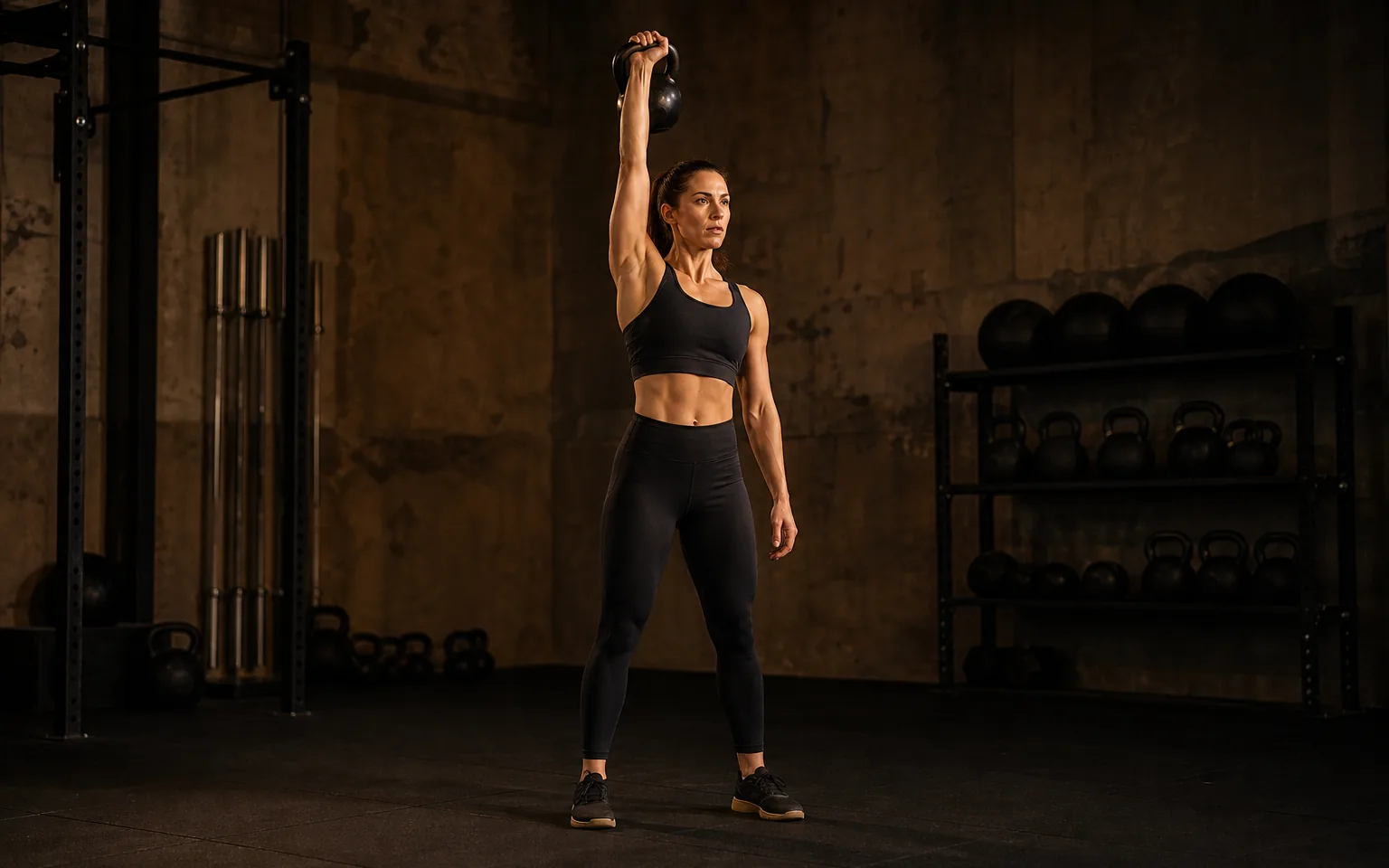
Start with 1 clean, 2 presses, and 1 front squat. Rest 60 to 90 seconds. Repeat with 3 presses, then 4 presses, while keeping the clean and squat at one rep each. Stop the ladder when the press slows or your ribs flare. The rack is the shelf position at your shoulder, with the bell resting against your forearm and your elbow near your side.
Use one bell and complete the sequence on one side, then switch. Rest between sides if your breathing or form needs it. A matched pair of bells is an option for experienced lifters, but both bells must feel controlled in the clean and press. A rep ladder lets you build the press target gradually while keeping the clean and squat steady.
To progress, repeat the same ladder for a few sessions before adding one press to your top rung. This is step-loading: hold the work steady long enough to own it, then make a small increase. Don’t add reps and load at once.
Pressing is the limiting lift for many people. Pick a bell you can press cleanly, even if it feels light for squats. If overhead work causes pain, stop and choose a movement you can do without pain.
4. The Single-Arm Conditioning Flow: train one side at a time
This one-sided sequence uses a clean, rack squat, row, and single-arm swing. It suits you if you’ve practiced each move and want conditioning with an extra focus on grip and trunk control.
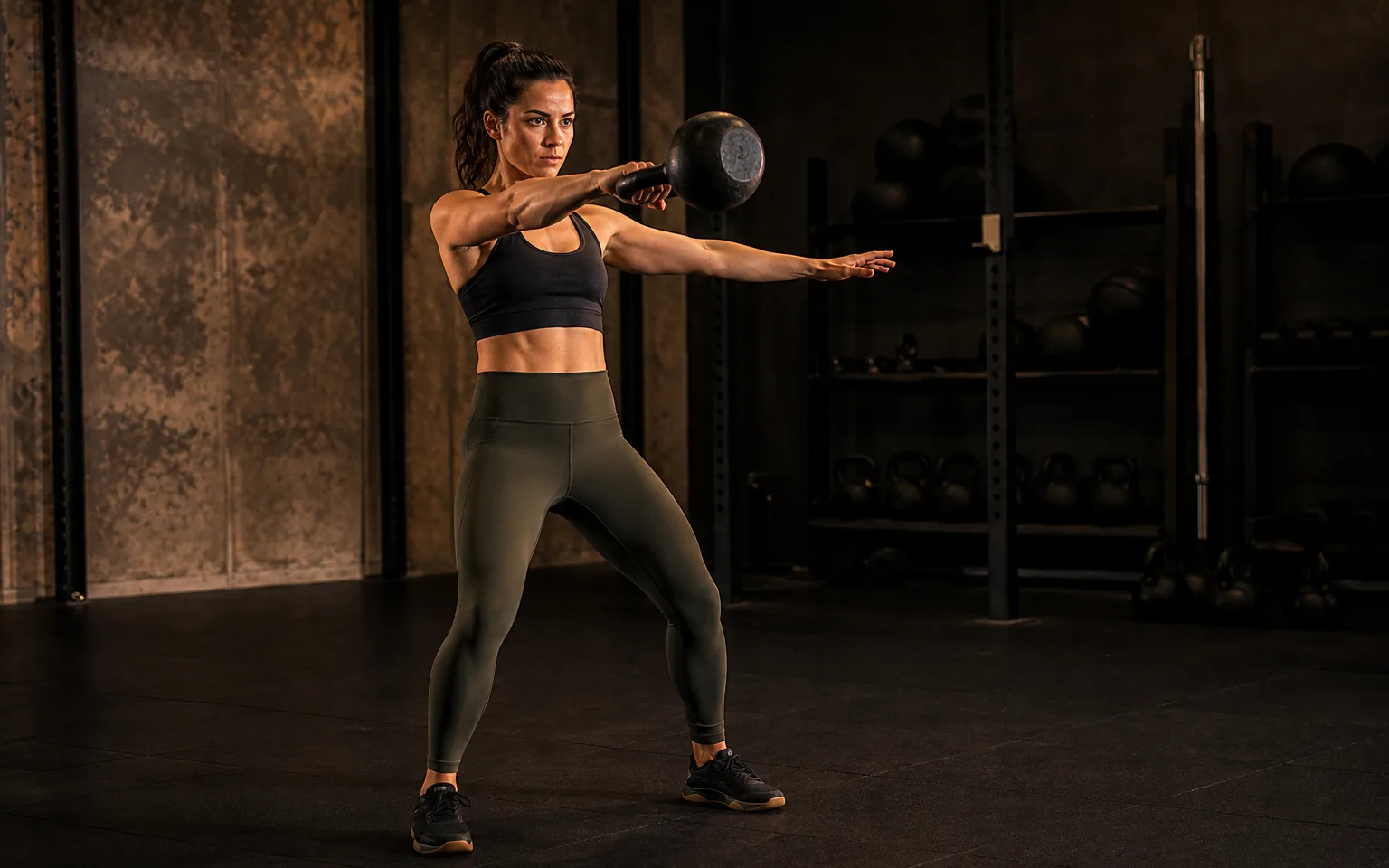
On your right side, do 4 cleans, 4 rack squats, 5 rows, and 6 single-arm swings. Set the bell down, switch hands, and repeat on the left. Rest 60 to 90 seconds after both sides. Begin with two rounds. Add a third only when your grip stays secure and your swing stays a hip hinge, not a deep squat.
Keep your wrist straight in the rack and keep your torso tall during the squat. For the row, send your hips back and pull the bell toward your hip rather than your shoulder. During the swing, let the hips drive the bell. If you haven’t learned the single-arm swing, use a two-hand swing or a deadlift instead.
One side may feel less steady than the other. Match the reps to the weaker side, rather than adding more work to the stronger side. You can also split the sequence into two shorter blocks, with a brief rest between clean and squat work and the row and swing block.
That pause is a useful scale, not a failure. Shrink it only when you can keep your positions and breathing under control.
5. The Beginner-Friendly Four-Move Complex: build confidence with basic skills
This lower-skill sequence uses a deadlift, goblet squat, supported row, and suitcase hold. It’s a good place to start if you know the basic positions but aren’t ready to link swings or overhead lifts under fatigue.
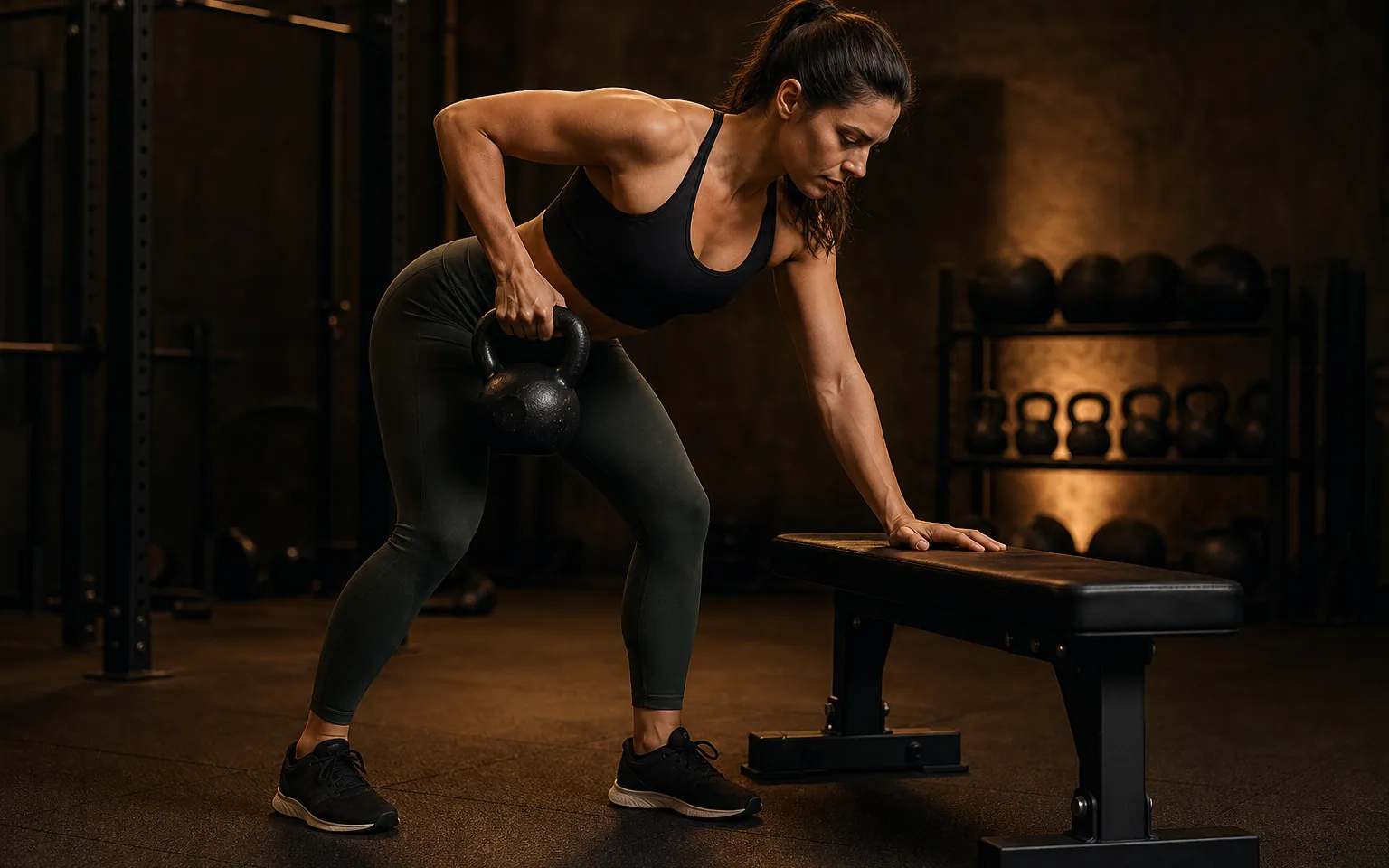
Do 6 deadlifts, 5 goblet squats, 5 supported rows per side, then hold the bell at your side for 15 seconds per side. Rest 60 to 90 seconds after the full sequence. Start with two rounds. The row can be supported by resting your free hand on your thigh while you pull the bell toward your hip.
Keep the bell close to your legs during the deadlift. For the squat, hold the bell close to your chest and keep your heels planted. Don’t force squat depth. For the row, keep your back long and avoid twisting to lift the bell. When switching hands, set the bell down with control.
Once the sequence feels steady, add a third round. Later, add a rep or two to one move. Learn each exercise on its own before linking it. The beginner kettlebell workouts for women page has more options for building basic skill at home.
Hybrid Fit Mom’s self-guided six-week kettlebell strength and conditioning program gives busy women a progressive home schedule, prerecorded demonstrations, and an eating framework. It costs $29 as a one-time purchase, includes lifetime access to future programs, and comes with a 14-day refund.
Quick comparison: match a kettlebell complex to your time and training goal
Use the chart to choose a format that matches your current skill and available time. The times below are suggested working formats, not promises about how long every session will take. Add a warm-up and allow enough rest to keep your form sound.
| Complex | Main focus | Starting format | Best fit |
|---|---|---|---|
| Full-body five-move | Strength across the body | 2 to 3 rounds, 60 to 90 seconds rest | You know the swing, clean, squat, press, and row |
| Hinge-and-core | Conditioning, grip, and trunk control | 3 rounds, 60 to 90 seconds rest | You want a short session with few transitions |
| Squat-and-press | Leg and overhead strength | Build a small press ladder | You can clean and press with control |
| Single-arm conditioning | One-sided strength and conditioning | 2 rounds, both sides | You’ve practiced single-arm work |
| Beginner four-move | Basic strength and grip | 2 rounds, 60 to 90 seconds rest | You’re linking basic moves for the first time |
For any of them, warm up for about five minutes. March in place, make a few unloaded hip hinges, then rehearse bodyweight squats and shoulder circles. Use a light bell to practice the moves before you begin. Afterward, walk until your breathing settles and stretch gently if it feels good.
Choose a bell that works for the hardest lift in the sequence, often the press. One kettlebell is enough for these routines. Dumbbells can replace some moves if you have them, but the handle and swing path differ, so don’t assume every kettlebell drill transfers directly. A push-up can replace a press only if you set the bell down and treat that as a planned break in the sequence.
Start with one or two complex sessions a week, with a rest day between harder sessions. Log your bell, reps, rounds, and rest. If the final round looks different from the first, repeat the same version next time instead of adding work.
FAQ
What is a kettlebell complex workout?
A kettlebell complex workout is a set sequence of lifts done back to back with the same kettlebell, with rest after the sequence. You complete all the reps for one movement before moving to the next. It differs from a circuit, where you may set the bell down between stations; if that format fits your schedule better, compare these kettlebell circuit workout ideas for home. In a complex, the bell usually stays in your hand between moves, so grip and transitions matter.
How many rounds should I do?
Start with two or three rounds, then rest for 60 to 90 seconds between rounds. Use fewer rounds if your form changes or your grip gives out early. You don’t need to finish a set number at any cost. Add a round only after you can repeat the current version with steady technique.
What kettlebell weight should I use for a complex?
Use a bell you can control for the hardest movement in the sequence, often an overhead press. A weight that feels easy for swings may be too heavy for presses. Test the limiting lift while fresh, then keep a margin so fatigue doesn’t turn the last reps into a different movement.
Can beginners do kettlebell complexes?
Yes, beginners can start with familiar lifts such as deadlifts, goblet squats, supported rows, and carries. Learn each move on its own before linking them. Leave out swings, cleans, and overhead presses until you’ve practiced them with control. Start with two rounds and take enough rest to keep each rep steady.
How often should I do kettlebell complexes?
One or two sessions a week is a reasonable place to start, with at least a rest day between harder sessions. Your total training load matters, so leave room for other strength work, walking, or sport. If you’re sore or your form slips at the next workout, reduce rounds or add more recovery time.
Conclusion
Start with the beginner four-move sequence if you’re still learning, or choose the full-body version if the lifts already feel familiar. Set out one bell and schedule two rounds this week. If you’d rather follow a progressive plan, take a look at Hybrid Fit Mom’s six-week program.