Best Kettlebell Cardio Workout: 5 Routines


A kettlebell cardio workout can fit into a busy day without turning your living room into a gym. Below are five routines, from swing intervals to a lower-impact circuit, with timing and scaling notes. For a set weekly plan, Hybrid Fit Mom’s six-week program includes progressive home sessions, exercise demos, and an eating framework.
An analysis of 49 comments and questions from YouTube, Reddit and Quora about kettlebell CARDIO workouts found that 39% mentioned weight loss and fitness improvements.
1. 20-Minute Kettlebell Swing Intervals: A Fast, Single-Bell Session
This routine centers on two-hand swings and uses one kettlebell. It suits you if your hip hinge is already steady and you want a short session with a clear clock.
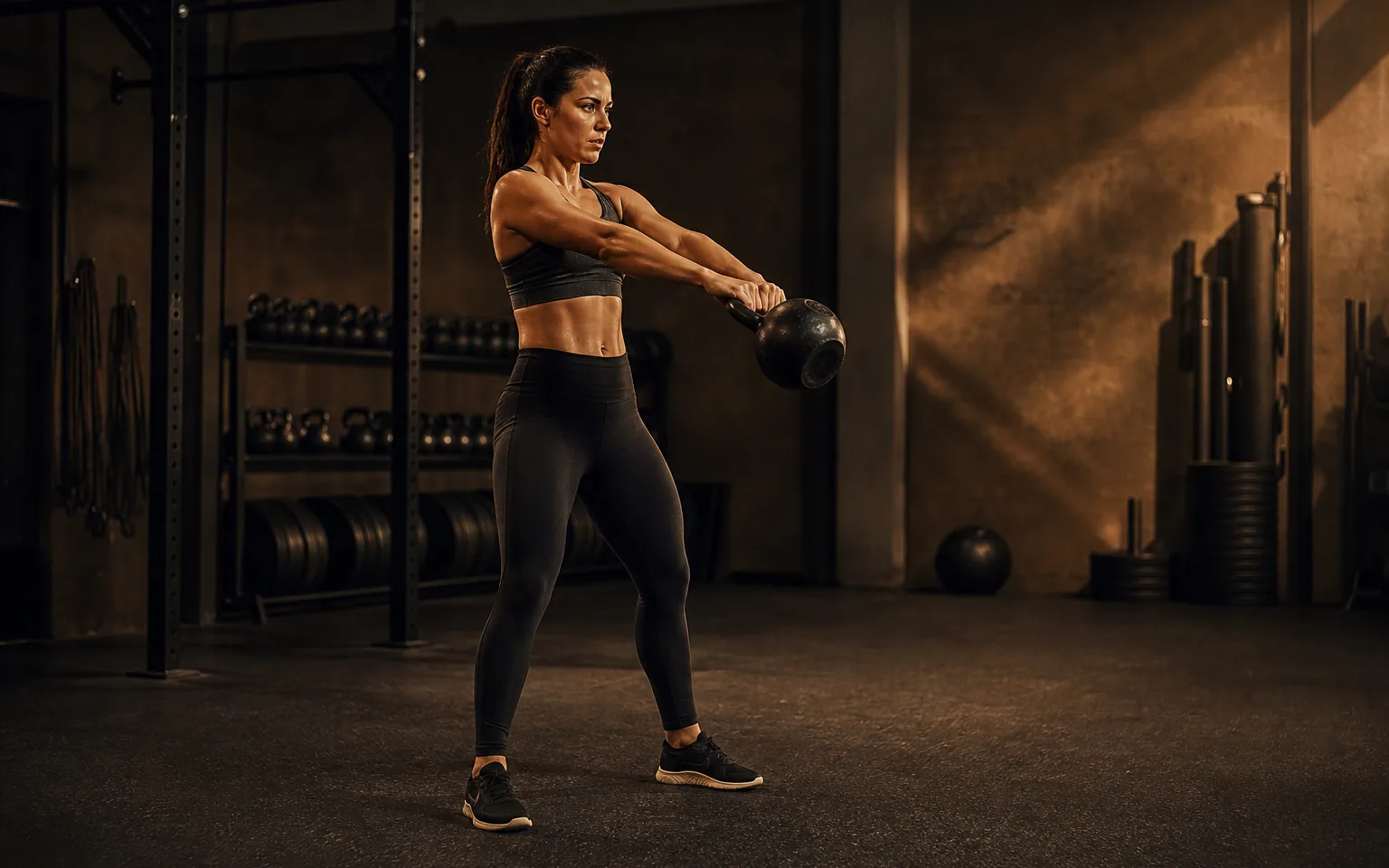
Start with four minutes of easy marching, arm circles, and unloaded hip hinges. For the main set, do 12 rounds of 20 seconds of swings followed by 40 seconds of rest. Use the final four minutes to walk slowly and let your breathing settle. That makes 20 minutes all in.
During each swing, send your hips back, then snap them forward. Your arms guide the bell; they shouldn’t lift it. Stop the set if your back rounds or the bell starts to pull you out of position. A deadlift is a good swap while you rebuild the hinge.
Use a bell you can control for every work interval. If 20 seconds feels long, swing for 10 seconds and rest for 50. Build the work time only after each rep stays smooth. The step-by-step kettlebell swing form cues can help you check the hinge before you add speed.
Swings can raise your heart rate while training the hips and back of the legs.
2. Swing-and-Goblet-Squat EMOM: A Simple Strength-and-Cardio Mix
An EMOM means “every minute on the minute.” This one pairs swings with goblet squats, so it suits you when you want a steady rhythm and a little more leg work.

Warm up for five minutes with marching, bodyweight squats, and hip hinges. Then set a 12-minute timer. On minute one, complete 10 to 12 two-hand swings. On minute two, do 8 goblet squats. On minute three, repeat the swings. On minute four, rest or walk gently. Repeat that four-minute pattern three times.
Finish the work early enough to take a few calm breaths before the next minute. The work shouldn’t become a sprint. If you can’t finish with control, reduce the reps or choose a lighter bell. For squats, hold the bell close to your chest and let your knees follow the line of your toes.
Cool down with three minutes of easy walking and relaxed breathing. A 12-minute EMOM format with an active-rest minute is one way to keep work repeatable instead of chasing a rushed finish.
If you’re still learning the swing, swap it for kettlebell deadlifts. That keeps the hinge pattern in the session without asking you to move the bell quickly. Keep the timer secondary to control, and don’t use it to rush a new skill.
3. Alternating Kettlebell Complex: A Continuous Full-Body Challenge
A complex links several exercises with the same kettlebell and little or no rest between moves. It fits you if you already know the movements and can keep your form when you’re breathing harder.

After a five-minute warm-up, complete this sequence with one bell: 6 rows per side, 8 deadlifts, 8 swings, 5 reverse lunges per side, then 5 presses per side. Rest for 60 to 90 seconds after the sequence. Do two or three rounds, and end the set if you need to stop midway to keep your form.
Choose a load that suits the hardest move, often the press. That may mean using a lighter bell than you’d pick for swings. If overhead presses feel awkward, skip them and finish with a standing march while holding the bell at your side.
Complexes raise the challenge by putting movements back to back. That makes them useful for work capacity, but it also makes fatigue easier to miss. Keep the transitions neat. Set the bell down before you lose control of the handle.
Snatches and high pulls can raise the pace, but they need sound timing and bell control. They aren’t required for a tough session. Build the complex from skills you already own, then add a move only when you can do it well outside the circuit. If you prefer set work-rest blocks, these home kettlebell HIIT routines use timed formats with form cues.
4. Kettlebell-and-Bodyweight Circuit: More Variety With Minimal Setup
This circuit alternates loaded moves with bodyweight work. It suits you if you have one bell and want variety without changing equipment between exercises.
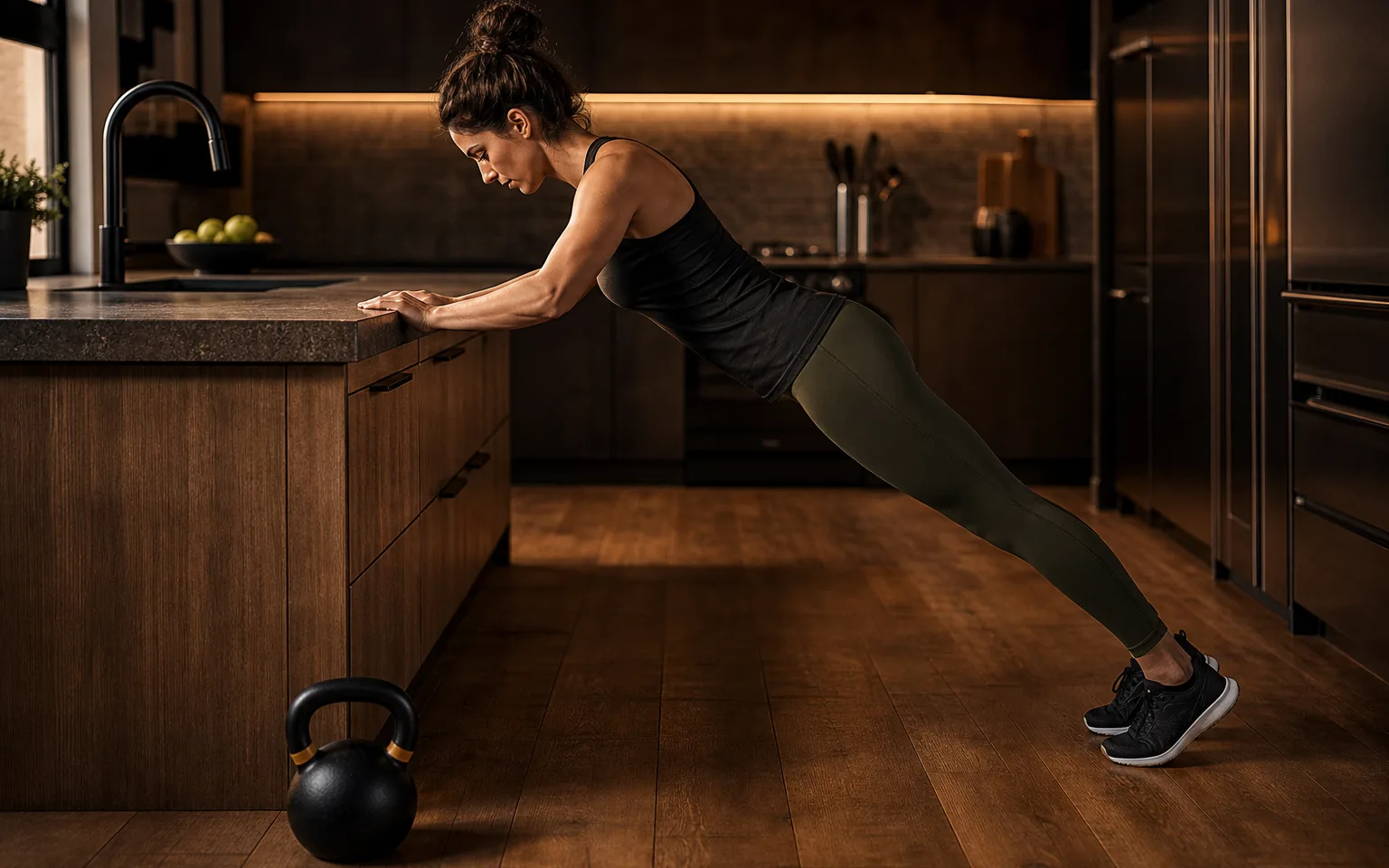
Warm up for five minutes. Then do three rounds of 30 seconds of work and 30 seconds of rest at each station:
- Kettlebell deadlift
- Incline push-up against a stable counter or bench
- Goblet squat
- Standing march in place
Keep the pace firm but controlled. The deadlift trains the hinge; the squat adds a knee-bend pattern. Push-ups give your grip a break, while marching lets you keep moving without jumping. If a push-up doesn’t suit you, use a wall push-up or skip the station and walk.
Do a few minutes of easy walking after the last round. If your breathing stays high, extend the rest before the next circuit. You can also shorten work intervals to 20 seconds. A timer app can help track work and rest, while a comparison of weightlifting apps for logging and planning may help if you want to record sessions over time.
Burpees are optional, not a test you need to pass. If you add them, use a step-back version and keep the bell out of the way. The goal is steady movement you can repeat next week.
5. Low-Impact Kettlebell March-and-Hinge Circuit: A Lower-Jump Option
This circuit uses marching, deadlifts, and rows instead of jumps. It suits you when you want to raise your effort without repeated impact, or when you need a calmer option after a long day.
Warm up for five minutes with easy marching, shoulder circles, and bodyweight hinges. Set a timer for six rounds of 40 seconds of work and 20 seconds of rest. Rotate through four moves: standing march while holding the bell at your side, kettlebell deadlift, supported one-arm row, and bodyweight squat. Alternate the rowing arm each time it returns.
Keep the march low and steady. For the deadlift, push your hips back and keep the bell close to your legs. Brace one hand on a sturdy chair for rows, and shorten the hinge if your lower back starts to work too hard.
Use a pace that lets you say a short phrase during work intervals. If you can’t get your breath back during rest, slow down or take longer between rounds. Cool down with three to five minutes of easy walking.
This format gives you a way to train when jumping doesn’t fit your joints, room, or energy that day. If a move causes pain, stop and choose a comfortable range or a different exercise. For a longer low-impact session, the 30-minute kettlebell workout with low-impact options gives you more movements to choose from.
Kettlebell Cardio Workout Comparison: Time, Equipment, and Training Feel
Use this quick comparison to match the session to your day. The times below cover the routine as written, including warm-up or cool-down when noted.
| Routine | Time | Equipment | Training feel | Best fit |
|---|---|---|---|---|
| Swing intervals | 20 minutes | One bell and timer | Short bursts, full rest | Practiced hinge and limited time |
| Swing-and-squat EMOM | About 20 minutes | One bell and timer | Steady minute blocks | Simple strength and conditioning mix |
| Alternating complex | About 20 to 25 minutes | One bell | Continuous work, then rest | Experienced movers who know the exercises |
| Bodyweight circuit | About 20 minutes | One bell and timer | Varied stations | A little more movement variety |
| March-and-hinge circuit | About 20 minutes | One bell and timer | Lower impact, steady pace | No-jump training days |
These are standalone sessions, not a full weekly plan. If you want training mapped across several weeks, Hybrid Fit Mom’s six-week program includes 24 sessions, four per week, with main workouts of 30 to 40 minutes and a shorter core day. It costs $29 as a one-time purchase and includes lifetime access, prerecorded exercise demos, an eating framework, and a 14-day refund.
FAQ
Can a kettlebell workout count as cardio?
Yes, a kettlebell session can challenge your heart and lungs when you use dynamic moves with planned work and rest. Swings and snatches can raise effort quickly, but your pace, load, and rest time shape the result. You don’t need to make every session all-out. A controlled circuit can be easier to repeat.
How long should a kettlebell cardio workout be?
A useful session can take about 20 minutes, including a short warm-up and cool-down. The five routines above range from short interval blocks to longer circuits. If you have less time, trim a round or shorten the work period. Keep a warm-up and stop before fatigue changes your form.
What weight kettlebell should I use for cardio?
Choose a bell you can control through every planned move. The right load for a swing may feel too heavy for a press, so use a lighter bell or change the exercise when needed. If your posture shifts or your grip slips, stop the set and adjust. Smooth reps matter more than a heavier weight.
Are kettlebell swings safe for beginners?
Beginners can learn swings, but they should first practice the hip hinge and kettlebell deadlift. In a swing, the hips drive the bell while the arms guide it. If you can’t keep your back long or the bell pulls you forward, set it down and return to deadlifts. Ask a qualified coach to check your form if you’re unsure.
How often should I do kettlebell cardio?
Start with one or two sessions a week and see how you recover. Leave room for easier days, especially if you’re also lifting or running. A hard circuit every day can make it harder to keep good form. Repeat a routine only when you can move well and feel ready for another session.
Conclusion
Start with the swing intervals if you already hinge well, or choose the march-and-hinge circuit for lower impact. Pick one routine, set a time you can protect this week, and write down what you did. If you want a progressive schedule rather than separate workouts, Hybrid Fit Mom’s six-week program is built for home training and busy weeks.