Best Kettlebell Exercises for Core Strength


A good core session doesn't need a long list of floor crunches. These kettlebell exercises for core strength train you to brace, stay upright, and resist unwanted movement, with options that fit a home workout.
An analysis of 29 YouTube comments about kettlebell core exercises found that 38% mentioned shorter workout durations.
Hybrid Fit Mom’s guidance is built for busy women who want a plan, not another saved reel. Start with the five moves below and choose the ones that match your skill today.
1. Kettlebell Dead Bug: Controlled Core Bracing
The kettlebell dead bug is a floor exercise that asks your trunk to stay steady while your limbs move. It suits you if you want to practice bracing without balancing on your hands or feet.
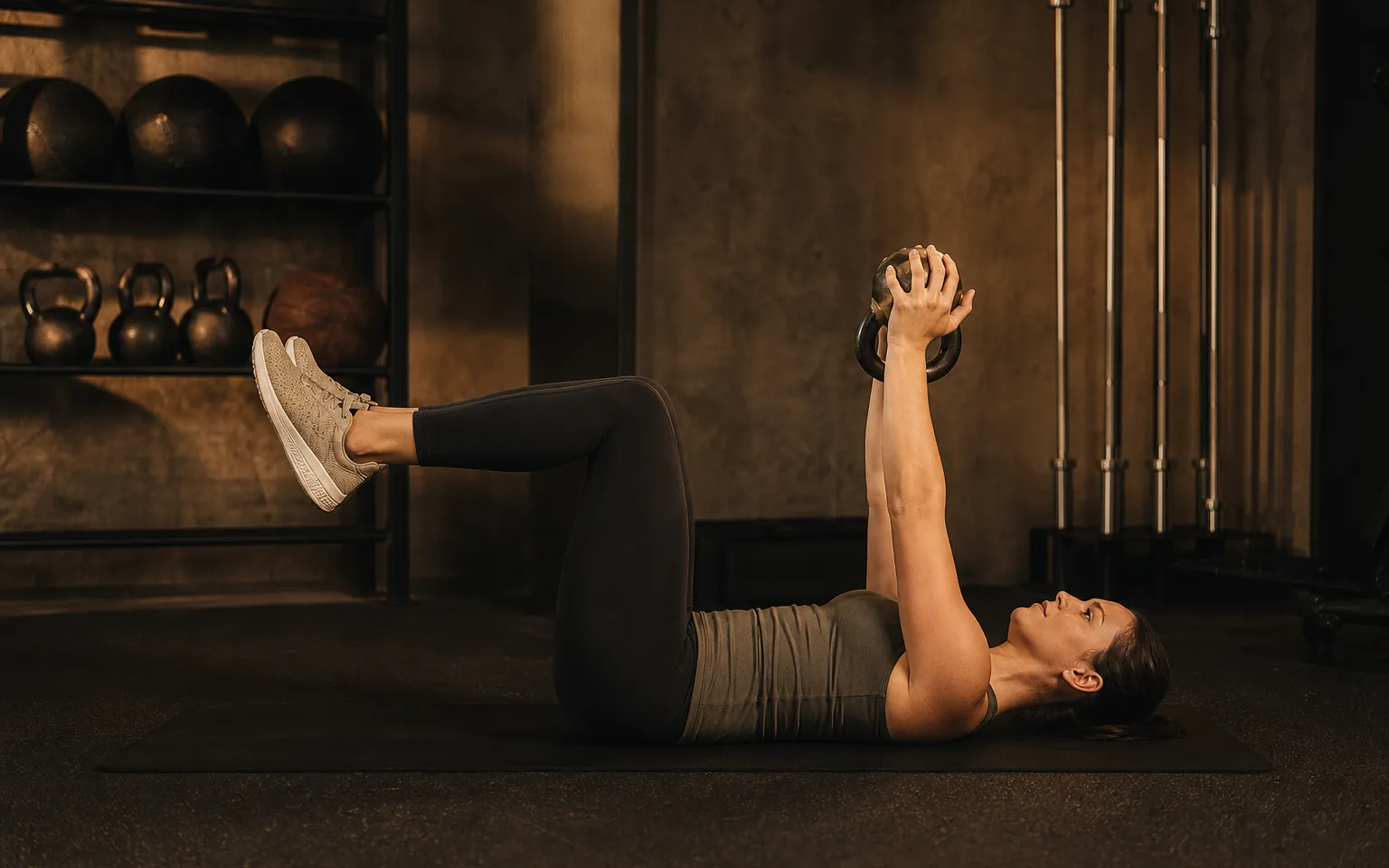
Lie on your back and hold a light bell above your chest with both hands. Bend your hips and knees to about 90 degrees. Keep your lower back gently pressed into the floor, then slowly reach one leg away. Bring it back and switch sides. Your arms stay still, and your ribs don’t pop up.
Start with a short reach. If your back arches or your ribs lift, bring the moving leg back sooner. You can also put the kettlebell aside and do the same leg movement with no load. The goal is a steady torso, not a dramatic range of motion.
Pair it with a slow exhale as your leg reaches away. That breath helps you keep the brace without clenching your neck. For more floor-based ideas, see these kettlebell ab workouts with clear form cues.
Try 6 to 8 controlled reps per side. Stop the set when your back position changes, even if your timer still has time left.
2. Half-Kneeling Kettlebell Halo: Core Control Through Rotation
The half-kneeling halo moves a kettlebell around your head while your hips and ribs stay quiet. It fits you if standing drills feel unsteady or you want to work on shoulder control alongside your trunk.
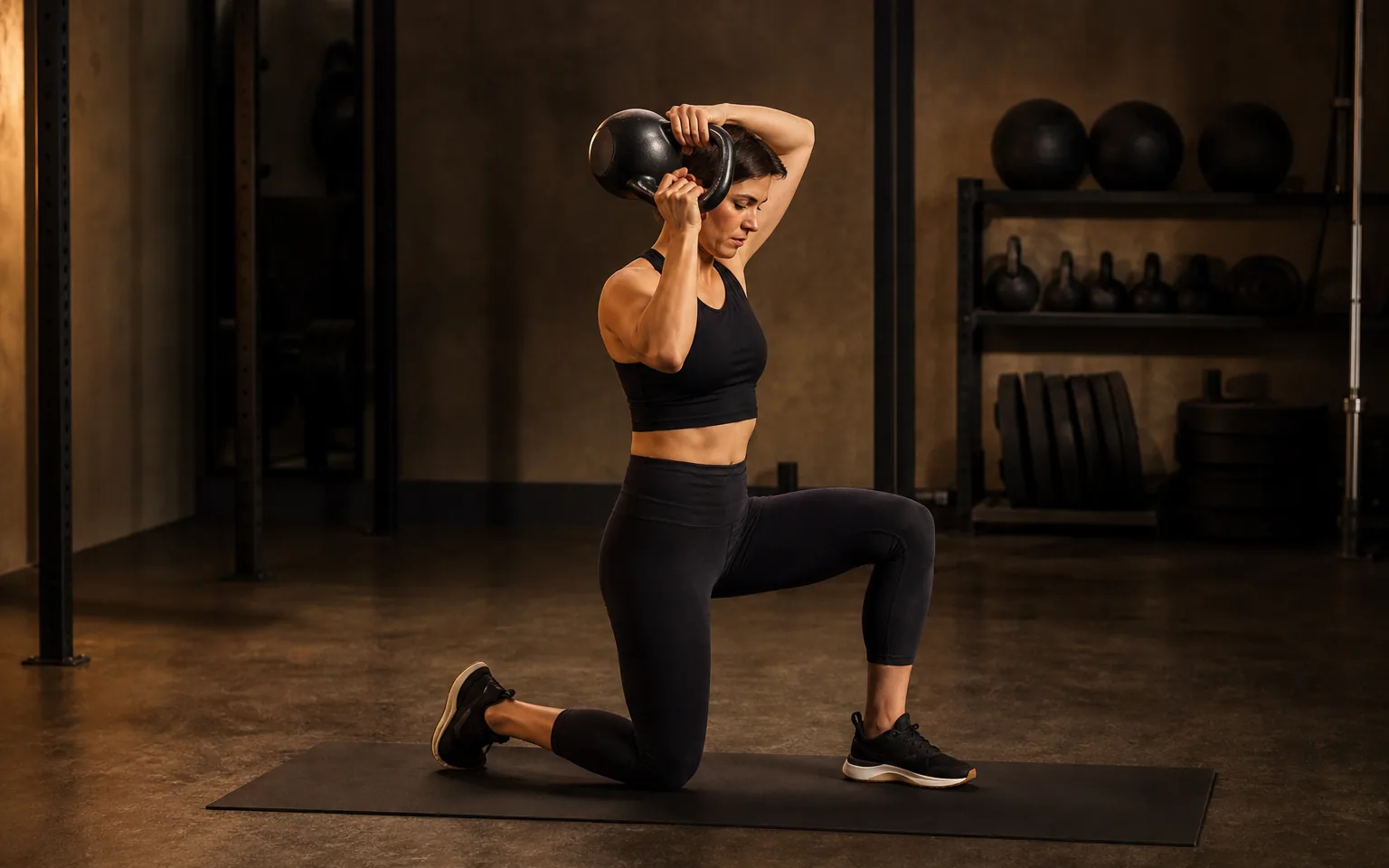
Set one knee on a mat and plant the other foot in front. Hold the bell by its sides close to your chest. Brace gently, then guide the bell around your head in a smooth circle. Keep it close to your hairline, and avoid leaning back to make room. Switch directions after a few slow circles, then change your front leg.
Make the circle smaller if your shoulder feels tight. You can also hold the kettlebell upside down by the horns, using a light load that stays under control. A half-kneeling stance gives you a stable base, but it won’t fix a rushed rep. Slow down before you add weight.
Keep your chest facing forward as the bell passes behind your head. Your arms move; your trunk resists the urge to arch or twist. This kind of controlled movement sits well beside core drills that resist movement rather than chase a hard twist.
Not every kettlebell drill suits every person. Use a range and load you can control.
Begin with 3 slow circles in each direction on each side. If your balance shifts, widen your stance or return to a two-knee kneeling position.
3. Suitcase Carry: Everyday Anti-Lean Strength
A suitcase carry is a walk with one kettlebell held at your side. The one-sided load asks your trunk to resist leaning, so it suits you if you want standing core work with little setup.
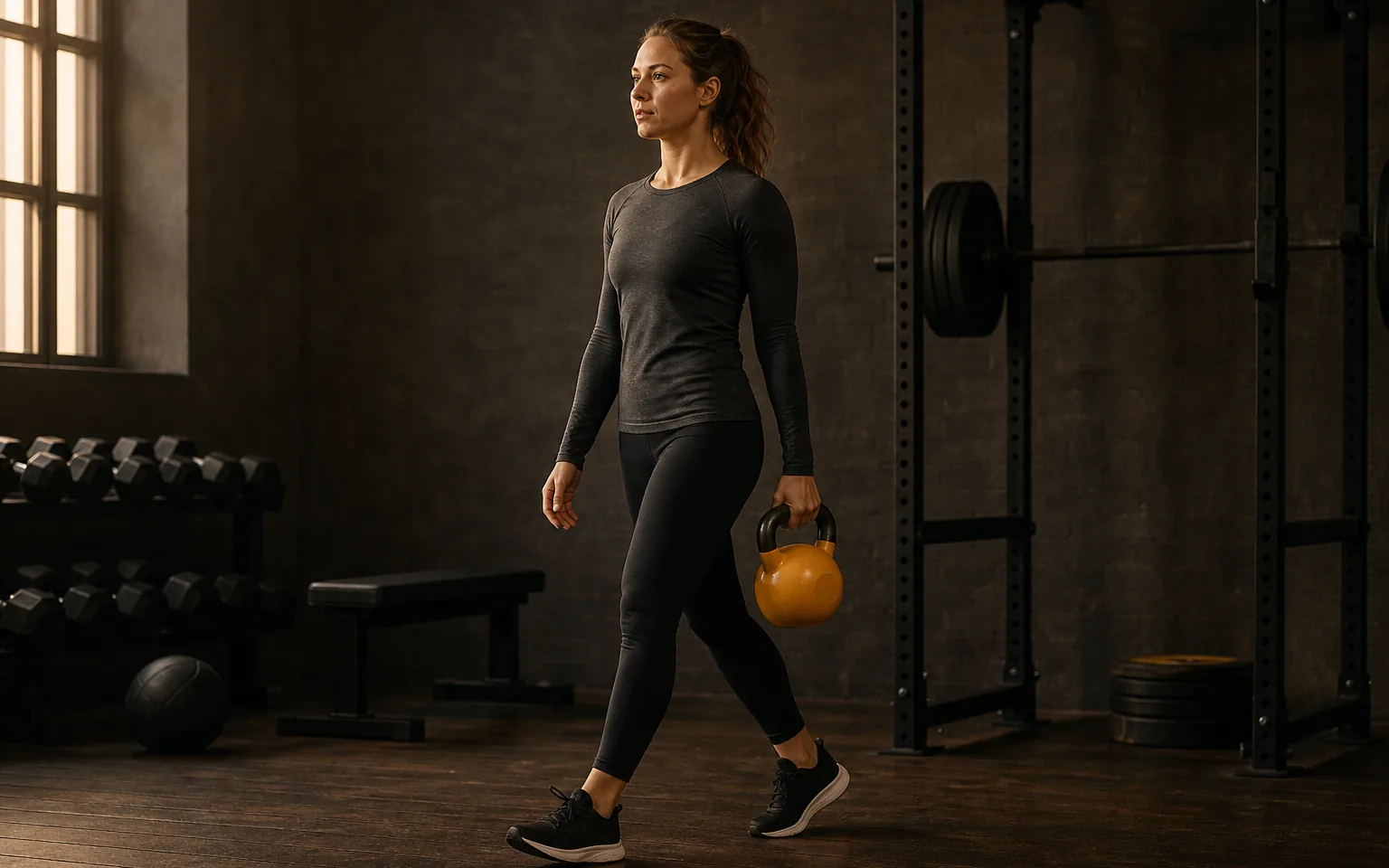
Stand beside the bell, hinge at your hips, and grip the handle. Rise tall with the weight hanging beside your thigh. Set your ribs over your hips, let your shoulder sit level, and walk at a steady pace. Don’t lean away from the bell or hike the loaded shoulder toward your ear.
Start with 20 to 30 seconds on one side, then switch. If you can’t stay tall for the full walk, use a lighter bell or shorten the time. Grip strength may tire before your core does, so set the bell down with control instead of rushing to finish.
For a simpler start, stand still and hold the bell for 10 to 20 seconds per side. Once your shoulders stay level, add a few slow steps. A suitcase deadlift uses a related one-sided load, but first make sure your hip hinge feels solid. These kettlebell deadlift form cues can help you rehearse the setup.
Use carries at the end of a strength session or between slower floor drills. They’re easy to scale by time, which helps when your workout window is short.
4. Kettlebell Plank Drag-Through: Resist Twisting Under Load
The plank drag-through is a high-plank exercise where you pull a kettlebell across the floor with one hand. It suits you if you can hold a steady plank and want to challenge your trunk to resist twisting.
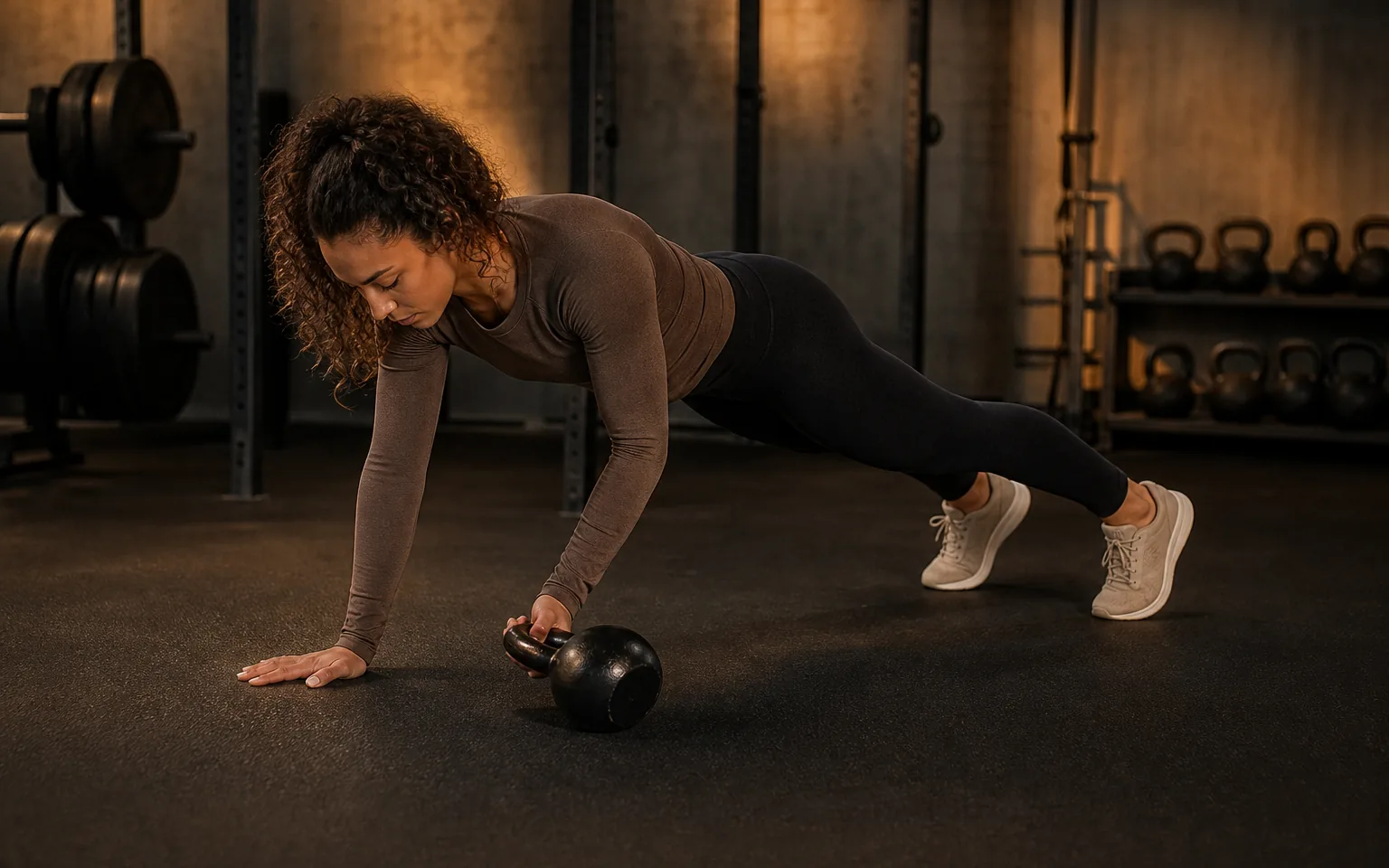
Set the bell just outside one hand. Place your feet a little wider than hip width, then brace and reach the other hand beneath your chest to drag the bell across. Keep your hips facing the floor. Move slowly, as if the bell were moving through thick mud, and place your hand back down before switching sides.
If your hips swing or your low back sags, pause. Set your knees down and practice the same drag from a modified plank. You can also skip the bell and reach one hand under your body, then return it to the floor. Use the version that lets you keep your trunk steady.
This is an anti-rotation drill: the aim is to stop your body from turning as the weight moves. It’s different from a wood chop, where you rotate through a controlled path. Both can fit a core session, but they ask for different control.
Try 4 to 6 drags per side. Rest before your form slips. If your wrists don’t like a floor plank, choose the suitcase carry or dead bug instead.
5. Turkish Get-Up: Full-Body Stability With a Core Focus
The Turkish get-up takes you from lying down to standing while you keep a kettlebell overhead. It suits you if you already know basic kettlebell skills and want a slow drill that challenges balance and shoulder control.
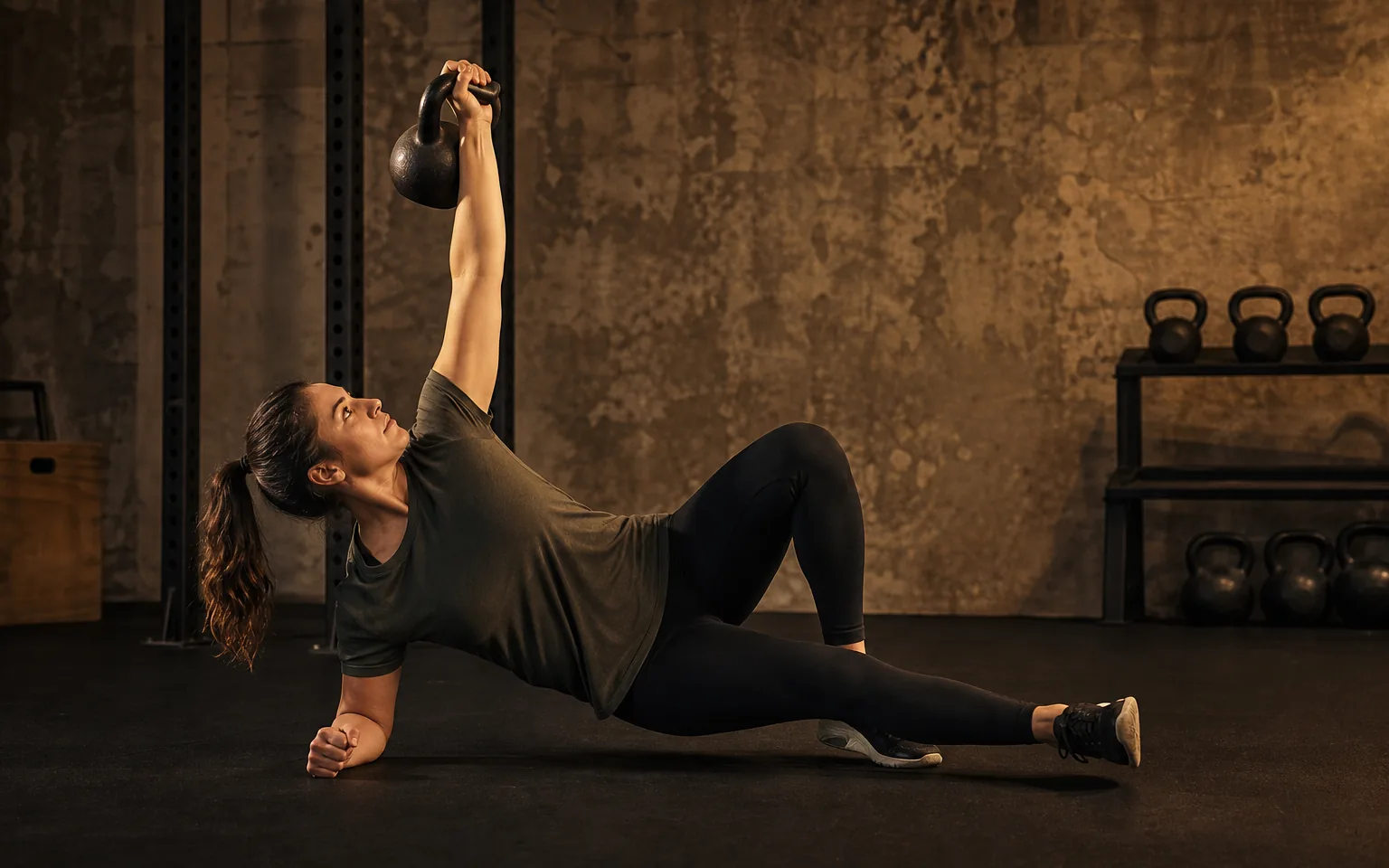
Learn the positions without a bell first. Then use a light load and move through one part at a time: roll to your elbow, press to your hand, lift your hips, sweep your leg through, and stand. Keep your eyes on the bell and your wrist straight. Reverse the steps with the same care.
There’s no prize for doing the full move fast. If one position feels shaky, pause there or return to the floor. A quarter get-up, where you move only from lying to your elbow, is a sensible way to practice the first transition. Keep the bell light until you can hold your arm steady.
The get-up uses more than your abs. Your shoulder has to stay firm overhead while your trunk helps you shift between positions. That makes it a skill-based choice, not the first move to grab when you have five spare minutes and no practice.
Quick Comparison: Which Kettlebell Core Exercise Fits Your Workout?
Choose by the control you want to practice, not by which move looks hardest. A single kettlebell can cover several patterns, but your skill level and the time you have should shape the session.
| Exercise | Main challenge | Try this easier version | Good fit when |
|---|---|---|---|
| Dead bug | Keep your back steady as a leg moves | Use no bell and shorten the reach | You want floor-based, low-speed work |
| Half-kneeling halo | Move the bell while your trunk stays quiet | Use a smaller circle | You want shoulder control with a stable base |
| Suitcase carry | Resist leaning to one side | Hold still before walking | You want a standing drill |
| Plank drag-through | Resist rotation in a plank | Drop your knees or use no bell | You can already hold a steady plank |
| Turkish get-up | Control several floor-to-standing positions | Practice one transition at a time | You have basic skills and time to move slowly |
For a short session, choose three moves and use 40 seconds of work followed by 20 seconds of rest. Do one round first. Rest for a minute, then repeat only if your form stayed steady. A 45-second work period with 15 seconds of rest is another option, but it leaves less time to reset.
Want a five-minute add-on? Use the dead bug, suitcase carry, and plank drag-through for one round each, with shorter work periods. For an all-standing session, choose carries, halos, and controlled wood chops. Start light on rotational moves and keep your hips steady as the bell crosses your body.
Use this work as a short core block after your main lifts, or add it to a full-body home session. Hybrid Fit Mom also has full-body kettlebell workouts for busy women if you’d rather follow a set session than assemble one from separate exercises.
FAQ: Kettlebell Exercises for Core Strength
What kettlebell exercise is best for core strength?
The best choice depends on the control you need to build. Try a dead bug if you’re learning to brace on the floor, or a suitcase carry if you want to resist leaning while standing. The Turkish get-up asks for more skill, so learn its positions with no load or a light bell before adding full reps.
How heavy should a kettlebell be for core exercises?
Choose a bell you can move without losing posture, grip, or control. The right load can differ by exercise: a carry may feel manageable while an overhead halo feels too heavy. Start light for get-ups and plank drags, then build only after each rep stays steady. Stop if you can’t keep the planned position.
How often should I train my core with a kettlebell?
Two or three short sessions a week can fit into a broader strength routine, provided you recover well and keep your form clean. You don’t need to do every drill in one workout. Add a carry after a lower-body session, or use dead bugs as a brief warm-up before slower strength work.
Can I do kettlebell core exercises every day?
You can practice easy, unloaded bracing often, but hard loaded sessions need room for recovery. If your trunk or grip still feels tired, choose a walk or a lighter movement instead of repeating a demanding plank or get-up. Sharp pain is a reason to stop and seek advice from a qualified health professional.
How do I make a short kettlebell core workout?
Pick three moves that don’t all challenge you in the same way. For example, pair a dead bug with a suitcase carry and a plank drag-through. Try 30 to 40 seconds per move, rest as needed, then repeat once if your form holds. Keep the get-up separate until you know the sequence well.
Conclusion
Start with the dead bug and suitcase carry if you want a simple mix of floor and standing work. Choose one light kettlebell, practice the positions slowly, and add a round only when your posture stays steady. If you need a week-by-week structure, take a look at Hybrid Fit Mom’s six-week home program, a one-time purchase with progressive home workouts and prerecorded exercise demonstrations.