Best Ab Workouts Kettlebell: 5 Core Moves


A kettlebell core session doesn’t need a long list of crunches. These five kettlebell ab moves train your trunk to resist unwanted movement while you lift, carry, and change position. Start with a light bell, move with control, and stop a set when your form slips.
1. Kettlebell Dead Bug: controlled core work on the floor
The kettlebell dead bug is a floor-based drill for learning to brace while your arms and legs move. It suits you if you want a low-impact start or need to practice keeping your lower back steady before adding harder core work.
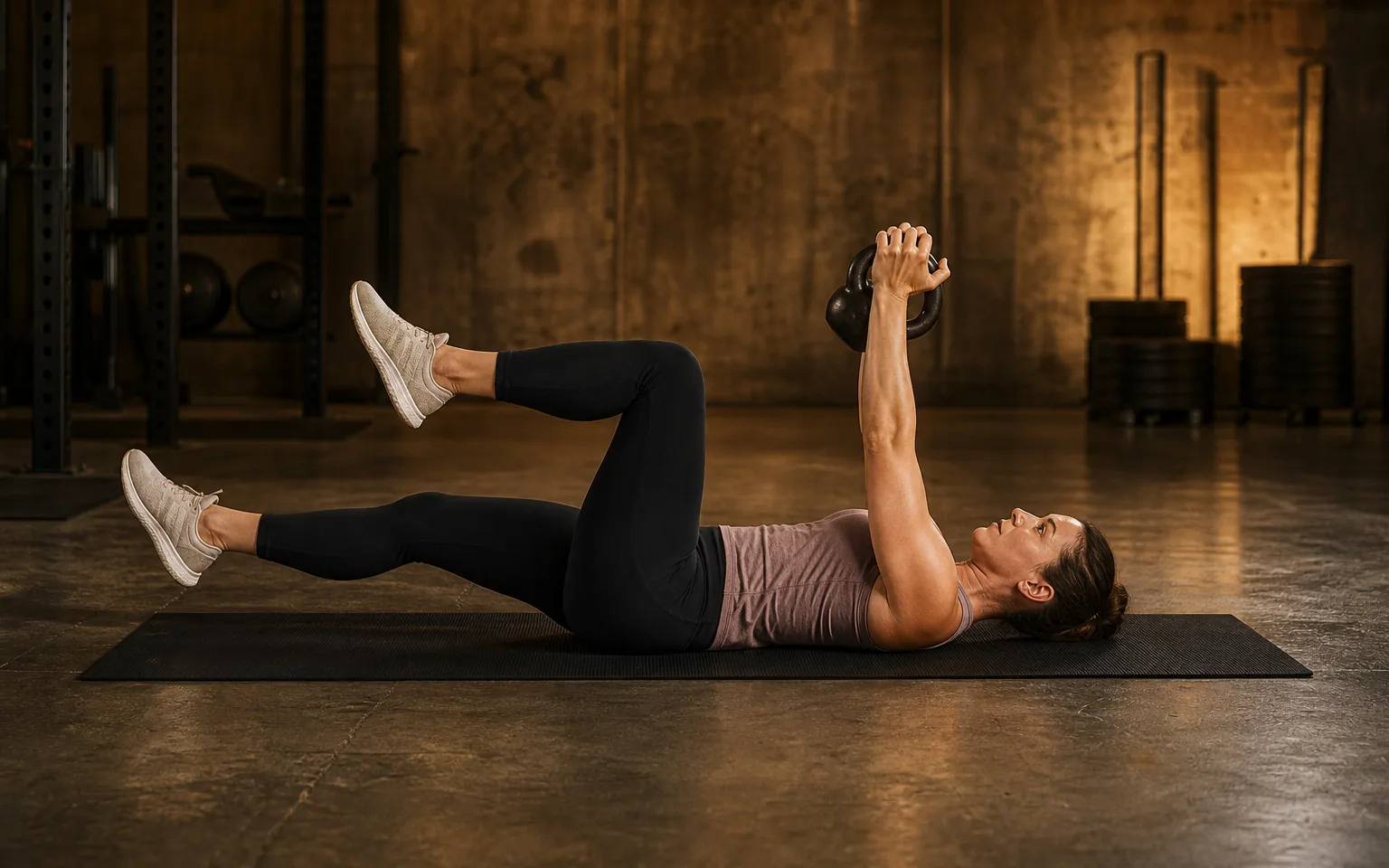
Lie on your back and hold the bell by its horns above your chest, with both arms straight. Bend your hips and knees to about 90 degrees. Press your lower back gently into the floor, as if you’re holding a small piece of paper there.
Keep the bell still. Slowly lower one heel toward the floor, then bring it back up. If that feels steady, reach the opposite arm overhead at the same time. Switch sides after each rep. Start with five controlled reps per side. Rest, then repeat for two or three sets.
A kettlebell has a handle and a weighted body. For this drill, use the handle to keep the bell centered over your chest rather than letting it drift.
Your back is the guide. If it lifts off the floor, shorten the leg reach or keep both arms still. Don’t force a larger range just to make the movement look harder. You can also practice the leg action without a bell until your trunk stays quiet.
Try this first: Keep the bell parked above your chest and move one leg at a time. Add the opposite-arm reach only when you can hold your back in place.
2. Half-Kneeling Kettlebell Halo: a bracing drill with a small range of motion
The half-kneeling kettlebell halo circles the bell around your head while your trunk stays facing forward. It’s a good choice when you want a standing-style core challenge without walking across the room or moving quickly.
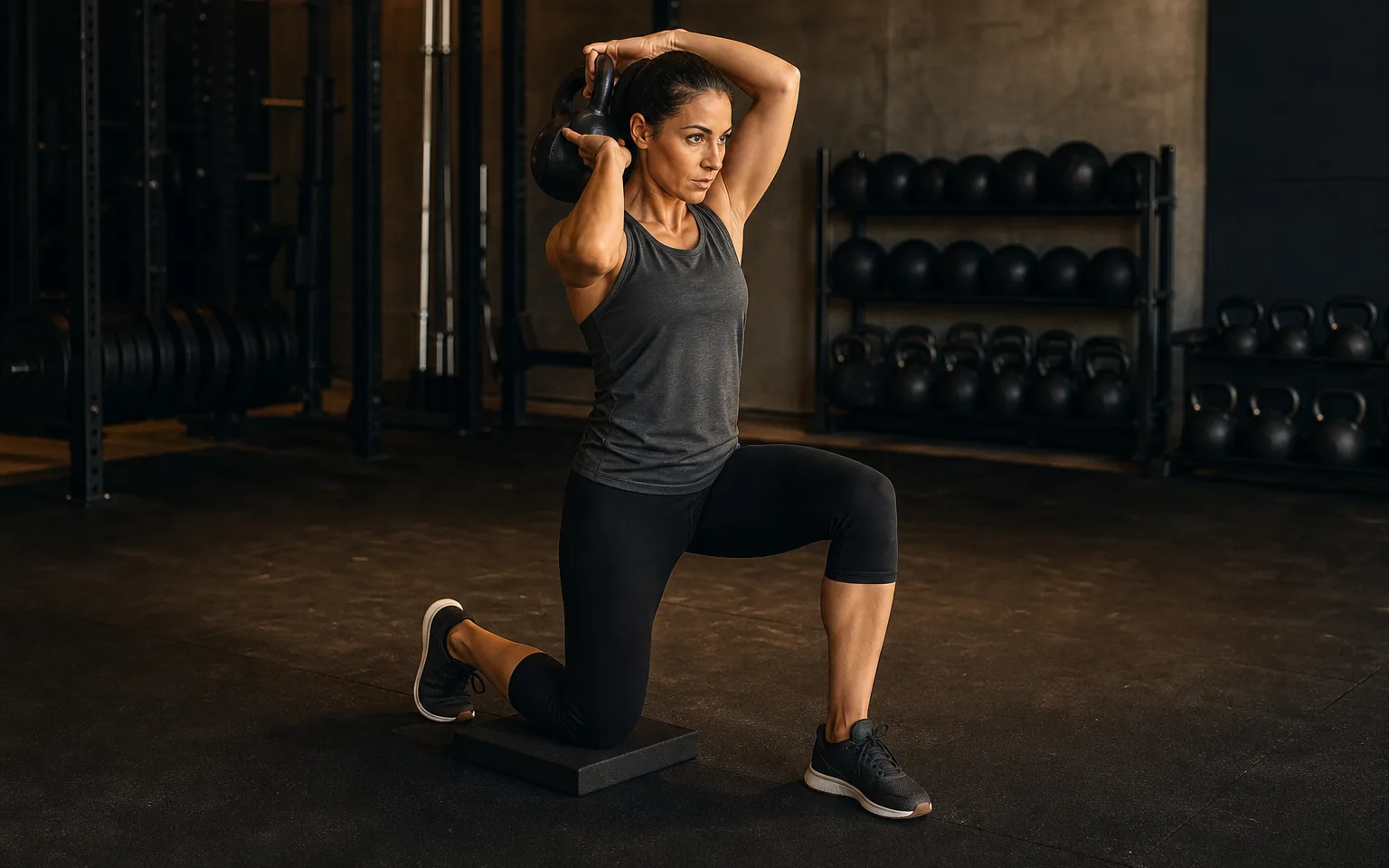
Set one knee on a pad and place the other foot in front, with that knee bent. Hold the bell by the horns at chest height. Keep your ribs stacked over your hips. Squeeze the glute on the kneeling side so your lower back doesn’t arch.
Move the bell slowly around your head. Keep it close, but don’t let it bump your head or pull your neck forward. Your head and chest should stay still as the bell travels behind and around you. Do three slow circles in one direction, then three in the other. Switch your kneeling position and repeat.
Use a light bell at first. This is a control drill, not a test of how much weight you can swing around your head. If you feel pressure in your neck or shoulder, stop and try the movement with no bell. Make the circle smaller if your ribs flare or your torso twists to clear space.
Half-kneeling removes some help from your legs, so it can make bracing easier to notice. Keep your breath moving. A quiet exhale as the bell passes behind your head can help you hold your position without bearing down.
Halos can also work as a warm-up before a strength session. Keep the pace easy and the circle smooth. If your shoulder feels pinched, skip the loaded version and ask a qualified coach or health professional about a suitable option.
3. Suitcase March: anti-side-bend core strength in a small space
The suitcase march is a simple way to train your trunk against a one-sided load. It works well at home because you can march in place beside a mat or a clear patch of floor.
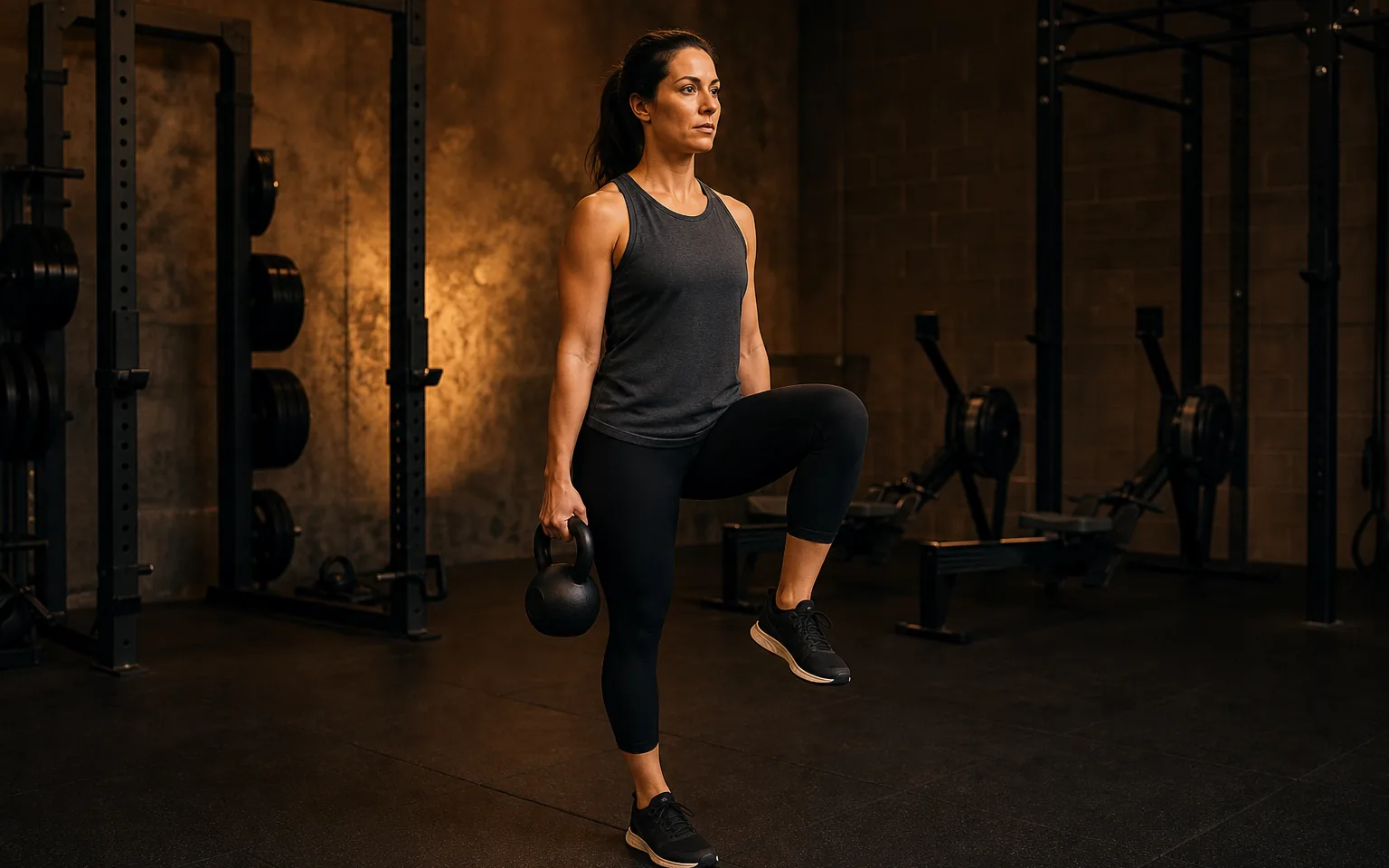
Stand tall with the kettlebell in one hand. Let your arm hang straight, but keep your shoulder relaxed rather than shrugged. Set your feet about hip-width apart. Before you march, check that your ribs sit over your pelvis and that you’re not leaning toward the bell.
Lift one foot a short distance from the floor, set it down, then lift the other. Take slow steps in place for 20 to 30 seconds. Switch the bell to your other hand and repeat. Start with two rounds per side. If you can’t stay upright for the full time, shorten the set or use a lighter bell.
The job is to keep your torso quiet while your legs move. You’ll feel the effort on both sides of your middle, especially the side working to keep you from tipping toward the weight. A quick visual check can help you spot a lean, but you don’t need a special test. Look at your shoulder line and keep it level.
Once marching feels controlled, try a slow walk for a few steps in each direction. Keep your stride natural. Don’t speed up to make the exercise harder; a rushed step often adds a sway that takes the work away from your trunk.
Switch hands each set rather than doing all the work on one side. If your grip gives out before your posture changes, rest longer or use a lighter bell. This is core training, not a grip challenge.
4. Kettlebell Plank Drag: a challenging option for a stable plank
The kettlebell plank drag adds a moving load to a plank, so your trunk must resist twisting as one hand reaches across. Choose it when you can already hold a steady plank without sagging or lifting your hips.
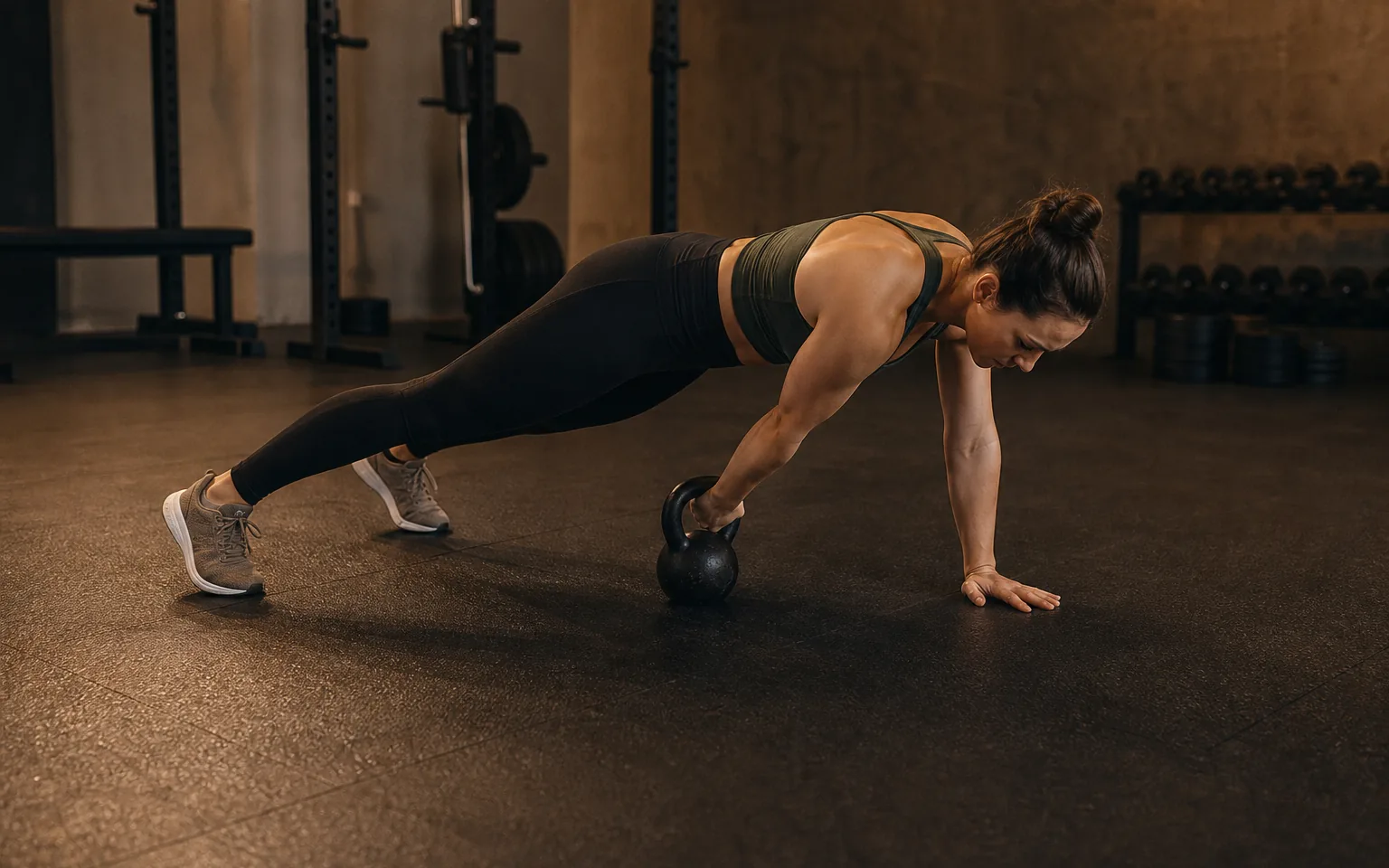
Place the bell beside one hand. Set up in a high plank with your hands under your shoulders and your feet wider than hip-width. That wider base gives you more support. Brace your middle, press the floor away, and keep your body in one long line.
Reach one hand under your chest to drag the bell across to the other side. Put your hand back down before you reach with the other arm. Start with three drags per side. Rest, then repeat for two or three sets. Keep the bell close enough that you don’t have to reach far.
Your hips will want to turn as the bell moves. Resist that twist. If your hips sway, your back sags, or your bottom lifts, widen your feet again or switch to a lighter bell. You can also practice the same reach without any weight. A clean, short drag is better than a long pull that breaks your plank.
A plank is a hold, not a race. Breathe through each rep and take a pause between sides if needed. If your wrists don’t like the position, try the movement from your knees or use a raised, stable surface for your hands. Keep the bell on the floor where it can slide without hitting your fingers.
Because this option asks for more shoulder and trunk control, place it after easier work or on a day when you’re fresh. If your form fades, end the set there. More reps won’t help once you can’t control the movement.
5. Turkish Get-Up: a whole-body movement that demands deliberate core control
The Turkish get-up takes you from the floor to standing while one arm holds a kettlebell overhead. It’s a full-body skill, not a quick ab finisher. Pick it if you already know the basic positions and can keep a light load steady above your shoulder.
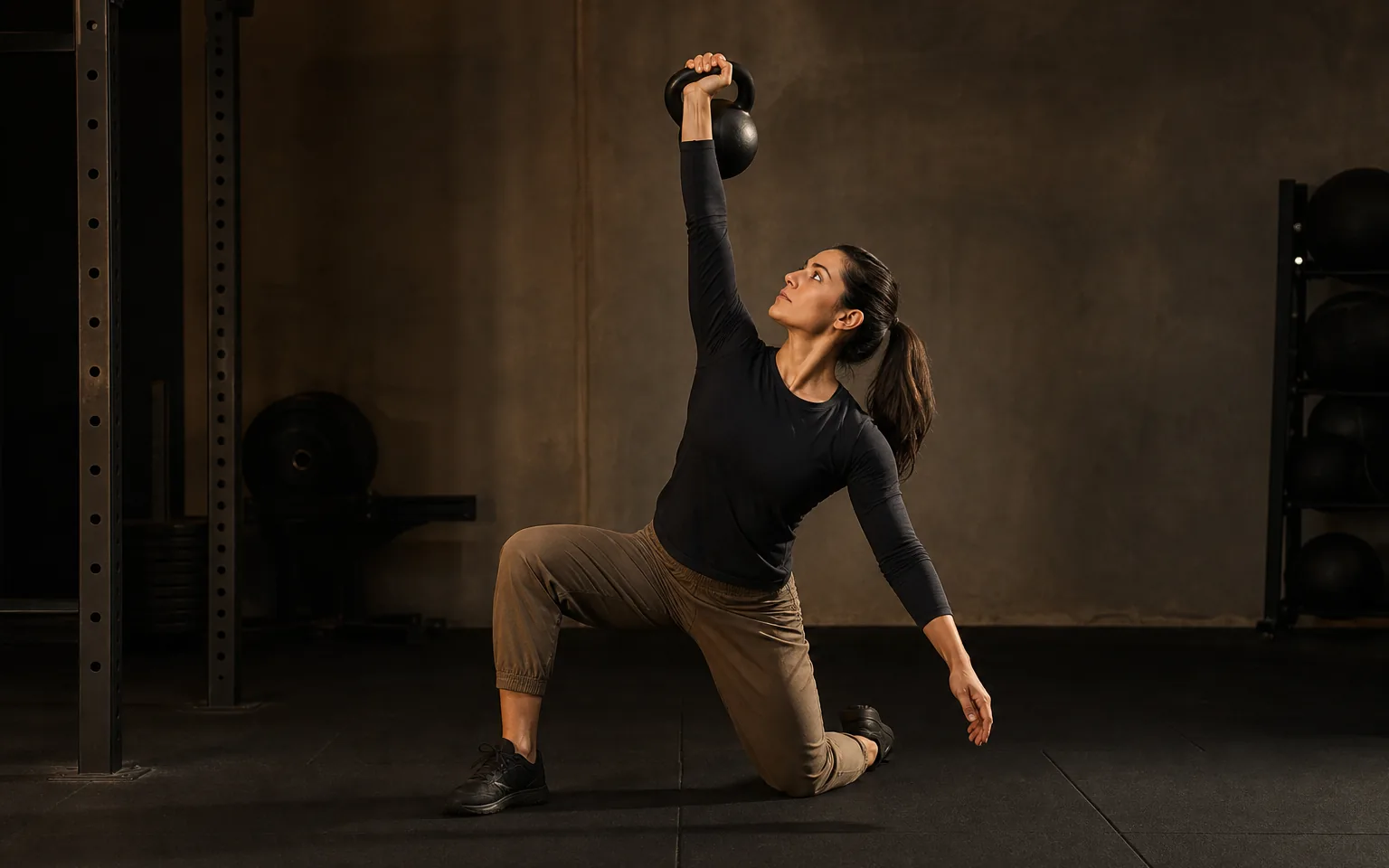
Learn the path with no weight first. Lie on your back with one arm reaching toward the ceiling. Bend the knee on that same side and place the opposite arm out on the floor. Keep your eyes on the raised hand as you roll onto your free forearm. Press up to your hand, lift your hips, sweep the straight leg underneath, and come to a kneeling position.
From there, stand up with control. Reverse each step to return to the floor. The exact sequence takes practice, so pause at each position rather than rushing through it. If you can’t keep your supporting shoulder steady, use an empty hand until the pattern feels clear.
Use a light bell only after you can do the full path without weight. Keep your wrist straight and your elbow locked, but don’t force the arm into a painful position. The bell should stay over your shoulder rather than drifting toward your face or behind your head. Set up on a clear floor, away from furniture and other people.
Do one slow rep on each side, then rest. That’s enough while you learn. The get-up asks for attention at every transition, so it belongs early in a session, not after a hard circuit when your balance and focus are tired.
FAQ
Are kettlebell workouts good for abs?
Yes, kettlebell workouts can train your abs when you use movements that make your trunk resist bending or twisting. A dead bug challenges you to keep your back steady, while a suitcase march asks you not to lean toward the bell. These kettlebell ab moves build control, but they don’t target fat loss in one area.
How often should I do kettlebell ab workouts?
Start with one or two short core sessions each week, then adjust based on how you recover and what else you train. Leave time between demanding sessions if your trunk feels tired or sore. These kettlebell ab exercises don’t need to be done daily; clean reps matter more than frequent sets.
What weight kettlebell should I use for ab exercises?
Choose a bell you can control without leaning, twisting, or arching your lower back. The right weight can vary by exercise, so use a lighter load for a halo or get-up than you might use for a carry. If your form changes, lower the weight or practice the same movement without a bell.
Can I do kettlebell core exercises as a beginner?
Yes, you can begin with simpler versions and build up as your control improves. Try the dead bug without a bell or march in place with a light load. Save plank drags and loaded get-ups until you can hold a steady position. These kettlebell core options should feel controlled, not rushed.
Conclusion
Start with the dead bug and suitcase march, then add the harder drills when your form stays steady. Choose one movement for your next session and do two controlled sets. Consistency beats a complicated routine, especially when training has to fit around family life.
Hybrid Fit Mom’s six-week kettlebell program gives busy women a set schedule with four sessions per week, filmed movement demos, and an eating framework. Its final week builds toward a full-body flow after earlier practice with the movements. If that kind of structure fits you better than saving separate workouts, the Hybrid Fit Mom kettlebell program is one option to explore.