Best Kettlebell Conditioning Workouts for Home


A kettlebell conditioning workout can build strength and stamina without taking over your day. The right format keeps the clock, the moves, and your effort clear. Hybrid Fit Mom’s six-week home program adds a steady schedule, exercise demos, and an eating framework for women who want more than a saved workout.
An analysis of 57 comments and questions from YouTube and Quora about kettlebell conditioning workouts found that 37% mentioned excessive difficulty and joint pain.
1. Kettlebell Swing Intervals: A Simple, Repeatable Conditioning Session
Two-hand swing intervals are a direct way to train your hinge while keeping the session easy to track. They suit you if you already swing with control and want a short conditioning block with one kettlebell and a small clear space.
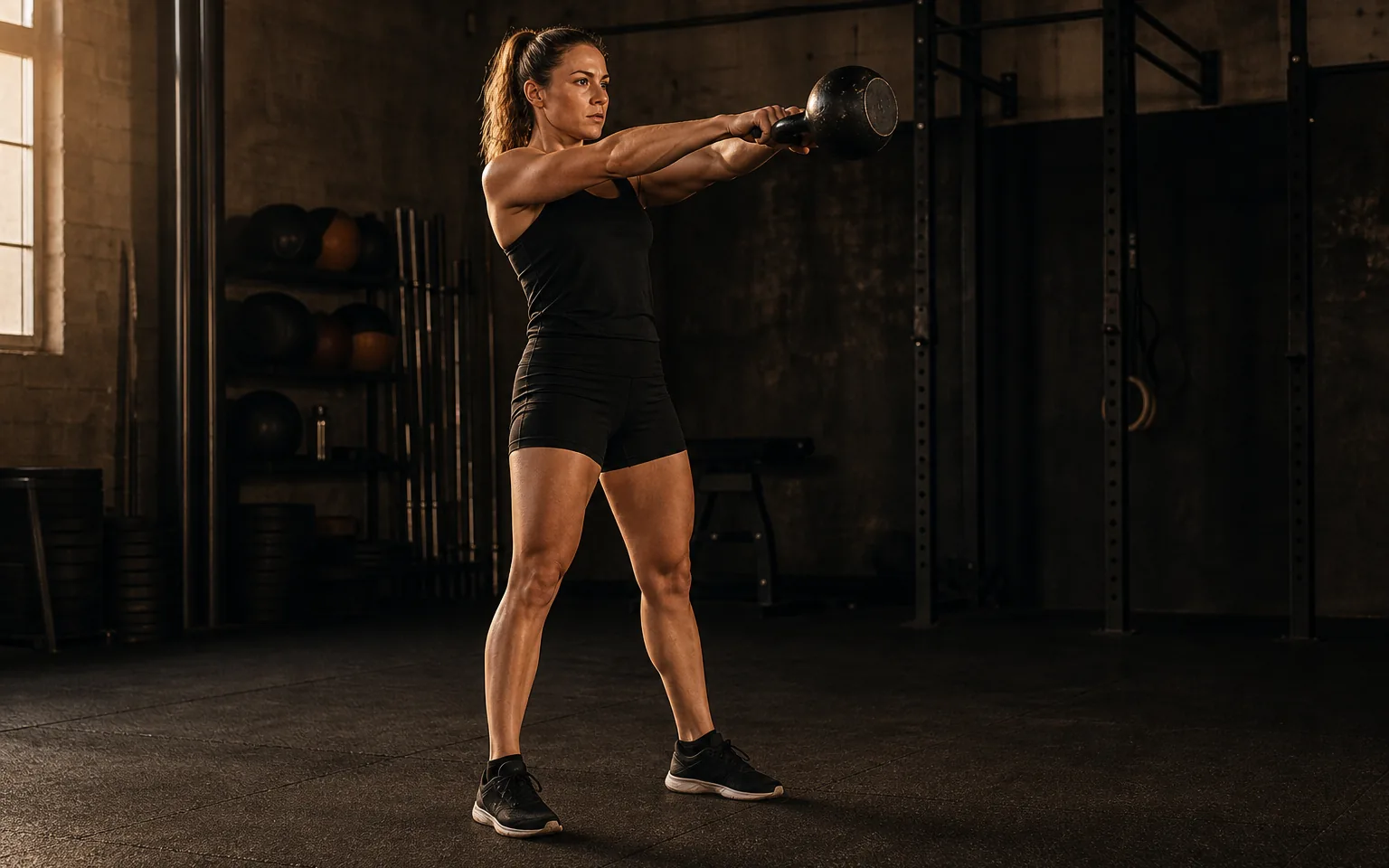
Start with 10 minutes. Do 10 swings at the top of each minute, then rest until the next minute starts. If your reps stay crisp, build toward 12 minutes before adding reps. You can also use 30 seconds of swings followed by 30 seconds of rest. The hinge matters more than the timer: send your hips back, then drive them forward. Keep your spine long and let your arms guide the bell.
Stop the set when your back rounds or the bell starts pulling you out of position.
Want a simple way to add upper-body work? Pair 20 swings with push-ups, then repeat while dropping one push-up each round. Raise your hands on a stable bench or box if floor push-ups are too hard. That pairing trains different areas in turn, which gives your pressing muscles a break during the swings.
Use a light bell and fewer reps if your hinge is still new. A short warm-up with easy hinges, bodyweight squats, and shoulder circles helps you rehearse the shapes before loading them. The swing workout options for busy women can help you choose a ladder or timed format that fits your day.
2. Armor Building Complex: A Strength-Focused Conditioning Choice
The Armor Building Complex links cleans, presses, and front squats into one repeatable sequence. It fits you if you already know how to clean a kettlebell into the rack position, press it safely, and squat without losing your posture.
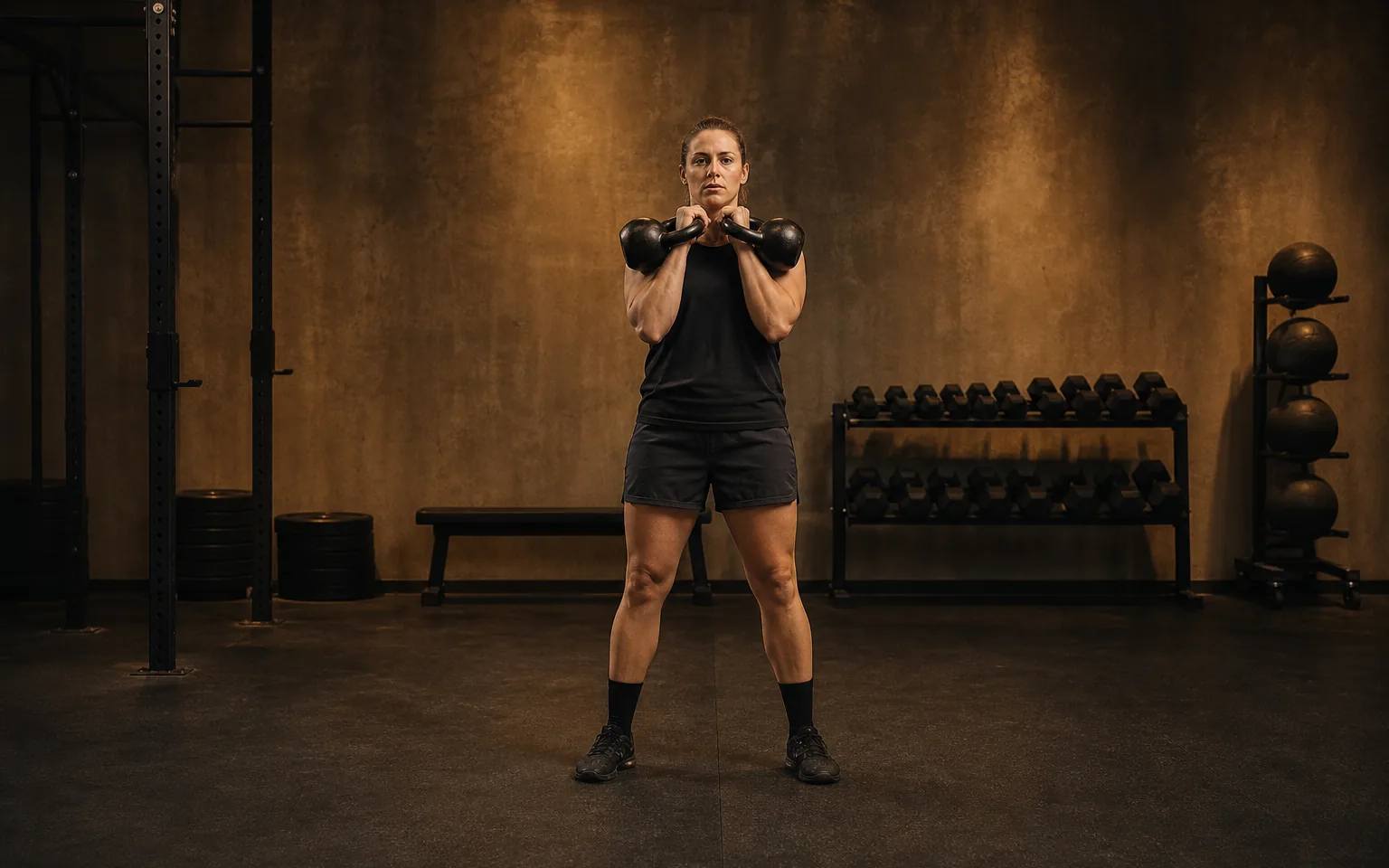
For a one-bell version, do two cleans, one press, and three goblet squats on one side. Switch arms next round. For the classic double-bell version, clean both bells, press them, then complete three front squats. An EMOM format works well: start a round at the beginning of each minute, then rest for whatever time remains. Try 10 to 15 minutes, and choose a load that leaves you enough control to finish every rep.
Don’t race the clock. The presses often set the pace, so use a bell you can press without leaning back or flaring your ribs. If the rack position feels awkward, practice the clean separately before adding a timer. For a lower-skill option, hold one bell at your chest for the squats and leave out the clean and press.
This complex can feel like conditioning, but each round also gives you strength practice. Keep reps low enough that you can breathe and reset between rounds. A hard workout doesn’t need to end with every rep turning into a scramble.
Before the timer, do a few easy bodyweight squats and light hinges. Gentle halos can warm your shoulders, while a kneeling spine wave helps you move through your trunk without rushing. Finish with a slow walk and easy shoulder or hip movement.
3. Kettlebell Swing-and-Goblet-Squat EMOM: A Two-Move Home Workout
This alternating EMOM gives you a clear start and stop, so it suits a busy day when you have 12 minutes and one bell. EMOM means “every minute on the minute”: start the assigned reps at each new minute, then rest for the time left.
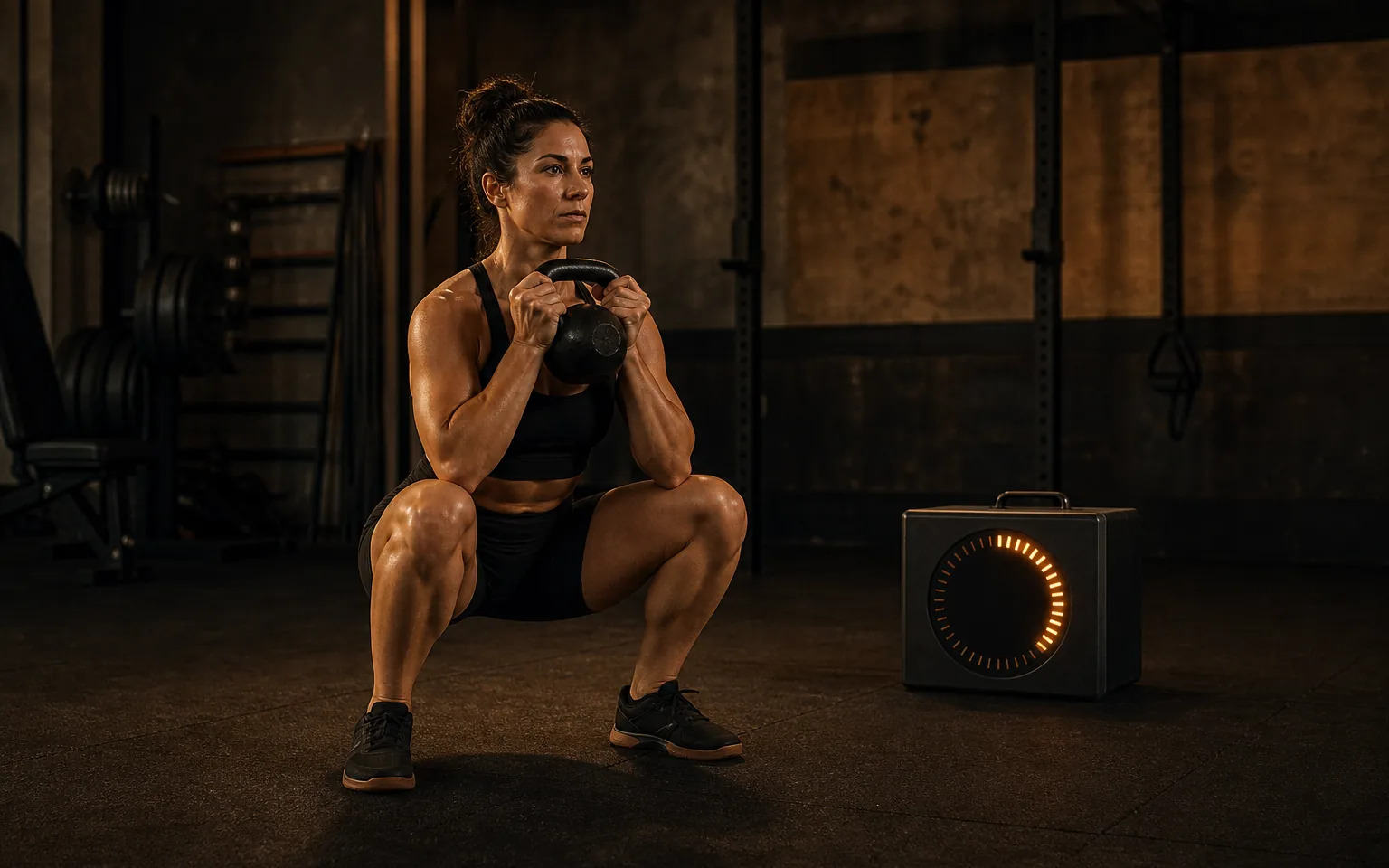
Set a 12-minute timer. On odd minutes, do 8 to 10 two-hand swings. On even minutes, do 6 to 8 goblet squats. That gives you six rounds of each move. If the work takes nearly the full minute, cut the reps. You should be able to put the bell down safely and catch your breath before the next set begins.
Keep the squat bell close to your chest. Sit between your feet, then stand with your whole foot pressing into the floor. For the swing, hinge rather than squat. These cues keep the two moves distinct, even as your breathing picks up.
To build a fuller circuit, add a press and push-up as separate stations instead of cramming them into every minute. For example, use a 16-minute rotation: swings, goblet squats, one-arm presses, then push-ups. Scale each station to finish with time to reset. If overhead pressing is not comfortable, leave it out or use a controlled floor press.
An AMRAP is another choice: repeat a small set of moves for a fixed time, at your own pace. You could divide a session into three 10-minute blocks, with easy mobility first, then a simple strength pairing, then swings and push-ups. Rest between blocks, and use the count as a pacing note, not a score. The home kettlebell circuit ideas provide more ways to arrange timed stations.
Start with 10 minutes if this is your first EMOM. Add time only when each set stays smooth and you can recover before the next minute.
4. Kettlebell Snatch Intervals: A Higher-Skill Conditioning Option
The snatch sends one kettlebell from a backswing to a locked-out position overhead in one motion. It’s a higher-skill choice for women who have already practiced the movement and can receive the bell gently without hitting the forearm.
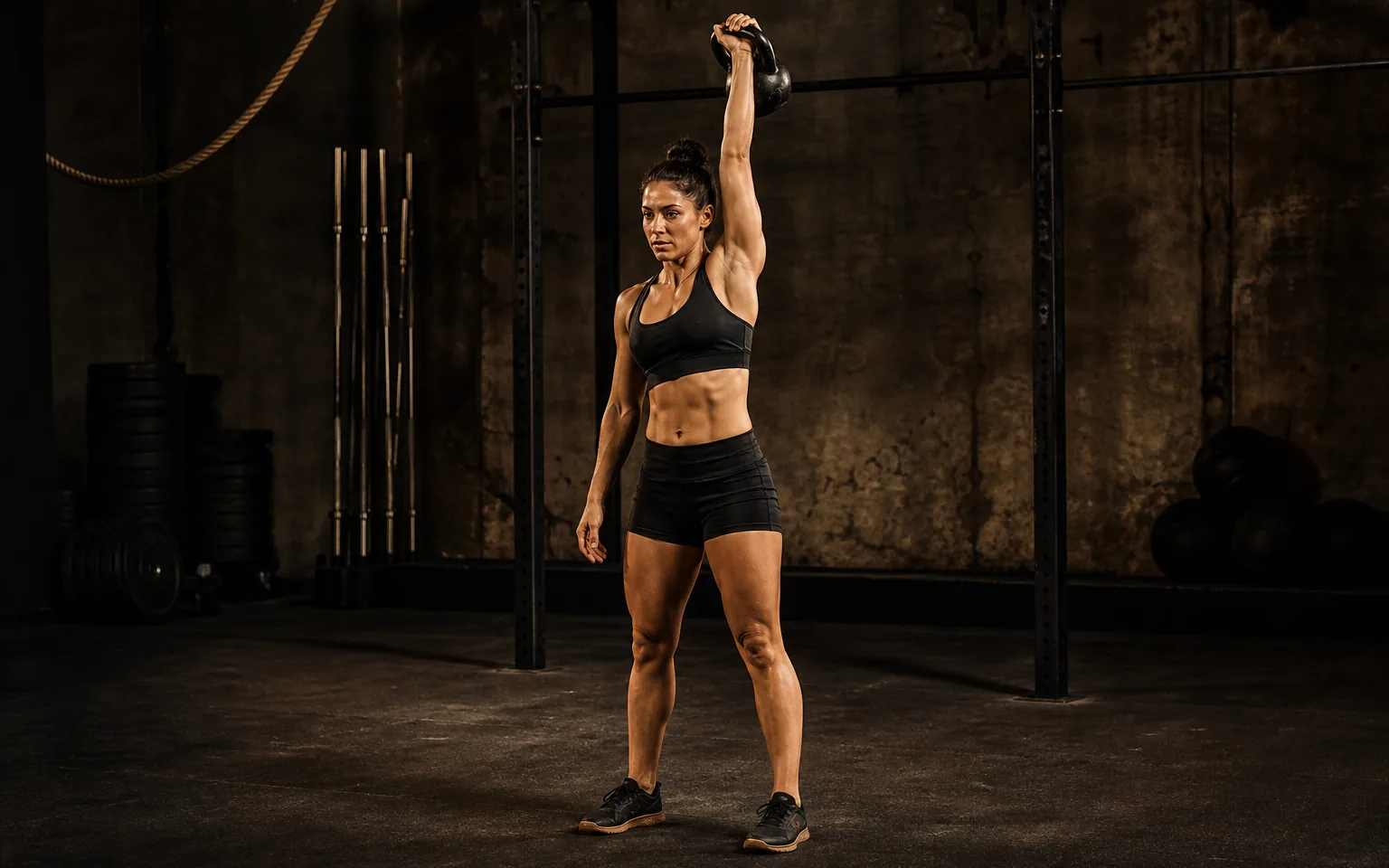
The snatch is a hip-driven lift from the hang to overhead. The hips and legs create the drive; the arm guides the bell into the overhead position. That sequence takes practice. Don’t learn the snatch inside a fast, high-rep workout.
For a short interval, set a 10-minute timer and alternate arms each minute. Do 5 to 8 snatches on the working side, then rest for the remainder of that minute. Switch arms at the next minute. Use a lighter bell than you’d choose for a slow strength set if that helps you keep the catch quiet and controlled.
If the bell bangs your wrist, your grip feels uncertain, or your lockout shifts, stop the interval. Use two-hand swings or cleans as a replacement, but only if those movements are already familiar. A snatch interval should test your repeatable skill, not your ability to push through poor reps.
Warm up with easy hinges and swings first. Then practice a few snatches on each side without a timer. End with a few minutes of walking and relaxed shoulder movement. This is a session to earn gradually, not the first workout to try after buying a kettlebell.
5. Simple and Sinister: A 20-Minute Swing-and-Get-Up Session
Simple and Sinister pairs kettlebell swings with Turkish get-ups. It suits you if you like repeating a small set of movements and already know the get-up positions. The get-up takes you from the floor to standing while you hold the bell overhead, so move slowly and keep control.
A common session structure uses 10 sets of 10 swings, followed by 10 get-ups total, alternating sides. The swings bring a faster hinge pattern; the get-ups ask for balance and steady shoulder control. Simple and Sinister uses an open-ended structure. Keep the bell light enough to pause safely through each get-up position.
Give the get-up its own practice time before you combine it with swings. Learn the steps with no weight or a light bell. If you lose sight of the overhead bell or can’t control the move back to the floor, stop and return to the easier version.
Warm up with gentle hip movement, a few bodyweight squats, and easy swings if you already know them. A shin-box switch with a small twist can prepare your hips, while a slow walk after training lets your breathing settle. This routine may take longer than 20 minutes once you include setup and rest, so don’t squeeze every transition to meet a clock.
It’s a useful repeatable option, but it isn’t the only way to build a week.
Quick Comparison: Which Kettlebell Conditioning Workout Fits Your Day?
Pick the format that matches your movement skill and the kind of effort you want. A clock can make a session feel more structured, but it doesn’t make a new or unfamiliar lift safe to rush.
| Workout | Time format | Skill need | Good fit when |
|---|---|---|---|
| Swing intervals | 10 to 12 minutes | Basic hinge and swing | You want a simple conditioning block |
| Armor Building Complex | 10 to 15-minute EMOM | Clean, press, squat | You want strength work with a clock |
| Swing-and-squat EMOM | 12 minutes | Basic swing and goblet squat | You want clear work and rest periods |
| Snatch intervals | 10 minutes | Confident snatch technique | You already control the overhead catch |
| Simple and Sinister | About 20 minutes | Swing and get-up practice | You prefer a repeatable two-move session |
For a short, low-complexity session, choose swings and goblet squats. For strength practice, choose the Armor Building Complex and leave room to rest. Snatches belong with experienced practice, not as a shortcut to a harder workout.
Some training styles favor repeated, low-rep strength efforts with brief rests instead of chasing a long burn. Iron Cardio uses that kind of clean, press, and squat sequence. The useful rule at home is simple: if your pace keeps breaking your form, reduce the reps or add rest.
A one-bell flow can also link a swing, clean, press, squat, and burpee. That’s a demanding sequence, so keep it for days when you already have those skills. If you’re deciding between brief circuits and a broader weekly plan, these 20-minute kettlebell workout options can help you compare session styles. Hybrid Fit Mom is built for a different need: a six-week schedule with four weekly sessions, including a brief core day.
Frequently Asked Questions About Kettlebell Conditioning Workouts
How long should a kettlebell conditioning workout be?
A kettlebell conditioning workout can fit into 10 to 20 minutes of work, depending on the moves and your skill. Add a brief warm-up before the timer and a short cool-down afterward. Start with less time if you’re new to timed training or still learning the lifts.
Can beginners do kettlebell conditioning workouts?
Yes, beginners can start with controlled moves such as deadlifts, goblet squats, and push-ups. Learn the swing before adding it to intervals. Keep the first sessions short, use a bell you can control, and stop when your posture changes or the reps become rushed.
How many times a week should I do kettlebell conditioning?
Two or three sessions a week is a reasonable starting point for many people, with easier days between hard workouts. Your other training and recovery matter too. If each session leaves you too tired to move well the next day, reduce the workload before adding another workout.
Do I need two kettlebells for these workouts?
No, one kettlebell is enough for swings, goblet squats, one-arm presses, and many EMOMs. The classic double-bell Armor Building Complex uses two bells, but you can use a one-bell version. Choose the variation that lets you control the clean and keep your posture steady.
Conclusion
Start with swing intervals or the swing-and-squat EMOM if those moves feel familiar. Choose one format and try a short session this week. If you want a schedule beyond standalone workouts, review Hybrid Fit Mom’s six-week home program and see whether its pace fits your routine.