Best Workouts for Moms: 5 Options for Busy Days

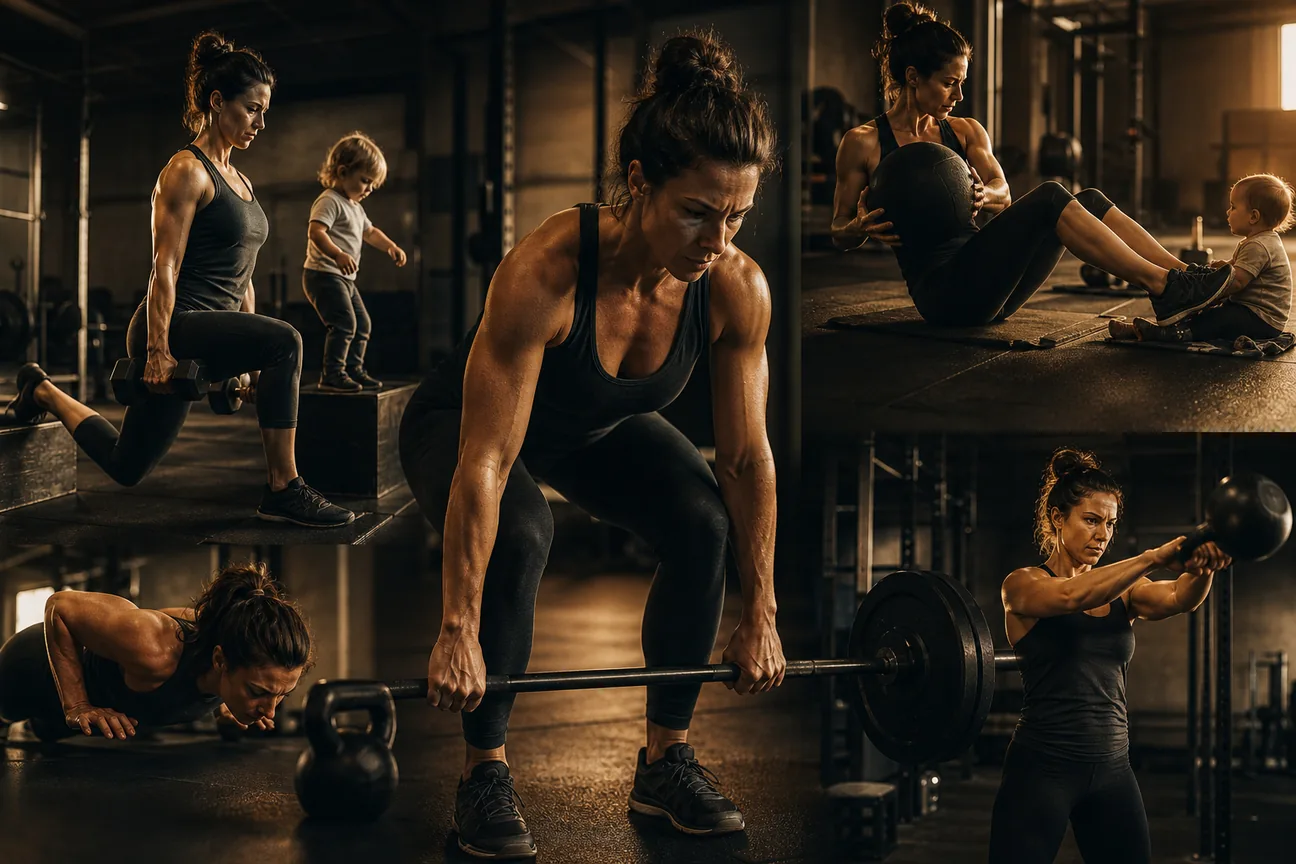
A good workout doesn't need a quiet house or a free afternoon. These workouts for moms use short blocks, little gear, or both, so you can choose what fits today and build a steadier routine over time.
An analysis of 68 comments and questions from YouTube, Reddit and Quora about workouts for moms found that 35% mentioned finding time for workouts.
1. Kettlebell Strength-and-Conditioning Workout: Build Strength at Home
A kettlebell workout pairs strength moves with faster work, often using one bell. It's a good fit if you already know basic skills such as the deadlift and swing, and want a plan that tells you what to do next week, not only today. If you want to compare session formats, these kettlebell full-body workouts for busy women range from short circuits to progressive plans.
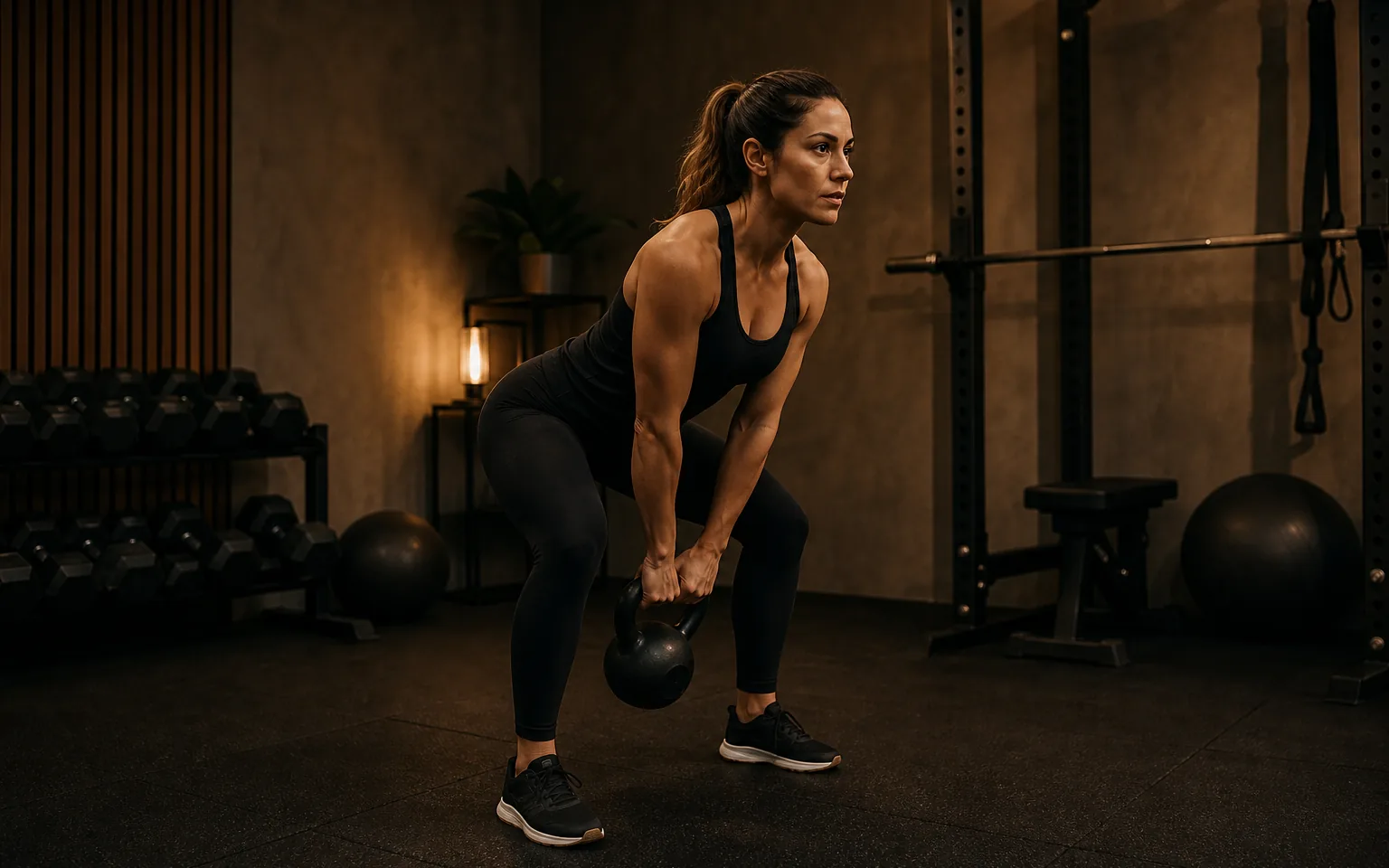
Hybrid Fit Mom's six-week Kettlebell Strength & Conditioning Program is built for busy women and mothers. It uses one kettlebell and has 24 sessions, with four sessions each week. The self-guided program includes prerecorded exercise demonstrations, an eating framework, and lifetime access to future programs. It costs $29 as a one-time purchase and includes a 14-day refund.
Coach Mari Grossi is weightlifting L1 certified, a hybrid athlete, a full-time teacher, and a mom of two. That context shows in the schedule: the program has a set progression, while you follow the sessions at your own pace. Three workouts take about 30 to 40 minutes, and the shorter core day takes about 20 minutes.
A hinge is the key skill behind a deadlift and swing: push your hips back while keeping your spine steady, then stand by driving your hips forward. Don't rush the swing if that pattern isn't reliable yet. Use a deadlift to practice the hinge, and choose a weight you can control through every rep.
A plan can also make a busy week easier to map out. If you want to compare formats and training schedules, see these kettlebell programs for women and busy moms. Hybrid Fit Mom is a sensible fit when you want one bell and a progressive home plan rather than a pile of saved clips.
2. Bodyweight Full-Body Circuit: Train With No Equipment
A bodyweight circuit uses your own body for resistance. It suits you when you want to start at home without buying gear, or when your workout window is too short to set up equipment. A single round can take about 10 minutes; two rounds make a fuller session of roughly 20 minutes.
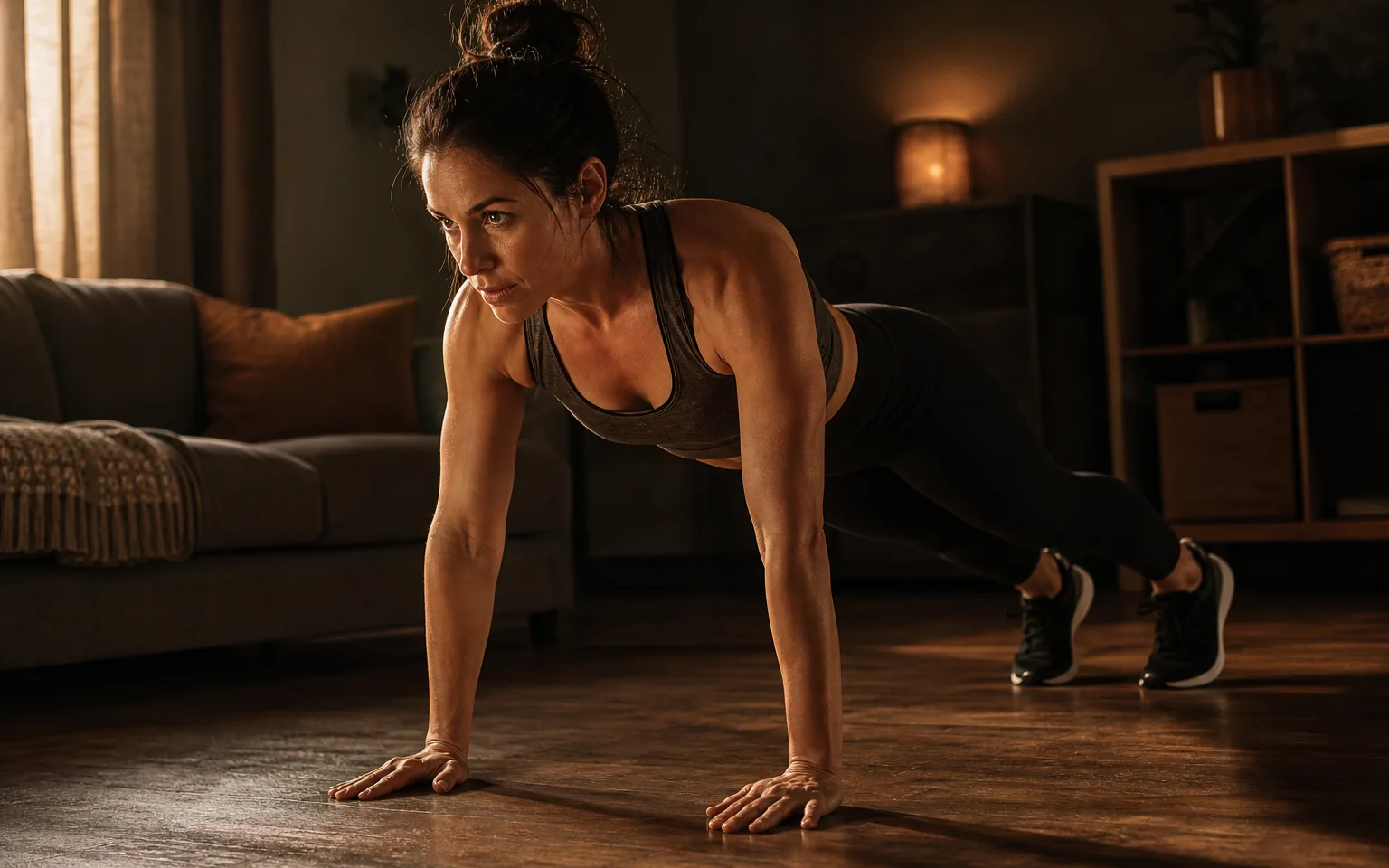
Try one round of these five moves. Work at a steady pace, and rest when your form starts to slip.
- Squat: Send your hips back and down, keeping your feet planted. Tap a chair if it helps you control the depth.
- Incline push-up: Put your hands on a stable counter. Keep your body in one line as your chest moves toward it.
- Glute bridge: Lie on your back with your feet near your hips. Lift your hips, then lower with control.
- Reverse lunge: Step back softly. Hold a sturdy chair for balance, and use a shorter range if needed.
- Dead bug: Lie on your back with knees bent. Reach one arm and the opposite leg away while keeping your lower back steady.
A round of eight to 12 controlled reps per move is a useful starting point. If you have less time, do fewer reps or split the circuit into two short blocks. You don't need to finish every move in one uninterrupted stretch for the session to count.
If you want printable routines with clear work formats, Hybrid Fit Mom also has printable kettlebell workouts for busy women. For this no-gear circuit, though, your only setup is a clear patch of floor and a stable surface for incline push-ups.
3. Dumbbell Strength Workout: Add Simple Resistance at Home
Dumbbells let you add load without a large home gym. This option suits you if you have a pair already, or if bodyweight moves feel too easy and you're ready to make strength work more demanding. You can train your whole body in about 20 to 30 minutes, including a brief warm-up and rest between sets.
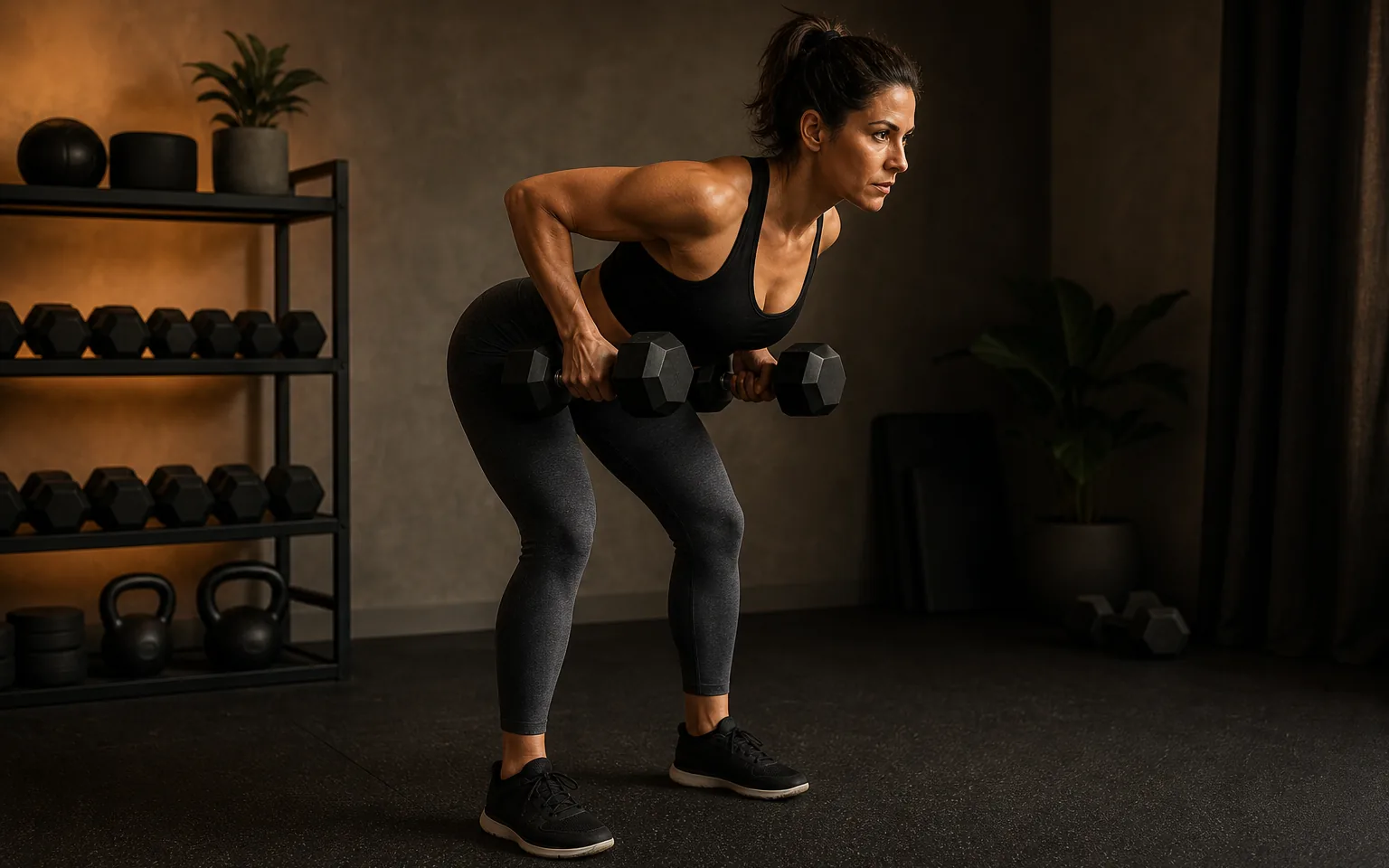
Use a simple circuit: squat, hinge, row, floor press, and carry. Start with two or three rounds, using a load that lets you keep each rep smooth. A pair of light dumbbells is enough to learn the patterns; heavier weights aren't useful if you have to swing or twist to move them.
- Goblet squat: Hold one dumbbell close to your chest. Sit between your hips, then stand through your whole foot.
- Romanian deadlift: Hold dumbbells by your thighs. Push your hips back and stop when you feel a stretch in the backs of your legs.
- Row: Hinge forward with a steady back. Pull the weights toward your ribs without shrugging your shoulders.
- Floor press: Lie down with knees bent. Lower the weights until your upper arms meet the floor, then press them up.
- Suitcase carry: Hold one weight at your side and walk slowly. Keep your torso upright rather than leaning toward the weight.
Choose a weight you can lift for eight to 12 good reps, then stop before your form changes. If you can do more reps with control, add a small amount of load or slow the lowering part of each rep. Change one variable at a time so you can tell what made the set harder.
Keep the session easy to restart. Leave the dumbbells in a safe spot where you can reach them, and decide in advance which five moves you'll do. A saved workout may be handy, but a written sequence cuts down the time spent choosing while someone waits for a snack.
4. Low-Impact Cardio Intervals: Raise Your Heart Rate Gently
Low-impact intervals alternate brisk movement with easier recovery, without jumps. They're a strong choice for a short morning wake-up or a day when you want to move without adding hard landings. A 10- to 20-minute session can fit before the household gets going or during a play break.
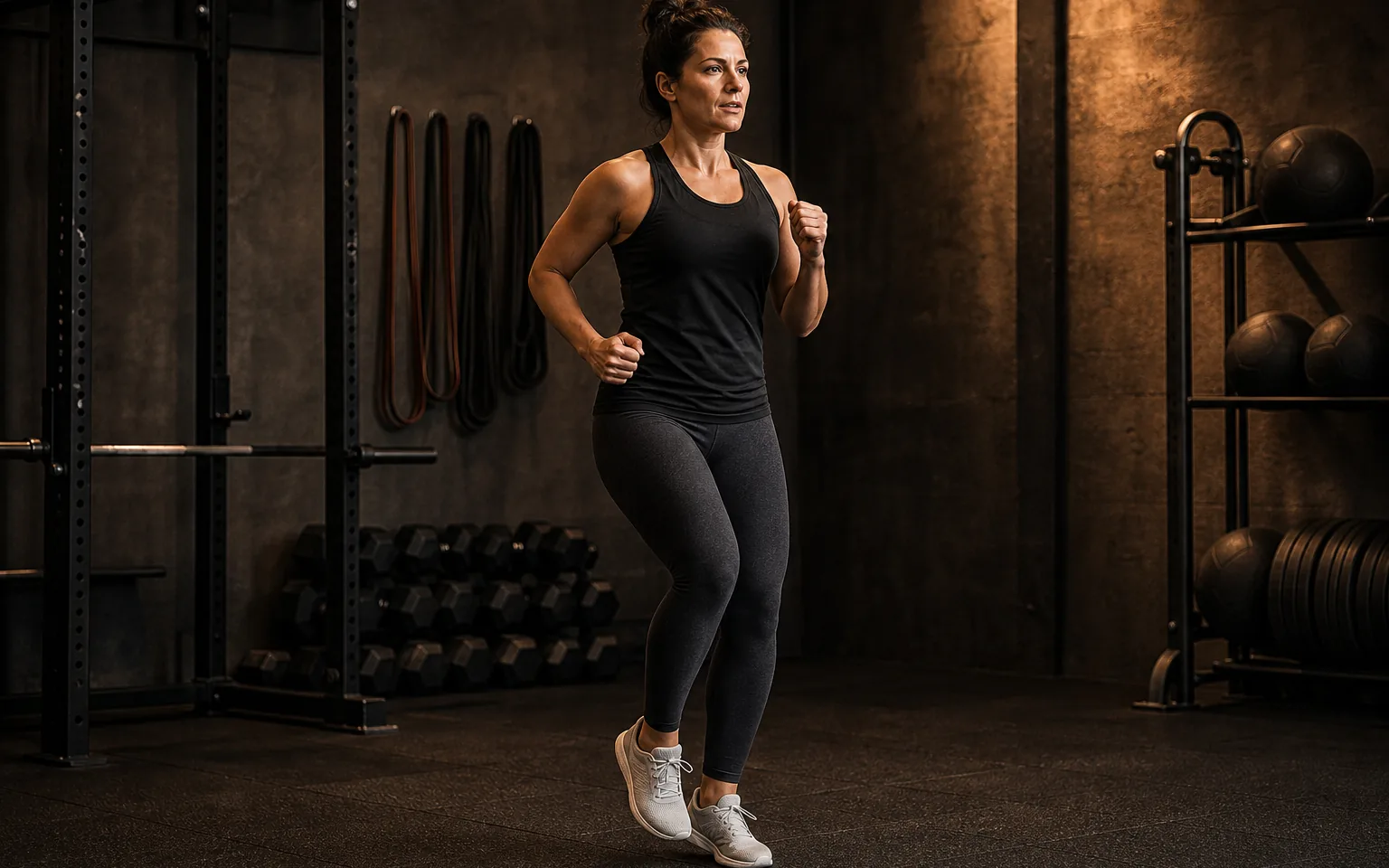
Try this 12-minute format. March in place for two minutes to warm up, then repeat the four-minute circuit twice. Work for 40 seconds and move gently for 20 seconds between exercises.
- March with relaxed arm swings.
- Step side to side, reaching your arms at shoulder height.
- Alternate a knee lift with a small opposite-arm drive.
- Step back into a shallow reverse lunge, then switch sides.
Finish with an easy walk around the room until your breathing settles. Keep one foot on the floor during each step; you don't need to jump to make the pace feel brisk. If a move causes pain, stop and choose a gentler option.
Short sessions may be easier to repeat than long workouts that need a perfect block of free time. The goal here isn't a calorie number. It's a reliable slot in your day, with enough effort to warm you up and enough control to keep the movements calm.
For a simple routine, use a timer and keep the same four moves for a few weeks. Once the sequence feels familiar, you can extend a work interval or add another round. Don't increase both at once. And leave space between harder sessions if your legs feel tired.
5. Mobility and Core Reset: Make Room for Control and Movement
A mobility and core reset is a short, slower session focused on steady movement. It suits you after a long day of sitting, between strength days, or when you have 10 minutes but don't want another hard workout. Think of it as a way to practice control, not as a test of how far you can stretch.
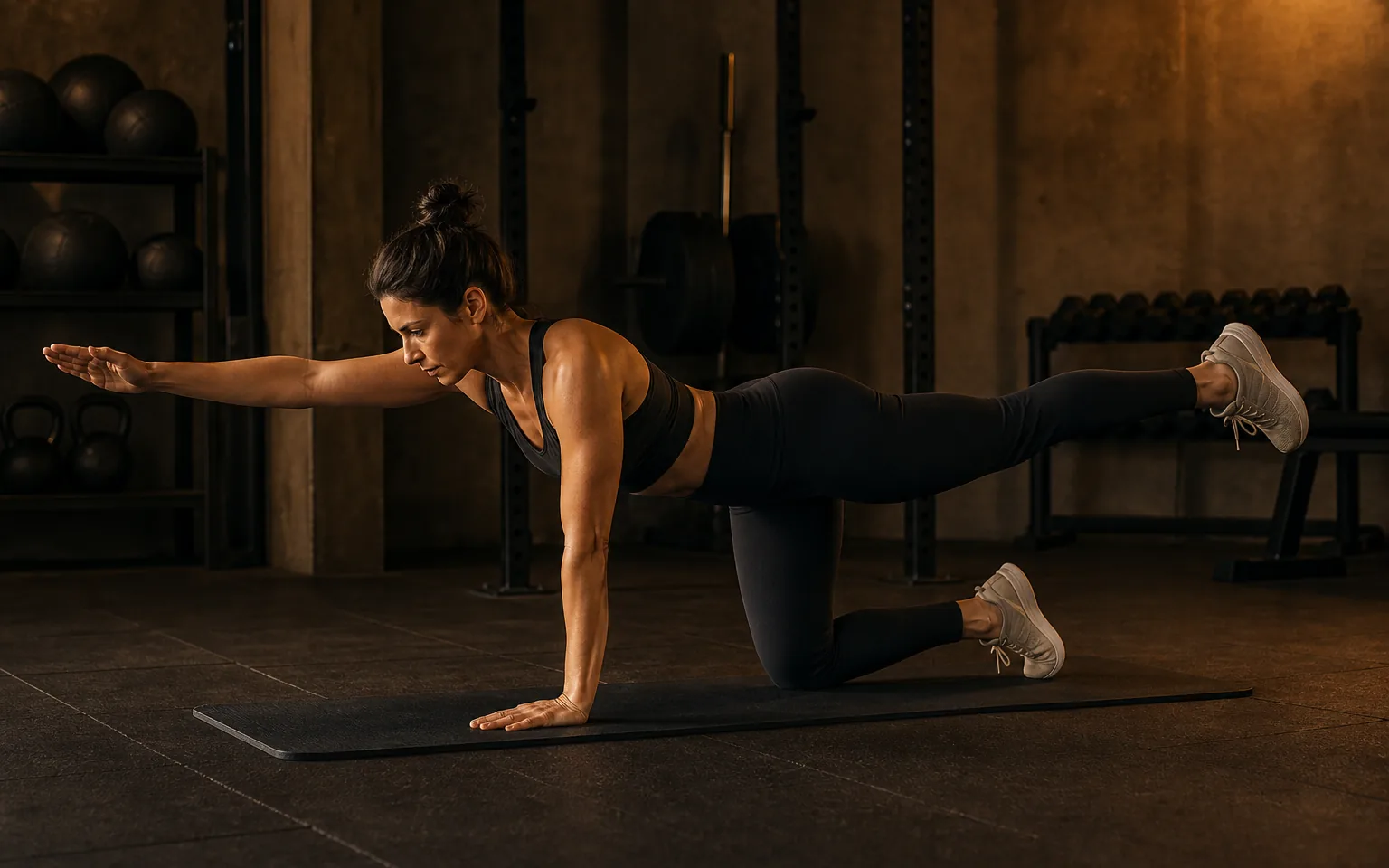
Move through this sequence at an easy pace. Take about one minute per move, breathing normally and staying within a comfortable range.
| Move | Simple cue | Good time to use it |
|---|---|---|
| Cat-cow | On hands and knees, gently round and extend your back. | After sitting for a while |
| Hip hinge drill | Push your hips back while keeping your ribs over your pelvis. | Before a kettlebell session |
| Dead bug heel tap | Lower one heel at a time while keeping your trunk steady. | For a brief core practice |
| Glute bridge | Lift your hips, then lower slowly without arching your back. | After an easy walk |
| Open-book rotation | Lie on your side and turn your top arm gently across your chest. | When your upper back feels stiff |
Keep the effort low enough that you can breathe and talk. If a stretch feels sharp, back out of it. For core work, shorten the movement as soon as your back arches or your ribs flare. A smaller, steady rep is better than forcing a bigger range.
Pregnancy and the weeks after birth call for individual guidance. Ask your care team what fits your situation before starting or progressing exercise, especially if you have pain or other warning signs.
Use this session on a rest day if gentle movement feels good, or skip it and rest. Recovery is part of a training week, not a missed workout. The point is to feel more in control of your next session, not to collect extra minutes.
FAQ
What is a good workout for a busy mom?
A good workout is one you can repeat around your actual schedule. A 10-minute bodyweight circuit works when you have a small gap, while a kettlebell plan may suit you if you want strength work with a clear weekly progression. Start with a session that feels manageable, then protect two workout times in your week.
How many days a week should moms work out?
Two strength sessions a week are a reasonable starting point for many adults. You can also include regular aerobic activity, which you can build through walks or low-impact cardio. Your schedule, health, and recovery matter, so begin with a routine you can keep.
Can I work out at home with no equipment?
Yes, bodyweight exercises can train major movement patterns without special gear. Squats, incline push-ups, glute bridges, reverse lunges, and dead bugs make a simple full-body circuit. Use a stable counter or chair for support, and clear enough space to step back without hitting furniture or toys.
Are short workouts worth doing?
Yes, short workouts can help you build consistency and contribute to your weekly activity. A 10-minute circuit is a useful choice on a packed day, while a longer session may give you more time for strength work. Short sessions don't need to replace every longer workout; they give you another way to keep moving.
When can I exercise after having a baby?
There isn't one return-to-exercise date that fits everyone. Your recovery, birth experience, and symptoms affect what is appropriate, so ask your clinician for personal guidance before you restart or increase training. Begin gently when cleared, and stop if you notice pain, pressure, or other symptoms that concern you.
Conclusion
Choose the workout that fits your time and training level today. If you know basic kettlebell skills and want a plan that builds week by week, explore Hybrid Fit Mom's six-week program; otherwise, start with one bodyweight round. Put your first session on the calendar, then build from there.