Best Printable Kettlebell Workouts for Busy Women


Want a kettlebell workout you can print, set beside your mat, and start without a long setup? These printable kettlebell workouts give you five formats for different time windows and training goals. Hybrid Fit Mom’s six-week program is a fuller option when you want a schedule, demos, and an eating framework instead of a stack of one-off sessions.
An analysis of 56 comments from YouTube and Reddit about Printable Kettlebell workouts found that 34% mentioned desired workout length and challenge format.
1. 15-Minute Full-Body Kettlebell Circuit: A Quick Home Session
This short circuit pairs a squat with a hinge, so one bell can train your legs and the back of your body. It suits you when the day has a small gap, but you still want more than a few rushed swings.
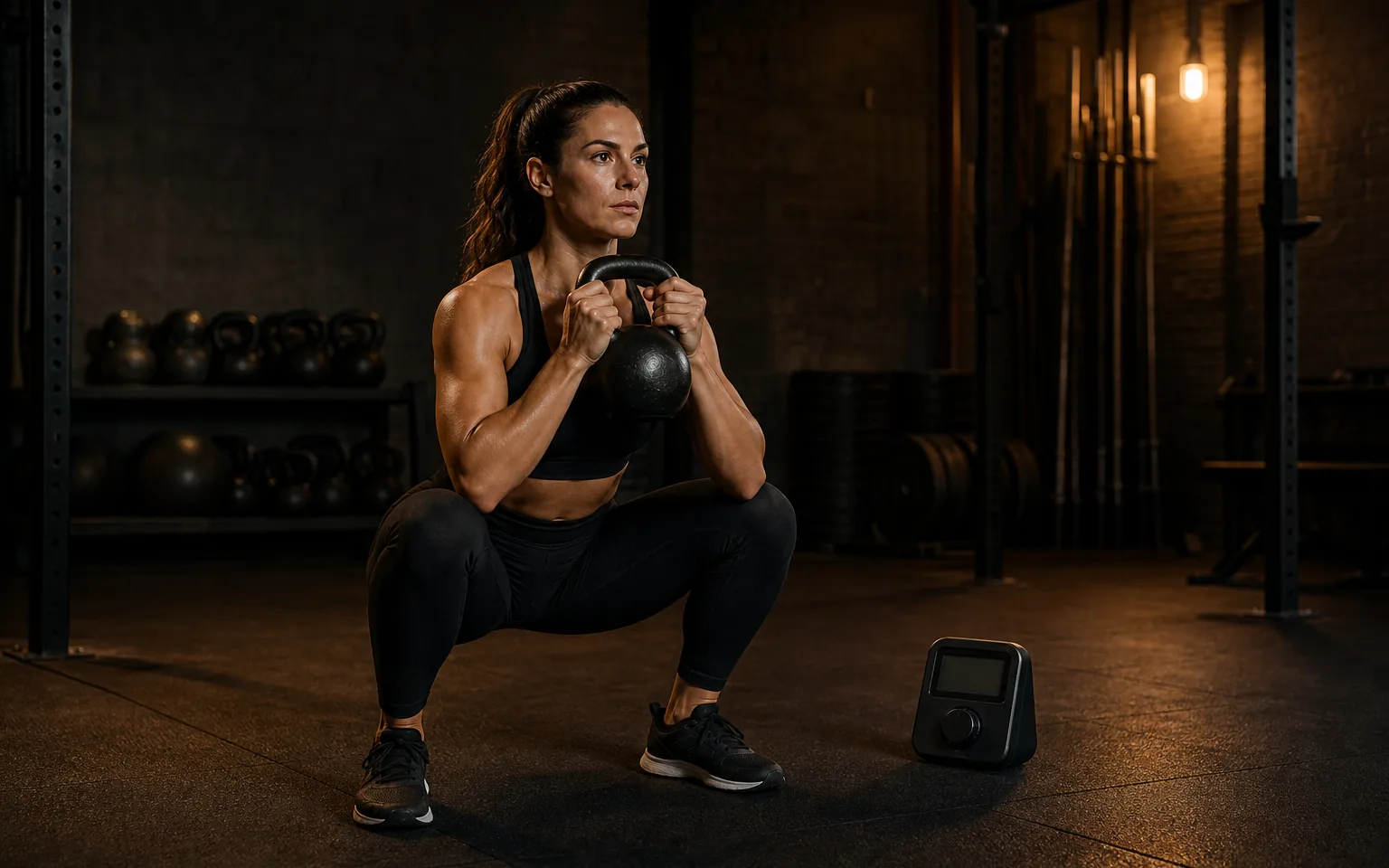
Time: 15 minutes of work, plus a brief warm-up. Gear: one kettlebell and a clear patch of floor. Set a timer for 30 seconds of work and 30 seconds of rest. Alternate goblet squats with kettlebell deadlifts for the full session.
Hold the bell close to your chest for the squat. Let your knees track in line with your toes, then stand through your whole foot. For the deadlift, place the bell between your feet. Push your hips back as if closing a drawer, keep your back long, then stand tall.
Keep the pace calm enough to hold your posture. If you already have a steady swing, you can swap a few deadlift intervals for two-hand swings. If not, stay with deadlifts. A printed routine should help you remember the plan, not push you into a new skill at speed.
If you want more formats built around whole-body sessions, the full-body kettlebell workouts for busy women include other time and effort options. Write down the bell you used and how each round felt. That note gives you a simple starting point next time.
2. Strength-Focused Kettlebell Ladder: A Simple Way to Build Reps
A rep ladder keeps a strength session simple: you repeat a small group of moves while the rep count rises. It fits you when you want to practice steady reps and track your work, without turning the workout into a race.
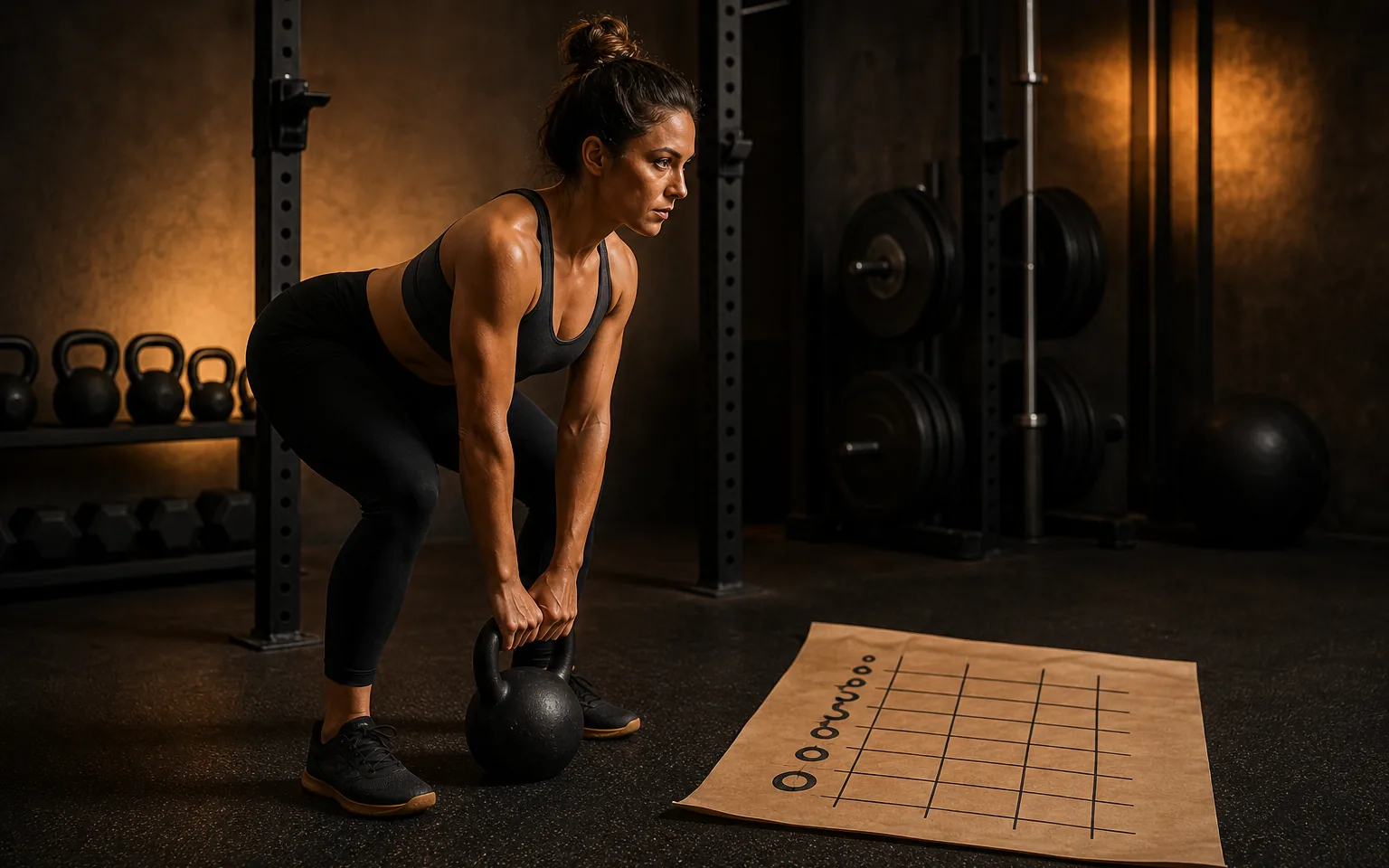
Time: about 20 minutes. Gear: one kettlebell. Use a goblet squat and a deadlift. Begin with 4 reps of each move, then do 6 of each, followed by 8 of each. Rest between rounds until you can start the next one with control. If the last round changes your form, stop there.
For the squat, hold the bell by its sides at chest height and sit between your feet. For the deadlift, keep the bell close to your legs as your hips move back. These familiar patterns make a useful home strength session; you don’t need to add a complex lift just to make a ladder feel hard.
Use the same bell throughout if you can control it for both movements. If the squat feels easy but the hinge feels heavy, don’t force extra reps. Try a lighter bell or repeat the lower rung. The aim is a clean set you can compare with your next workout.
For more strength formats and cues, see kettlebell strength workouts for busy women. A ladder is most useful when you write down the reps you finished, rather than judging the session by how tired you feel.
3. Low-Impact Kettlebell EMOM: A Structured Workout for Busy Days
EMOM means every minute on the minute. You begin a set at the start of each minute, then rest for whatever time remains. This format suits you when a timer helps you stay on track, but you want less impact than a workout built around jumps or fast swings.
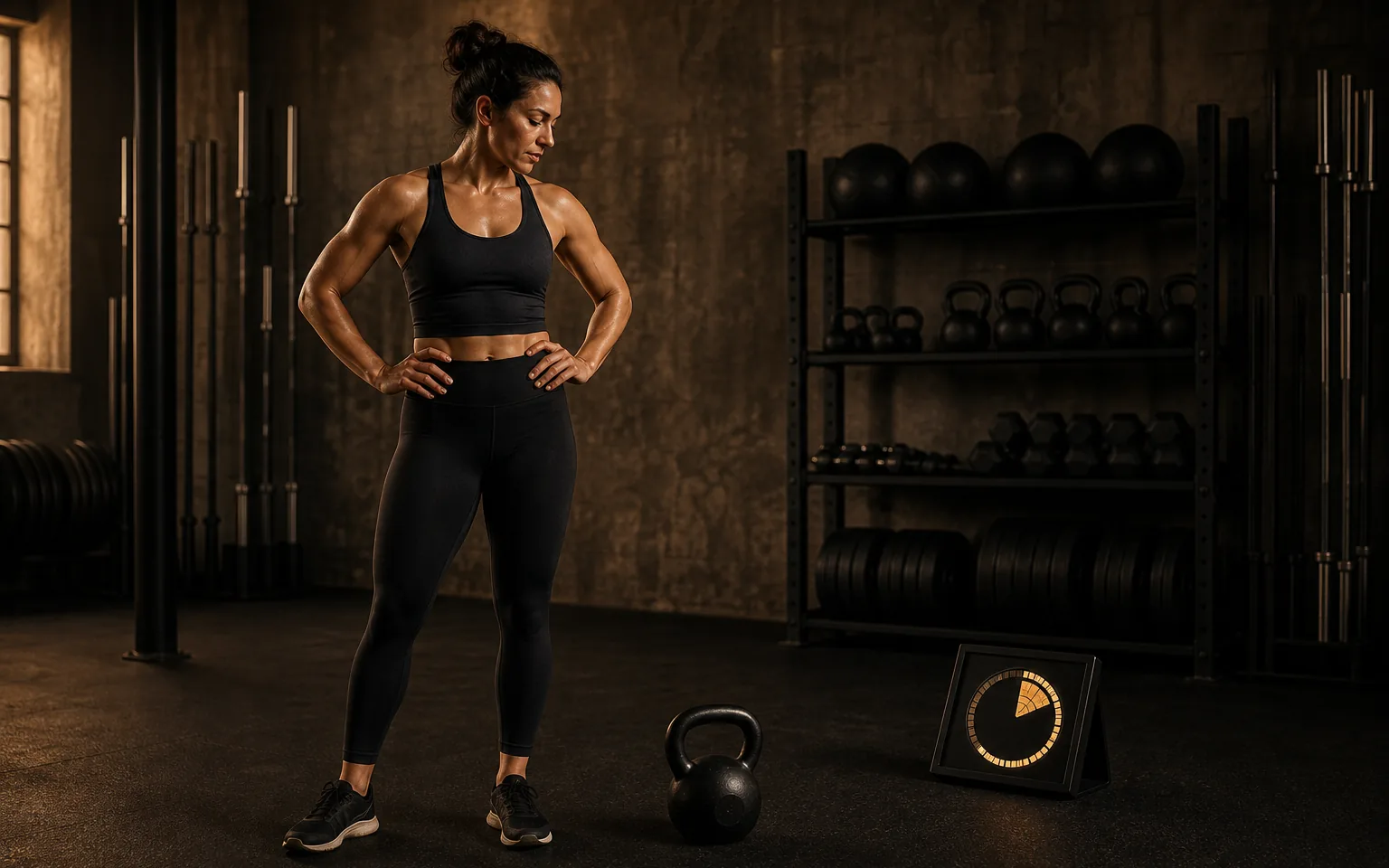
Time: 9 minutes for one round, or 18 minutes for two. Gear: one kettlebell, a timer, and a mat if you want one. Set up six one-minute stations: deadlift, goblet squat, supported row, glute bridge, floor press, and a standing march while holding the bell at your side.
Choose a small number of controlled reps for each station, then rest for the remainder of the minute. For the row, switch arms halfway through. If you’re new to timed sets, use 30 seconds of work and 30 seconds of rest instead, or do just four stations.
Keep the bell down for any move you can’t do smoothly. A sturdy chair can support your free hand during rows. If you’re short on space or need a lower-impact day, the chair-assisted row and bridge let you keep working without rushing through balance-heavy moves.
Progress by adding a station or repeating a second round only when you can keep your posture steady. The timer sets the pace. It doesn’t get to choose your form.
4. Kettlebell Lower-Body and Core Workout: A Focused Strength Option
This focused session combines a hinge with floor-based core work. Choose it when you want to train your legs and trunk without building the whole workout around standing intervals.
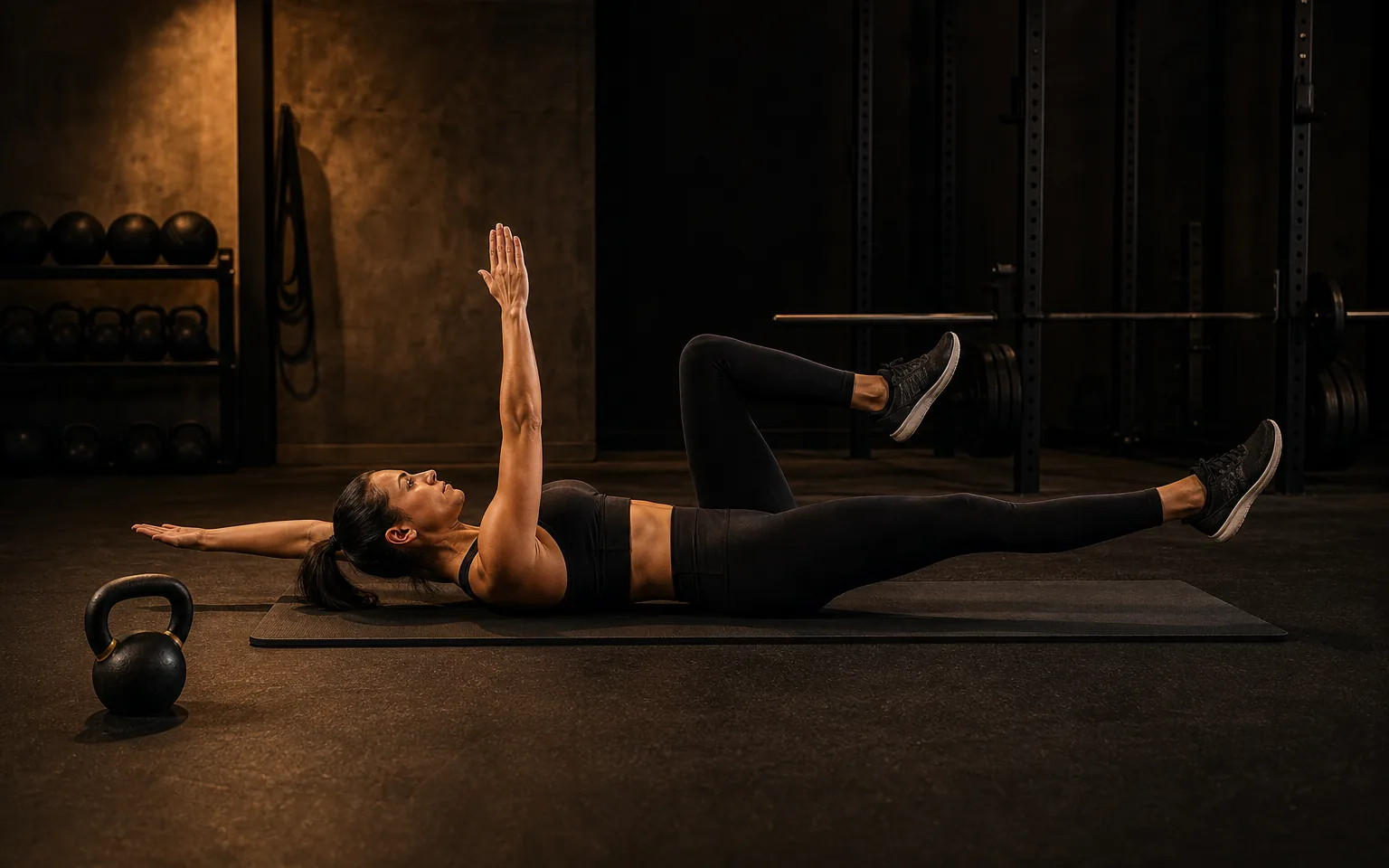
Time: about 20 minutes. Gear: one kettlebell and a mat. Complete three rounds of 8 kettlebell deadlifts, 10 glute bridges, 6 dead bugs per side, and a 15- to 25-second plank. Rest as needed between moves.
For the deadlift, send your hips back and keep the bell close. During a bridge, press through your heels and lift your hips without arching your lower back. For a dead bug, move one arm and the opposite leg only as far as you can while keeping your back steady against the floor. Make the plank shorter if your hips start to sag.
Kettlebells can add resistance to familiar moves, but a heavier bell isn’t always the next best step. Start with a weight you can control, then gradually increase the load or reps as your strength grows.
Hybrid Fit Mom’s program includes a shorter core day of about 20 minutes alongside its main sessions. That can help you place core work into a crowded week without treating every training day as a full-length workout.
5. Beginner-Friendly Kettlebell Conditioning Intervals: A Flexible Cardio Option
This circuit alternates simple strength moves at a steady pace. It suits you when you want your heart rate up but need the option to pause, change a move, or shorten the session.
Time: about 12 minutes. Gear: one kettlebell and a sturdy chair for support if needed. Repeat this loop at a calm pace: 8 deadlifts, 6 goblet squats, 6 supported rows per side, then 8 chair sit-to-stands or supported split squats per side. Rest whenever you need to.
Keep track of full rounds, but treat the count as a note, not a grade. If a split squat feels unsteady, use chair sit-to-stands. If you’re still learning the hinge, replace any swing with a deadlift. The bell should move because your hips drive it, not because you lift it with your arms.
A longer plan can help when the main problem isn’t finding one workout, but knowing what to do next week. Hybrid Fit Mom’s six-week program has four sessions each week, with main workouts lasting 30 to 40 minutes and a roughly 20-minute core day. It includes prerecorded exercise demos and an eating framework. The program costs $29 as a one-time purchase, with lifetime access and a 14-day refund.
For a self-paced plan with that schedule, see kettlebell workout programs for women. A short printable circuit is handy for a busy day. A six-week plan gives you a next session to return to.
Compare These 5 Printable Kettlebell Workouts at a Glance
Choose by the time you have and the skill you want to practice. These sessions can be printed from the page for a simple workout sheet. The six-week Hybrid Fit Mom program adds a planned schedule, exercise demos, and an eating framework.
| Workout | Best fit | Time | Easy adjustment |
|---|---|---|---|
| Full-body circuit | Short home session | 15 minutes, plus warm-up | Use deadlifts instead of swings |
| Strength ladder | Steady rep practice | About 20 minutes | Repeat a lower rep rung |
| Low-impact EMOM | Timed, supported moves | 9 or 18 minutes | Use 30 seconds on, 30 off |
| Lower-body and core | Floor-based core work | About 20 minutes | Shorten the plank |
| Conditioning intervals | Flexible cardio effort | About 12 minutes | Swap split squats for sit-to-stands |
Want a session you can finish in a small gap? Start with the circuit or EMOM. Want a repeatable schedule with the next week already planned? The six-week program is the more structured choice.
FAQ
Can I print these kettlebell workouts?
Yes, you can print the workout sections from your browser and keep the sheet near your training space. The routines above are presented as print-friendly formats, not as a single downloadable PDF. If you need a multi-week plan, Hybrid Fit Mom’s program follows a six-week schedule.
What kettlebell weight should a beginner use?
Choose a weight you can control through the hardest move in the workout. Your deadlift may feel easy while an overhead press feels too heavy, so don’t assume one weight suits every lift. Start lighter if you’re unsure. Add reps or load only when you can keep the same posture and control from the first rep to the last.
How often should I do kettlebell workouts?
Start with two sessions a week and leave a rest or easy-movement day between them. If your form stays steady and you recover well, you can build from there. You can also review physical activity guidance for weekly aerobic activity targets.
Can I do these workouts without kettlebell swings?
Yes. Swings aren’t required for a useful session. Use deadlifts while you practice the hip hinge, which means moving your hips back and then standing tall. The workout should match the skill you can do well today. Add swings only when the hinge feels steady and you can control the bell on its return.
What should I do if a move causes pain?
Stop that move rather than trying to push through pain. You can shorten the range or switch to an easier option only if it feels comfortable. If you have an ongoing injury, joint concern, or pain that continues, ask a qualified health professional what movements are right for you before adding load.
Conclusion
Pick the session that fits the time you actually have, then write down your reps and bell weight. If you want a plan beyond today’s workout, review Hybrid Fit Mom’s six-week schedule and choose your first training days.