Best 30-Day Kettlebell Programs for Home

A 30-day kettlebell program can give your home training a clear shape, but a calendar alone won’t tell you what to do next. These five options include a six-week home plan, focused strength resources, and training for lifters who already use two bells.
1. Hybrid Fit Mom: Six weeks of self-guided home training
Hybrid Fit Mom is a self-guided six-week strength and conditioning program for busy women and mothers with basic kettlebell skills. It suits you if you want a planned week at home instead of a folder of saved workouts.
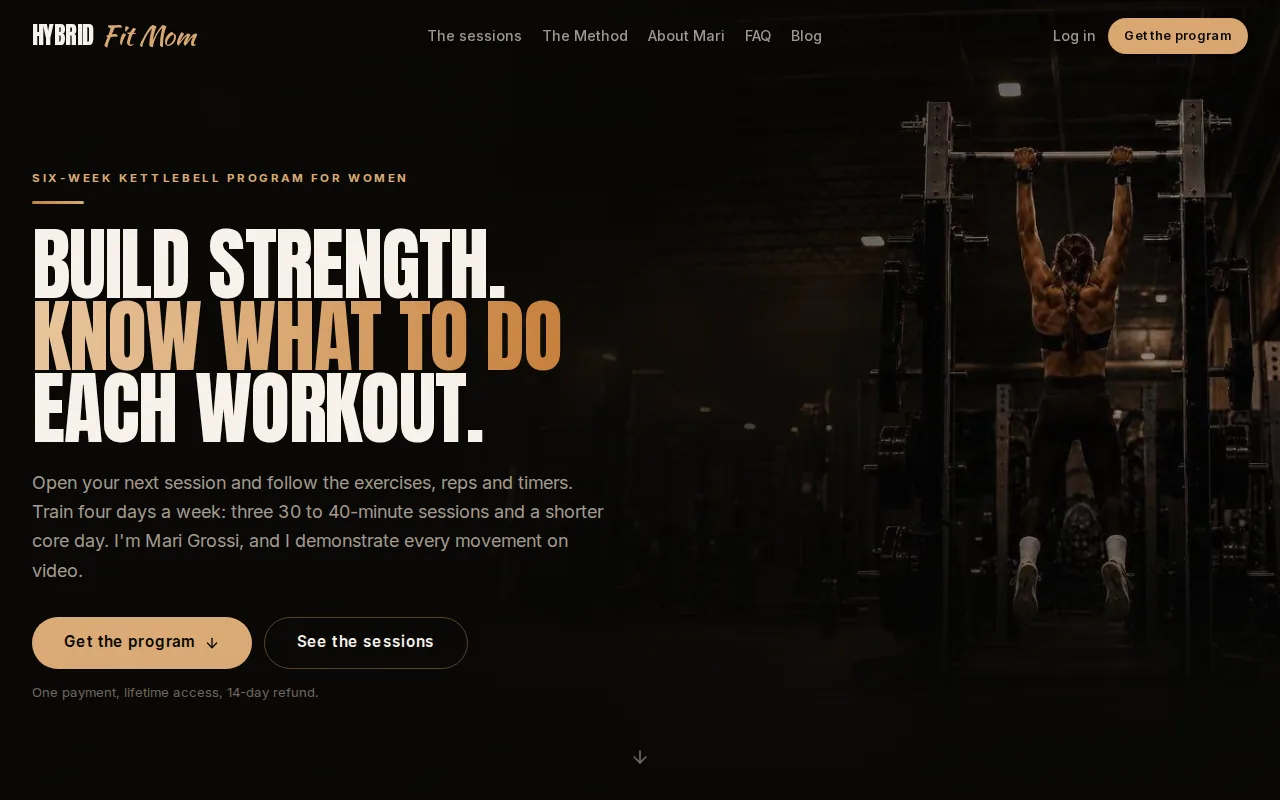
The schedule has four sessions each week: three workouts of about 30 to 40 minutes, plus a core session of about 20 minutes. You need one kettlebell. The sessions progress from lighter endurance work toward heavier resistance and faster power work, so each part of the block has a purpose.
Mari Grossi, the coach behind the plan, is a weightlifting L1 certified coach, hybrid athlete, full-time teacher, and mother of two. Prerecorded demonstrations show movement cues you can review before a session. The program includes an eating framework and lifetime access to future programs. It costs $29 as a one-time purchase and has a 14-day refund.
When a pickup runs late, a shorter core day can be easier to keep than a long workout. The schedule and progression are laid out for you, but the training is self-guided, not live coaching. If your hinge or press feels uncertain, learn the movement before adding speed or load.
If you want to compare the session structure with other home plans, see these six-week kettlebell programs for women. The difference between having workouts and having a progression is simple: one gives you a session; the other tells you what comes next.
2. Simple & Sinister by StrongFirst: A focused kettlebell training resource
Simple & Sinister by StrongFirst is a minimalist kettlebell practice built around the one-hand swing and Turkish get-up. It may suit you if you like repeating a small set of movements and want clear targets rather than a varied weekly menu.
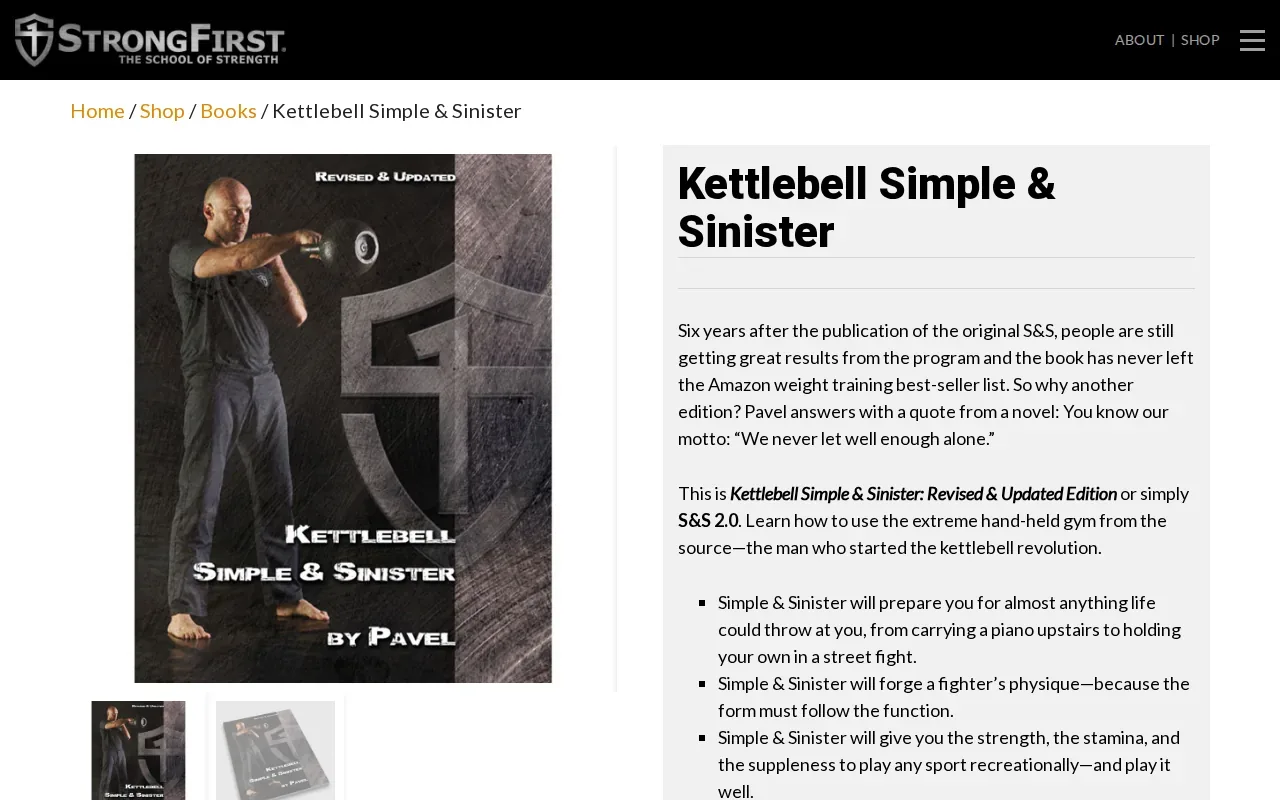
The basic work is 100 swings and 10 get-ups, practiced regularly while keeping each set well short of failure. A swing is a hip hinge: send your hips back, then drive them forward to move the bell. A Turkish get-up takes you from the floor to standing while you hold the kettlebell overhead. That sequence needs slow practice before you add load.
The progression centers on rest, not adding weight every session. You begin with enough rest to keep your reps crisp, then gradually shorten it. StrongFirst describes the program as swings and get-ups with clear goals and progression in its overview of Simple & Sinister.
This isn’t a 30-day challenge with a finish line. It’s a repeatable practice that may take months to build toward its named standards. It also has a narrow exercise range, so it may not match your goal if you want regular squat, press, and row work in one plan.
Before you follow the routine, make sure you can swing without turning the move into a squat. Learn the get-up in stages, too. A steady overhead hold matters more than rushing through the rep count.
3. EricLeija.com: Online workouts and courses to explore
EricLeija.com has online training, courses, and workouts. It may fit you if you want to explore different training materials instead of following one fixed six-week schedule.
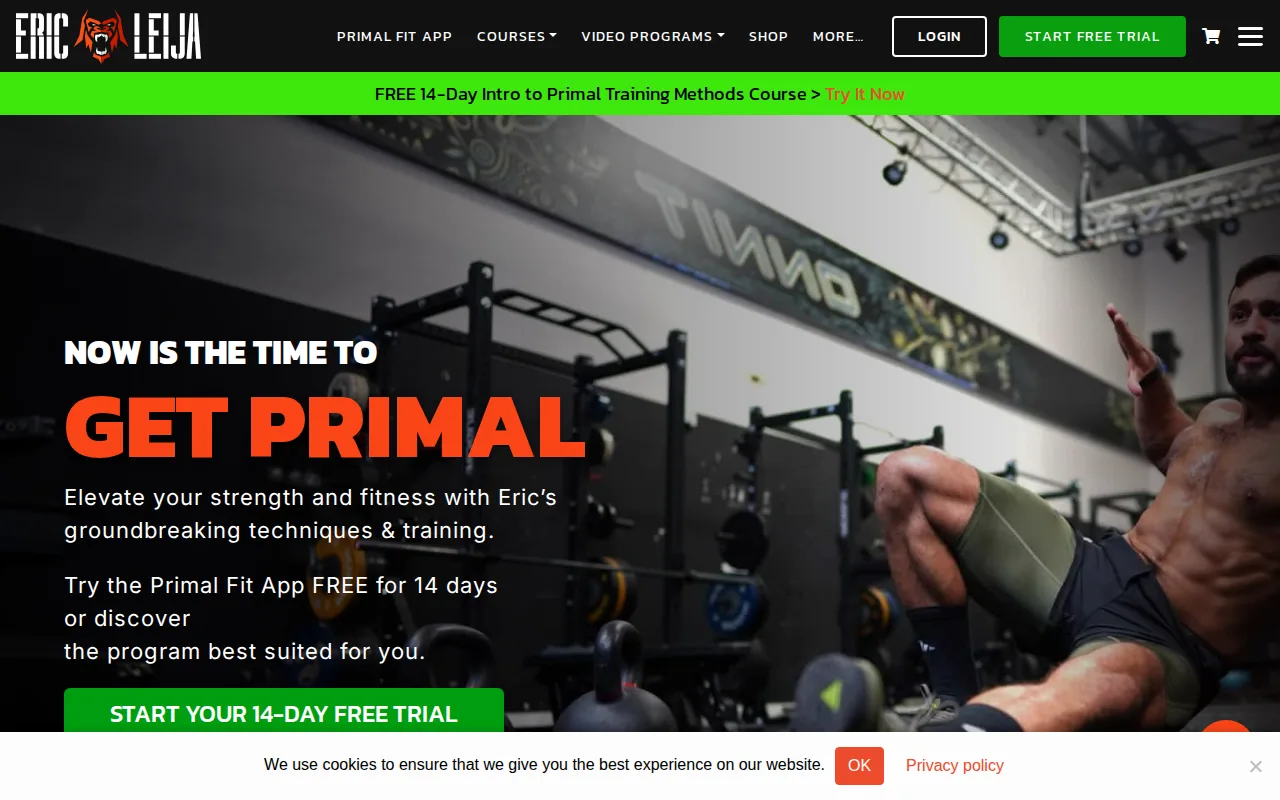
One course includes more than 150 high-definition videos along with kettlebell workout instruction. That volume of demonstrations may be useful when you want to see how a movement is done before trying it. But a large library can leave you with a new job: choosing which sessions fit together and what to repeat next week.
If you’re choosing a video by the time you have available, compare it with these 20-minute kettlebell workouts for women. A short session can solve the time problem for today. A progression plan also answers what to do the next time you train.
Pick this option if you enjoy browsing courses and workouts and feel comfortable shaping your own weekly routine. If you want a fixed schedule, check that the material you choose gives you enough direction to build one.
4. Hypertrophy by Wyron Bell: Double-bell training for intermediates
Hypertrophy by Wyron Bell is an eight-week muscle-building program for intermediate athletes who already train with two kettlebells. It’s for you if building muscle is the main goal and the two-bell lifts are familiar.
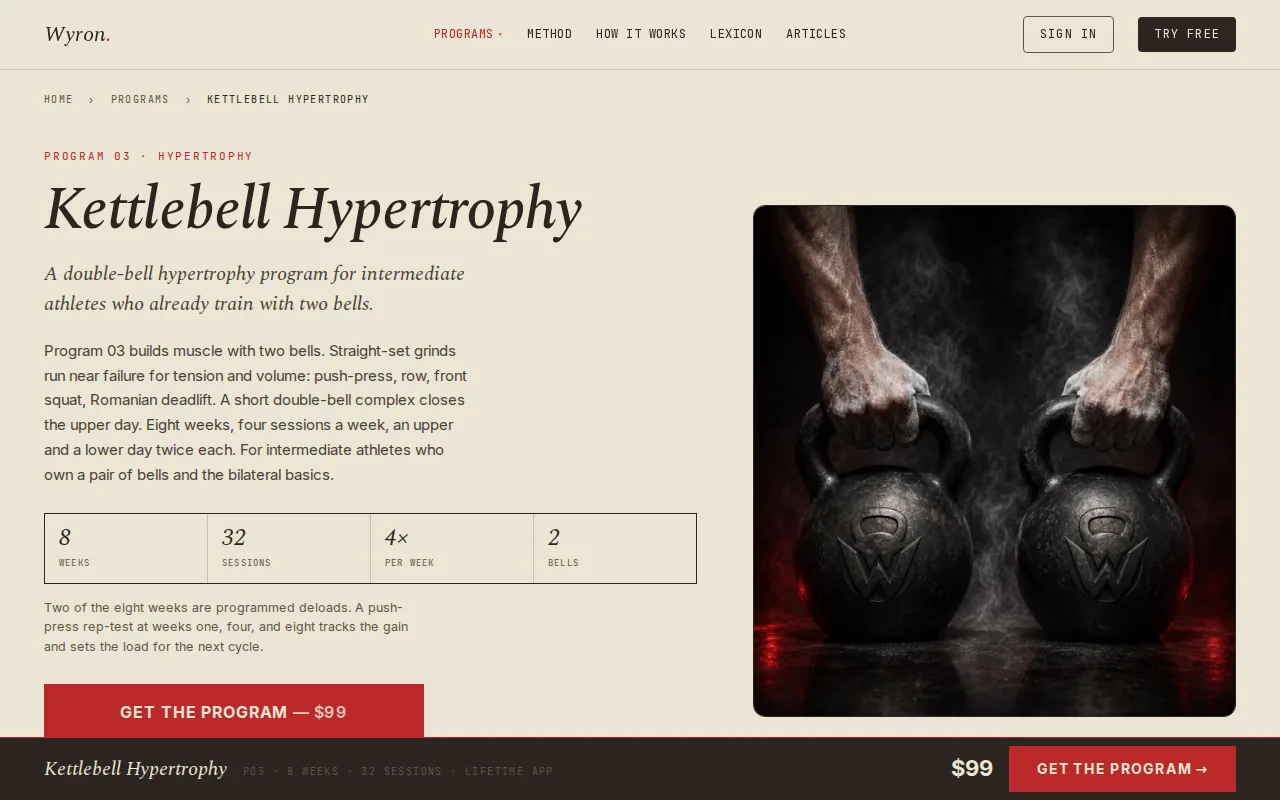
The program uses four sessions per week, with upper-body and lower-body days each repeated twice. Its main lifts include the push-press, row, front squat, and Romanian deadlift. Sets use controlled reps close to failure, which means you stop when only a small number of good reps remain, rather than turning every set into a fast circuit.
Two weeks are planned deloads, meaning the training load eases to support recovery. A push-press rep test at weeks one, four, and eight helps track performance and set the load for the next cycle. The program also uses a working pair of bells, so your equipment and comfort with bilateral lifts matter from the start.
This is not a short beginner challenge. It runs eight weeks and asks for four sessions each week. If you want a broad mix of conditioning and home strength with one bell, compare that goal with the kettlebell strength training programs for busy women.
Use this plan when your training skill, two-bell setup, and muscle-building goal all line up. If one of those pieces is missing, build your base before taking on a demanding double-bell block.
5. Kettlebell Strong! by Geoff Neupert: Strength work with a pair of bells
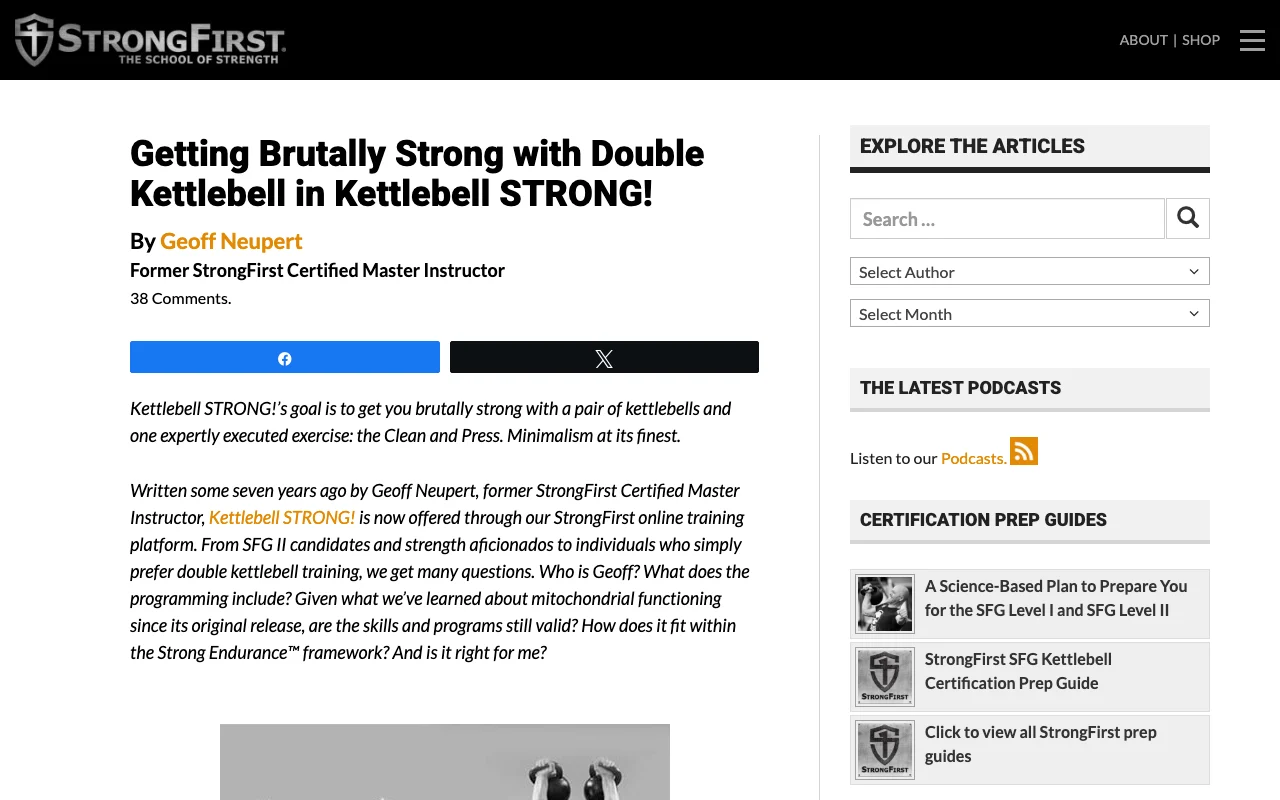
Kettlebell Strong! by Geoff Neupert is a strength-focused resource built around double kettlebell clean and presses. It may suit you if you want to get stronger with a pair of bells and already know the main movements well enough to train with control.
The program’s central idea is to repeat one compound lift with a pair of kettlebells. A clean brings each bell into the rack position at your shoulders; the press moves them overhead.
Kettlebell Strong! is intended for serious kettlebell lifters who want to get stronger by learning to use a pair of kettlebells properly.
Double-bell pressing asks more of your setup than a single-bell home routine. You’ll need two bells you can clean and press with steady form. This is a better fit for lifters who want focused strength work than for someone learning the hinge or press from scratch.
Choose it when the pair of bells is already part of your training. If you’re still building the basics, a single-bell plan may give you a clearer place to start.
Compare the 30-Day Kettlebell Program Options
These options don’t all last 30 days, and they don’t share the same goal. Compare the training setup first. A plan that fits your equipment and available days is more useful than one that only fits the calendar.
| Option | Time frame or schedule | Equipment and focus | Best fit |
|---|---|---|---|
| Hybrid Fit Mom | Six weeks; four sessions weekly | One kettlebell; progressive strength and conditioning | Busy women wanting a planned home schedule |
| Simple & Sinister by StrongFirst | Regular practice; progression over time | Swings and get-ups | Lifters who want a narrow, repeatable practice |
| EricLeija.com | Courses and workouts | Online training materials | People comfortable choosing their own sessions |
| Hypertrophy by Wyron Bell | Eight weeks; four sessions weekly | Two bells; muscle-building work | Intermediates with two-bell experience |
| Kettlebell Strong! by Geoff Neupert | Several training cycles | Two bells; clean and press strength work | Lifters seeking focused double-bell strength |
For a clear home schedule and a single bell, Hybrid Fit Mom is the closest match. The other choices may suit you better when your goal is specific practice, more independent browsing, or advanced two-bell work.
Frequently Asked Questions About 30-Day Kettlebell Programs
Can you build strength with a kettlebell at home?
Yes, you can build strength at home with a kettlebell when you use movements you can control and follow a plan that progresses. A single bell can support hinge, squat, and press work. Choose a weight you can move with steady form, and don’t assume the right load for a deadlift will also suit an overhead press.
Is a six-week kettlebell program close enough to a 30-day plan?
Yes, a six-week plan can be a useful choice if you care more about having a clear training block than stopping on day 30. Hybrid Fit Mom runs for six weeks, with four weekly sessions and workouts that progress over time. If you need an exact calendar month, check the schedule before you start.
How many days a week should I train with a kettlebell?
Follow the schedule of the program you choose, then adjust if you can’t recover or keep your technique steady. Hybrid Fit Mom sets four weekly sessions, including a shorter core day. Simple & Sinister uses more frequent practice. The right schedule depends on your training background and how your body responds.
Can beginners use a kettlebell program?
Beginners can use a kettlebell program, but they should learn each movement before adding speed or weight. Start with a load you can control and practice the hinge before swinging. A program designed for people with basic skills may move too quickly if you’re still learning how to set up, brace, or hold a bell overhead.
Conclusion
If you have basic kettlebell skills and want a planned home routine that fits a busy week, start with Hybrid Fit Mom. Review the four-session schedule and one-bell setup, then decide if the six-week block fits your calendar.