Best 12-Week Kettlebell Programs for Busy Women

A 12-week kettlebell program can give your training a clear path, but a long block only works if it fits your week. Hybrid Fit Mom’s six-week home plan is one option; the others below suit different schedules, settings, and skill levels.
Here are six named choices, with the details that help you decide what you can stick with.
1. Hybrid Fit Mom
Hybrid Fit Mom is a self-guided, six-week kettlebell strength and conditioning program for busy women and mothers with basic kettlebell skills.
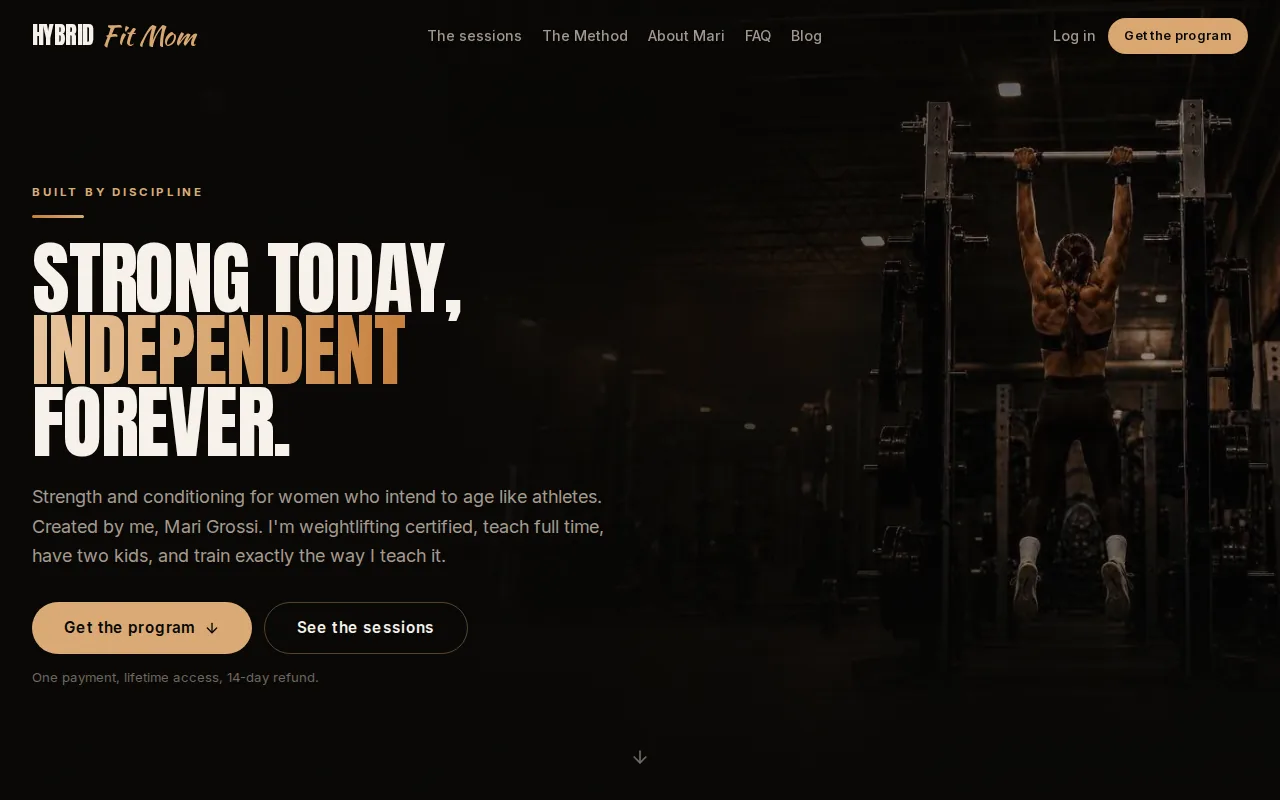
The schedule has three workouts of 30 to 40 minutes each week, plus a shorter core session of about 20 minutes. You need one kettlebell. That gives you a full weekly plan with a shorter option for days when the calendar is tight. Its 24 sessions are set across four weekly training days.
Mari Grossi, the coach behind the program, is a weightlifting L1 certified coach, hybrid athlete, full-time teacher, and mother of two. Prerecorded demonstrations show the movements with her cues. The program also includes an eating framework, lifetime access, and a 14-day refund. The listed one-time price is $29.
Progressive sessions give each week a purpose. For example, the plan’s early work uses deadlifts, swings, goblet squats, and strict presses without rushing the reps. To choose a starting bell, use one you could deadlift for 10 clean reps. The program tells you when to move up.
Because this is self-guided, you won’t have live feedback during a workout. Start with movements you can do with control. The printable kettlebell workout options for busy women can also help you see how a planned routine differs from a page of saved sessions.
2. Precision Kettlebells: coached group training for accountability
Precision Kettlebells is a kettlebell gym in Malvern, Pennsylvania, with coach-led group training. It’s best for you if you live nearby and want in-person instruction to help you learn or adjust movements.
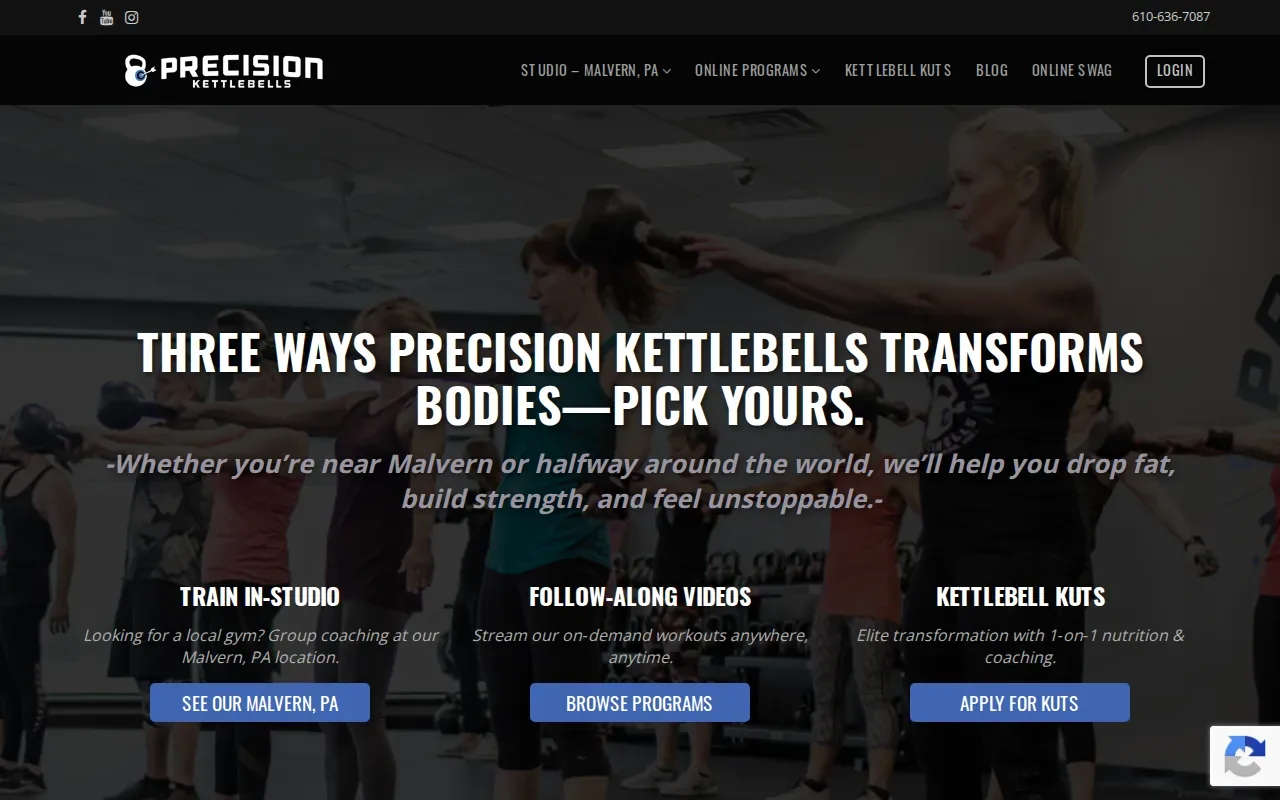
Group sessions use strength work, circuits, intervals, and kettlebell skill practice. Coaches provide technique corrections and help scale movements to different levels. That can take the guesswork out of a swing or squat, especially if you’re not sure whether your form stays steady as you get tired.
The gym also has online follow-along programs. Most need one kettlebell plus bodyweight, which gives home trainees a way to follow workouts without traveling to the studio. The online format may be a better fit if you’re outside Malvern, but the main draw of this option is coaching in person.
There’s a clear trade-off: a class schedule and travel time need to fit your work and family routine. If a child’s pickup or a late meeting can erase a planned class, compare that setup with a self-paced program you can do at home.
For your decision, ask whether you need someone to watch your reps or mainly need a plan telling you what to do next. The kettlebell workout programs for women page can help you compare home-based structures with other training styles.
3. Fit Dad Company: an eight-week option built around short workouts
Fit Dad Company has eight-week programs for busy dads, with strength, muscle, and conditioning workouts designed for home or gym use. It’s best for you if you want a shorter training block and sessions that fit a 30-to-45-minute window.
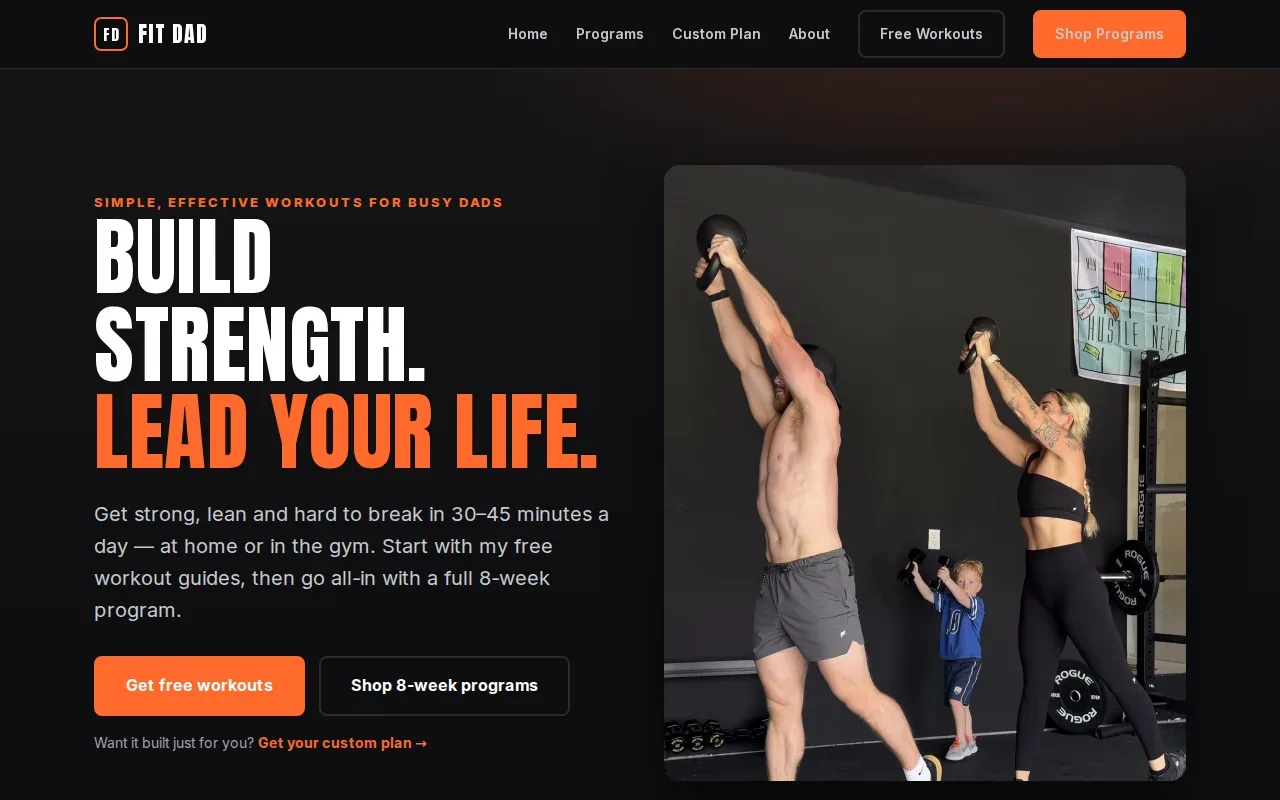
That workout length is useful when you’re planning around work or family time. A session that fits before the day starts is easier to protect than one that needs a wide-open afternoon. The company also provides free workout guides, so you can look at its training material before settling on a longer routine.
This is a dad-focused option, so its audience differs from a program built for women and mothers. The home-or-gym setup offers flexibility in where you train, but make sure the plan’s schedule and workout content match your own goals and equipment.
Eight weeks is shorter than a 12-week block, but it still asks for regular sessions. Think through the days you can reliably train, not the ideal week when nothing runs late. If you’re comparing training plans by equipment and progression, the kettlebell strength training program options give you another way to weigh those details.
4. JTM FIT: strength and mobility training for adults 40+
JTM FIT focuses on athletic strength training for men and women 40 and up. It’s best for you if you want strength work that also names muscle, power, and mobility as goals.
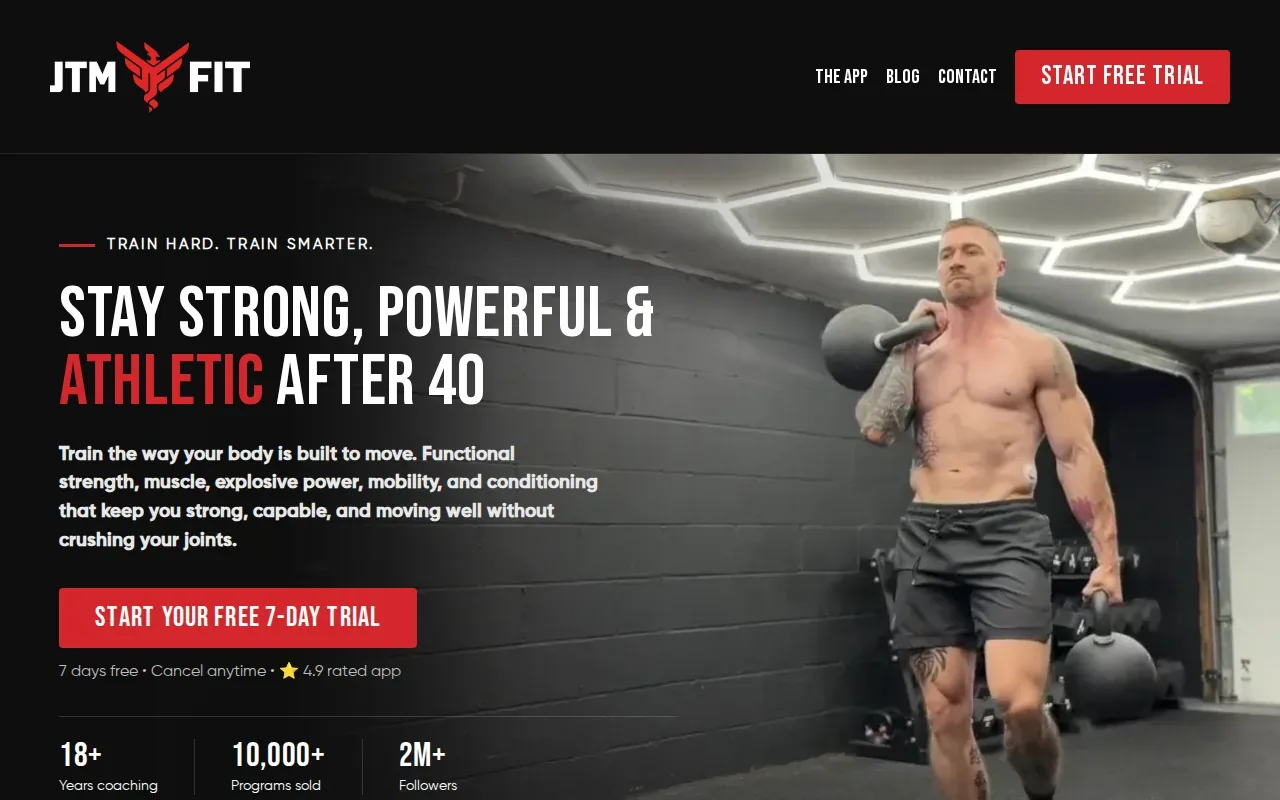
The age focus may matter if you’re looking for training that accounts for how you want to move over time. Strength is useful in daily life, too. A controlled hinge trains the motion you use to pick up a bag, while a press builds practice with moving a load overhead.
If a lift causes pain, stop and seek qualified guidance rather than pushing through it. A resource on ACL rehab and return-to-sport planning covers recovery support when a knee injury is part of your training picture.
Age alone doesn’t tell you which bell to use or how much rest you need. Your training history and current movement skill matter. Begin with loads you can control, and leave enough time between harder sessions to see how you recover.
5. Hypertrophy by Wyron Bell: double-bell training for intermediate lifters
Hypertrophy by Wyron Bell is an eight-week double-bell program for intermediate athletes who already train with two kettlebells. It’s best for you if building muscle is a main goal and you know the basic two-bell lifts.
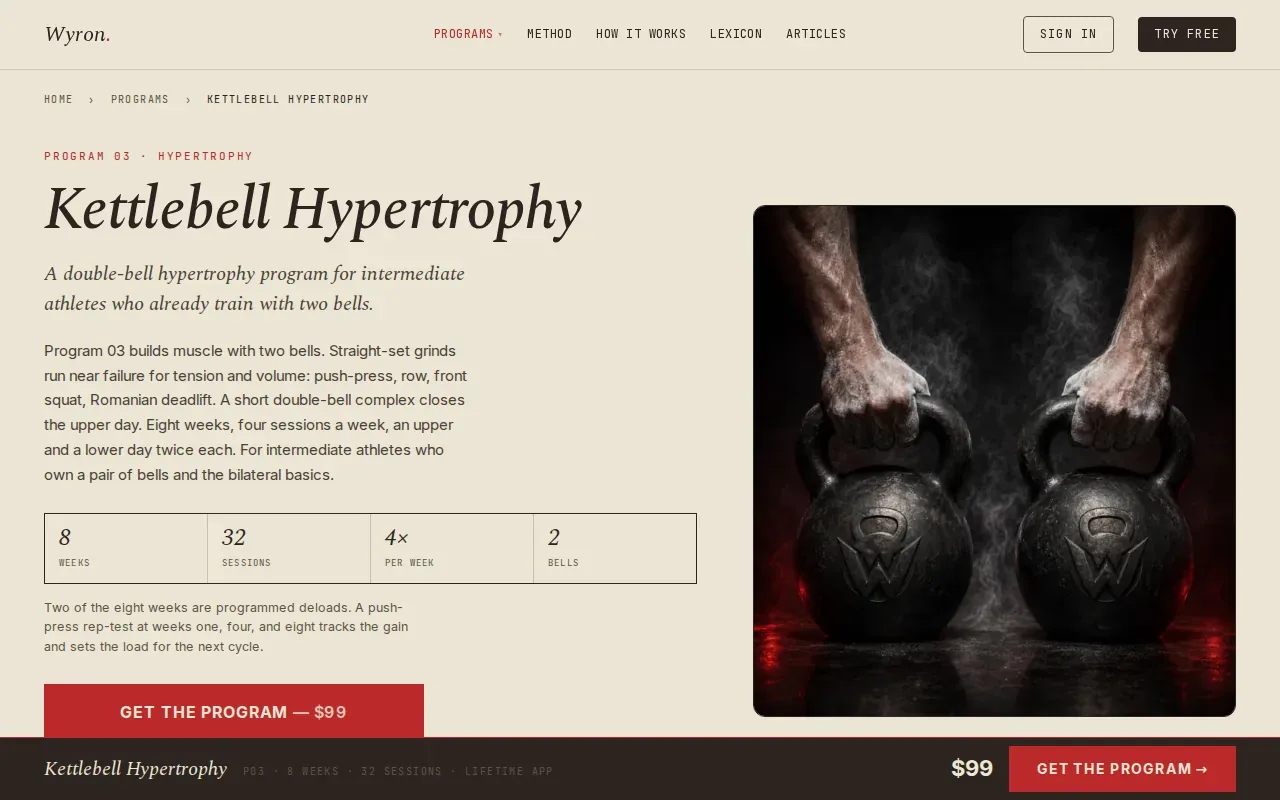
The plan has four sessions each week, split between upper- and lower-body days. Its main lifts include the push-press, row, front squat, and Romanian deadlift. Sets use controlled reps close to failure, which means stopping when only a small number of good reps remain, rather than turning every set into a fast circuit.
Two of the eight weeks are deload weeks, with less demanding training. A push-press rep test at weeks one, four, and eight helps track changes and guide load choices. You’ll need a pair of bells and comfort with the bilateral lifts, so this isn’t the simplest starting point if you’ve only used one kettlebell.
The plan focuses on muscle-building work. If you mainly want a short conditioning session, this emphasis may not match your goal.
6. Simple & Sinister by StrongFirst: a focused kettlebell training option
Simple & Sinister by StrongFirst is a focused routine built around kettlebell swings and Turkish get-ups. It’s best for you if you like repeating a small set of movements and want a clear practice target.
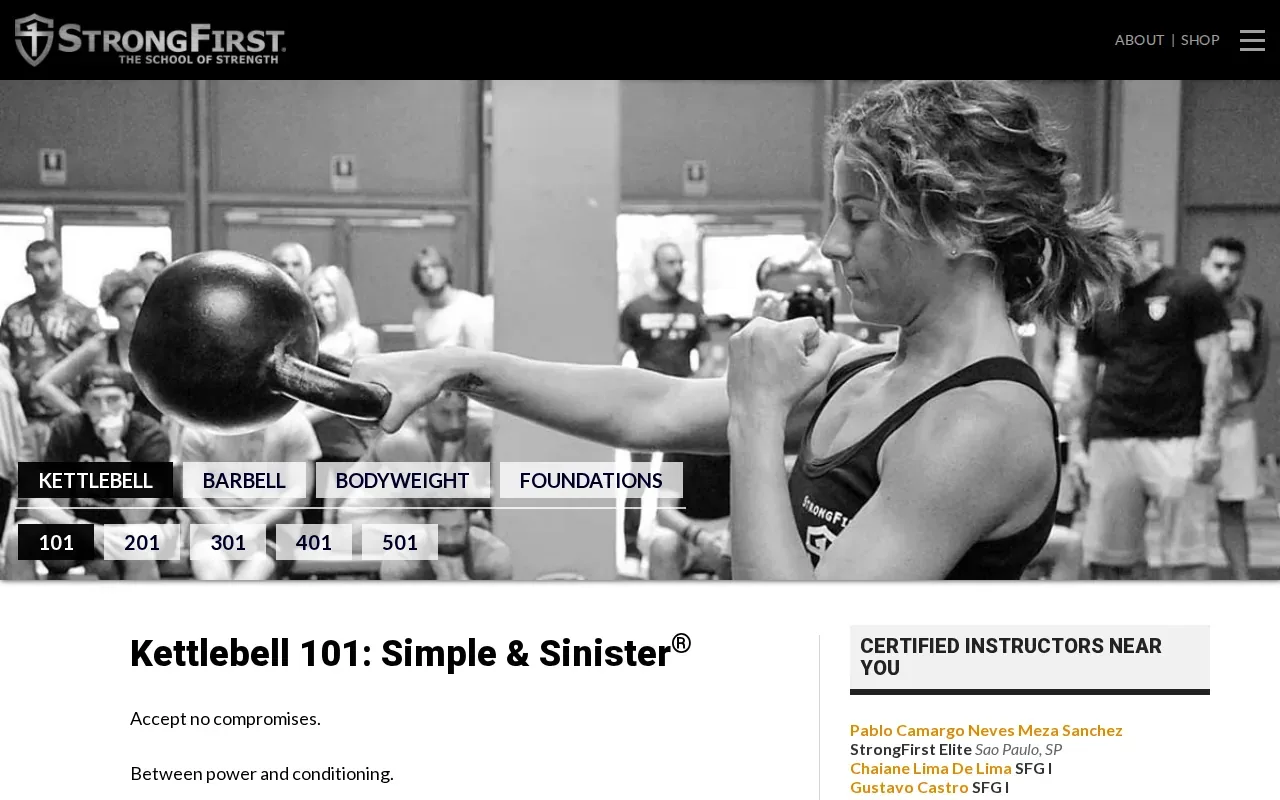
The routine calls for 100 swings and five Turkish get-ups per side, with training five to six days a week. A Turkish get-up moves you from lying on the floor to standing while holding a kettlebell overhead. It takes more coordination than a deadlift, so learn the stages slowly before adding speed or load.
Two main lifts keep the session menu simple. That can make it easier to begin a workout when you’re short on time, but the routine doesn’t provide the same mix of squats, presses, and conditioning blocks as a broader plan. The frequent schedule also needs to work with your recovery and family calendar.
A kettlebell’s handle-and-bell design lets you hold it in different positions during a lift. For your own training, focus on a steady hinge in the swing and a slow, controlled path through each get-up stage. Stop if you can’t keep the bell stable overhead.
12-Week Kettlebell Program Options Compared
These choices don’t all last 12 weeks. Compare the schedule and support first, then match the plan to your training level.
| Option | Time or schedule | Best fit | Key trade-off |
|---|---|---|---|
| Hybrid Fit Mom | Six weeks; four weekly sessions | Busy women training at home | Self-guided rather than live-coached |
| Precision Kettlebells | Coach-led group training | People near Malvern who want feedback | In-person sessions require travel |
| Fit Dad Company | Eight-week programs; 30 to 45 minutes | Busy dads seeking home or gym workouts | Its audience is dads |
| JTM FIT | Strength and mobility focus | Adults 40+ seeking strength and mobility | Check that its training style fits your needs |
| Hypertrophy by Wyron Bell | Eight weeks; four sessions weekly | Intermediate double-bell lifters | Requires two-bell skills |
| Simple & Sinister by StrongFirst | Five to six days weekly | Lifters who want repeated practice | Uses a narrow movement menu |
FAQ
Can you get stronger with a kettlebell at home?
Yes, one kettlebell can support home strength training when you follow a plan that builds over time. Common patterns include hinges, squats, rows, presses, and carries. Start with a load you can control, then add challenge only when your reps stay steady. If a movement is new, learn the skill before trying to move faster.
How heavy should my first kettlebell be?
Choose a bell you can move with control through the lifts in your plan. A load that feels fine for a deadlift may be too heavy for a press. Hybrid Fit Mom’s program uses a bell you could deadlift for 10 clean reps as a starting point, then gives guidance on when to move up.
Do I need to train four days a week?
No, the right schedule depends on the program and what you can recover from. Hybrid Fit Mom’s plan sets four weekly sessions, including a shorter core day. Simple & Sinister calls for more frequent practice. If you’re new to kettlebell training, start with a schedule you can keep and adjust based on how your body feels.
Can kettlebell training help build muscle?
It can, when your plan includes challenging strength work and a way to progress. For example, a muscle-focused routine may use controlled sets of squats, rows, presses, or hinges. The double-bell Hypertrophy by Wyron Bell plan is aimed at intermediate lifters. A beginner can focus first on learning the movements and repeating clean reps.
Is a six-week plan enough if I searched for a 12-week program?
A six-week plan can still provide structure if its schedule and progression fit your needs. Hybrid Fit Mom’s program runs for six weeks and includes 24 sessions, four per week. A longer block isn’t automatically a better fit. Consider the time you can protect, the movements you want to train, and the support you need.
Conclusion
If you’re a busy woman who wants progressive kettlebell training at home, Hybrid Fit Mom is the clearest fit in this shortlist. Check the weekly schedule and choose your first training days before you start.