Best Kettlebell Workout Reviews: 6 Programs

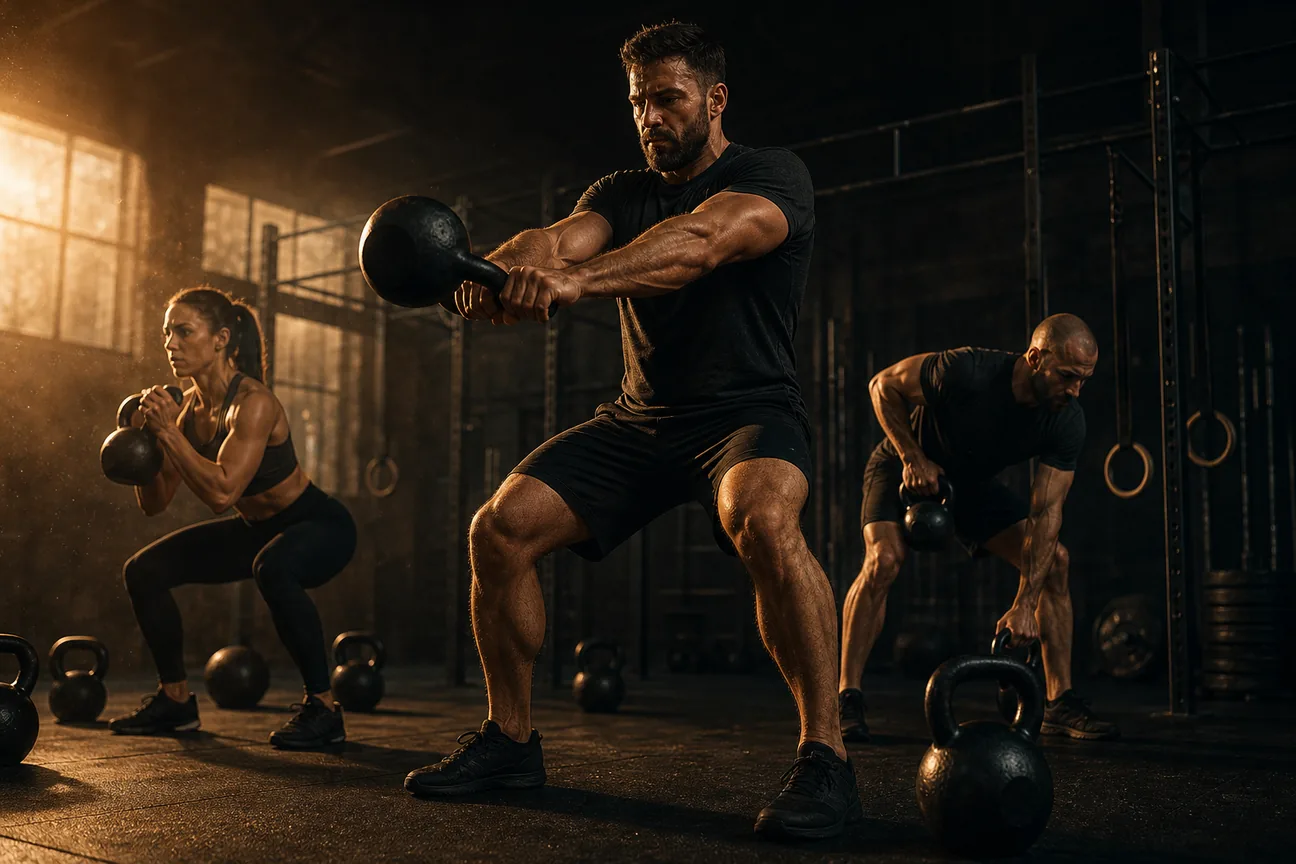
A good kettlebell plan gives you a clear next session, not another list of workouts to sort through. These kettlebell workout reviews compare six programs by schedule, format, and progression, with busy women and mothers in mind. For a broader side-by-side, explore kettlebell workout programs for women.
1. Hybrid Fit Mom Six-Week Kettlebell Strength & Conditioning Program
The Hybrid Fit Mom program is a self-guided, six-week plan for home training. You get four sessions each week, with workouts lasting 30 to 40 minutes. It suits women who already know basic kettlebell moves and want a schedule they can follow without a monthly membership.
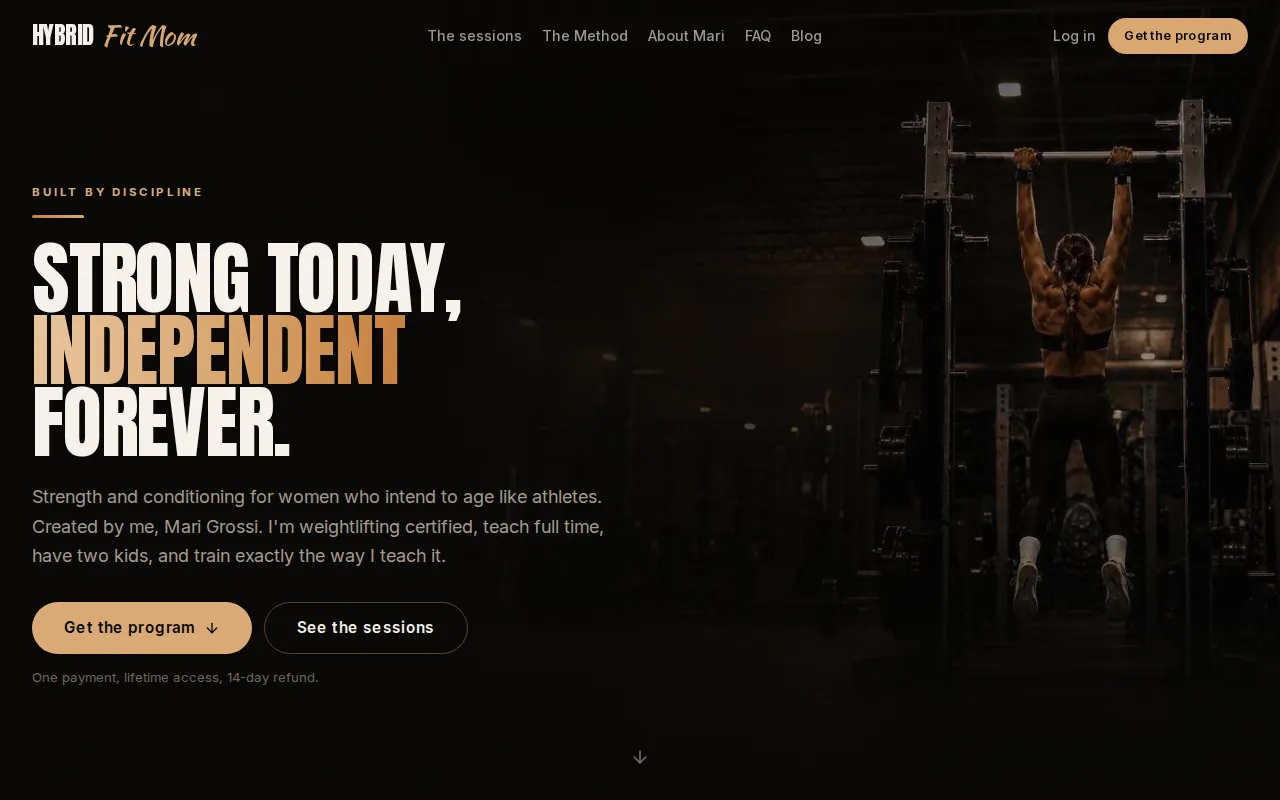
Each workout builds on the last through progressive training. The program includes prerecorded demonstrations with cues, an eating framework, and lifetime access. Mari is the coach behind the guidance, so the demos can help you check how a movement should look before you pick up your bell.
The one-time price is $29. That makes the cost easy to plan around, while four sessions per week give you a steady rhythm. If you miss a day, you can return to the plan at your own pace rather than racing to keep up with a live class. For your planning, choose a six-week kettlebell strength plan for women that fits your schedule.
For a busy week, the key choice is whether four 30-to-40-minute sessions fit your calendar. The program is self-guided, so you’ll need to set aside time and follow through on your own.
2. Cavemantraining Kettlebell Programs
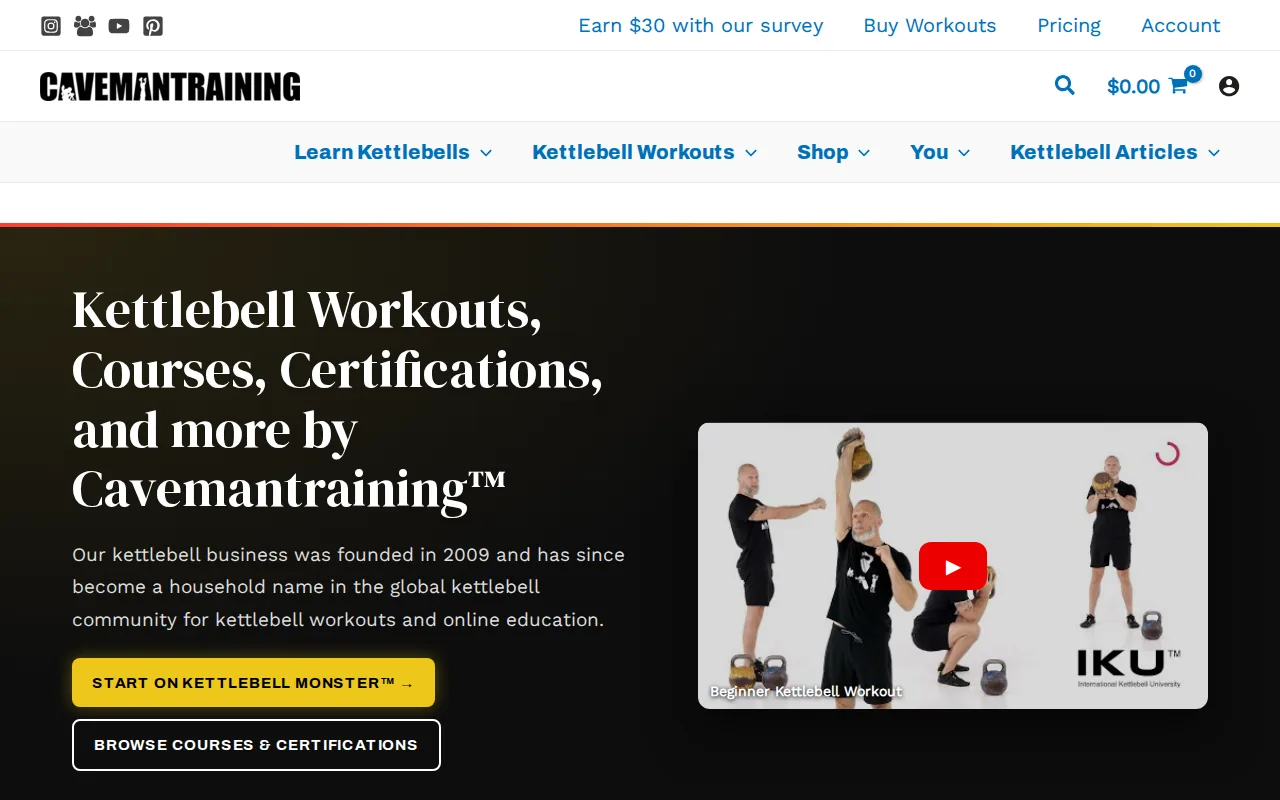
Cavemantraining has online courses and books with kettlebell workouts. Its strength-focused plans suit lifters who want more structure than a loose collection of exercise ideas, but still prefer to choose workouts at their own pace.
One useful approach is to keep a simple log and repeat a session before making it harder. Write down the bell you used and the reps you completed. If the last set still looks controlled, you have a clear record to guide your next session. If your hinge starts to turn into a squat, repeat the same load instead of pushing ahead.
That kind of tracking can help you build consistency without guessing. It also makes the difference between a saved workout and a program easier to see: a plan gives you a reason to repeat or progress a session. The best fit here is a self-directed lifter who likes to choose their training rather than follow a fixed weekly calendar.
Expect to do some of the planning yourself. Pick a goal for the day, then note how the work felt. A log is only useful if you keep it short enough to use after a busy workout.
3. KettleBelle App
KettleBelle App is a mobile program with video demos and movement cues. It suits women who want a guided session that can fit a shorter workout window. Sessions range from 15 to 40 minutes, and the app’s programs build in difficulty and duration over time.
The guided format can cut down on mid-workout decisions. You can follow the demonstration, check the cue, and move on to the next exercise. For someone training in a small space before work or between family tasks, that can be easier than building a session from scratch.
The membership costs $29 per month. That recurring fee may make sense if you value app-based guidance and use it often. If you prefer to pay once and keep access without a subscription, compare that setup with a fixed-length plan before signing up.
Form still matters when a video is on your phone. A kettlebell’s handle affects how you hold and guide the bell. Choose a bell you can grip with control, and pause the video if you need another look at a movement cue.
4. EricLeija.com Kettlebell Courses
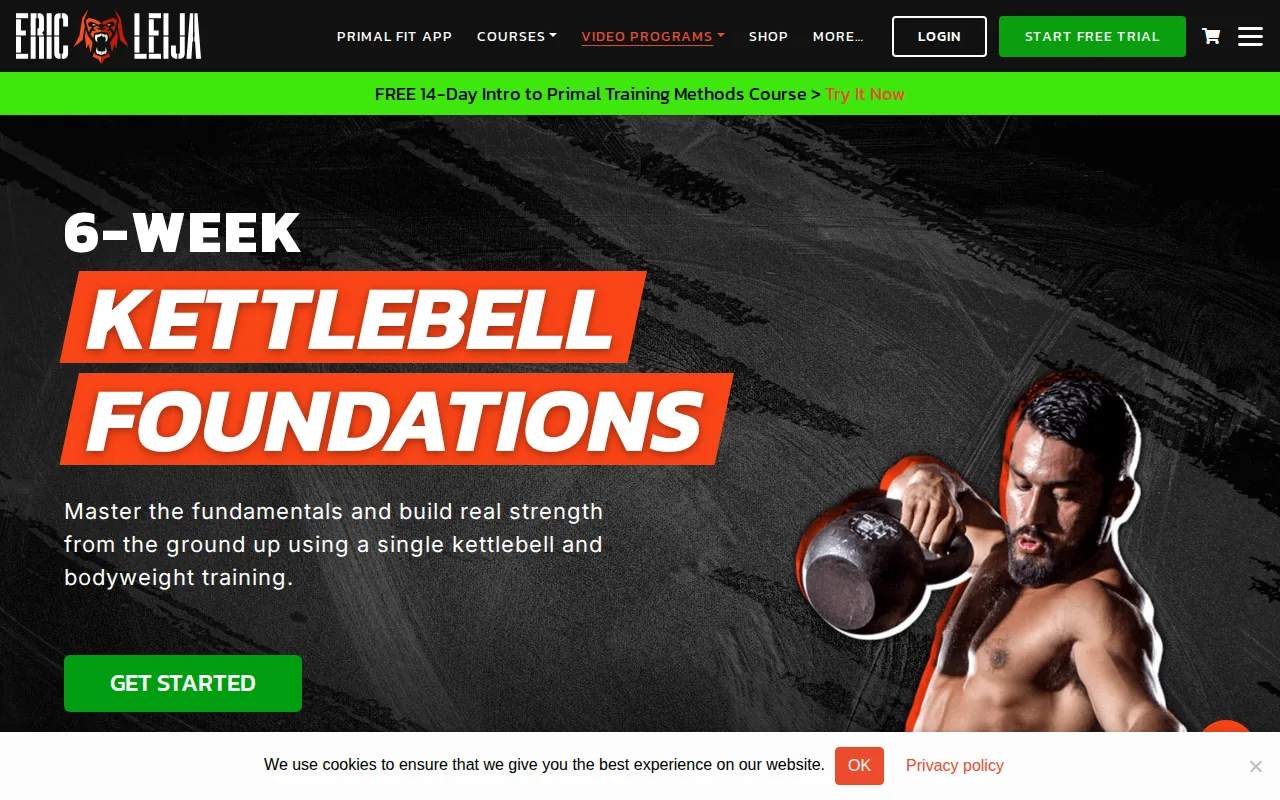
EricLeija.com has kettlebell courses in 4-week, 8-week, and 12-week formats. The range suits people who want to choose a program length before they begin. Its courses focus on progressive skill building through an online video library, with a monthly subscription app also available.
A shorter course may suit you if you want a defined block to complete before deciding what comes next. A longer block gives you more time to practice and build skill. The trade-off is commitment: choose a duration that fits your real calendar, not the imaginary week when nobody gets sick and work ends on time.
Before you start, check how the course fits the movements you already know. A clean hinge is a good base for swings. A steady rack position matters for cleans and presses. If a skill feels new, slow down and practice it before adding speed or load.
Compare the course structure with your available time before choosing a block.
5. Precision Kettlebells
Precision Kettlebells has in-person group classes and online follow-along programs. Its in-person coaching suits busy adults who want a coach to correct technique and adjust the work during a class. Online programs give you a way to train from home instead.
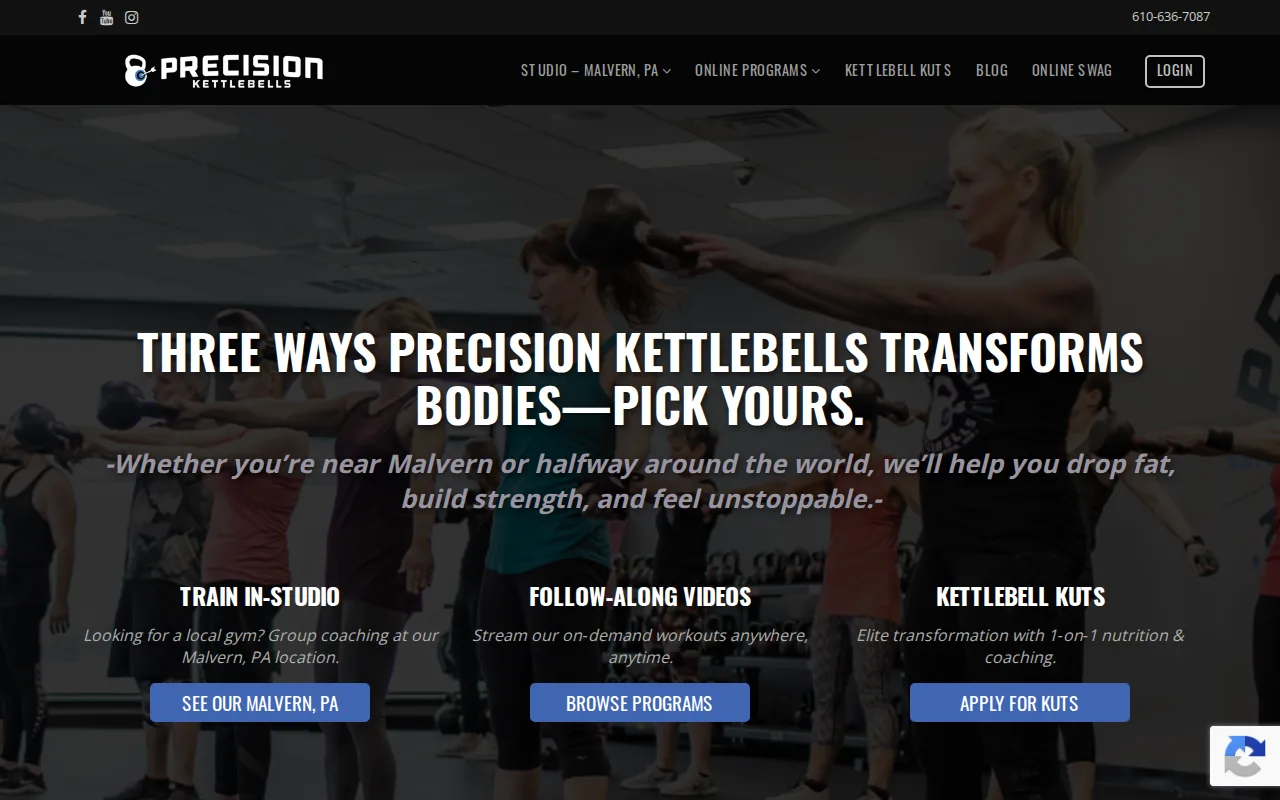
In the studio, sessions include strength work, conditioning, intervals, circuits, and kettlebell skill practice. Coaches provide technique corrections and help scale exercises, so you can ask for a change when a movement or pace doesn’t fit your current ability. The studio is in Malvern, Pennsylvania, which makes location part of the decision.
The online programs are streamed follow-along workouts, with beginner, intermediate, and advanced targets. Most need one kettlebell plus bodyweight. That mix gives you a home option, but it won’t give you the same live coaching as an in-person class.
Ask yourself what kind of help you need. If you want someone to watch your form and adjust a movement in real time, a coached class has a clear edge. If you need to work around a changing family schedule, on-demand video may be easier to fit in.
6. JTM FIT Kettlebell Revolution
JTM FIT Kettlebell Revolution is an eight-week plan with six 45-minute sessions per week. It suits experienced trainees who can protect that much time in their schedule and want a high training frequency.
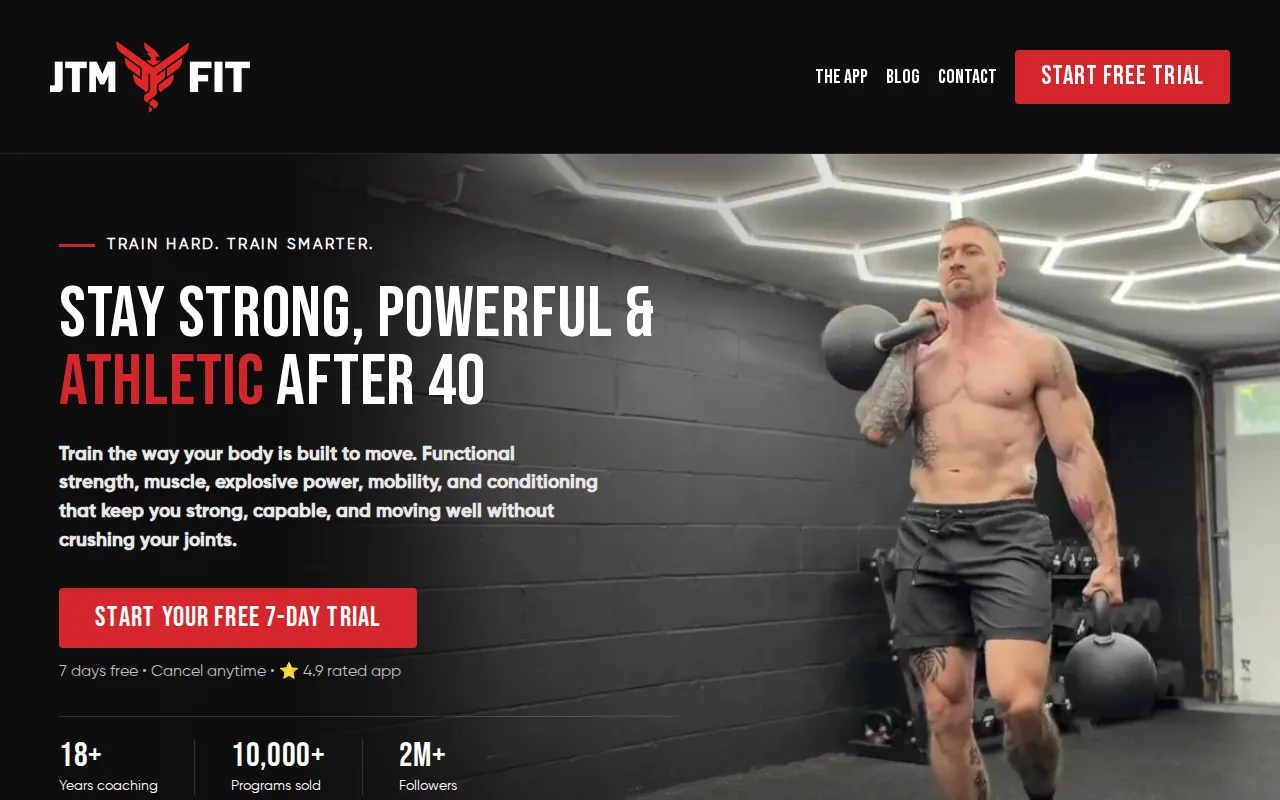
The plan progresses load and complexity across four main workouts, with two recovery days in the weekly schedule. That structure gives the week a clear shape, but six sessions can be a lot to fit around work and care duties. The recovery days are part of the schedule, not spare slots that need another hard workout.
Quick comparison: Which kettlebell program fits your routine?
Use the schedule first, then weigh the format. A plan that fits your week is more useful than one that looks impressive but keeps slipping to next Monday.
| Program | Format and time | Good fit if you want |
|---|---|---|
| Hybrid Fit Mom Six-Week Kettlebell Strength & Conditioning Program | Four 30-to-40-minute sessions weekly, six weeks | Self-guided home training with a one-time purchase |
| Cavemantraining Kettlebell Programs | Online courses and books | Strength-focused options you can choose at your pace |
| KettleBelle App | Mobile app, 15-to-40-minute sessions | Strength and confidence for busy women |
| EricLeija.com Kettlebell Courses | Online video courses of 4, 8, or 12 weeks | A choice of program length |
| Precision Kettlebells | In-person classes or online follow-alongs | Technique coaching or streamed home workouts |
| JTM FIT Kettlebell Revolution | Eight weeks, six 45-minute sessions weekly | A demanding schedule, if the program is available |
Hybrid Fit Mom’s four-session schedule lands between short app workouts and JTM FIT’s six-day week. Its $29 one-time price also avoids a monthly fee. That can matter when household costs already arrive on a schedule of their own.
What should a useful plan include?
Look for a clear way to progress. Resistance training means working muscles against an external force. In a kettlebell plan, progress can come from more reps, a heavier bell, or harder variations. Change one thing at a time so you can tell how your body responds.
A sample four-week structure can keep the work simple: use the first week to practice your main moves with a manageable bell. In week two, repeat the same work and aim for crisp reps. In week three, add a small amount of work or load, not both. In week four, hold steady or reduce the work if your form has started to slip. That outline is a general template, not a feature of every program above.
For a full-body session, pair a hinge such as a deadlift or swing with a goblet squat. Add a press, then finish with a carry or a Turkish get-up if you can do it with control. You can also split the work: use one day for upper-body presses and another for lower-body hinges and squats. Short swing intervals can add a cardio element, but stop while your hinge still looks sharp.
A swing should come from a hip hinge, not an arm lift or a deep squat. Keep your feet planted and let the bell travel between your thighs before your hips drive it forward. For a goblet squat, hold the bell close to your chest and let your knees track with your toes. In a Turkish get-up, move slowly through each position rather than rushing to stand.
For cleans and overhead presses, start with a load you can control on both sides. Don’t force a press if your ribs flare or your lower back arches. Rest long enough to breathe normally and make the next set look like the last one. A bell with a handle that feels secure in your grip is a better choice than one that makes you fight the hold.
Strength work can build your ability to squat, hinge, press, and carry a load. Faster swings or short intervals also raise the effort and challenge your grip as you hold the handle. But the value comes from sound reps repeated over time, not from finishing every session breathless.
Hybrid Fit Mom’s comparison of kettlebell programs for women and busy moms can help if you’re weighing a home plan against other formats. If you have pain, a health concern, or a movement restriction, ask a qualified health professional before starting a new training plan.
FAQ
How many days a week should you do kettlebell workouts?
Two to four weekly sessions can work, depending on your training history and the plan’s workload. Start with the schedule you can recover from and repeat. If you’re new to structured kettlebell training, leave rest between harder sessions and don’t add extra workouts to make up for a missed day.
What kettlebell weight should a woman start with?
Choose a weight you can control through the movements in your plan. A bell that feels fine for deadlifts may be too heavy for an overhead press, so test the main moves with care. Keep your reps smooth and stop if your form changes. Some people prefer separate bells for upper- and lower-body work.
Can kettlebell workouts build strength and cardio fitness?
Yes. Controlled presses, squats, and deadlifts train strength. Swings and timed intervals can raise your breathing rate while you work. The mix depends on the session design and your pace. Keep fast moves crisp, and don’t let fatigue turn a hinge into a squat or an arm swing.
Are kettlebell workouts safe for beginners?
They can be, if you learn the basic hinge and squat before adding speed or heavy loads. Follow clear coaching cues, use a weight you can control, and stop when your form breaks down. If you have pain or a health concern, speak with a qualified professional before you begin.
Is a one-time kettlebell program better than an app subscription?
It depends on how you like to train. A one-time program gives you a defined plan without a monthly charge, while an app subscription may suit you if you want ongoing guided sessions. Compare the actual weekly schedule with your calendar, then choose the format you’re most likely to keep using.
Choose the plan that fits your week
If you want a structured home plan without a recurring fee, start with the Hybrid Fit Mom Six-Week Kettlebell Strength & Conditioning Program. Check the four-session schedule against your calendar, then set aside your first workout window and begin at a load you can control.